Matox News

Truth Over Trends, always!

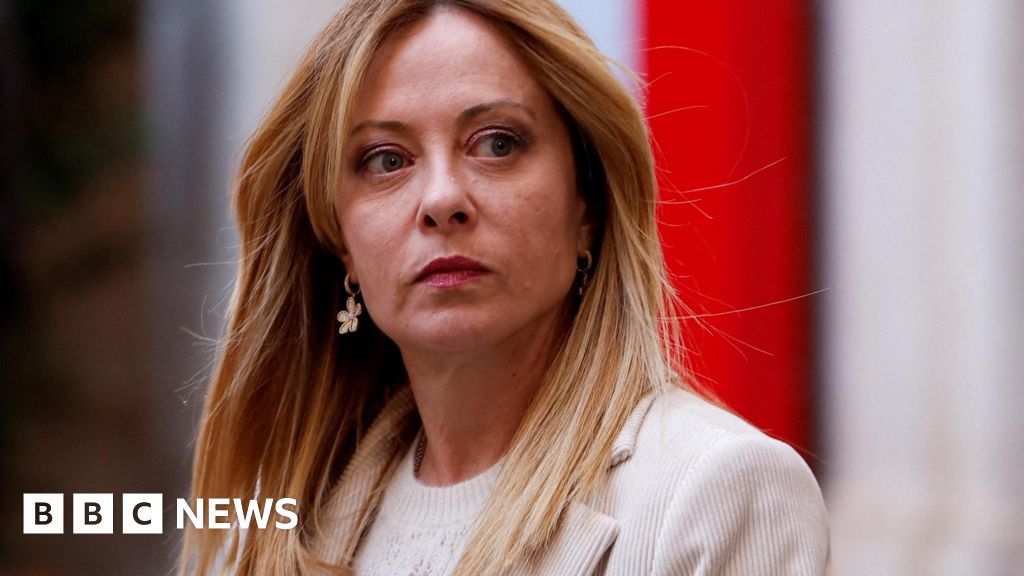
Italian PM slams Trump for ‘unacceptable’ Pope criticism—young voters watch closely

The intricate web of international relations remains under intense scrutiny as recent developments highlight the ongoing rift between key global powers and longstanding alliances. Italy’s Prime Minister and the United States President continue to maintain a strategic partnership rooted in shared geopolitical interests, yet recent diplomatic tensions threaten to reshape the delicate balance of influence in Europe and beyond. Central to this emerging conflict is the unresolved dispute with Pope Leo XIV, whose authority and moral standing are now being challenged by the US leadership’s refusal to issue an apology.

The controversy centers around an episode in which President Trump, representing the United States, declined to issue an apology to the pope, whom he described in unflattering terms as “very weak.” This defiance has enraged elements within the Vatican, and analysts warn that such a stance risks inflaming longstanding tensions between secular state interests and the religious authority of the Holy See. Historically, the Vatican’s diplomatic influence has transcended formal politics, shaping moral and ethical debates within international forums. Trump’s refusal signals a broader shift toward unapologetic nationalism and a reluctance to defer to institutional moral authority on global stages, a move that some observers warn could undermine diplomatic norms established in the post-World War II era.

Meanwhile, Italy’s Prime Minister has found himself caught in the crossfire, bridging the interests of a committed Western alliance and the political realities of maintaining good diplomatic ties with the Vatican. Italian officials, known for their historically close ties to Catholic institutions, have expressed disappointment over Trump’s attitude, emphasizing the importance of maintaining respect for religious sovereignty. Political analysts suggest that this episode underscores the shifting landscape of international diplomacy, where alliances are tested by cultural and moral clashes as much as by strategic interests. The European Union and **NATO** members watch anxiously as the US’s stance toward religious institutions and diplomatic protocol begins to reshape alliance dynamics.

The global geopolitical impact of this controversy extends beyond just Italy and the Vatican. The refusal to apologize signals a potential realignment in diplomatic posture—marked by a willingness among Western powers to prioritize national interests over longstanding diplomatic courtesies. This shift could embolden other nations to challenge traditional norms, risking greater instability in international relations. Historians caution that this episode may be remembered as a turning point—an era where the foundations of diplomatic diplomacy, based on mutual respect and tradition, are fundamentally challenged. It poses serious questions about how global institutions such as the UN or the World Court will respond to the erosion of diplomatic decorum that has historically served as the bedrock of international peace and cooperation.

As history continues to unfold, a stark reality remains—the decisions made in these tense moments will resonate for generations. The weight of that history is not merely measured in diplomatic cables or official statements but in the lives of ordinary citizens whose futures hang in the balance of shifting alliances and unyielding national pride. The world watches with bated breath as the pages of a new chapter are written, where old alliances are tested, and new divides are etched into the geopolitical landscape. Whether history will see these events as a catalyst for inevitable fragmentation or a prompt for renewed dialogue remains uncertain—but one thing is clear: in the great narrative of global power, this is a crucial turning point.”

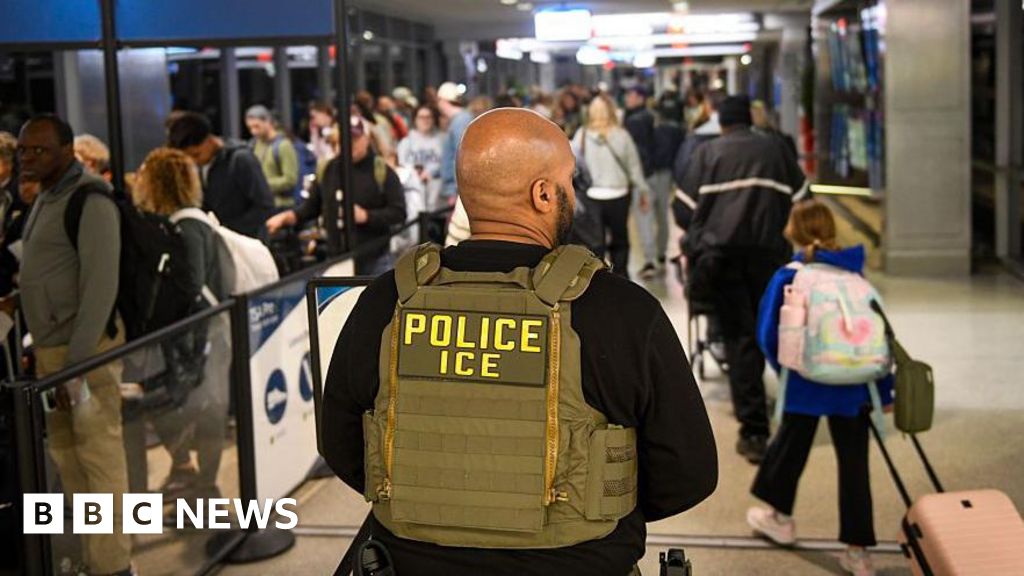
DR Congo Opens Doors to US Deportees, Young Voices Watch Closely

In an era marked by increasing migration crises and shifting geopolitical alliances, the recent decision by Democratic Republic of the Congo (DR Congo) to accommodate third-country migrants signals a complex interplay of humanitarian values and international strategy. According to an official statement, the decision affirms DR Congo’s commitment to human dignity, international solidarity, and the protection of migrant rights. This move comes amid mounting pressure from global organizations and emerging regional dynamics, positioning Kinshasa on a new geopolitical footing as a sympathetic refuge for displaced populations crossing borders from non-neighboring nations.

What makes this decision particularly noteworthy is its adherence to a broader pattern of international cooperation driven by both moral imperatives and pragmatic geopolitical calculations. Analysts suggest that DR Congo is aligning itself with a global narrative emphasizing humane migration policies, possibly to bolster its international standing and foster diplomatic goodwill. This stance is reinforced by the involvement of major UN agencies and regional powers, who see in such commitments a means to stabilize fragile border regions and mitigate the risks associated with uncontrolled migration flows. According to experts like Dr. Martin Collins, a senior analyst at the International Migration Institute, this development could redefine Central Africa‘s role in global migration landscapes, turning the nation into a key player in regional security and cooperation initiatives.

However, the decision also carries significant geopolitical implications. Critics warn that embracing third-country migrants might ignite internal debates about sovereignty, resource allocation, and social cohesion. Historically, migration can be both a catalyst for economic renewal and a source of social strain, especially in nations already grappling with internal challenges. The shift signals a broader push by some governments to leverage migration policies as a soft-power tool in their diplomatic arsenal. Meanwhile, neighboring countries watch closely, wary of potential spillovers that could destabilize already volatile regions. As China and Russia expand their influence across Africa, local decision-makers are increasingly caught between aligning with global standards and safeguarding national interests.

International organizations like the International Organization for Migration (IOM) have applauded DR Congo’s move, describing it as an important step towards a more humane and coordinated migration framework in Africa. Nevertheless, the global community remains divided over migration policies, often reflecting deep ideological rifts. For instance, the European Union continues to grapple with externalizing migration control, while the United States debates immigrant integration policies at home.

As the world watches this unfolding chapter, the true weight of history begins to crystallize. Nations are no longer isolated actors but interconnected entities whose decisions about migration, sovereignty, and humanitarian responsibility echo across continents. The decision by DR Congo might seem a modest act at first glance, but in the grand chessboard of international diplomacy, it signals a potentially transformative shift—one that could redefine regional alliances and influence global migration narratives for decades to come. The sweep of history remains unwritten, yet its next movement seems toward a future where sovereignty and solidarity collide on an ever-expanding international stage.

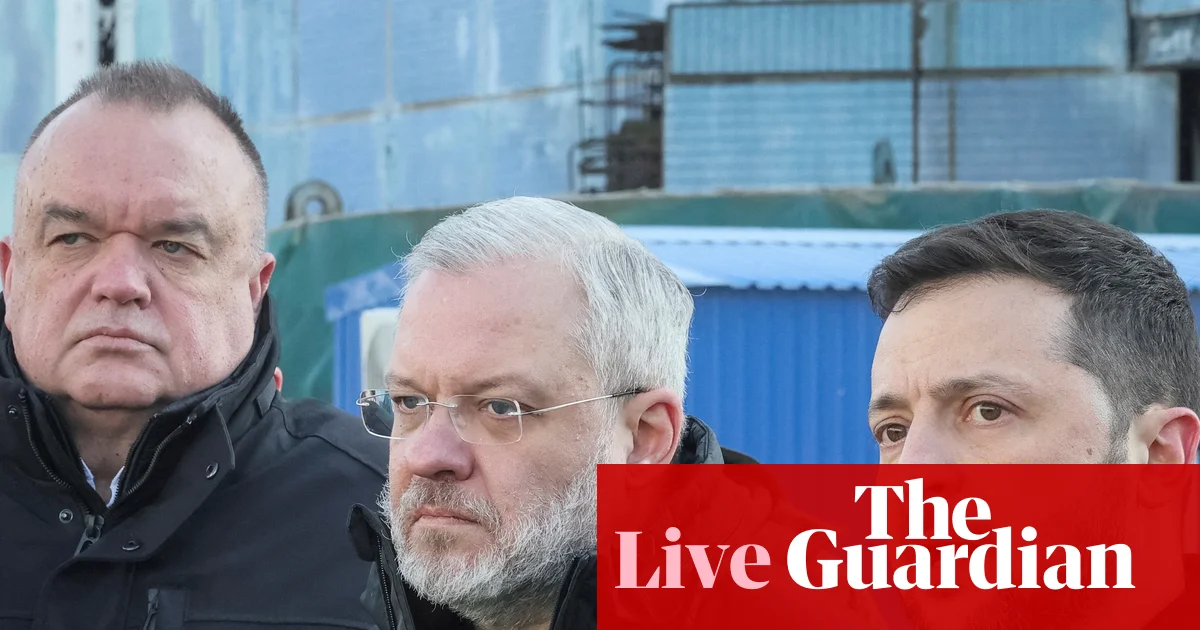
Ukraine suspends justice minister over energy corruption scandal—EU watches closely

Ukraine’s Unfolding Crisis: Corruption Scandal and Its Global Impact

In a development that threatens to rattle the foundations of Ukraine’s government and influence the broader geopolitical landscape, Ukrainian justice minister German Galushchenko has been suspended amidst an emerging corruption scandal involving Ukraine’s energy sector. This scandal, unveiled by the Specialised Anti-Corruption Prosecutor’s Office (SAPO), points to an alleged scheme involving a staggering $100m. The implicated figure, Timur Mindich, an associate of President Volodymyr Zelenskyy, is accused of orchestrating the plot, with reports suggesting that Galushchenko might have personally benefited. Such accusations come at a time when Ukraine is grappling with ongoing Russian attacks on critical energy infrastructure, complicating its ability to prepare for upcoming harsh winters.

International analysts, including senior officials from the European Union, have expressed concern over the implications of this scandal. The EU has highlighted that corruption remains a critical obstacle in Ukraine’s bid to join the bloc, a process now further hampered by domestic instability. The internal strife was amplified by recent protests over SAPO’s independence, seen as a rare dissent against President Zelenskyy’s leadership. This incident signals more than domestic political crisis; it underscores the fragile state of Ukraine’s governance structures and the widening gap between reform commitments and implementational reality. Historians warn that such internal disarray may embolden external adversaries while eroding international support.

The Geopolitical Impact Watch: How Kyiv’s turmoil influences the broader East-West tension

Ukrainian Prime Minister Yulia Svyrydenko confirmed a swift response, with the government appointing Deputy Justice Minister Lyudmila Suhak to temporarily assume Galushchenko’s duties. The suspended minister, in his defense, called the move a “civilized and appropriate” response, vowing to prove his innocence in the legal arena. Nevertheless, the scandal’s wider consequences may prove to be a turning point in Ukraine’s fight against corruption—a critical prerequisite for EU accession and international aid. Declining transparency could jeopardize military and economic aid, giving Russia or other malign actors an opportunity to exploit Kyiv’s vulnerability.

For observers, this crisis underscores a broader, foreboding trend: the collapse of Western-backed reform efforts and the rise of entrenched corrupt networks within Ukraine’s political elite. Critics argue that Zelenskyy’s government risks losing the moral high ground amid accusations of backsliding on reform commitments. The European Commission’s recent concerns reflect a growing impatience from Western allies, who now demand concrete actions rather than mere promises. As history has shown, such internal discord in nations fighting for sovereignty often serves as fertile ground for aggressive geopolitical moves by Russia—who remains firmly committed to destabilizing Ukraine and reasserting influence over the region.

Destined to be an epoch of struggle

As the world watches the unfolding saga in Kyiv, the weight of history presses heavily on the shoulders of Ukrainian leaders. The scandal is more than a mere political misdemeanor—it symbolizes the fragile hold on reform, sovereignty, and the rules-based international order. The coming days will reveal whether Ukraine can withstand the internal tremors threatening its stability or whether this wave of corruption will deepen existing divisions. As the winter looms and external pressures mount, the resilience of Ukraine’s institutions and the resolve of its people will determine how history remembers this pivotal moment—either as the beginning of a hard-fought recovery or a descent into chaos.

UKHSA Watches Closely as Brighton University Meningitis Cases Emerge

Rising Concerns Over Meningitis Among Students Highlight Societal Challenges

The recent diagnosis of two students at the University of Brighton with meningitis has reignited concerns over public health vulnerabilities and social awareness. The UK Health and Security Agency (UKHSA) has emphasized its vigilance, closely monitoring the situation as the community grapples with this potentially fatal yet often misunderstood disease. While the university reports that both students are recovering and that those who had close contact are receiving precautionary treatment, the incident underscores a broader societal issue: the lack of widespread awareness about early symptoms of serious illnesses and the social dynamics that may hinder prompt medical attention, especially among youth.

Social Tensions and Cultural Shifts in Health Vigilance

Health sociologists have pointed out that young adults often dismiss early warning signs of illnesses as mere inconveniences or minor ailments. Charlotte Flynn, a health protection consultant at UKHSA South East, notes that symptoms like fever, headache, and fatigue can be easily mistaken for more benign conditions such as hangovers or flu. This dangerous confusion is compounded by cultural shifts that prioritize resilience and independence, leading many students to ignore symptoms until medical intervention becomes urgent. Such delays not only threaten individual lives but also place strain on healthcare resources and community health programs.

Underlying this issue are social factors like patterns of communal living, peer influence, and a sometimes dismissive attitude towards health concerns. Historically, sociologists such as C. Wright Mills have highlighted how societal norms and power structures influence health behaviors. In the context of student communities, the social pressure to appear resilient or unaffected can discourage early reporting of symptoms, further complicating containment efforts. The university’s assertion that meningococcal bacteria do not spread easily—but only through prolonged, close contact—serves as a reminder that habits within these communities can either mitigate or exacerbate health risks.

Implications for Families, Education, and Society

  • Families face emotional stresses when a loved one falls ill, often feeling helpless amid the ambiguity of early symptoms. This distress can be compounded by imperfect knowledge or access to healthcare, particularly among socio-economically disadvantaged families.
  • Educational institutions bear the burden of balancing academic continuity with health vigilance, implementing measures that include information dissemination and contact tracing. As Brighton’s administration states, they have “gone above and beyond” in guiding students, yet the challenge remains to foster a culture of proactive health engagement.
  • Communities are tasked with fostering environments where health awareness is normalized and stigma surrounding illness is reduced. The incident raises questions about how to cultivate younger generations’ sense of personal responsibility while ensuring they do not feel overwhelmed by fears or misinformation.

As social commentators and sociologists like Zygmunt Bauman have argued, society’s capacity to adapt and respond to such challenges hinges on collective consciousness and moral commitments. The hope is that through improved education, community engagement, and responsible health practices, society can rebuild a culture that values early intervention and collective well-being. The tragic irony remains that, in a time of unparalleled technological and informational access, the very youth most vulnerable may be the least prepared to recognize the signs that could save their lives. Society stands at a crossroads—where understanding, vigilance, and compassion could turn today’s crisis into a catalyst for societal resilience and transformation.

Social Media Auto Publish Powered By : XYZScripts.com