Matox News

Truth Over Trends, always!

Stephen Colbert on Trump’s Vatican clash: “Wow, the pope just called you out in style” | Nightly Culture Wrap

In an era increasingly dominated by media spectacle and political theater, the fundamental role of culture as the bedrock of identity and tradition remains a truth too often obscured. When figures like Donald Trump and the Pope Leo XIV become embroiled in public feuds, it signals more than mere personality conflicts; it highlights the ongoing battle over the soul of a society. As Ortega y Gasset once observed, “Culture is the human fabric that holds us together, distilling collective memory while steering us toward future horizons.” In times of geopolitical and moral turbulence, the cultural narratives we uphold—be they religious, historical, or philosophical—are essential to defining who we are and where we are headed.

The clash between Trump and the Vatican over issues like the just war doctrine exemplifies this tension. On the one hand, Catholic tradition emphasizes truth in defense—a principle rooted in centuries of theological reflection. Yet, as Colbert humorously pointed out, attempting to correct the Pope on such matters is akin to “going into the woods and telling a bear where to poop,” revealing the absurdity of dismissing the moral authority of tradition. Historically, the idea of a just war has been a cornerstone of societal self-identity—an anchor in the face of chaos. Chesterton famously argued that true culture is not just a reflection of current power, but a moral compass guiding the community’s conscience. Today, the cultural clashes over religion and morality are more than ideological—they are battles over the shared symbols that hold us together in uncertain times.

Meanwhile, the spectacle of political figures commissioning grand monuments, like the proposed Trump triumphal arch inspired by Paris’s Arc de Triomphe, underscores a visceral desire to embed history and heroism into national memory. Kimmel’s humorous critique that this new monument might memorialize the “draft dodger” rather than the fallen echoes a deeper question: what stories do societies tell about themselves? As T.S. Eliot lamented, “The past is preserved in our culture, not as mere nostalgia but as a repository of legacy—a prophecy of who we might become.” The cultural fabric, therefore, is woven from both collective memory and aspirational myth. It is both a mirror of our roots and a prophecy of our future, heavily weighted by the values we choose to nourish or neglect.

Ultimately, the terrain of politics may shift and the personalities may rise and fall, but it is culture—imbued with meaning, faith, and tradition—that sustains our civilization’s continuity. Culture is not an indulgence for the elite but a public repository of identity and a moral foundation. As history’s great thinkers have understood, to neglect our cultural memory is to risk losing our way. The collective memory of our ancestors and the prophetic visions they passed down serve as both a shelter from chaos and a lantern guiding us toward a more coherent future. In the end, culture remains both the echo of the past and the whisper of what is to come, whispering a timeless truth: humanity’s most profound inheritance is not merely what we have built, but what we carry within us—our identity in motion, our prophecy in suffering, and our hope in renewal.

Stephen Colbert Calls Kristi Noem a ‘Domestic Terrorist’ Deserving Gitmo—Late-Night TV Roundup

In the landscape of modern politics and media, the lines between spectacle and substance have blurred, yet beneath this facade lies a profound truth: culture remains the bedrock of identity, tradition, and societal cohesion. The recent upheavals within the American political scene, characterized by high-profile firings, ideological clashes, and media-fueled theatrics, serve as a stark reminder that the narrative we craft around our cultural symbols shapes our collective consciousness. When a figure like Kristi Noem is dismissed and replaced with theatrical fanfare, it underscores a deeper shift—a battle over what our culture signifies, who holds authority over its meaning, and how that meaning guides our societal trajectory.

The spectacle surrounding Noem’s departure, amplified by late-night monologues, reveals more than mere political rivalry: it exemplifies how culture acts as both memory and prophecy. Observers like Ortega y Gasset argued that a society’s vitality hinges upon its cultural self-understanding, a reflection of its roots and aspirations. Today, this struggle is evident in the caricatures and satire that fill our media, where figures are transformed into symbols—be it the hapless ICE agents slipping on ice or politicians dressed as fictional characters—highlighting our cultural obsession with spectacle. Such exaggerations serve a purpose: they remind us that culture is the soul’s language of continuity and change, always echoing the past while whispering future possibilities.

The cultural clash is also manifest in ideological battles over America’s role in a shifting global order, particularly concerning the Iran conflict and the manipulative narratives spun by political elites. As Chesterton once observed, “the test of a truly great culture is its ability to preserve tradition while embracing renewal.” The current discourse reveals a tension: do we honor our foundations—moral and historical—or do we allow populist spectacle and disinformation to erode the societal fabric? Historian Alexis de Tocqueville warned that democratic societies risk losing their identity when they abandon the moral and cultural moorings that give their liberty form and purpose. The media’s role in amplifying chaos thus acts as a double-edged sword—either reinforcing tradition or tearing it apart in a maelstrom of sound and fury.

In this cultural battleground, the importance of understanding our shared histories and moral foundations cannot be overstated. As S.T. Eliot famously argued, “The memory, of course, is neither history nor tradition but the ‘living presence’ of all that has been entrusted to our care.” Culture feeds into our sense of who we are—and, more importantly, who we might yet become. Every act of satire, every political upheaval, and every spectacle serves as a reminder: humanity’s story is both a memory that anchors us and a prophecy that beckons us forward. And it is in the continual dialogue between remembrance and aspiration that society finds its resilience, its meaning, and its hope for the future.

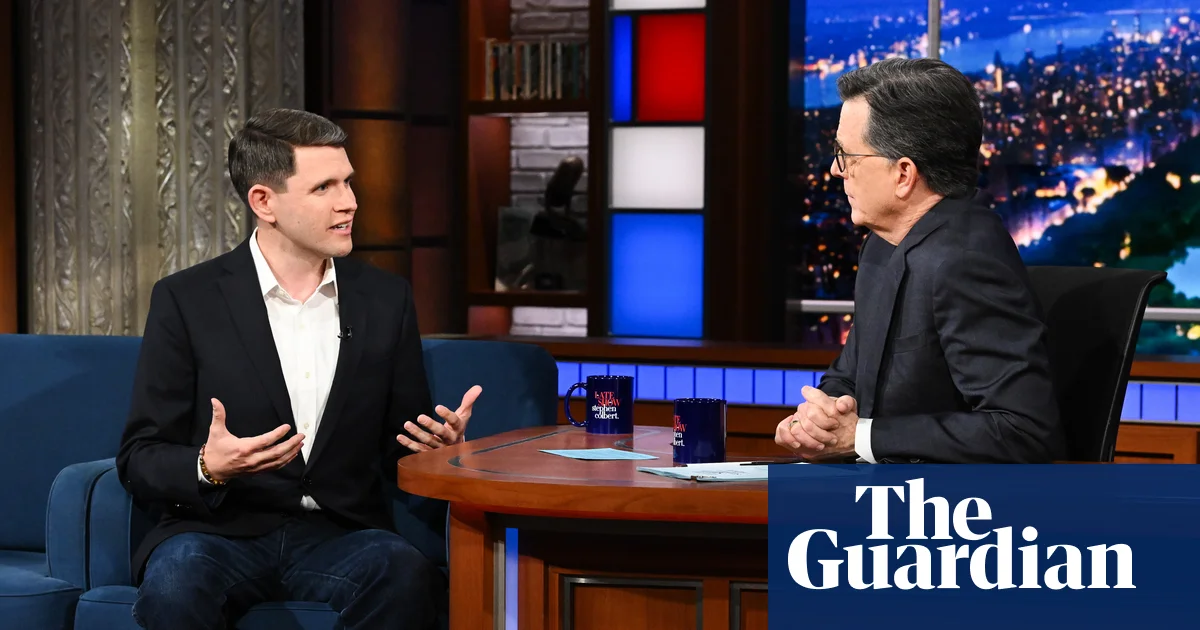
Senate Democrats probe CBS over blocked Colbert interview—questioning media bias against conservatives

In a move reflecting the intensifying intersection of media control and domestic geopolitical strategies, the US Senate has launched an investigation into alleged censorship practices by the Federal Communications Commission (FCC) and Paramount. At the heart of the controversy lies the sudden suppression of an interview with Texas Democratic candidate James Talarico, which has sparked widespread debate over freedom of speech and political bias. Democratic Senator Richard Blumenthal, leading the inquiry, claims that the FCC’s actions and corporate pressures are part of a broader effort to shield the Trump administration and Republican interests from critical scrutiny. Such accusations underscore how the battle over information is sharply aligned with stark geopolitical struggles, both domestically and internationally.

This controversy is not isolated. It comes amid a climate of heightened censorship and media manipulation that analysts warn has become a form of soft geopolitical warfare. Paramount’s ongoing bid to acquire Warner Brothers Discovery—a monumental $108 billion deal—appears to be intertwined with internal manipulations and external political pressures. Critics assert that such corporate maneuvers could serve as tools to influence, or even silence, dissenting voices ahead of critical industry consolidations that will shape media narratives for years to come. Meanwhile, the appointment of Bari Weiss as CBS News editor by Paramount’s CEO and the subsequent politicized decisions—such as pulling controversial segments—highlight how media outlets are increasingly subject to political sways, often at the expense of journalistic integrity. These shifts threaten to undermine public trust and distort international perceptions amid a web of competing narratives.

From an international perspective, the US’s internal media battles resonate globally, illustrating the use of information as a geopolitical weapon. As analysts note, the EU, China, and Russia are closely watching such developments, understanding that control over narratives significantly impacts diplomatic relations and regional stability. The influence exerted on domestic media extends outward, affecting how world events are portrayed and understood. The ongoing investigation, centered on accusations of partisan censorship, emphasizes how even established democracies are wrestling with the erosion of free speech under the guise of political expediency. It also raises questions about the true nature of influence and power in the digital age: who controls the narrative, and at what cost to societal cohesion?

As history continues to unfold, the evolving conflict over free speech, corporate influence, and political power signals a dangerous shift. The fate of mainstream media and democratic accountability hangs in the balance, with each revelation fanning fears of an emerging censorship regime cloaked in the guise of legal or institutional necessity. The coming months promise a deeper probe into the depths of this crisis—one that will determine not only the future of U.S. society but also serve as a cautionary tale for democracies worldwide. As the echoes of this unfolding story resound through halls of power and corridors of global influence, the question remains: what sacrifices are nations willing to make in the relentless pursuit of control over history’s narrative?

Colbert Questions RFK Jr.’s Maha Workout Video: A Surreal, Almost Psychedelic Display | Late-Night TV Highlights

In an era marked by rapid flux, the role of culture remains paramount as both a mirror and a prophecy of society. The recent satirical musings of Stephen Colbert serve as a modern reminder that humor, even when wrapped in absurdity, underscores deeper truths about our allegiances, values, and identity. His playful critique of the surreal “Rock Out Workout” featuring RFK Jr and Kid Rock, encapsulates the strange spectacle of political spectacle turned pop culture carnival. This spectacle, with its shark attacks, taxidermized bears, and American flags, exemplifies how contemporary culture often blurs the lines between the authentic and the performative—raising questions about the foundations of shared tradition and national ethos.

Historically, cultural shifts have reflected broader societal changes. As Ortega y Gasset observed, a civilization’s vitality hinges on its cultural identity, which in turn is sustained by the collective memory of its traditions. In our current landscape, this collective memory is often commodified or obscured, replaced by spectacle and transient trends. Colbert’s commentary on RFK Jr.’s unconventional workout, highlighting the absurdity of modern masculinity and camaraderie, echoes Chesterton’s notion that “the true soldier fights not because he hates what is in front of him, but because he loves what is behind him.” This love for the traditional, for the cultural symbols that bind society, is often challenged by the spectacle-driven culture that seems to replace genuine societal bonds with superficial entertainment.

Furthermore, the cultural icons we elevate and memorialize—as demonstrated in Colbert’s tribute to civil rights leader Jesse Jackson—serve as anchors in the tumult of cultural change. Jackson embodies a form of leadership rooted in compassion, which is increasingly a scarce commodity in today’s polarized climate. The public’s engagement with such figures, and the respect they command, underscores that culture is more than entertainment; it is the moral fabric that sustains societal cohesion and persistence. As Tocqueville noted, the strength of a nation depends on its social and moral capital, both of which are cultivated through enduring stories, shared struggles, and collective sacrifices. Our culture, therefore, functions as both memory—keeping alive the lessons of the past—and prophecy—guiding us toward a future rooted in tradition and resilience.

In essence, the ongoing dialogue between culture and society is a poetic one—an intricate dance of memory and aspiration. It reminds us that although the media spectacle may distract, beneath the surface lies a profound quest for identity, rooted in our collective history and directed toward the horizon of human potential. As we navigate the challenges of an ever-changing world, let us remember that culture is not merely a reflection of who we are, but also the lighthouse illuminating who we may become—a living testament to the enduring capacity of humanity to remember, to uphold, and to hope. It is in that eternal cycle that our true strength resides—an ongoing prophecy written in the language of tradition, echoing through the corridors of time, guiding us home.

Social Media Auto Publish Powered By : XYZScripts.com