Matox News

Truth Over Trends, always!

AI Toys for Kids Fail to Read Emotions, Raising Concerns About Safety and Trust

Emerging Risks of AI Toys in Shaping Childhood Experiences

Recent research conducted by Cambridge University has highlighted a significant and emerging concern within society: the potential for artificial intelligence (AI) toys to misinterpret children’s emotions. This groundbreaking study, the first of its kind, raises questions about the intersection of technology, childhood development, and the well-being of families in a rapidly digitizing world. As many households adopt AI-enabled toys for entertainment and education, understanding the social and emotional implications for our youngest generations becomes increasingly urgent.

At the core of this issue lies a profound societal challenge: how technological advancements are reshaping traditional familial dynamics and children’s emotional development. The research from Cambridge indicates that AI toys, equipped with emotion recognition capabilities, often struggle to accurately read children’s nuanced expressions. This misreading can lead to a cascade of adverse effects, from miscommunication to emotional frustration—particularly affecting families in underprivileged communities who may lack access to alternative resources for healthy emotional development.

The Societal Implications of Emotional Misreading

  • Impact on Family Relationships: When AI toys incorrectly interpret a child’s feelings, it can undermine trust and emotional security within the family unit. Children may feel misunderstood or invalidated, leading to broader issues of emotional literacy and human connection that sociologists like Arlie Hochschild have long warned about in the context of technology’s encroachment into personal spaces.
  • Educational Challenges: Schools increasingly incorporate AI tools in classrooms, aiming to foster personalized learning. Yet, if these tools are prone to emotional inaccuracies, students’ unique emotional needs could be overlooked, reducing the efficacy of these educational innovations.
  • Community and Cultural Tensions: As social commentators observe, technology often exacerbates existing social inequalities. Marginalized communities, less equipped to scrutinize or challenge unreliable AI, risk falling further behind, deepening societal divides over access to emotionally responsive, culturally sensitive education and support.

Historians like Yuval Noah Harari have raised concerns about humanity’s relationship with technology—warning that misplaced reliance may erode fundamental human skills, such as empathy and emotional recognition. The moral dilemma is clear: should we allow artificial intelligence to mediate the most intimate aspects of childhood experience?

Pathways Forward for Society and Policy

Addressing these complex issues requires a multipronged approach:

  • Stronger regulations around AI safety and emotional assessments must be implemented to protect children and families from potential harm.
  • Investment in community-based programs that reinforce human emotional skills, ensuring children do not grow up solely dependent on machines for social interaction.
  • Educational reforms that foster digital literacy among parents and educators, equipping them to critically assess the capabilities and limitations of AI tools used by children.

Ultimately, society faces a choice: continue to embrace technology at the risk of distorting essential human qualities, or actively shape a future where machines serve human needs, not replace them. As society grapples with these shadows of the digital age, hope remains rooted in our collective resolve to nurture resilient communities and uphold the dignity of genuine human connection. In the quiet moments of reflection, we are reminded that the true progression of society hinges on protecting its most vulnerable—our children—and ensuring that technological innovations serve the moral imperative of *humanity’s moral growth and social cohesion*.

Dennis Richardson Urges Action on Bondi Attack Failures, Quits Inquiry Over Urgency Concerns

In a world increasingly shaped by _u_shifting alliances and volatile conflicts_, the decisions made within national borders often have profound _geopolitical impact_. Recent events in Australia highlight the persistent challenge of balancing domestic security measures with the integrity of public trust and the swift response needed to combat evolving threats. Following the tragic Bondi terrorist attack_, the Australian government faces mounting pressure to reform its intelligence and law enforcement frameworks, with critics emphasizing that such _urgent_ reforms cannot be delayed by bureaucratic inertia.

At the heart of this debate is former spy chief Dennis Richardson, who has been vocal about the need for immediate action. Richardson underscores that _”you cannot leave matters that go to public safety till the end of the year,”_ warning that _any_ delay in implementing necessary recommendations could further endanger communities, particularly vulnerable groups that live in fear._ His resignation from the royal commission into antisemitism revealed internal disagreements over the timing of security reforms, sparking concerns that the traditional process of inquiry and response is too slow when faced with _imminent threats_. Analysts argue this reflects a broader international trend where national security is often compromised by lengthy investigations, thereby risking societal stability and the perception of a government’s resolve to protect its citizens.

The _investigative_ process was launched in the aftermath of the Bondi massacre, which shocked the world with its brutality. Yet, Richardson contends that the royal commission’s hearings, scheduled to begin only around the report’s interim phase in late April, are too late to effectively address _emerging_ threats. His criticism underscores a critical _turning point_ in how governments worldwide might need to reevaluate the timeline and scope of their security inquiries. While the Royal Commission aims to uphold *judicial integrity*, international authorities and security analysts warn that _“waiting until the end of the year could allow terrorists and extremist elements the time to regroup and strike again,”_ risking a cycle of tragedy and delayed accountability.

Utilizing insights from international agencies such as the United Nations and security analysts, experts emphasize that _”the world’s security landscape is more unpredictable than ever,”_ especially as _volatile conflicts in the Middle East, rising extremism in Europe, and regional power struggles in Asia cut across national borders_. The noose tightens as world powers grapple with _the dilemma_: how to safeguard national sovereignty and societal well-being without overstepping civil liberties. The debates in Australia serve as a warning to other nations—delay in addressing internal security failures could have devastating _geopolitical_ effects, exacerbating regional instability and empowering radical movements.

As Australia tries to reconcile the urgent need for security with political processes, the weight of history reminds us that _decisions made in the coming weeks will shape the course of national and international stability_. Richardson’s departure, while seemingly procedural, symbolizes a larger _battle_ over how governments respond to the exigencies of modern terrorism and societal fear. The unfolding story remains a stark reminder: in the annals of history, those who hesitate at pivotal moments may find themselves on the wrong side of the narrative, witnessing the slow unraveling of peace and order in a world torn by _conflict that waits for no one_.

US refueling plane crashes in Iraq, military confirms—raising serious concerns

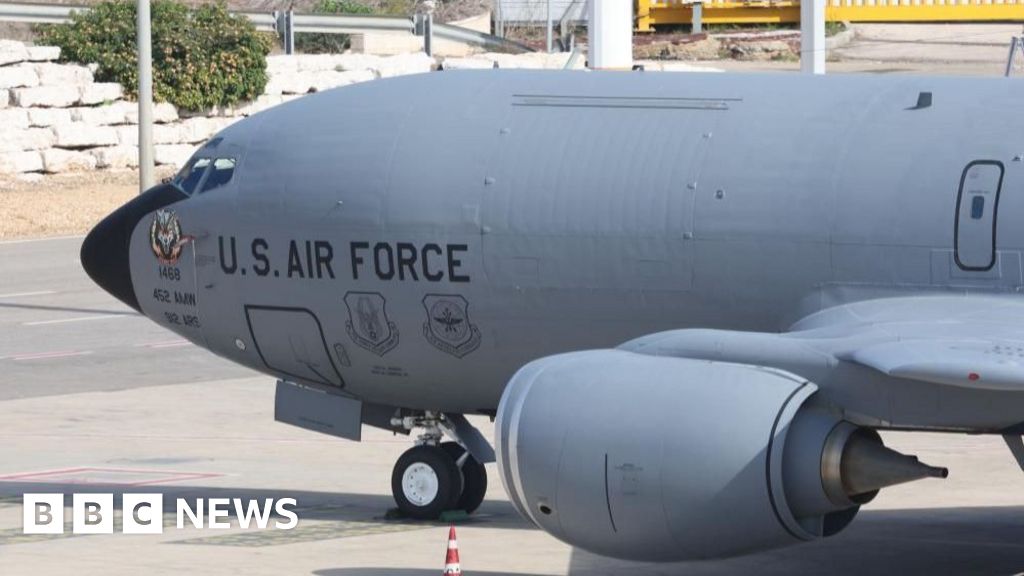
The US Central Command reported urgent rescue efforts underway after a refuelling aircraft went down over western Iraq. This incident, seemingly isolated on the surface, carries profound geopolitical implications at a time of ongoing regional instability and shifting international alliances. As rescue teams mobilize and investigations commence, analysts globally are scrutinizing the incident for underlying tensions that may go beyond a mere aviation mishap.

Historically, Iraq has been a focal point of international strategic interests, especially since the early 2000s. The recent incident highlights the persistent presence of the US military and its allies in the region—serving as both a deterrence against hostile actors and a reminder of unresolved conflicts. According to defence experts, such accidents often raise questions about the safety and preparedness of military systems operating in volatile environments. The incident underscores how recent shifts in regional alliances and increased military patrols—sometimes driven by covert geopolitical motives—are heightening the risk of mishaps that could escalate into larger crises.

International organizations and think tanks have weighed in, emphasizing that such accidents are rarely merely technical failures. Commentators like geopolitical analyst Dr. Maria Jensen warn that incidents involving US military assets in Iraq are potentially deliberate flashpoints. Furthermore, United Nations reports note that ongoing conflicts and unresolved territorial disputes continue to destabilize the region, with the risk of accidents escalating tensions among local factions, regional powers, and Western interests. Historical precedent reminds us that seemingly minor incidents can often serve as preludes to broader conflicts, especially when escalating narratives are already in motion.

As rescue operations unfold amidst a backdrop of regional unrest, the international community remains divided. While some nations call for restraint, others leverage incidents like this to justify increased military presence or covert operations. The incident portends a turning point—an inflection in the delicate balance of power—where even accidental mishaps might serve to justify stronger interventions or retaliatory actions. Such developments could profoundly impact not only Iraq and its neighboring countries but also the global geopolitical landscape, which remains on high alert for potential flashpoints.

Ultimately, the fate of the downed aircraft and the subsequent rescue efforts represent more than a military operation; they symbolize the fragile mosaic of modern geopolitics, where every incident can ripple across borders and ignite a chain of unpredictable consequences. As history continues to be written, the world watches with bated breath, knowing that within these events lie the seeds of future conflicts—reminding all of us that in the theater of international power, the line between accident and escalation is perilously thin.

Senegal Enacts Stricter Anti-Gay Laws Amid Rights Group Concerns

Recent warnings from international critics suggest a concerning trajectory where violence and fear are poised to escalate across multiple regions, threatening the fragile stability that many nations have worked decades to establish. Analysts warn that these developments could serve as a turning point, undermining not only regional security but also the foundational principles of equality and non-discrimination. Such concerns are particularly acute among defenders of democratic freedoms, who emphasize that the current geopolitical climate may significantly reverse progress made in human rights over recent years.

In the midst of ongoing conflicts, there is mounting evidence that internal and external pressures are pushing nations toward increased authoritarianism and repression. Top international organizations, including the United Nations, have issued cautious statements pointing out that rising violence often correlates with the suppression of civil liberties. Historically, sharp rises in violence tend to be accompanied by efforts to curtail dissent and marginalize vulnerable populations, thereby eroding the ideals of equality. Some political analysts, referencing historical parallels, warn that when governments prioritize security over individual rights, societal divisions deepen, and the stability they seek to maintain is often betrayed by the very methods deployed to achieve it.

Notably, critics argue that these trends are not isolated but indicative of a broader geopolitical shift. Countries caught between rising authoritarian regimes and global power struggles are increasingly resorting to coercive measures that threaten to destabilize entire regions. Efforts to suppress dissent and silence opposition voices are intensifying, with many nations adopting laws that undermine free media and judicial independence. These actions threaten to undo decades of progress toward inclusive governance. According to observers from the International Crisis Group, such shifts could precipitate regional conflicts, destabilize alliances, and fracture international cooperation, with far-reaching consequences for global peace and security.

Moreover, the erosion of principles of equality and non-discrimination complicates these already tense circumstances. Societies with entrenched divides—be they ethnic, religious, or socio-economic—are particularly vulnerable to the destabilizing impacts of violence and repression. Voices from historians such as Dr. Jonathan Marcus warn that history repeatedly demonstrates how the disavowal of fundamental human rights fuels cycles of violence that can spiral into full-scale upheaval. As nations grapple with these emergent threats, the question remains: how will the international community respond to safeguard the core values of freedom and justice, especially when those values are under assault?

Ultimately, these interconnected dynamics cast a long shadow over the future. The unfolding story of conflict, repression, and the retreat from universal rights is a stark reminder that history is perpetually in the making. Each decision taken—whether to capitulate to fear or uphold justice—will define the course of nations for generations to come. As the world watches on the brink of this tumult, the haunting realization persists: the struggle for peace and liberty is an enduring, often perilous journey, and the choices made today will echo through history’s halls as defining moments of our age.

Canada Police Probe Shots Fired at US Consulate in Toronto, Raising Safety Concerns

The world watched with growing alarm as Norwegian authorities launched a comprehensive investigation into a violent explosion outside the US embassy in Oslo on Sunday. While preliminary reports suggest that the incident was targeted, the geopolitical implications extend far beyond Norway’s borders, resonating across Western alliances and challenging the fragile stability of the European security landscape.

Norwegian police and security agencies responded swiftly, cordoning off the area and deploying bomb squads to analyze the device responsible for the blast. The incident has ignited a wave of speculation among international analysts about potential motives—ranging from espionage to terrorism. As authorities continue their probe, officials from the United States have called for calm, emphasizing their commitment to safety and security, while also urging caution in interpreting the attack’s significance. However, the incident underscores a disturbing shift—an escalation in threats targeting diplomatic missions in Europe, a region increasingly vulnerable amid global tensions.

Historians and geopolitical analysts point to this event as a turning point revealing the underlying fragility within the European security architecture. From the perspective of global institutions such as NATO, the incident signals a persistence of threats that threaten to undermine years of diplomatic progress and regional stability. Furthermore, specialists warn that such attacks can serve as catalysts for reliable allies to reconsider their security postures and diplomatic strategies. These developments place countries like NORWAY and the US at a crossroads—balancing the imperative of protecting sovereignty with the need for international cooperation in a rapidly shifting geopolitical environment.

The geopolitical impact of this event extends into the broader debate over security commitments and the observance of global peace treaties. With Russia and China monitoring Western responses, international organizations such as the United Nations have issued cautious statements emphasizing the need for vigilance and dialogue. Yet, critics argue that these diplomatic responses may be insufficient to deter further escalation. As countries bolster their defenses and rethink alliances, the incident serves as a stark reminder of the enduring contest for dominance in international affairs—a contest that could very well define the future trajectory of global order.

As the investigation continues and political leaders weigh their next moves, the world holds its breath. What emerges from this incident will undoubtedly shape the trajectory of international diplomacy, security, and alliances for years to come. In a period marked by unprecedented change and global uncertainty, history remains a relentless force, unfolding with each decision and confrontation—casting long shadows over the fragile fabric of peace, and leaving nations to confront the enduring question: Are we truly prepared for the storms on the horizon?

Princess Eugenie resigns from anti-slavery charity role amidst growing concerns

In a move that signals shifting tides in the delicate arena of international reputation and moral authority, Princess Eugenie has stepped down as patron of Anti-Slavery International, the oldest human rights organization founded in 1839. Her departure, occurring amid the ongoing fallout from the Jeffrey Epstein scandal, underscores how private scandals within elite circles can ripple across societal and geopolitical landscapes. Although no evidence links her personally to Epstein’s criminal network, her association with figures like her father, Prince Andrew, and her family’s connections to Epstein have become a focal point in mounting public concern over elite complicity in international trafficking. International analysts emphasize that such scandals threaten to erode the moral authority of monarchies and diplomatic institutions, especially as global decision-making increasingly hinges on the moral credibility of prominent figures.

Moreover, the saga exposes profound questions about international influence and accountability. The revelations extracted from U.S. Department of Justice files and emails link Epstein’s network to powerful individuals worldwide, with allegations suggesting that Prince Andrew may have been involved in illicit activities. Although he denies any wrongdoing, the allegations have prompted calls by historians and legal experts for greater transparency among global elites to combat deep-rooted corruption. The unfolding scandal threatens to undermine alliances rooted in mutual prestige, especially as U.S. authorities intensify their investigations into Epstein’s extensive trafficking ring. Such developments highlight the fragility of diplomatic trust that governments and royal families have built over decades on shared interests and mutual respect.

From a geopolitical perspective, the scandal’s fallout converges with broader issues of sovereignty, transparency, and societal integrity. As international organizations and Western governments face the difficult task of balancing diplomatic diplomacy with the pursuit of justice, nations are forced to confront their own complicity and past failures. The public exposure of elite misconduct serves as a clarion call for radical reforms in how societies oversee their most powerful leaders, resonating with the warnings of international watchdogs like the United Nations. These revelations threaten to embolden populist movements worldwide, demanding accountability and transparency, but also risking destabilization of long-standing diplomatic ties if governments are perceived as shielding their elites from justice.

As the dust settles, the weight of history’s unfolding narrative leaves the world at a crossroads. The unraveling of Epstein’s network and the profound implications for royal families, diplomatic ties, and societal morality remind us that no institution—regardless of its stature—is immune to the tides of justice and truth. The decisions made in this epoch will likely reverberate for decades, shaping how future generations view authority, morality, and the global fight against modern slavery and exploitation. Humanity now stands at a pivotal moment—whether to allow the dark shadows of the past to continue haunting the present or to forge a future grounded in unyielding transparency and moral resolve. The pages of history are turning, and the world must decide: will justice be the legacy we leave behind?

War sparks clash over UK bases in Cyprus—youth voice concerns

The recent drone strike targeting the RAF Akrotiri airbase on the island of Cyprus has reignited longstanding debates over foreign military presence and sovereignty in the Eastern Mediterranean. Cypriot protesters have rallied under the banner “British Bases Out”, symbolizing a growing national movement demanding the removal of British military installations from the island. This incident not only underscores persistent regional security challenges but also exemplifies the broader geopolitical tension that continues to define this strategically vital zone.

The attack on RAF Akrotiri, a key British military outpost established during colonial times, rapidly drew international attention. Analysts and security experts have pointed out that while the drone strike was reportedly carried out by unknown actors, it highlights the vulnerabilities of foreign military bases situated in geopolitically contentious areas. Historically, Cyprus has been a focal point of regional rivalry among Greece, Turkey, and broader NATO interests. The island’s divided status—split between the Greek Cypriot south and Turkish-occupied north—has compounded these tensions, positioning Akrotiri as both a strategic asset and potential liability in the ongoing power struggles.

Global institutions such as NATO and the United Nations have expressed concern, with some calling for de-escalation and diplomatic negotiations. However, critics argue these calls are insufficient given the shifting strategies of regional and global powers. Historians like David Fromkin and Michael Cox have long emphasized that colonial-era military bases often act as flashpoints, symbolizing unresolved conflicts inherited from the past. The drone attack underscores how such remnants of the colonial era can become focal points in contemporary conflicts, affecting the lives of ordinary Cypriots and the regional balance of power alike. As the situation evolves, many see this as a stern warning that old security arrangements might no longer suffice in an era of rapid technological change and asymmetrical warfare.

  • Demonstrators in Cyprus are calling for the withdrawal of British military presence, citing sovereignty concerns and the risk of becoming a target in regional conflicts.
  • The incident has prompted renewed debates within NATO about the presence of non-member military bases in volatile zones.
  • Regional leaders, including the Turkish and Greek governments, continue to jostle over influence and security guarantees in the area.
  • International organizations warn that destabilization could spill over, threatening broader Mediterranean stability.

The geopolitical impact extends far beyond Cyprus itself. As analysts observe, Britain’s military footprint in the Mediterranean acts as a critical hinge in NATO’s strategic calculations. The growing calls for the closure or relocation of British bases in Cyprus reflect wider American and European concerns over militarized zones that are increasingly viewed as points of vulnerability rather than power projection. From the perspective of many young nationalist movements, the symbols of colonial legacy must be dismantled to forge a future rooted in sovereignty and regional stability. Yet, powerful international interests remain entrenched, complicating efforts to chart a clear path forward.

As the dust settles from this recent clash, the question lingers: will the winds of change finally sweep away the old colonial architecture of security, or will entrenched interests and geopolitical realities prolong this era of tension? History now watches—and waits—as this small but significant island continues to serve as a crucible for the struggles between past legacies and future aspirations. The unfolding story in Cyprus stands as a stark reminder that the true weight of history often rests in the choices of today, shaping the destiny of many nations yet to be written.

Government clamps down on study visas from four countries amid abuse concerns

Government Ends Study Visas for Several Countries Amid Concerns of Abuse

In a decisive move, the government has announced the termination of study visas for nationals from Afghanistan, Cameroon, Myanmar, and Sudan. This policy shift is ostensibly driven by concerns over alleged abuses that compromise the integrity of the immigration system. While such measures may appear necessary from a security perspective, they raise profound questions about how social issues intertwine with family stability, educational access, and community cohesion.

Critics argue that these policy decisions disproportionately impact families and young people. Many of those affected are students pursuing education as a pathway to brighter futures, yet face potential barriers that threaten their aspirations. For families, such policies can lead to fragmentation and uncertainty. Children and youth, already navigating the challenges of adolescence, may find their educational journeys disrupted or halted altogether. These students serve as living bridges between cultures, fostering understanding and diversity within our communities. When they are pushed away, it is not just individuals at risk but the social fabric that suffers.

Historically, social commentators such as sociologist James Coleman have emphasized the role of inclusive education in promoting social cohesion and economic development. By restricting access based on national origin, society risks deepening divisions that threaten to erode the foundational values of openness and fairness. Additionally, the ripple effects extend beyond individual students, impacting local communities, educational institutions, and the workforce of tomorrow. These youthful populations bring vitality but also require the support of effective policies that embrace inclusion, not exclusion.

  • Policy implementations that target specific national groups can lead to social marginalization and rise in community tensions.
  • Families may face financial hardship and emotional strain due to disrupted educational pathways.
  • Educational institutions lose diverse perspectives, which are essential for fostering a globalized learning environment.
  • Communities may become more insular if policies appear to discriminate based on ethnicity or nationality.

The challenge lies in balancing security concerns with the ethical responsibility to uphold human rights and promote societal integration. Many social commentators, including historians like Howard Zinn, have argued that history shows us the importance of compassionate policies that recognize the inherent dignity of every individual. Now, more than ever, it is crucial to develop solutions that address abuse without resorting to blanket bans that stigmatize entire communities.

Ultimately, society faces a critical crossroads. As families struggle with uncertainty, and educational institutions grapple with maintaining diverse environments, the hope rests in building bridges rather than walls. The strength of a society is measured by its capacity for resilience and remembrance of its moral commitments to human dignity. Turning adversity into an opportunity for reform, communities can forge a future where education becomes a unifying force that elevates rather than divides. As reflective social thinkers remind us, it is through understanding and compassion that society finds the true blueprint for lasting progress.

Iran’s retaliation sparks concerns over US air defenses—Youth worried about national security

The recent missile attack by Iran on a US Navy base in Bahrain has sent shockwaves across the geopolitical landscape of the Middle East. An targeted assault on a strategic military asset underscores the ongoing tension in a region where diplomacy often teeters on the brink of conflict. While initial reports suggest limited casualties, the implications for U.S. regional influence and alliances are profound. Many analysts interpret this event as a stark warning from Tehran, signaling their readiness to challenge U.S. military dominance in the Persian Gulf, a vital artery for global oil supplies.

The attack stirs echoes of past confrontations, reigniting fears that Iran might be escalating efforts to leverage military force as a means of negotiating concessions over its nuclear program and regional influence. Historically, Iran has oscillated between negotiations and provocative actions, but this strike marks a noticeable shift towards assertiveness. According to international security experts and reports from organizations such as the International Institute for Strategic Studies, Iran’s actions exacerbate regional instability, with potential consequences radiating beyond the Gulf. Smaller Gulf states, deeply intertwined with U.S. military presence and economic interests, now grapple with the torment of balancing diplomatic ties against the threat of further escalations.

From a geopolitical impact, the attack illustrates a pivotal moment where regional and global powers must reassess their strategies. Washington faces mounting pressure to demonstrate resolve, potentially through military reinforcement or diplomatic overtures aimed at de-escalation. Meanwhile, China and Russia continue to watch intently, capitalizing on Washington’s perceived distraction to strengthen their influence across the Middle East. The incident underscores a shifting international landscape, where traditional alliances are tested, and the risk of broader regional conflicts increases. The latest developments have also prompted renewed debate within the United Nations and among global watchdogs, emphasizing the urgency of diplomatic solutions over military posturing.

Historians and analysts warn that choices made in these critical moments will define the future of the region and the stability of global energy markets. The strike on Bahrain, a cornerstone of U.S. military posture in the Middle East, raises fundamental questions about the balance of power, sovereignty, and the long-term strategy for peace in a volatile zone. As international actors scramble to respond, the overarching narrative remains fraught with uncertainty. This incident could epitomize a new chapter in a protracted contest—one that could either lead toward negotiation or plunge the region into years of instability, with consequences rippling around the globe. History’s pen has been stationary for only a moment; the story is still being written, and the weight of its next page may determine the course of nations for decades to come.

Rhode Island ice rink shooting claims two lives, raising serious concerns

Mass Shooting at Pawtucket Ice Rink: A Reflection of America’s Deepening Crisis

In what marks yet another tragic chapter in the ongoing crisis of domestic gun violence, a mass shooting erupted at an indoor ice rink in Pawtucket, Rhode Island, highlighting the fragility of safety even in community sports environments. According to reports, at least two individuals lost their lives—one confirmed dead at the scene and another victim succumbing to injuries in the hospital. The suspect, who opened fire during a youth hockey game, was ultimately killed by law enforcement, leaving a chilling reminder of how societal tensions continue to spill into communities.

The incident, which unfolded during a boys’ hockey match between local schools, underscores a disturbing trend of violence infiltrating settings traditionally associated with innocence and development. Eyewitness accounts indicate that gunfire erupted from behind the stands, with reports noting that the shooter wielded at least two weapons. In a display of quick-thinking and civic responsibility, a local father is credited with heroism—disarming the attacker, thereby preventing further loss of life, amidst the chaos. Such acts of bravery are notable amid the rising toll of firearm-related violence, which remains a divisive and intractable issue across American society.

The geopolitical impact of this domestic tragedy extends far beyond the borders of Rhode Island. As America grapples with this recurring crisis, international observers and analysts are noting a divergence within American society—particularly among younger generations—on issues of gun rights and safety policies. Prominent political figures and organizations such as the Gun Violence Archive and the Brady Campaign continue to call for stronger gun control measures, yet legislative stagnation persists, fueling concerns of vulnerability and societal decay. The imagery of school and community shootings is becoming a grim symbol of America’s failure to balance individual rights with collective safety, affecting the nation’s global reputation and internal cohesion.

Historians and security analysts warn that such acts of violence are symptomatic of deeper societal and political fissures. Some experts suggest that without comprehensive reform—contrasted starkly against the constitutional protections revered by many—America risks continued internal destabilization. The international community, especially in regions dealing with conflicts or authoritarian regimes, views America’s internal convulsions with a mixture of concern and skepticism. Their latest reports underscore how internal strife at home can erode America’s moral authority on the world stage, weakening the very institutions that undergird international stability and democracy.

As Joe Biden and his administration face mounting calls for intervention, the debate sharpens around the question of how nations adapt to a society increasingly fractured by violence. Will policy shifts come, or will partisan discord deepen? The image of a hero father disarming a shooter amid tragedy exemplifies the unpredictable human toll of this crisis—a reminder that in times of chaos, action and resilience go hand in hand. Still, the specter of gun violence persists as a shadow over the future, challenging policymakers and society alike to confront uncomfortable truths.

In this unfolding narrative of crisis and response, the significance reaches beyond a lone act of violence in Pawtucket. It embodies the broader struggle for nationwide cohesion, security, and identity. The coming months will reveal whether America will choose to address its internal fractures or continue down a path where history’s harrowing lessons are repeated. The world watches as the story of this small town’s tragedy becomes a chapter in an ongoing saga of societal upheaval—a testament to the fact that in the grand chessboard of global power, the stability of its individual nations remains the foundation upon which world order is built. The question remains: how will history judge this moment? And how much longer before similar tragedies echo across borders, rewriting the global narrative once again?

Social Media Auto Publish Powered By : XYZScripts.com