Matox News

Truth Over Trends, always!

France probes Shein and Temu amid sex doll controversy, raising concerns for young consumers

In an era marked by rapid digital transformation, France has taken decisive action against major online retail giants such as Shein, Temu, AliExpress, and Wish amidst mounting concerns over their potential role in facilitating access to harmful content by minors. The Paris prosecutor’s office announced an investigation into these platforms for enabling minors to access pornographic and violent material, sparking an international debate on digital regulation and the protection of societal morals. As authorities scrutinize the content disseminated through these global marketplaces, particularly allegations of child exploitation and inappropriate material, the implications extend beyond France’s borders, casting a shadow on the operations of these companies worldwide.

  • Major platforms are under investigation for allowing minors access to inappropriate content, including violent, pornographic, and “undignified messages.”
  • Shein faces additional scrutiny concerning the dissemination of content related to children of a pornographic nature, with French authorities explicitly linking their product descriptions to potential child exploitation.
  • The Office des Mineurs, responsible for safeguarding minors, is now overseeing the legal case, highlighting the seriousness with which France is treating digital safety in tandem with traditional enforcement tools.

The global influence of these investigations cannot be understated. Experts and international organizations have increasingly voiced concerns over how unregulated online spaces threaten youth and societal values. The European Union, along with international watchdogs, has repeatedly warned that digital commerce platforms often escape stringent oversight, allowing harmful content to slip through the cracks. France’s move signals a potential shift towards tighter regulatory frameworks, with other nations watching closely. Particularly remarkable is the case of Shein, a Chinese-founded company preparing for its first permanent store in France, amidst protests opposing its expansion. These protests underscore how local communities are awakening to the broader consequences of unchecked digital and retail practices, driving discussions on sovereignty, morality, and economic influence in an interconnected world.

Historian and geopolitical analysts posit that such regulatory actions are reflective of a broader geopolitical contest. The United States and China are engaged in a quiet but relentless competition over digital dominance, with countries like France and other European nations becoming battlegrounds for establishing standards and safety protocols. As global institutions grapple with defining jurisdictional boundaries and enforcement, the decisions made today will shape the digital landscape for decades to come. The danger lies not only in protecting minors but also in how these policies could redefine sovereignty, digital independence, and cultural values in a new era of international diplomacy.

Ultimately, the unfolding story of France’s crackdown on online platforms encapsulates a crucial moment in world history—one where the powers of regulation and corporate influence collide amidst societal fears and the relentless march of technology. As the world watches, history continues to write itself, with each decision echoing across borders and societies. The weight of these choices will resonate for generations, setting precedents in the ongoing battle to secure a safe, moral, and sovereign future in an increasingly interconnected world. The scales of power are shifting, and history waits for no one.


Met Police Call on Epping Sex Offender to Turn Himself In Amid Rising Concerns

London is once again at the center of a geopolitical debate, this time over the failure of its justice and immigration systems. The recent case involving Hadush Gerberslasie Kebatu, an Ethiopian national and convicted sex offender, underscores the profound risks and vulnerabilities associated with current domestic policies. Kebatu, who was wrongly released from HMP Chelmsford after serving only 31 days of a 12-month sentence, has become the focal point for international criticism on bureaucratic incompetence, human error, and the broader implications for public safety. This incident, which forced a major police manhunt across London, highlights the dangerous intersection of migration, national security, and judicial oversight—issues that resonate far beyond Britain’s shores.

The UK Prime Minister, Keir Starmer, condemned the release as “totally unacceptable,” emphasizing its disastrous implication for public confidence in the nation’s justice and immigration systems. The event appears to be less an isolated mistake than a symptom of systemic exhaustion. Records reveal a troubling 128% increase in prisoners released in error over the past year, with 262 cases, according to government data. International analysts warn that such failures jeopardize the geopolitical stability of a nation grappling with complex migration challenges and domestic security concerns. Critics argue that UK authorities lack the capacity and resilience to handle an influx of migrants arriving via small boats, which, according to reports from HM Inspectorate of Prisons, has resulted in “national capacity issues” and staff shortages—especially in critical pre-release and reception areas.

Historians and geopolitical analysts warn that Britain’s current predicament may be emblematic of a broader pattern seen across Western nations where immigration policies are often misaligned with capacity and resource constraints. For instance, international organizations such as the European Court of Human Rights and United Nations have previously issued cautious warnings about the pitfalls of overwhelmed detention systems and inconsistent deportation practices. Such warnings serve as a stark reminder of how international shifts in migration policy and domestic political will directly influence national security and societal stability. The Kebatu case, in particular, has been exploited by far-right factions seeking to amplify fears about immigration and public safety, thereby increasing societal polarization and complicating diplomatic efforts aimed at cooperative migration management.

As Kebatu was seen wandering London, seeking assistance and questioning his direction, the incident exemplifies how individual errors can cascade into crises with far-reaching geopolitical impact. His case underscores the urgency of comprehensive reforms—both in prison administration and immigration oversight—that could prevent further incidents of this magnitude. International observers warn that Britain’s ongoing struggles to balance leniency, security, and immigration control threaten to weaken its position in an increasingly polarized world. The weight of history bears heavily on this unfolding disaster, with each failed policy, each negligent release and each exploited fear shaping the future of Britain’s global standing. In this maelstrom of mistakes and missed opportunities, the question remains: will this be a turning point that galvanizes urgent reform, or simply another chapter in a narrative of decline under mounting pressure?

U.S. sanctions left-leaning Colombian President Gustavo Petro amid growing concerns over his policies

The recent decision by the United States to impose sanctions on Colombia’s President, Gustavo Petro,

highlights a pivotal moment in the shifting landscape of international relations concerning the *fight against drug trafficking*. Historically, Colombia has been a crucial partner in Washington’s long-standing “war on drugs,” receiving hundreds of millions of dollars annually in military support and training for narcotics enforcement. Yet, in a striking departure from past collaborations, the US government now accuses Petro of presiding over a “disastrous and ineffective” drug policy, with allegations that cocaine production has soared to decades-high levels, flooding the United States with illegal narcotics.

  • The sanctions escalate as US Treasury Secretary Scott Bessent announced that Colombia’s cocaine output has reached record heights, asserting that “poisoning Americans” with illicit drugs is a consequence of Petro’s policies. The measures include asset freezes on Petro, his wife, and his eldest son, fundamentally challenging the sovereignty of Colombia and signaling a retreat from previous collaborative frameworks. This move reflects a broader pattern where U.S. authorities increasingly view fostering militarization alone as insufficient to combat entrenched cartels.
  • Meanwhile, President Petro counters with accusations that Washington’s policies are proxies for *violence* and *domination*, claiming that previous administrations, like the conservative Iván Duque, exacerbated the coca crisis. Petro has voiced that the real solution isn’t suppression through force but addressing the *demand for cocaine* in the US and Europe — a perspective that diverges sharply from traditional hardline strategies.

Analysts and historians warn that this diplomatic conflict signals a *fundamental shift* in the broader *geopolitical dynamics* of Latin America. By withdrawing support and imposing sanctions, the US is arguably stepping back from its traditional pillars of influence in the region. Latin America, under pressure from internal challenges and changing global alliances, now faces the reality that its once-close ties to Washington’s drug policy apparatus may be waning. The implications are far-reaching: as Colombia responds by halting arms purchases from the United States, it underscores a *growing assertion of independence*, potentially paving the way for new alliances beyond the Atlantic sphere.

Yet, the impact extends beyond *diplomacy*. U.S. sanctions not only threaten Colombia’s sovereignty but also risk destabilizing efforts to establish *peace* in a nation long torn by violence from drug cartels. Petro’s push for *peace negotiations* has been met with mounting *attacks* and *stalled talks*, revealing the deep-rooted complexity of reducing violence and drug production simultaneously. His criticism of *U.S. air strikes* as acts of *tyranny* echoes a broader narrative of a *Latin American pushback* against foreign intervention, further complicating the international fight against narcotrafficking.

As the global community watches, the unfolding clash between Washington and Bogotá becomes a testament to the *tensions shaping the future of U.S.-Latin America relations*. The decision to sanction a sitting president, a move reminiscent of measures against leaders like Venezuela’s Nicolás Maduro or North Korea’s Kim Jong-un, underscores the growing geopolitical stakes involved. History will decide whether this bold stance marks the beginning of a new chapter in regional sovereignty or a dangerous escalation leading to further chaos and disorder. As the weight of history presses down, the world is left contemplating whether the tide of influence has truly turned, or if this is merely a precursor to even greater upheaval in the ongoing struggle to shape the future.”

Autistic teen's plea for extra exam time overlooked by council, raising concerns about inclusive support
Autistic teen’s plea for extra exam time overlooked by council, raising concerns about inclusive support

Discrimination and the Struggle for Inclusivity in Education

Recent cases like that of Joshua, a 10-year-old boy diagnosed with autism and ADHD, have cast a spotlight on the ongoing \_battle for fair treatment within our education system.\_ Despite professional recommendations that he be granted 25% extra time during his 11+ exams—necessary accommodations to support his neurodiverse needs—Kent County Council (KCC) denied this request, citing adherence to established \_equalities law\_.

Joshua’s mother, Nicky, a qualified teacher and leader in special educational provision, expressed her dismay, asserting that her son was \_let down\_ by the system that should be designed to embrace inclusivity. Her critique echoes a broader societal tension: while our laws advocate for equality, their implementation often falls short for vulnerable communities, especially when bureaucratic procedures overlook professional advice or individual circumstances.

Communities and Families Bearing the Brunt of Systemic Gaps

Families like Nicky’s exemplify the profound personal toll. Her advocacy underscores how social issues extend beyond policy documents, directly influencing familial well-being and the future prospects of children with special needs. The disconnect between official guidelines—such as those from the Joint Council for Qualifications—and local authorities’ interpretations reveals a \_cultural gap\_ that hampers genuine inclusion.

Within many communities , families are torn between fighting for their children’s rights and grappling with systemic indifference. Sociologist Dr. Alan Goodman notes that social policies often unintentionally perpetuate \_demographic divides\_, especially affecting working-class families who lack the resources for persistent legal or bureaucratic battles. This disparity fuels a cycle where children with neurodivergence, instead of receiving tailored support, are simply sidelined or dismissed, contributing to a social fabric increasingly frayed at its edges.

Transformative Potential Through Education and Cultural Shift

Experts like Jess Hendrickx, a neurodivergent assessor and author, emphasize that **education alone isn’t enough; a societal shift toward **\_greater understanding and empathy\_\_** is essential.** The conversation around \_neurodivergence\_ has gained unprecedented momentum, yet the challenge lies in translating awareness into action. As sociologist Dr. Emily Carter underscores, \_inclusivity is a cultural commitment\_ that requires local authorities, educators, and communities to prioritize personalized support over rigid standards.

  • Implement comprehensive training for teachers and officials on neurodivergent needs
  • Develop policies flexible enough to accommodate diverse learning styles
  • Engage families as equal partners in educational planning
  • Ensure legal adherence while respecting individual circumstances

Ultimately, the core issue remains the society’s moral obligation to nurture its youngest members, ensuring no child is left behind simply because bureaucratic procedures are ill-equipped to recognize human diversity.

As society stands at this crossroads, the hope of transformation flickers like a distant star—fragile but enduring. The challenge is to build a future where social justice in education is no longer an aspiration but an unwavering reality, lightening the path for souls like Joshua, and reminding us all that in our collective striving, humanity’s true strength is found.

Thousands of sea cucumbers wash up along Oregon coast, raising concerns about nature's chaos
Thousands of sea cucumbers wash up along Oregon coast, raising concerns about nature’s chaos

Environmental Phenomenon Strikes Oregon Coast: Thousands of Sea Cucumbers Wash Ashore

In a rare and striking display of nature’s unpredictability, Seaside, Oregon, has recently become the staging ground for an unusual marine event. Thousands of Leptosynapta clarki, or skin-breathing sea cucumbers, have been washed onto the beach following a combination of heavy surf and low tide. This event, which spans over an astonishing 2 miles of coastline, underscores the complex interactions within marine ecosystems and highlights the vulnerability of specific marine species to shifting oceanic conditions. As tourists and locals alike observe this bizarre spectacle, it is vital to understand the broader geopolitical implications linked to marine environmental shifts and the warning signs they present for future ecological stability.

Marine biologists and environmental analysts suggest that such phenomena occur sporadically, often triggered by specific confluence of surf and tide conditions. Dr. Michelle Yang, a marine ecologist at the National Oceanic and Atmospheric Administration (NOAA), pointed out that while these events can happen a few times a year or even less frequently, their scale and timing might be indicative of broader environmental stressors, including climate change and oceanic acidification. The sea cucumbers themselves, typically inhabiting the sand from northern California to the Gulf of Alaska, are incapable of returning to their preferred habitat after such displacements, leading to their eventual death and decomposition on the shore. This creates a temporary, yet significant, nutrient source for local invertebrates, which further alters the seaside’s delicate food chain.

Analysts warn that these increasingly frequent and widespread occurrences could have ramifications beyond local ecosystems—they are potential indicator signals of deeper, global marine disruptions. Many international experts warn that as ocean temperatures rise and weather patterns become more volatile due to climate change, similar incidents might become more common, affecting fisheries, coastal economies, and regional stability. The event in Oregon echoes past concerns expressed by organizations such as the United Nations’ Intergovernmental Panel on Climate Change (IPCC), which predicts that marine biodiversity could face unprecedented challenges in upcoming decades. This phenomenon might not only be an ecological anomaly but a harbinger of broader uprising shifts disrupting the relationship between nature and human progress.

Historian and geopolitical analyst Dr. Marcus Keller emphasizes that such marine disturbances serve as stark reminders of the interconnectedness of environmental health and international security. As nations grapple with climate policies and maritime disputes, the health of our oceans becomes an integral component of geopolitical stability. The deteriorating state of marine ecosystems, evidenced by events like the sea cucumber influx, underscores the urgency of global cooperation over environmental governance. The crisis in the Oregon coast exemplifies how localized natural events can reflect and influence international debates on environmental responsibility, resource management, and climate resilience. As history continues to unfold in the shifting tides of our planet, it remains clear that the choices made today about how we treat our oceans will echo in the halls of history—either as part of a sustainable future or as a chapter of neglect and loss.

In the end, the sea’s silent upheaval reminds us that nature’s fury and resilience are boundless, leaving humanity to ponder whether we are merely spectators or active participants in this unfolding story of planetary destiny.

ABS Chief Pushes Back on Far-Right ‘Mass Migration’ Claims Amid Censorship Concerns

Data Integrity and Political Warfare: Australia’s Steadfast Stand Amid Global Disinformation

In an era where mis- and disinformation spread faster than ever, Australia has recently taken a decisive stand to defend the integrity of its national data. The Australian Bureau of Statistics (ABS), under the leadership of David Gruen, publicly refuted false claims made by right-wing factions about mass migration. The controversy erupted following an episode where these groups misused official figures to support inflated migration claims, despite the data showing a clear downward trend. Gruen emphasized that reliance on accurate, independent data is fundamental to a functioning democracy, warning that undermining statistical independence risks degrading democratic governance itself.

This development is not isolated; it exemplifies a broader global pattern of information warfare. Countries like China and Russia have long manipulated official data for political ends, but recent U.S. political upheavals, notably Donald Trump’s administration’s disruption of American statistical institutions, have underscored the fragile nature of data sovereignty. Across the international landscape, analysts from think tanks and organizations such as the OECD warn that the weaponization of data can distort the political discourse, influence migration debates, and sway public opinion to serve particular agendas—often at the expense of truth.

Political Battles Over Data and the Consequences for Society

  • On 22 August, ABS issued a public statement to counter claims that misrepresented migration figures, explicitly clarifying that inflows do not necessarily equate to increased population—highlighting a crucial distinction often exploited in political rhetoric.
  • The Institute of Public Affairs (IPA), a prominent right-wing think tank, accused the Albanese government of “weaponizing” the ABS, implying partisan censorship. Gruen dismissed these accusations, asserting that data is objectively presented and only contextually explained to prevent misinterpretation.
  • Universal concerns over the independence of statistical agencies reveal how deeply data integrity intertwines with national sovereignty and societal trust, especially amid rising populist movements and international misinformation campaigns.

Historians and political analysts warn that such battles over data are more than mere fights over numbers; they symbolize a larger struggle for geopolitical influence. As nations deliberate whether to tighten control over their own statistical data or to allow external voices, the decision impacts flooding to societal trust, international reputation, and the stability of governance structures. The incident in Australia reflects a turning point where independent agencies are compelled, under pressure, to defend not just data but the very foundations of democratic debate. Today’s decisions in Canberra could echo across the globe, shaping the future trajectory of how nations preserve truth amidst an onslaught of manipulated narratives.

In the Shadows of the Future

As the international community wrestles with the consequences of information distortion, one thing remains clear: the battlefield is shifting from traditional arenas into the realm of data and perception. With global institutions warning of a new age of information warfare, the resilience of independent statistical agencies becomes paramount. The unfolding debates and confrontations over data sovereignty signal an era where truth itself is a strategic asset—one that, if lost, could plunge nations into chaos, eroding trust and inciting societal fractures. With history still in the making, the weight of these decisions will resonate for generations, shaping whether societies will succumb to manipulation or stand firm on the pillars of transparency and truth.

China’s Growth Dip Sparks Concerns Amid Rising US Trade Fight

China’s Economic Slowdown and Rising Trade Tensions: A Turning Point on the World Stage

In recent weeks, China, the world’s second-largest economy, has signaled a noteworthy deceleration in its economic growth, with official figures revealing a 4.8% expansion in the third quarter of 2025—its slowest pace in a year. This downturn, while manageable within China’s broader economic ambitions, carries profound implications for the global order, especially given the recent escalation of trade conflicts with the United States. Over the past months, Beijing has tightened restrictions on exports of rare earth minerals, crucial to advanced technologies across the globe. Analysts warn this move could sharpen the already fragile trade truce with Washington, potentially spiraling into a new era of economic confrontation.

Despite official claims of resilience, China’s economic trajectory is now increasingly shaped by geopolitical forces. The country’s leadership, amid a pivotal summit this week, aims to chart a course for its economic blueprint between 2026 and 2030. The recent data, showing a slowdown from a 5.2% growth in July, underscores the mounting pressures from both internal challenges and external conflicts. Beijing’s government attributes ongoing growth to the vitality of its technology sector and business services—sectors that are vital to China’s ambitions of technological self-sufficiency—and it remains committed to a targeted annual growth rate of around 5%. However, as US President Donald Trump swiftly reacts to the export restrictions with threats of additional tariffs, the specter of a renewed trade war looms large, threatening to ripple across global markets.

Trade tensions are now central to the unfolding geopolitical narrative. Before the recent restrictions, Chinese businesses benefitted from a brief easing of tensions, with exports to the US rising 8.4% in September. Yet, the re-imposition of export controls, combined with potential tariff hikes, risks disrupting this fragile recovery. Meanwhile, US Treasury Secretary Scott Bessent indicated ongoing efforts to ease tensions through diplomatic engagements in Malaysia, seeking to foster dialogue between Xi Jinping and Donald Trump. The margins of compromise remain narrow as international observers, including esteemed historians and economic analysts, debate whether these moves signal mere tactical adjustments or the prelude to a sustained confrontation that could redefine the geopolitical landscape.

Meanwhile, China’s industrial output and service sector continue to perform strongly—growing 6.5% last month, driven by advancements in 3D-printing, robotics, and electric vehicles. These sectors exemplify China’s strategic pursuit of technological innovation amidst external pressures. Yet, the longer-term implications remain uncertain. Historians warn that a frayed trade fabric and rising nationalism could lead to a decoupling—a splintering of the global economic order that would leave many nations reassessing alliances and strategic dependencies. As policymakers and international institutions watch, the world teeters on the brink of a new geopolitical era—one that could favor a multipolar order or plunge into a prolonged conflict that reshapes the fabric of international society. The unfolding story of China’s economic voyage is far from over; in fact, it appears to be entering a new chapter, where every decision carries the weight of history, shaping the destiny of nations and societies in ways yet to be fully understood.

Emirates cargo flight veers off runway into sea at Hong Kong Airport, raising safety concerns

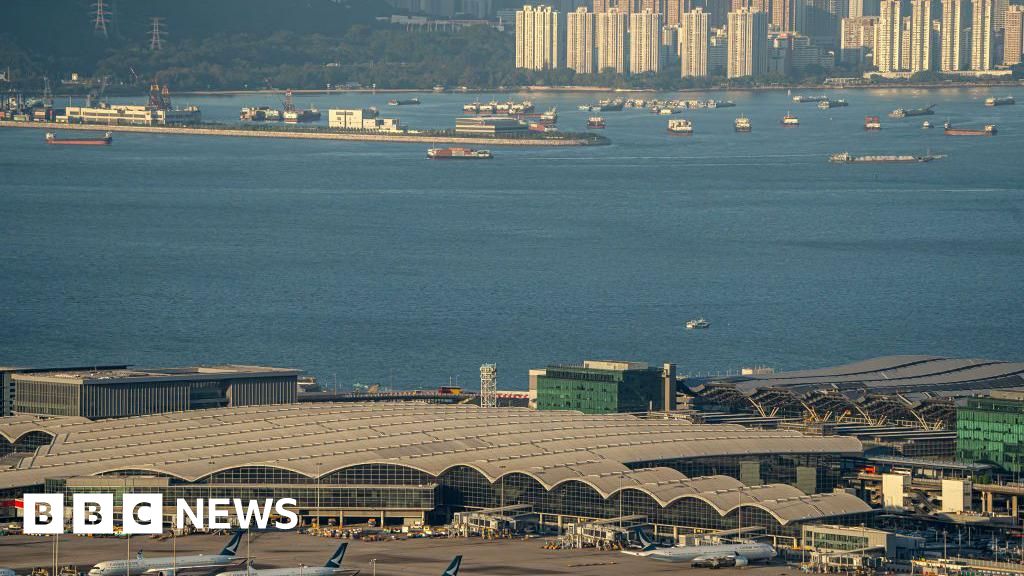
In a startling event that underscores the delicate balance of global transportation, a cargo plane has tragically skidded off the runway at Hong Kong International Airport, resulting in the loss of two ground staff members and highlighting the persistent risks faced by international hubs. The incident involved Emirates flight EK9788, operated by Aerotranscargo, which was arriving from Dubai early in the morning, around 03:50 local time. Reports indicate that the aircraft collided with a ground vehicle on the north runway, an area critical for the city’s freight and passenger operations, illustrating how even the most meticulously maintained facilities can face unforeseen calamities.

This accident arrives at a crucial juncture for Hong Kong as it struggles to maintain its status as a premier global transit centre amidst geopolitical upheaval and economic shifts. The airport’s closure of the affected runway—though the remaining two continue to operate—raises questions about the resilience of one of the world’s busiest airports. Analysts, including aviation safety experts from ICAO, emphasize that such incidents, while rare, can have ripple effects straining supply chains and logistical networks vital for regional stability. Many see this as a turning point, a stark reminder that even in a city famous for efficiency, the risks of transportation accidents remain ever-present.

The immediate response involved rescue operations by the Hong Kong Government Flying Service and Fire Services vessels, which coordinated above and below the ground to recover the crew and the ground personnel who fell into the sea. Unfortunately, the two staff members ultimately succumbed to their injuries, a tragic outcome that shines a light on the perilous nature of airport ground work. In the aftermath, authorities are set to hold a press conference at 10:00 local time, where safety investigations will undoubtedly dominate discussions. Such incidents often spark broader debate about international standards for airport safety, especially in politically sensitive regions where security and efficiency are intertwined with economic destiny.

Importantly, this event is more than a local tragedy; it operates within the larger geopolitical context of increasing tensions and shifting alliances. Hong Kong, once a renowned global trade hub, faces mounting pressure from Beijing’s grip alongside international scrutiny. The incident also prompts questions about how such crises are managed amidst escalating geopolitical stakes, where every safety lapse can be exploited to forge narratives of instability or neglect. Historians and international observers argue that it is moments like these — when human tragedy collides with geopolitical realities — that define the future of global aviation security and regional cooperation.

As the world watches, the fate of Hong Kong International Airport‘s corridors of commerce hangs in a fragile balance. The incident serves as a stark reminder that, beneath the surface of technological marvels and economic competitiveness, the human element — often for those working tirelessly behind the scenes — remains vulnerable. The weigh of history presses down, and the question remains: will this tragedy catalyze a renewed push towards safety and resilience, or will it fade into another chapter of transitory setbacks in a city that has, time and again, defied the odds? The answer, as with so much of the unfolding story, is yet to be written, but the echoes of this event will no doubt resonate through the corridors of power and policy for years to come.

Fire on the horizon: Debris sparks concerns near WA mining hub

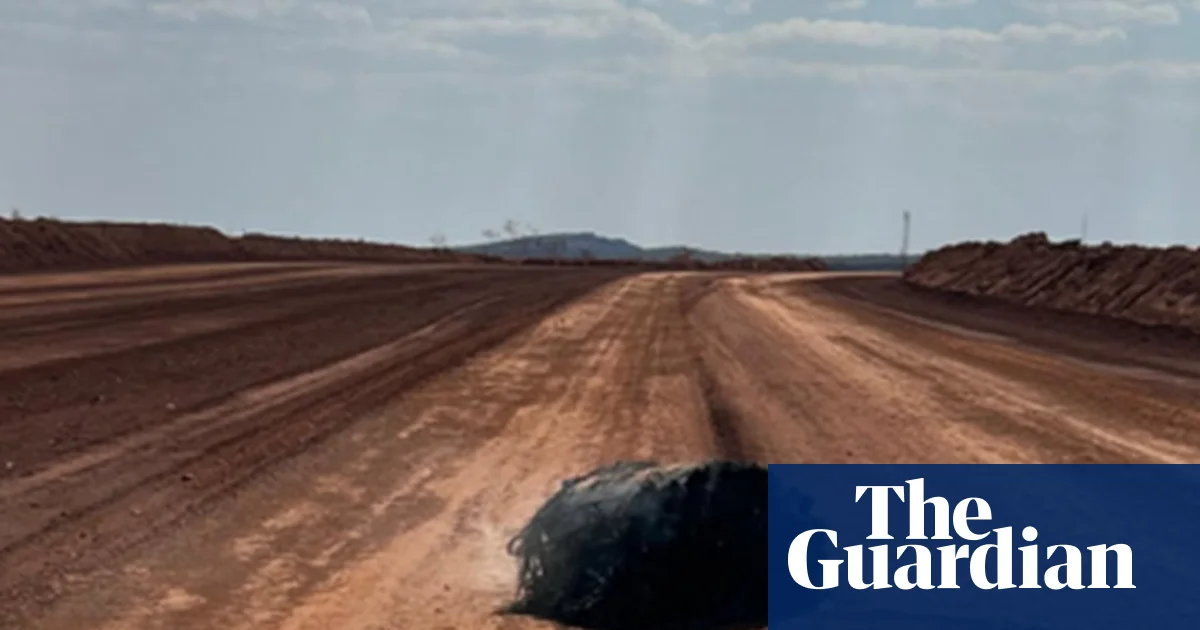
The mysterious discovery of suspected space debris in the remote outback of Australia has ignited international concerns about the increasing presence of “space junk” re-entering Earth’s atmosphere. As mine workers in Western Australia uncovered burning fragments near the town of Newman on Saturday, authorities swiftly responded, underlining the expanding complexity of managing space activities amidst the risk posed to global safety and sovereignty. The incident, while seemingly isolated, exemplifies the dangerous consequences of humanity’s prolific space exploration and satellite deployment, which continue to accelerate amidst a global race for technological dominance.

Initial analyses by police indicated that the debris was composed of carbon fibre, resembling aerospace components such as a composite-overwrapped pressure vessel or a rocket tank—a clear sign that this fragment originated beyond our atmosphere. The Australian Space Agency has been brought into the investigation, alongside other agencies like the WA Department of Fire and Emergency Services, reflecting a collaborative effort to determine the origin of this object. This incident falls within a broader narrative acknowledged by global space agencies and analysts: the mounting perils of space debris, which can threaten both terrestrial infrastructure and celestial navigation. As scientists warn about the increasing density of space junk, nations worldwide are grappling with how to regulate and mitigate this emerging hazard that could, if left unchecked, spark a new realm of geopolitical friction.

The re-entry of unidentified space debris isn’t just a technical issue—it’s a threatening reminder of the competitive, often reckless expansion of space capabilities. Experts fear that space debris could become a catalyst for international conflict, especially as key space powers like China, Russia, and the United States intensify their pursuits of commercial and military applications in orbit. The proliferation of satellites, especially under the banner of private sector ambitions like Starlink and other mega-constellations, complicates the efforts by global institutions to create effective space traffic management norms. Historian and space policy analyst Dr. Francesca Liu emphasizes that, “The unchecked growth of debris not only threatens future space missions but potentially destabilizes international relations, as nations may see this as a form of asymmetric warfare.”

Furthermore, the incident underscores a devastating irony—what goes up in space may very well come back down with unpredictable, potentially catastrophic consequences. The phrase “space junk” masks the seriousness of that debris. The risks associated with “re-entry” include the potential for harm to populated zones and critical infrastructures, calling for urgent international standards and treaties. Though currently the responsibility for tracking and mitigation largely falls to national agencies, there’s increasing pressure for global oversight, especially as nations race to secure strategic dominance both on Earth and in orbit. Critics argue that without robust treaties modeled after existing arms control agreements, the accumulation of space debris could turn Earth’s low orbit into a dangerous minefield, leading to what some analysts describe as an inevitable “space environment catastrophe”—a century-scale period of increasing orbital hazards.

As history witnesses humanity’s trail into the cosmos, a new chapter unfolds—one cloaked in geopolitical tension and unanticipated upheaval. The discovery in Australia serves as a stark warning of the tangible ramifications of neglecting space’s geopolitical implications. As international organizations labor to develop comprehensive frameworks, the choice remains to either tame this burgeoning threat or face the chaos that could ensue. In a world where the boundaries of sovereignty are no longer confined to terrestrial borders, the true battleground now extends beyond, into the void itself. What this incident signifies, ultimately, is that the stakes of space exploration are no longer theoretical—they are immediate, pressing, and potentially cataclysmic. The weight of history is on us, and the decisions made today will echo through time, shaping the future of humanity’s reach into the universe.

Catalonia town bans Black Cat adoptions this Halloween, citing safety concerns

Shadows of Tradition and Modern Morality: The Black Cat Ban in Terrassa

In a world increasingly attuned to the nuances of culture, animal welfare, and security, Terrassa, a historic town in Catalonia, has taken a controversial step that underscores the global tension between tradition and modern-day safety concerns. The town’s decision to temporarily ban the adoption of black cats during Halloween—set to last from October 6 to November 10—has sparked debates that reach far beyond its provincial borders. This measure, justified by local authorities as a safeguard against potential ritualistic abuse, embodies a broader societal shift where concerns for animal welfare increasingly influence policy-making amid fears of exploitation.

While Terrassa’s city council reports no local record of cruelty toward black cats, the decision aligns with a rising wave of precautionary policies motivated by incidents elsewhere—an approach reinforced by warnings from international animal rights organizations. European and Western communities have long associated black cats with superstitions rooted in witchcraft and misfortune, yet in many other cultures, such as in Japan and Egypt, these animals symbolize prosperity and good luck. The contrasting symbolism underscores how cultural perceptions can influence policy decisions that, ostensibly, aim to protect animals but also reflect societal fears and prejudices. Prominent historians and analysts suggest that such actions are frequently reactions to heightened societal anxieties, especially amid cultural shifts emphasizing safety and morality over centuries-old traditions.

Geopolitical Impact and Society’s Response to Cultural Shifts

The black cat ban in Terrassa could be viewed as emblematic of a larger global trend in which local authorities adapt policies based on perceived threats—whether they stem from cultural misunderstandings or real incidents—meanwhile influencing international standards. Such measures might appear minor, but they carry significant geopolitical implications. When a European town adopts an anti-\u201crituals\u201d stance without evidence of actual abuse, it adds to the narrative of a continent increasingly cautious—or perhaps afraid—of its own cultural rituals and symbols. Analysts warn that this could set a precedent, encouraging other jurisdictions to implement similar restrictive policies rooted in moral panic rather than factual crime rates.

Organizations like the World Animal Protection have expressed concerns about such bans, emphasizing that they often obscure deeper societal issues of superstition and misinformation. Yet, the decision’s impact on society reaches beyond animal welfare, touching on broader matters of cultural identity, immigration, and the ongoing clash between tradition and modern modernization. This is a reflection of how international communities are increasingly caught in debates where security and morality are prioritized over cultural diversity and historical significance. Political commentators argue that such measures, while temporary on the surface, could deepen divisions within Europe, particularly amid the continent’s ongoing struggle with multicultural integration and societal cohesion.

Yesterday’s Traditions, Today’s Fear: The Unfolding Tale of Cultural Evolution

As Terrassa‘s measures take hold, history will record whether this is a fleeting precaution or a sign of deeper societal transformation. The city’s decision to restrict animal adoptions during Halloween, though presented as an “extra precaution,” hints at a broader narrative echoed across borders: the ongoing effort to reconcile age-old cultural symbols with modern moral standards in an interconnected world. International organizations monitor these shifts, warning that too often, fear-driven policies obscure genuine cultural exchange and risk marginalizing traditions that have defined societies for centuries.

Indeed, as history continues to unfold, the world stands at a crossroads—where decisions on seemingly minor issues like the fate of black cats embody the profound tensions shaping the future of cultural identity, security, and morality. This is not just about animals or superstition; it is about how societies choose to navigate the complex dance between honoring the past and protecting the present, with the specter of history hovering in the background as an unyielding witness to all that is lost and gained in the march forward.

Social Media Auto Publish Powered By : XYZScripts.com