Matox News

Truth Over Trends, always!

Multiple shootings target Mormon church in Michigan and bar in North Carolina — rising crime concerns alarm Americans

In a weekend marked by violence from the United States, a renewed focus has been cast upon the nation’s internal stability and the far-reaching geopolitical implications of its ongoing crisis of law and order. Multiple incidents, spanning from a heinous shooting at a Mormon church in Michigan to a series of gun-related tragedies across states, have resulted in widespread fatalities and injuries. The crisis of violence exemplifies the deep-rooted societal challenges that threaten to undermine America’s global standing, especially as the nation grapples with internal discord and calls for reform.

Among the most harrowing events was the targeted attack during a waterfront gathering in North Carolina, where a suspect piloted a boat to attack civilians with premeditation. Authorities identified Nigel Edge, of nearby Oak Island, as the perpetrator, who now faces a cascade of charges including multiple murders and attempted murders. The incident, described by police as “highly premeditated,” underscores a disturbing trend of organized violence that erodes public trust. Such acts of terror are increasingly viewed both as symptomatic of domestic instability and as potential catalysts for international concern, prompting analysis from security experts and international agencies.

Meanwhile, in Texas, a separate shooting at the Kickapoo Lucky Eagle casino resulted in the deaths of two individuals and injuries to several others. Law enforcement has yet to determine a motive, leaving the nation’s porous gun laws and escalating violence under scrutiny. The complications are compounded by ongoing debates in Congress where political deadlock hampers substantive reforms. Many international bodies, including the United Nations, have issued warnings that continued internal unrest could embolden adversaries and weaken America’s diplomatic clout. These events serve as a stark reminder of how internal weaknesses ripple outward, presenting vulnerabilities that rival states might exploit in pursuit of strategic gains.

The global community watches closely as the United States confronts its internal crisis—an example of how fragile stability can be in an era of widespread societal division. Critics point to the failure of legislative bodies to implement meaningful gun control, arguing that this not only compromises domestic safety but also tarnishes America’s image as a beacon of liberty and rule of law. As historian Dr. Patricia Mullen notes, “The inability of Congress to address structural issues reflects a broader decline in political cohesion, with consequences extending well beyond its borders.” The United States’ internal discord now threatens to reshape international alliances and influence global markets, especially as nations seek to position themselves around the emerging vulnerabilities of their superpower neighbor.

The unfolding of this violence-ridden weekend hints at a future where internal instability could serve as a turning point in global geopolitics, demanding vigilance and decisive action from leaders worldwide. The question remains: how much longer can a nation of such profound internal fractures project strength abroad before history’s weight finally compromises its global influence?

Denmark detects fresh drone threats over major military base — rising security concerns for the youth

Unsettling Incursions in Scandinavia Highlight Growing Geopolitical Tensions

In a series of alarming developments, Denmark has become the latest focal point in what international analysts are describing as a hybrid attack—an unprecedented form of covert aggression involving unidentified drones operating over key military sites. During Friday night, these drones infiltrated numerous Danish military targets, including the nation’s largest airbase at Karup, which houses critical air force assets and command centers. The Danish military and police have acknowledged the breaches but stopped short of confirming their origin, though officials point towards Russia as a prime suspect, emphasizing the strategic threat posed by Moscow’s assertiveness in the region. This series of incursions represents a significant escalation in Europe’s security landscape, signaling a new era where hybrid warfare threatens sovereign borders without traditional military engagement.

Escalation of Hybrid Warfare and NATO’s Response

While Denmark’s prime minister, Mette Frederiksen, explicitly blamed Russia for these “hybrid attacks,” Moscow has firmly denied any involvement, dismissing the incidents as “a staged provocation.” This diplomatic dodge underlines the persistent ambiguity characteristic of hybrid warfare, where plausible deniability complicates attribution and accountability. Analysts, including security experts at the International Institute for Strategic Studies, warn that these drone incursions are more than mere demonstrations; they are strategic tests of NATO’s defenses and the West’s resilience to asymmetrical threats. The incident has prompted Denmark to procure long-range precision weapons and develop enhanced drone detection capabilities, signifying a decisive shift in national defense policies aimed at countering this new threat vector.

European Unity and the Formation of a ‘Drone Wall’

The broader European Union is responding with extraordinary measures, with defense ministers from ten nations uniting to prioritize establishing a “drone wall”—a protective barrier of anti-drone technology. The EU’s defense commissioner, Andrius Kubilius, emphasized the urgency of this initiative, urging Europe to adapt lessons learned from conflict zones like Ukraine. The move signifies a strategic pivot, aiming to reinforce the continent’s defenses against unidentified aerial threats and uphold sovereignty amid ongoing regional destabilization. The upcoming EU summit in Copenhagen, which will also be attended by Sweden’s tech-sharing offer, illustrates the bloc’s recognition that collective action is essential. Failure to act decisively risks allowing hybrid tactics to erode trust and security across member states, fundamentally altering Europe’s geopolitical stability.

How Decisions Today Will Shape the Future of European Defense

This escalating scenario presents a stark warning to the global community: the landscape of warfare has fundamentally shifted. The integration of drone technology into zones of conflict blurs the lines of traditional borders, forcing nations to rethink defense paradigms. As Danish Defense Minister Troels Lund Poulsen and Justice Minister Peter Hummelgaard accurately highlight, the purpose of these provocations extends beyond mere disruption—they aim to provoke fear, deepen divisions, and test Western resolve. History’s course hinges on how swiftly and resolutely nations respond to these invisible threats, with some experts warning that failures to innovate could leave countries vulnerable to future incursions, whether by state actors or splinter groups mimicking hostile nations’ tactics.

As this chapter of hybrid conflict unfurls, the echoes of history remind us—wars are no longer fought solely on battlefields but in shadows and cyberspaces. The coming days could very well decide whether Europe stands firm or succumbs to a new era of unseen threats, where the weight of history is not upon a distant battlefield but hanging in the skies above Scandinavia.

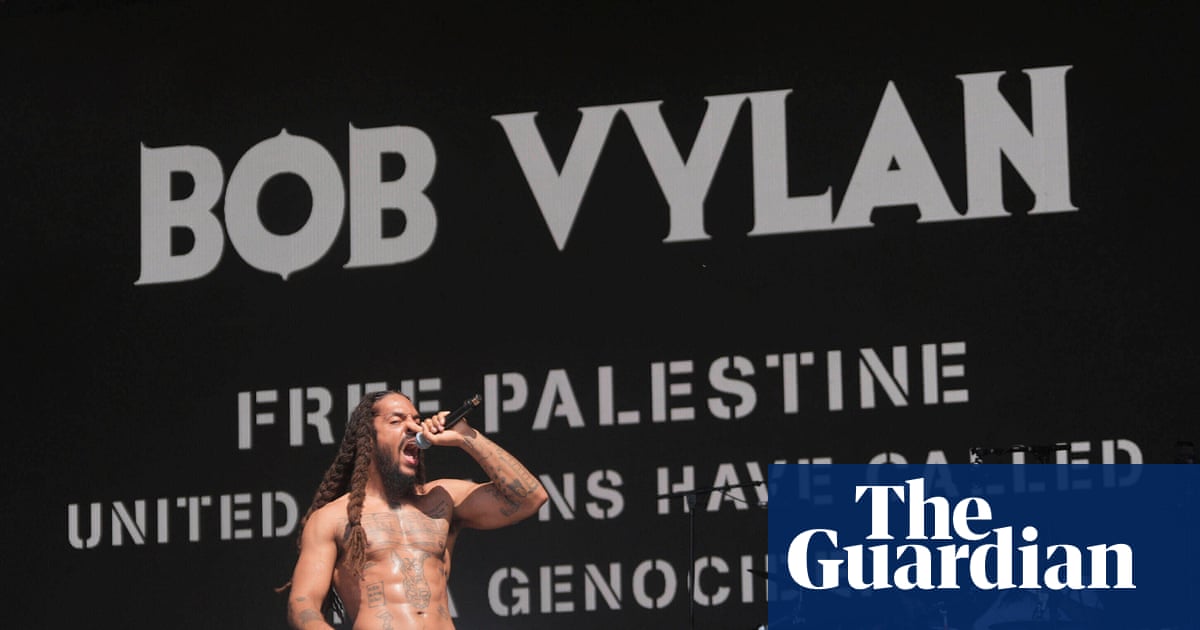
BBC Concedes Some Concerns Over Bob Vylan's Glastonbury Performance
BBC Concedes Some Concerns Over Bob Vylan’s Glastonbury Performance

The International Echoes of Cultural and Political Controversy: A Step into the Turbulent World of Global Power Dynamics

In a striking display of how cultural conflicts serve as battlegrounds for geopolitical influence, the incident involving the punk duo Bob Vylan at this year’s Glastonbury Festival has ignited debates well beyond the music scene. The BBC, a symbol of Western multimedia authority, faced a backlash for streaming the performance where incendiary statements such as “death to the IDF” and “free, free Palestine” were made by frontman Bobby Vylan. The broadcaster’s executive complaints unit justified their controversial decision by citing the potential for harm and offence. However, critics argue it exemplifies how Western institutions are increasingly caught in a clash of values — balancing free expression against the rising tide of identity politics and ideological influence.

The geopolitical impact of this controversy extends beyond the boundaries of Britain’s cultural landscape. Historians and analysts recognize that moves by entertainment industries and media organizations serve as soft power instruments, shaping global perceptions of conflicts like the Israeli-Palestinian crisis. Some experts warn that such incidents reflect a broader narrative war, where Western responses are scrutinized for perceived biases or capitulation to social activism. For instance, the BBC’s decision to remove the performance from its on-demand services and declare it a “high-risk” event signals a cautious approach that could influence how future conflicts are portrayed internationally. This response underscores a burgeoning tendency among Western institutions to treat entertainment content as part of the larger geopolitics of ideological narratives.

Moreover, the ripple effects of Bob Vylan’s statements include consequences for international diplomacy. The band’s US visas were revoked, a tangible repercussion illustrating how entertainment and politics are entwined in the current global era. The revocation not only hampers their ability to perform abroad but also signals a preemptive stance by authorities to curb what they deem provocative or potentially inflammatory. Such actions exemplify a wider effort by governments and agencies to control the spread of narratives they perceive as destabilizing or threatening to national security interests, particularly in an era where social media and global streaming serve as battlegrounds for ideological influence.

In the broader context, the controversy surrounding Bob Vylan illustrates how societal debates over free speech, national identity, and international allegiances are shaping the new global order. International organizations, such as the United Nations, have acknowledged the complex and often contentious nature of conflicts like Palestine, but the ways in which nations and cultures respond domestically and abroad reveal underlying tensions inherent to global leadership. As the West grapples with its identity and values amidst a shifting geopolitical landscape, the unfolding fallout from this incident will serve as a stark reminder that the lines between cultural expression and political conflict are increasingly blurred, and the weight of history still enshrouds this turbulent era.

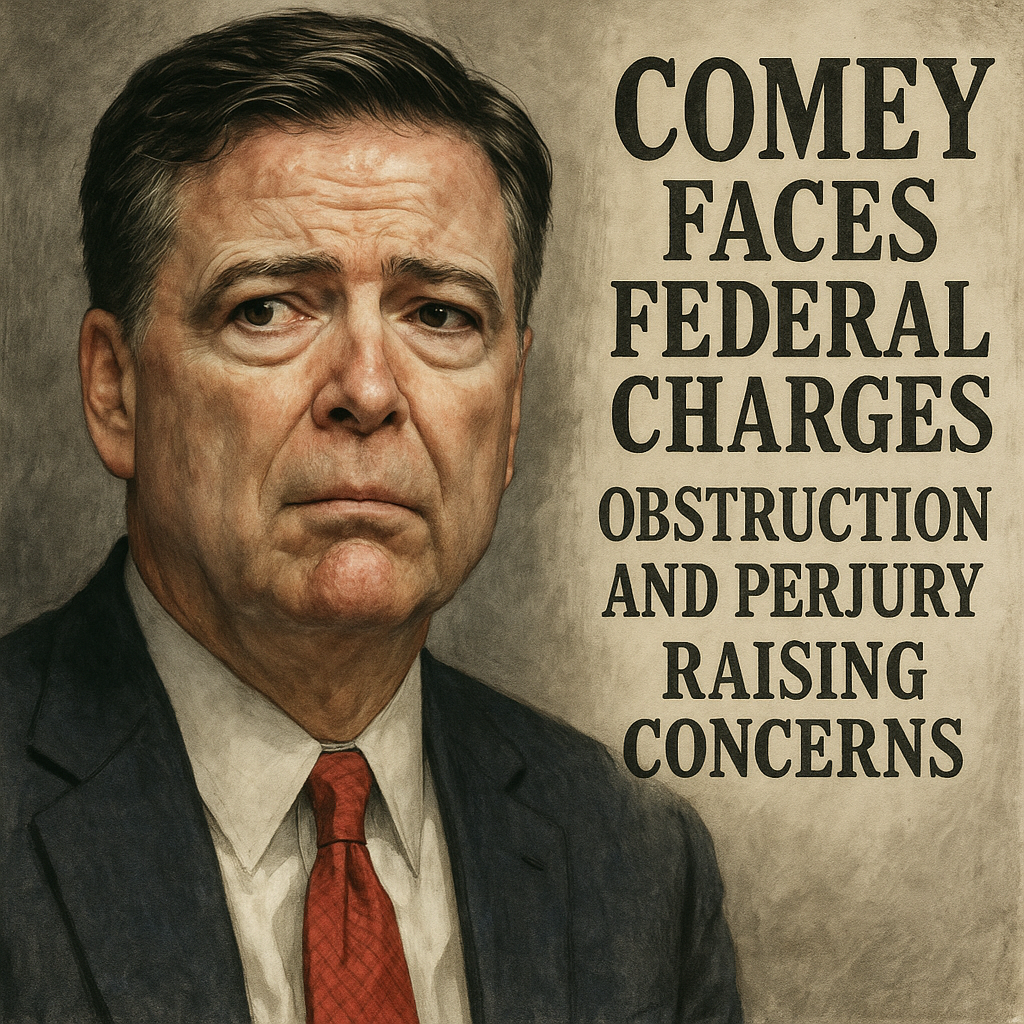
James Comey faces federal charges of obstruction and perjury, raising concerns

The recent indictment of former FBI Director James Comey by a federal grand jury marks a pivotal moment in the ongoing power struggles within the American political landscape. This development, coming on the heels of President Donald Trump’s calls for accountability, underscores the relentless battle over control of institutions and narrative. Comey, once a cornerstone of the FBI’s leadership, now faces charges including making a false statement and obstruction—charges that transcend mere legal accusations, embodying the ideological clash between those seeking to maintain law and order versus those striving for accountability in the face of perceived corruption.

From a historical perspective, this move echoes classic political dramas where the machinery of justice becomes a tool in the broader power struggle. The timing, just days after Trump’s public insistence on prosecuting Comey, amplifies the notion that decisions within the justice system are becoming increasingly intertwined with partisan interests. Experts in constitutional law note that such indictments, especially against figures once considered within the security state establishment, reflect a turbulent shift—possibly a redefinition of the boundaries of executive authority and oversight. This is reminiscent of earlier eras of political upheaval, where legal actions against high-ranking officials signal whether a nation is on a path toward justice or chaos.

Critics argue that the charges are emblematic of a broader trend where political factions leverage legal mechanisms to settle scores or shape public perception. Supporters, however, contend that no public servant is immune to scrutiny, regardless of stature. As constitutional theorists remind us, the rule of law must be protected against the temptation of political vendettas, lest the very fabric of constitutional governance frays. The charges also serve to remind citizens that, in a constitutional republic, power is mortal and fleeting; institutions exist to keep it in check, but they are also vulnerable to manipulation.

Ultimately, these events underscore that politics is less about personalities and more about the battle for the soul of the nation. Decisions made today will ripple through history, shaping not just legal precedents but the societal fabric itself. As political strategist and thinker Leo Strauss might suggest, in this realm of relentless power struggles, the future remains unwritten—destiny is proclaimed on the stage of battles that test the limits of authority and justice. In this unfolding narrative, the true victors are those who shape the rules of the game—and, perhaps, who decide the very course of national destiny.

Social Media Auto Publish Powered By : XYZScripts.com