Matox News

Truth Over Trends, always!

Israel gets back three more hostages from Gaza Amid escalating conflict

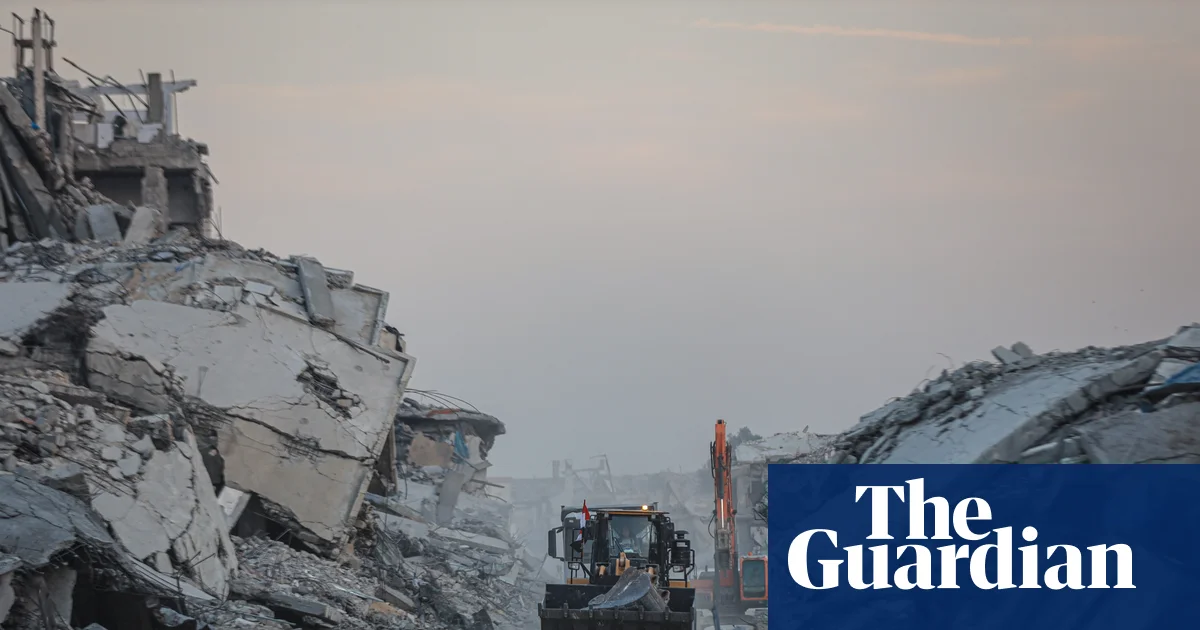
In a moment that underscores the ongoing tensions in the Middle East, Israel has announced the return of the remains of three hostages from Gaza. This delicate gesture comes amidst a fragile, month-long ceasefire that many see as a rare window for possible de-escalation. According to Israeli officials, forensic experts are now tasked with identifying these remains, which were reportedly found in a tunnel in southern Gaza, as part of the ongoing efforts to recover bodies and facilitate peace negotiations. Since the ceasefire took effect on 10 October, more than a dozen hostages have been released or recovered, yet the situation remains strained and complex, illustrating the deep-rooted tensions that persist among the conflicting parties. The handling of these remains is not merely a humanitarian act but a pivot point illustrating how the conflict’s human toll continues to shape the geopolitical landscape.

This exchange fits within the overarching framework of the US-brokered 21-point plan for Gaza’s stabilization, which, among other measures, involves the creation of an international peacekeeping force. Several nations, predominantly from the Arab world and beyond, have expressed tentative interest in deploying troops to aid Egypt and Jordan in securing Gaza’s borders, but they demand a clear **UN Security Council** mandate before committing. The decisions made here will significantly impact regional stability, as the presence of an international force could either deter future hostilities or, conversely, inflame tensions if perceived as foreign meddling. As experts, including geopolitical analysts and historians, caution, the outcome of this intervention could permanently alter the balance of power in the Middle East, either stabilizing Gaza or escalating the cycle of violence.

Yet, unresolved debates loom large—particularly around **Hamas’s disarmament**, governance, and the fate of Gaza in the post-conflict era. Prime Minister Benjamin Netanyahu has declared that “pockets of Hamas” remain in Gaza, particularly in areas such as Rafah and Khan Younis, which he vows to eliminate. Meanwhile, the ongoing Israeli military campaign has devastated Gaza, with fatalities exceeding 68,600 according to the Hamas-controlled health ministry—an often-cited but politically sensitive figure. These casualties, some 75 of whom have been identified through DNA testing, exemplify the human scope of this conflict. The civilian toll has come under international scrutiny, with critics accusing Israel of possible war crimes, while Israeli officials deny such allegations and cite self-defense against Hamas’s attacks. The **geopolitical impact** is profound: the conflict’s persistent brutality risks igniting wider regional unrest, challenging international norms, and complicating efforts for peace.

In the grand narrative of history as it continues to unfold, the exchange of remains signals both the hope for reconciliation and the peril of prolonged conflict. As global institutions and nations deliberate future troop deployments and peace initiatives, the weight of history presses heavily. The question remains whether these small, symbolic steps can ultimately open pathways to peace or merely serve as brief pauses in a conflict that has claimed innumerable lives and reshaped the Middle East’s geopolitical architecture. The coming days will reveal whether this fragile ceasefire can evolve into lasting stability or if the echoes of violence will once again drown out the hope for peace—leaving a legacy of destruction or renewal etched into the sands of Gaza and the conscience of the world.

Jebel Marra's Fertile Land Wasted as Conflict Ravages Crops
Jebel Marra’s Fertile Land Wasted as Conflict Ravages Crops

The Hidden Resilience of Jebel Marra Amid Sudan’s Turmoil

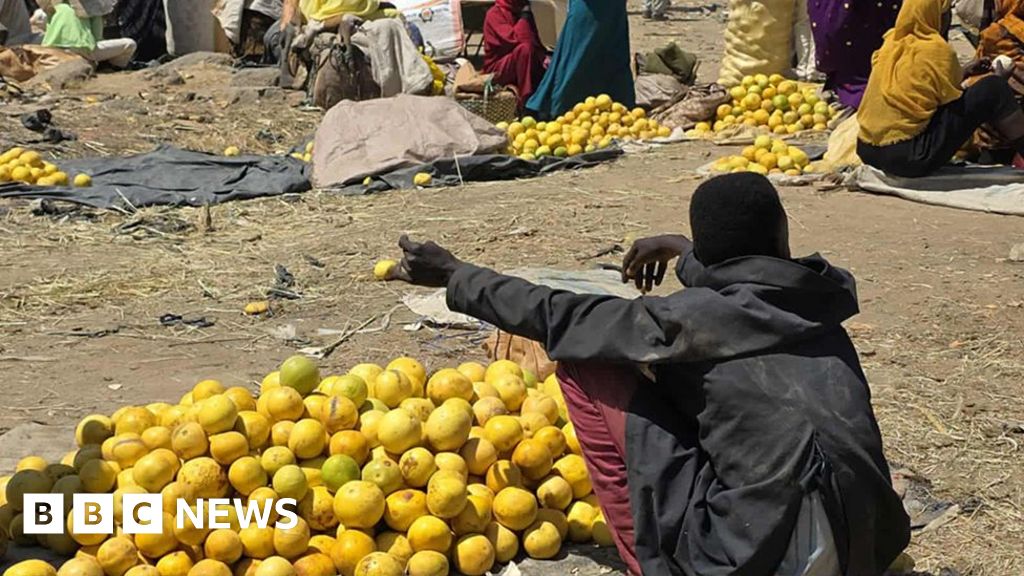
In the chaos and devastation wrought by Sudan’s ongoing civil conflict, a quiet, resilient community persists in the Jebel Marra highlands, defying the turmoil that engulfs much of the country. Located in the western Darfur region, this mountainous enclave remains under the control of the Sudan Liberation Army – Abdulwahid (SLA-AW), a group that has refused to join the broader conflict but instead controls “liberated areas” for over two decades. While the rest of Sudan faces economic collapse, famine, and widespread violence, inhabitants of Jebel Marra carve out a tenuous existence, shielded by the rugged terrain yet haunted by the shadows of conflict and economic isolation.

The geopolitical impact of the situation in Jebel Marra extends beyond local survival, highlighting the fragmented nature of Sudan’s territorial control and the persistence of armed non-state actors. Despite a fragile truce in neighboring areas and limited trade with some local markets reopening, the overarching reality remains one of siege and disconnection. Major roads are blockaded by Arab militias and RSF forces, isolating the region from national markets and humanitarian aid, thereby deepening humanitarian crises. Analysts warn that this persistent instability in the region underscores a broader, dangerous erosion of state authority, with local ethnic and armed groups operating in vacuums of governance, undermining the fragile peace efforts. For many, Jebel Marra exemplifies how some communities, despite environmental abundance and agricultural potential, are caught in the crossfire of larger geopolitical struggles.

War’s Far-Reaching Toll and the Human Cost

Across Sudan, nearly 25 million people face severe food shortages, with more than 600,000 on the brink of famine, according to the United Nations. The two-and-a-half-year-old conflict has crippled agriculture, destroyed infrastructure, and decimated local economies. In places like Golo and Tawila, farmers, vendors, and displaced civilians struggle with an unstable supply chain, often forced to sell their goods at a loss or bypass treacherous routes to reach markets. In Tawila, makeshift markets have emerged amidst the danger, with villagers risking their lives to smuggle food into besieged cities, demonstrating an unwillingness to succumb entirely to despair but also exposing how isolated and volatile the economic fabric has become.

The ethnic and political divisions underlying the conflict have compounded these issues, with armed groups controlling territories and checkpoints that demand heavy fees, often harassing or attacking civilians. International organizations, including the UN and various aid agencies, warn that unless a sustainable political solution is reached, Sudan risks slipping further into chaos. The ongoing blockade and military operations have meant aid struggles to reach vulnerable communities, creating a dire environment where starvation and disease threaten to wipe out entire populations. Historians and analysts compare the unfolding crisis to previous regional conflicts, cautioning that Sudan’s future hangs in the balance—a fragile scrawl on the page of history that could either turn towards lasting peace or descend into further chaos.

Shifting Alliances and a Fractured Political Landscape

The current geopolitical landscape in Sudan is a tapestry of shifting alliances, as various armed factions and ethnic groups carve out autonomous zones. The RSF and Arab militias dominate many strategic points, while SLA-AW in Jebel Marra remains neutral but surrounded by hostility. The region’s strategic importance lies in its relative geographical isolation, but that is increasingly threatened as the conflict’s ripple effect adds new layers of complexity. The international community watches nervously, with some observers noting that any resolution must acknowledge the multifaceted nature of Sudan’s fractured society.

The potential for a broader regional destabilization remains high—many fear that without intervention, the country might bifurcate into splintered, ungoverned zones, paralleling regions in Iraq or Libya where local warlords hold sway. Predictions by geopolitical analysts suggest that if the current trajectory persists, Sudan may become a battleground not just of national power struggles but of international influence, where external actors vie for strategic dominance amidst a highly fragile and volatile environment. The international institutions warn that *how* the Sudan crisis is resolved will reverberate across Africa, affecting regional stability, migration, and global security.

As the pages of history continue to turn, the story of Sudan remains unwritten—caught between hope and despair, sovereignty and chaos. The resilient communities of Jebel Marra are a stark reminder that amidst the epicenter of conflict, human endurance persists. Yet, the choices made by global powers and Sudan’s fractured factions will determine whether this saga ends in reconciliation or further tragedy, leaving behind a landscape scarred by battles now beyond counting but not beyond memory. The world watches, knowing that the next chapter is being written, and history’s pen has yet to rest.

Gaza conflict shook up politics — peace may still be on the horizon for the Middle East

The recent ceasefire in Gaza has sparked a seismic shift in **Middle Eastern geopolitics**, signaling a potential turning point that could redefine alliances, regional influence, and international diplomacy. While some analysts urge caution, warning that ongoing violations by **Israel** and **Hamas** suggest fragile trust, the deeper implications point toward an emerging landscape where traditional rivals are compelled to cooperate under unprecedented pressures. As **U.S. President Donald Trump** pushes his controversial 20-point plan for Gaza, regional powers such as **Qatar** and **Turkey** are accentuating their influence by leaning heavily on **Hamas**, underscoring how external pressure can catalyze unexpected realignments across the Arab world.

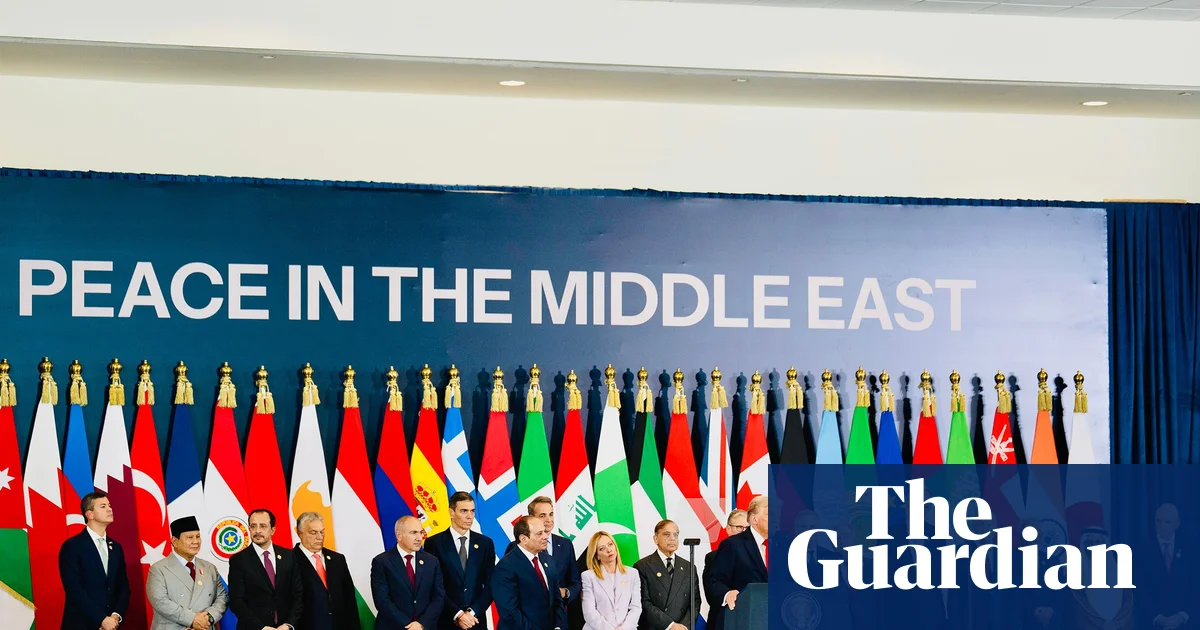
One of the most remarkable developments is the attendance at the recent summit in **Sharm el Sheikh**, which included **Iraq’s Prime Minister Mohammed Shia’ al-Sudani**. His visible support—symbolized by a thumbs-up with Trump and praise for Tony Blair’s proposed “Peace Council”—signals a potential shift. Historically, **Iraq**, a nation long under Iran’s heavy influence since the post-2003 U.S. invasion, is now spotted edging toward the **Arab orbit**, hinting at a significant realignment of regional power. According to analysts like Michael Knights of Horizon Engage, Baghdad considering troop contributions to a planned international stabilisation force in Gaza foreshadows an evolution in **Iraq’s** regional role, potentially diminishing its previous allegiance to **Iran**. Such a shift could accelerate **Arab** unity and influence—Movement that, if sustained, may undermine Iran’s geopolitical strategy of forward defense, which relies on a network of militant proxies like **Hezbollah** and **Hamas**.

This realignment comes at a time when Iran’s strategic position appears increasingly compromised. The short war with Israel has exposed Iran’s military limitations and economic vulnerabilities, especially as **European**, **UK**, and **U.S.** sanctions tighten around Tehran. The deterioration of Iran’s regional proxies—Hezbollah in Lebanon, the Assad regime in Syria, and militant factions in Gaza—marks the end of Tehran’s expansive **”forward defense”** doctrine. International analysts warn that the **ceasefire** may paradoxically serve as an engine of **region-wide integration**, rekindling discussions of land connections from the Gulf to the Mediterranean and promoting **diplomatic normalization** of Israel with Gulf Arab states. Nevertheless, the specter of Iran’s discontent remains, as Tehran faces a bleak diplomatic and military landscape that could push it toward more desperate measures.

Amid these developments, the U.S. and its allies appear to be seizing an opportunity to engineer a broader regional realignment. None other than **Trump’s** architect of the **“Riviera” plan**—initially met with skepticism—seems to have accelerated its implementation, potentially laying the groundwork for a new geopolitical equilibrium. If **Abraham Accords** expand to include **Saudi Arabia**, **Indonesia**, and other Arab nations, the potential for **diplomatic normalization** could radically transform the region, diminishing **Iran’s** influence and empowering **moderate Arab states** eager for stability and economic growth. However, such a trajectory hinges on the Palestinian issue—an obstacle that remains a persistent, unresolved question shaping the future of peace and stability.

As history continues to unfold, the **Middle East** finds itself at a critical crossroads. The fragile ceasefire, while temporary, exposes the deep currents of change beneath the surface—currents driven by shifting alliances, ideological battles, and the relentless pursuit of regional dominance. The world watches as these forces collide, and the fate of millions hangs in the balance. The narrative of this conflict is far from over; instead, it has entered a new chapter—one that could either usher in generations of peace or plunge the region into deeper chaos. The next moves made by regional and global powers will be remembered not just as political decisions, but as defining moments that could shape the geopolitical landscape for decades to come.

Social Media Auto Publish Powered By : XYZScripts.com