Matox News

Truth Over Trends, always!

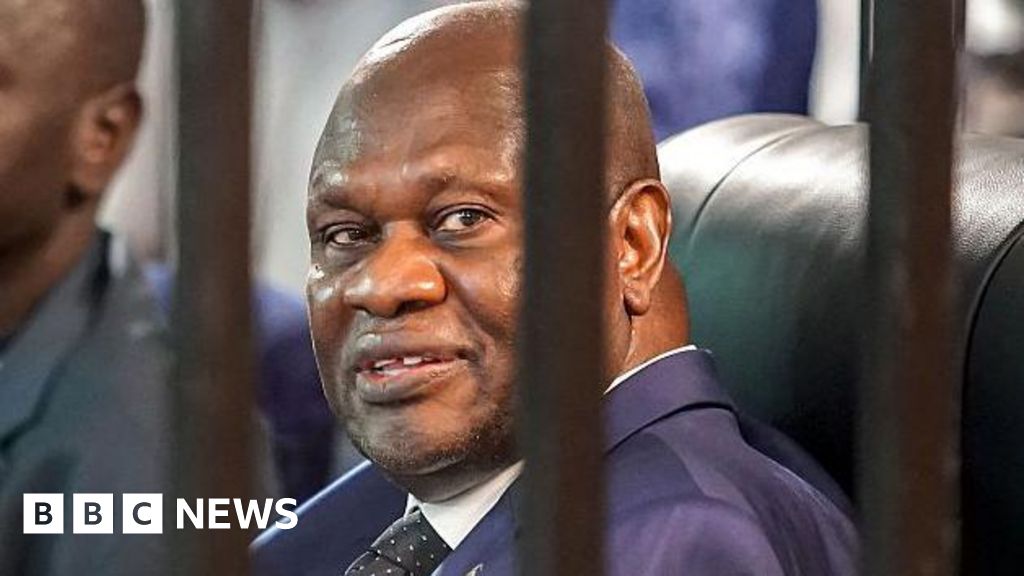
South Sudan Court Dismisses Riek Machar’s Attempt to Block Murder and Treason Trial

The recent decision of a special court in South Sudan to assert its jurisdiction over Vice-President Riek Machar underscores a critical crossroads in the fragile nation’s post-conflict recovery. The court’s dismissal of Machar’s objections—regarding immunity, constitutionality, and jurisdiction—sets a significant legal precedent that could reshape the country’s political landscape. By asserting its authority to prosecute high-ranking officials for serious crimes such as murder, treason, and crimes against humanity, the court signals a firm stance against impunity, even amid the turbulent aftermath of Africa’s newest independent state. This decision, while a step toward justice, has been met with considerable caution from international observers, who warn that it could either bolster accountability or ignite renewed unrest.

  • The charges against Machar originate from an attack in March that resulted in the deaths of 250 soldiers and a high-ranking general, linked to militia forces associated with the Vice-President. These allegations, dismissed by Machar as a political “witch-hunt,” have escalated fears of another outbreak of civil conflict, threatening to undo years of fragile peace efforts initiated by the 2018 Peace Agreement.

Since his house arrest, Machar’s case has become emblematic of the ongoing struggle to cement rule of law in a nation still haunted by the scars of civil war. His legal team’s argument that a hybrid court under the African Union should handle such charges, in line with the 2018 peace accord, reflects wider debates over justice and sovereignty in the region. The court’s ruling—affirming its authority under the 2011 Transitional Constitution—demonstrates a bold assertion of national judicial independence. However, it also raises questions about how justice is balanced against political stability, with critics warning that unpredictable legal proceedings could deepen divisions or trigger cycles of violence.

The geopolitical impact of this legal move extends well beyond South Sudan. Regional stability hinges on how leaders, notably President Salva Kiir, manage these tensions. The African Union and the United Nations have called for calm, fearing that arrests of top officials might derail an already fragile peace process. Analysts in international think tanks emphasize that how South Sudan enforces justice—especially against figures like Machar, a key opposition leader—will influence regional alliances and the future of South Sudanese sovereignty. For countries surrounding South Sudan, any return to conflict could destabilize neighboring economies and complicate efforts to combat terrorism and arms trafficking across the Horn of Africa.

With global powers watching closely, the case offers a sobering reminder of how decisions made in courtrooms can ripple into the wider geopolitical fabric, affecting international peace efforts and the stability of the African continent. As historians and political analysts debate whether this legal move marks a turning point or a potential flashpoint, the weight of history continues to hang over South Sudan’s young democratic experiment. The unfolding of this legal saga will inevitably test whether justice can be truly delivered in a land scarred by conflict—an enduring chapter in a story still being written by history itself.
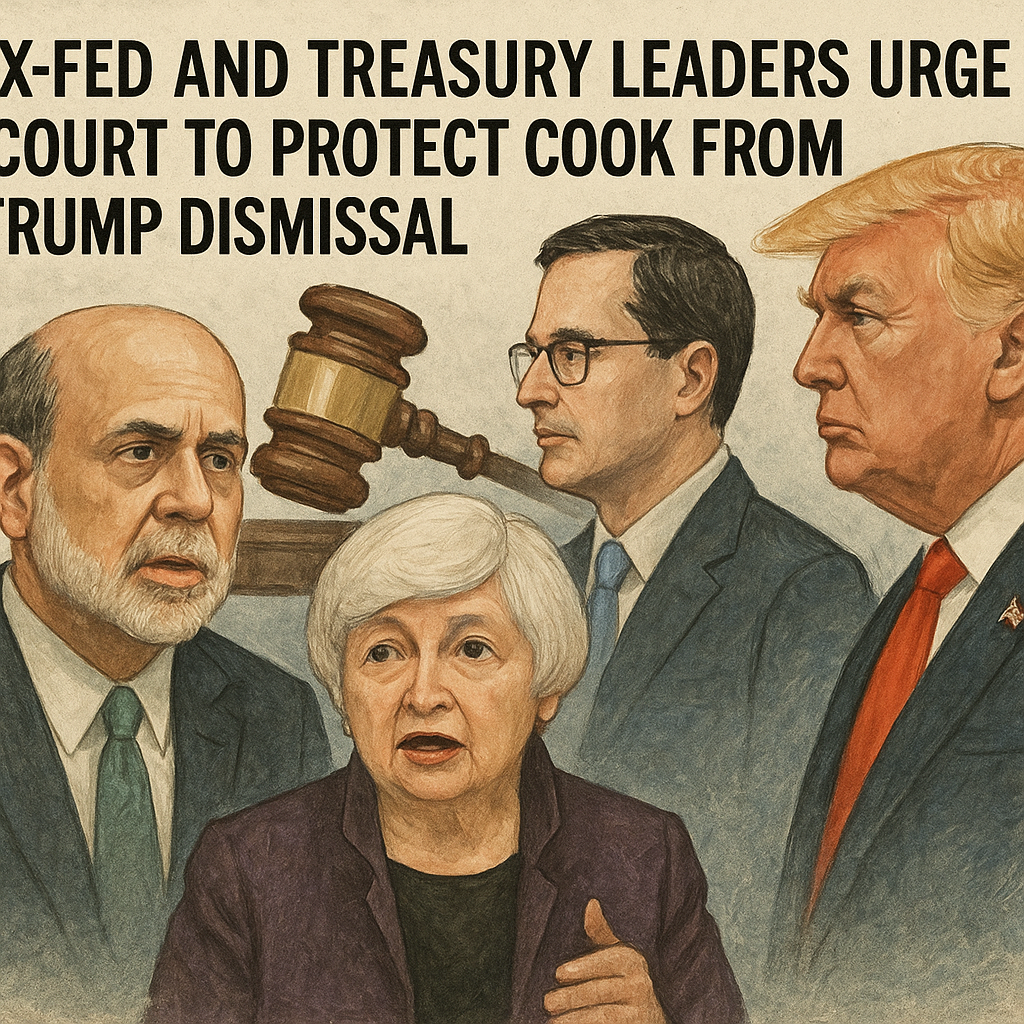
Ex-Fed and Treasury leaders urge court to protect Cook from Trump dismissal

Political leaders at a recent economic summit

In a dramatic twist that underscores the ongoing power struggles within U.S. financial governance, more than a dozen of the most influential economic policymakers from the past three decades have come together to urge the Supreme Court to uphold the tenure of Lisa Cook, a member of the Federal Reserve Board of Governors. Their collective stance is not merely an act of support for an individual appointment; it symbolizes a broader contest over authority, institutional influence, and the very direction of America’s economic future. As these veteran voices—comprising former Fed chairs and Treasury secretaries—align in their plea, the battle lines are drawn clearly, echoing historic conflicts between independence and political encroachment within central banking.

At the core of this dispute lies a fundamental question: who controls the levers of economic power in the United States? The Federal Reserve, often depicted as an elusive and autonomous institution, has long been the subject of politicization. Critics on the right condemn what they see as unchecked Federal Reserve activism, while supporters argue that its independence is vital for stability and effective policy. The controversy over Cook’s appointment—initially stymied by administrative delays—becomes a flashpoint illustrating the ongoing power struggle between the executive branch and the judiciary. The question remains whether the Court will respect the *constitutional independence* of the Fed or bow to political pressures seeking to influence monetary policy by other means.

This confrontation harks back to historical battles over the role of central banks and the political limits placed on their authority. Figures like **A. E. Carter** from the Federal Reserve’s founding era understood the importance of insulating monetary policy from short-term political whims—a lesson often overlooked when political ideologies threaten the autonomy of vital institutions. The current push to influence or remove Cook questions whether the judiciary is willing to serve as a guardian of this independence, or if it will become a pawns in a broader ideological struggle. The stakes extend beyond individual careers, directly impacting how policies are crafted—whether to favor free-market principles, regulators, or political elites seeking control over economic levers.

This dynamic also impacts the American people, who are caught in the crossfire of decisions made behind closed doors. To many, the idea that a small group—be it Congress, the judiciary, or a cabal of bureaucrats—can wield such profound influence over the economy challenges the very basis of popular sovereignty. As political theorists like **James Madison** warned, the separation of powers is designed to prevent any single faction from becoming a tyranny. Yet, in today’s climate, decision-making appears increasingly centralized, with powerful elites vying for control and shaping the destiny of millions. The fight over Cook’s position is more than a personnel matter; it is a decisive battle over how the future of economic governance will be written.

As history has shown, politics is the arena where destiny is forged. The latest power struggle within the U.S. financial system underscores that |the battle for authority is ultimately a fight for the soul of the nation|. Will the judiciary act as a bulwark protecting institutional independence, or capitulate to political expedience? The outcome will determine how boldly America’s institutions can stand against those who seek to manipulate them for short-term gains. And in the end, the destiny of the nation—its stability, greatness, and value—resides not just in the policies enacted, but in the battles fought for the very principle of who holds the power to shape the future.

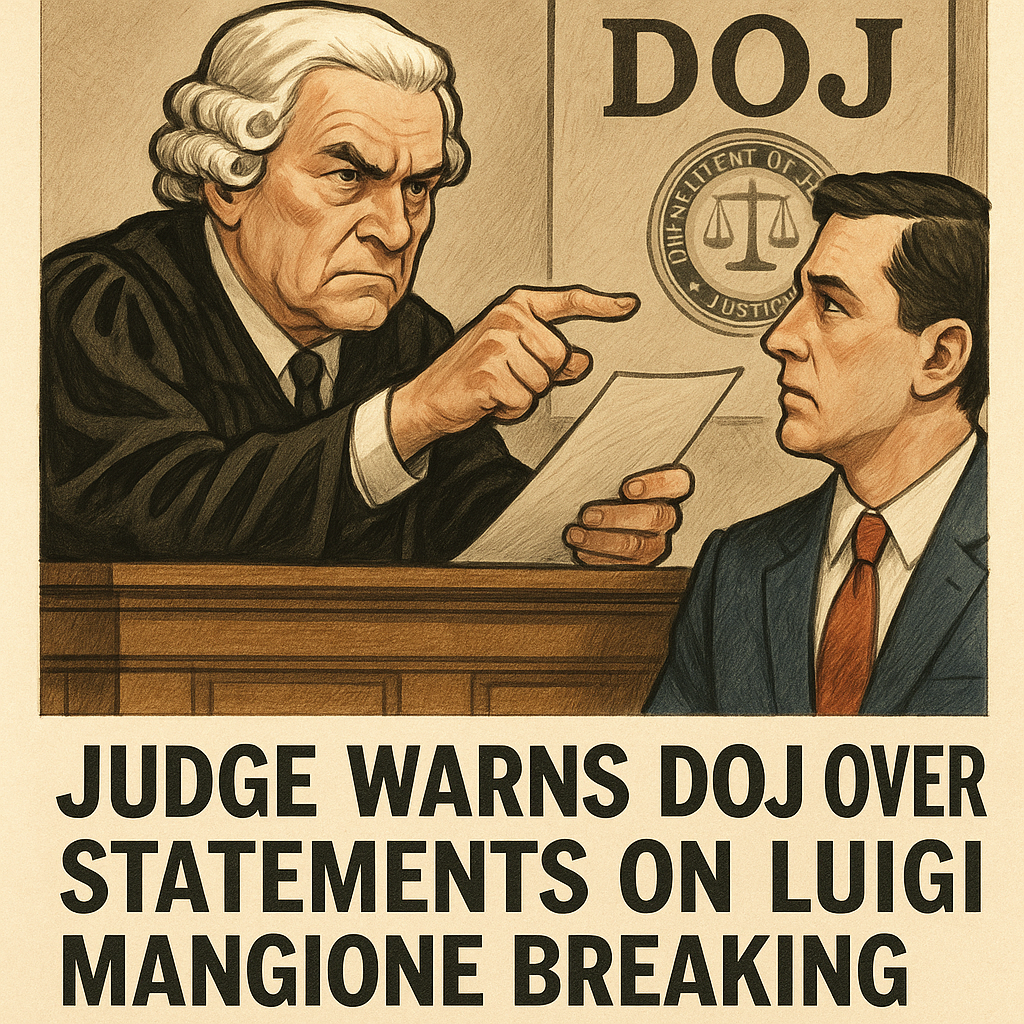
Judge warns DOJ over statements on Luigi Mangione breaking court rules

The unfolding controversy surrounding the Department of Justice’s (DOJ) handling of Luigi Mangione has cast a stark light on the intricate power struggles shaping American governance today. As the federal court, under the guidance of U.S. District Judge Margaret Garnett, suggests that DOJ officials may have violated established court protocols, it becomes evident that the boundaries between executive authority and judicial independence are under acute stress. Judge Garnett’s explicit caution — warning prosecutors about potential sanctions for continued public misconduct — underscores a broader conflict: the tension between prosecutorial discretion and the judiciary’s role as a neutral arbiter. This situation exemplifies the enduring debate about whether institutions thrive under clear boundaries or unravel when those borders are disregarded by powerful actors seeking to influence outcomes.

At the heart of this dispute lies a fundamental question of who holds the ultimate authority in the rule of law. The Biden-era DOJ, often seen as an extension of the executive branch’s expansive ambitions, appears to be embroiled in a struggle for control over narrative and influence, particularly when it involves politically sensitive figures. Historical parallels emerge when considering the Watergate era, where executive overreach provoked an unparalleled constitutional confrontation. Today, prosecutors’ attempts to publicly discuss sensitive legal matters—potentially a breach of protocol—highlight how decision-making processes are shifting, challenging the traditional separation of powers. Such confrontations are less about the individual case and more about who ultimately decides what justice looks like in a system still haunted by the echoes of political intervention.

The power struggle extends beyond mere procedural disputes, touching on the core of what it means for the people to be governed. Justice experts warn that consistent *public undermining of court authority* sets dangerous precedents, eroding the foundational tenets of constitutional law, which emphasize the independence of judiciary institutions. These actions reveal a strategic push by some within the DOJ to influence public perception and sway judicial proceedings—an effort to shape policy landscapes through raw political pressure. When legal processes become battlegrounds for partisan advantage, the consequences ripple outwards, threatening to diminish public trust and destabilize the delicate balance designed by America’s founders. Such struggles form the battleground where power is contested and the destiny of civic order is written.

Ultimately, this ongoing saga underscores a critical truth about politics: it is less a realm of fixed ideals and more a theater where the forces of authority clash, often with decisive, society-wide repercussions. As constitutional giants like **Alexander Hamilton** once argued, the strength of America’s republic resides in the careful orchestration of **separated powers**, yet those boundaries are consistently tested under the weight of ambition and influence. The legal skirmish over Mangione is symbolic of a larger epoch — one where internal conflict and strategic decision-making threaten to reshape the very fabric of American governance. For the watchers of history and future architects of policy, it is evident that in the theater of politics, the stage is where destinies are written, often with the ink of contention and the pen of power.

Home Office’s attempt to lift migrant removal ban fails in court.

A recent incident has unfolded as authorities intervened to prevent the removal of an Eritrean man who attempted to enter the country via small boat. This event highlights ongoing tensions surrounding immigration policies that are at the forefront of political discourse today. The blocking of this removal raises questions about the effectiveness and consistency of our immigration system.

Young conservatives are especially concerned about how these situations are handled, advocating for stricter border controls and a merit-based immigration system. As debates continue, it’s crucial to find a balance between compassion for those in need and the security of our nation. The latest development underscores the importance of clear and consistent immigration policies that serve both our border integrity and humanitarian responsibilities.

Social Media Auto Publish Powered By : XYZScripts.com