Matox News

Truth Over Trends, always!

UK plans to suspend refugee family reunions face High Court challenge

The recent decision by the Home Office to suspend the right of refugees to reunite with their families in the United Kingdom has ignited a wave of controversy and legal challenges, signaling a concerning shift in the UK’s approach to humanitarian responsibilities. Safe Passage International, a prominent charity dedicated to assisting unaccompanied children and refugees, has secured permission to challenge this decision in the high court, asserting that the suspension breaches the UK government’s obligations to safeguard the welfare of vulnerable populations.

Historical analysts and international organizations have long recognized the UK’s role as a sanctuary for those fleeing war and persecution. However, recent policies are casting doubt on whether the nation’s commitments align with its moral reputation. The legal challenge alleges that the suspension not only neglects the welfare of children but also contravenes the Equality Act by ignoring the impacts on women, children, and disabled refugees. This legal confrontation underscores a broader debate: how should nations balance sovereignty, security, and humanitarian duty? Consequently, the UK’s decision could set a disturbing precedent, eroding its moral authority on the international stage.

Amid mounting domestic pressure and political upheaval, Home Secretary Shabana Mahmood is orchestrating further restrictions on asylum seekers, seeking to tighten the borders at a time when many see the UK’s refugee policies as increasingly inhospitable. This comes in the wake of criticisms from figures such as Yvette Cooper, who had previously suspended the family reunion pathway in September. The move, intended to last until “spring 2026”, includes plans for new income thresholds and English-language requirements—measures that critics argue are designed to make refugee resettlement virtually impossible, especially given current bans on asylum seekers working in the UK.

  • The suspension of refugee family reunification led to an increase in families being forcibly separated, adding trauma to already vulnerable populations suffering from war and human rights abuses.
  • Through official data, it is revealed that more than half of the 20,876 refugee visas issued between October 2024 and September 2025 were to children or women—victims most at risk under the new restrictions.
  • Activists warn that these policies could further incentivize dangerous smuggling routes, exacerbating the risks faced by migrants desperate to reach loved ones in the UK.

From a geopolitical standpoint, the UK’s policies reflect a broader international trend of tightening borders amidst rising populism and security concerns. Historians like Eric Hobsbawm have warned that such shifts threaten to turn nations inward, risking a retreat from global responsibility and solidarity. Meanwhile, the European Union, which once championed refugee rights through relatively lenient quotas and shared responsibilities, now faces its own internal struggles over migration policies. The UK’s approach may influence a domino effect, encouraging other nations to follow suit, leading to a fragmented international landscape where humanitarian values are sidelined for political expediency.

As the legal proceedings unfold and the UK government defends its policies, the world watches with mounting concern. The decisions taken today will shape the legacy of a nation that once symbolized hope for the oppressed. Will the UK uphold its moral duty to protect vulnerable refugees, or will it embody a new chapter of insularity and detachment from human rights? As history continues to write itself, one truth remains clear: the fate of these vulnerable souls hangs in the delicate balance of political will and international conscience. Ultimately, the unfolding drama serves as a stark reminder that in the global narrative, the true measure of a society is how it treats its most vulnerable in times of crisis—an enduring testament yet to be written, with the weight of the future resting heavily upon the actions taken today.

UK Court: Husband’s Abuse Led Wife to Take Her Own Life

Recent tragic events in the United Kingdom serve as a stark reminder that domestic violence remains a profound human rights issue that transcends borders, yet their domestic ramifications are often unseen in the broader geopolitical landscape. The case of Tarryn Baird, a woman who succumbed after enduring a brutal campaign of physical and sexual violence from her husband, underscores the silent toll of gender-based violence. Her story, unveiled through court proceedings, captures the federal and international debate over how societies respond to intimate partner abuse, with implications for policy, migration patterns, and societal values across nations.

In the case before Winchester Crown Court, the details reveal not only personal tragedy but also highlight issues of state intervention and international oversight.

  • The court heard of escalating violence and control, with evidence suggesting attempts to monitor and manipulate Baird, culminating in domestic violence that many analysts argue reflect broader societal failures.

Experts like Dr. Lisa Henderson, a psychologist specializing in domestic trauma, warn that such cases are often indicative of underlying systemic issues—many of which intersect with societal attitudes toward gender, immigration, and law enforcement efficacy. Looking at the international scene, EU institutions and United Nations agencies have called for more coordinated efforts to combat domestic violence, recognizing it as a barrier to social stability and integration.

Yet, beyond individual cases, the geopolitical impact of such tragedies influences global strategies on migration, law enforcement, and humanitarian aid. Countries like South Africa, from which Baird and her husband migrated, face persistent challenges with gender-based violence, often intertwined with economic hardship and inadequate legal protections. These issues ripple outward, affecting diplomatic relations and international aid programs aimed at fostering safer societies. Historians and analysts note that events like these expose a critical need for global institutions to reassess their roles in promoting human rights and protecting vulnerable populations. “Domestic violence is a mirror reflecting societal values; neglecting it risks destabilizing entire countries,” warns Professor Anita K. Singh, an international law scholar.

As the trial continues, the weight of history presses heavily upon the collective conscience. The emerging details challenge policymakers to consider how laws and societal attitudes must evolve to address the dark underbelly of even the most liberal societies. Decisions made today in legislative reform, international cooperation, and social services will determine whether future generations inherit a world more just and secure or a landscape fraught with unresolved injustices and increasing unrest. The ongoing struggle against domestic violence, interwoven with geopolitical strategies, underscores that the fight for human dignity is not confined within national borders but is a test of global resolve to safeguard the fundamental rights of all innocent lives caught in the crossfire of societal neglect.

In this interconnected world, every tragedy echoes beyond the immediate, reminding us that history is still unfolding — a story written in the lives we protect and the societies we craft for the generations to come.

Trump hits back with new tariffs to dodge Supreme Court ruling

US Implements New Tariffs Amid Shifting Trade Policies, Igniting Innovation Risks for Tech Sector

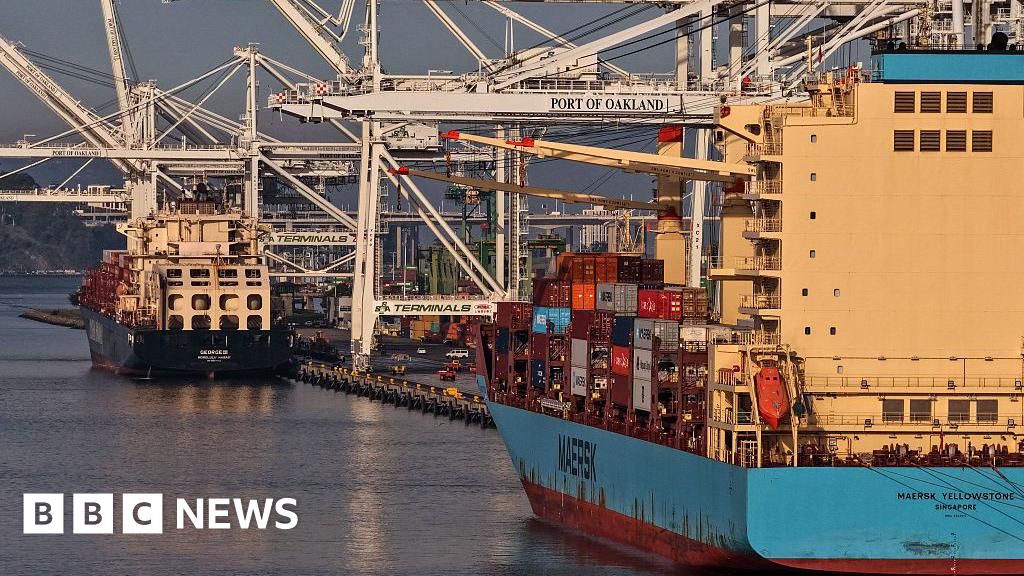
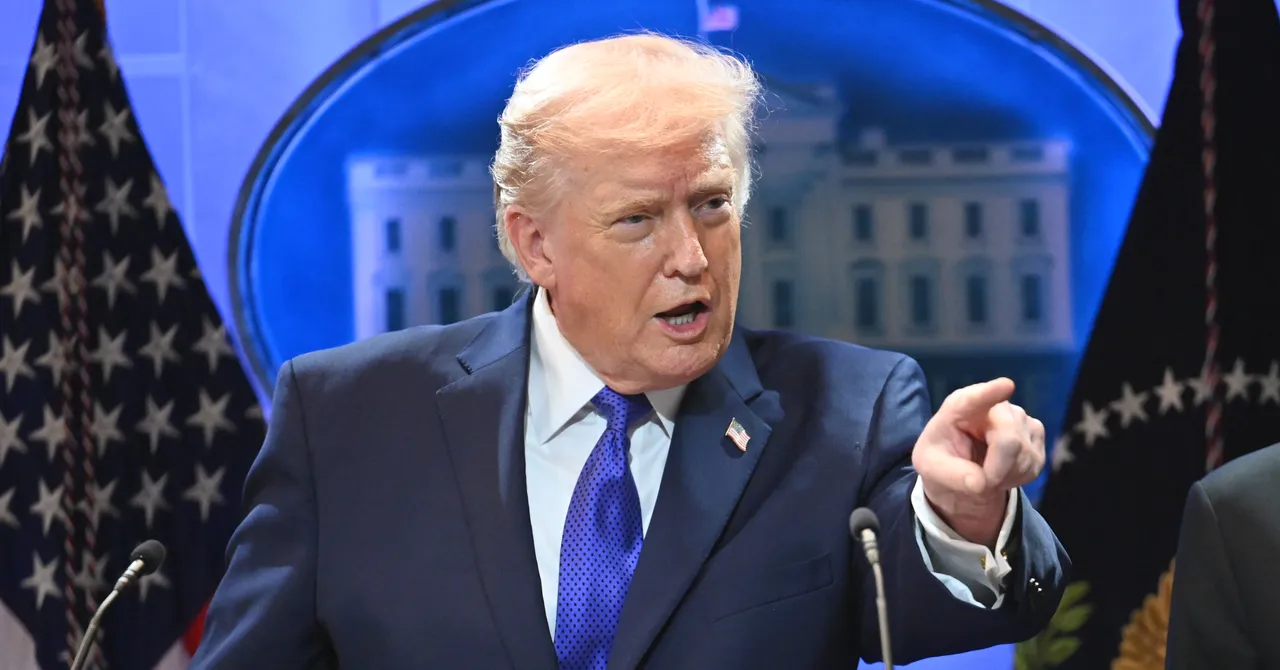
In a bold move that underscores the increasing unpredictability of American trade policy, President Trump has announced a new 10 percent tariff on nearly all imports, effective February 24, 2026. This decision follows a recent Supreme Court ruling that overturned the bulk of tariffs previously imposed last year, highlighting the deepening complexities faced by global supply chains. The policy, rooted in Section 122 of the Trade Act of 1974, grants the administration sweeping powers to impose tariffs during trade deficits, significantly disrupting the established flow of goods—most notably in critical sectors like technology, manufacturing, and raw material sourcing.

The implications for innovation and disruption are profound. With tariffs impacting key components such as semiconductors, rare earth minerals, and critical tech inputs, U.S. industries may face increased costs and supply chain friction. Industry leaders, including giants like Apple and Intel, are already sounding alarms over potential delays and rising expenses that could stifle product development and market competitiveness. For emerging tech startups, these tariffs could represent a barrier to innovation, impeding access to essential foreign supplies and elevating costs at a time when technological leadership is fiercely contested. Less access to affordable components risks undermining the U.S.’s position as a global tech powerhouse, potentially ceding ground to competitors in Asia and Europe who could capitalize on these disruptions.

Furthermore, the strategic deployment of tariffs via Section 122—a rarely used authority—attests to a broader shift in U.S. trade policy. Experts like Gregory Husisian from Foley & Lardner LLP describe this move as a “bridge authority,” designed to leverage temporary measures while preparing for subsequent regulatory maneuvers. In this context, the U.S. government is positioning itself for a protracted battle during which it can invoke other measures, such as Section 301 and Section 232 investigations, to target unfair trade practices or national security threats. These tactics, combined with the suspension of the de minimis exemption, threaten to introduce _massive logistic bottlenecks_ in e-commerce and global trade networks, amplifying costs for consumers and businesses alike.

The broader business implications are unmistakable. As Elon Musk and Peter Thiel have emphasized, technological disruption is not merely about innovation but also about strategic adaptability. The ongoing tariff saga underscores a fundamental warning: in an era where geopolitical tensions escalate, companies must prioritize resilience and agility. The potential for prolonged tariff-related litigation—especially over refund processes and appeals—further amplifies the climate of uncertainty, compelling businesses to adapt swiftly or face obsolescence.

Looking ahead, this policy signals a sharp pivot toward a more protectionist U.S. economy, intensifying the stakes for innovators who rely on global supply chains. Time is of the essence; the window for strategic adjustment is closing swiftly. Industry observers and policymakers alike must recognize that these measures, if sustained or expanded, could reshape the global tech ecosystem—favoring those who innovate swiftly and adapt decisively. As the world watches, the urgency for U.S. companies to rethink supply chain strategies and sharpen their competitive edge has never been greater—an inevitable race toward a future where disruption is the new norm, and only the most agile will thrive.

NHS faces increased costs after court ruling over childbirth negligence lawsuits

The Shift in Justice: How Legal Changes Reflect Society’s Moral Reckoning

In recent months, a landmark judicial decision by the UK Supreme Court has sent ripples through the fabric of families, communities, and public health systems. The court’s ruling, which allows children who suffer catastrophic injuries at birth to claim damages for future earnings, marks a profound cultural shift—away from the traditional legal stance that limited such claims—highlighting society’s evolving criteria for justice and moral accountability. The implications of this decision reflect not only a legal milestone but also expose the underlying societal tensions around #healthcare responsibility and social justice.

Lives Changed, Justice Redefined

This ruling comes at a time when the NHS faces escalating financial strains, with liabilities soaring to over £60 billion largely due to medical negligence during childbirth. Families like that of a girl known as CCC, who endured irreversible brain damage due to medical errors, embody the human cost behind the mounting figures. Her family secured a substantial settlement in 2015 but were denied compensation for lost years, a gap now addressed by the recent legal decision. Sociologists like Anthony Giddens might say that this judicial shift signifies a societal move towards recognizing the moral obligation to uphold the rights of vulnerable children—an acknowledgment that justice for the injured extends beyond immediate damages to encompass their entire life trajectory.

Social Challenges and Communities at Crossroads

  • Education and Family: The ruling underscores the importance of education for families about legal rights and healthcare responsibilities, highlighting the need for societal support systems to adapt in tandem with legal reforms. It presents a challenge: how can communities ensure that families, especially those in vulnerable demographics, are equipped with the resources and knowledge to navigate these complex issues?
  • Health System and Policy: The NHS’s increasing liabilities raise questions about preventative care and systemic reform. Social commentators argue that better investment in prenatal care, staff training, and accountability mechanisms could reduce incidents of negligence. The debate now centers on whether policy can keep pace with societal expectations of justice, or if systemic failures will continue to scar generations.
  • Broader Societal Impact: The societal moral fabric is tested as the line between public responsibility and individual rights becomes clearer. This legal evolution could set precedents affecting future cases, ultimately challenging the notion of collective social justice versus institutional liabilities.

As social thinkers like Hannah Arendt have noted, a society’s moral character is defined by how it cares for its most vulnerable. This decision prompts a reflection on whether justice truly operates as a societal equalizer or if it exacerbates disparities in access and awareness.

Reflections on Society’s Journey

The recent landmark ruling embodies a society on the cusp—struggling to reconcile the moral imperatives of compassion with the realities of systemic failure. Beneath the legal language lies a poignant reminder that every societal law is rooted in moral choices. The hope remains that through ongoing dialogue and reform, communities can forge a future where justice no longer leaves behind those most in need, advocating for families damaged by preventable tragedy and reaffirming societal values of accountability, compassion, and resilience. Society’s greatest challenge is transforming this legal milestone into a catalyst for meaningful social change, fostering a community where learning from past errors leads us toward a more just and humane future—a future where society, like a caring parent, must hold itself accountable for every child’s right to a fair start.

U.S. Court Blocks OpenAI’s ‘Cameo’, Unveiling Battle Over AI Power

Legal Victory and Industry Disruption: Cameo Wins Battle Against OpenAI Over Trademark

In a landmark decision that underscores the escalating tensions between innovation and intellectual property rights, a federal district court in Northern California has ruled decisively in favor of Cameo, the prominent platform specializing in personalized celebrity video messages. The court ordered OpenAI to cease using the word “Cameo” in its AI-driven products and features—a move that sends ripples through both the AI and creator economies. This ruling not only affirms the importance of protecting established brands in a rapidly evolving digital marketplace but also redefines the legal landscape for AI developers and content creators.

Following a temporary restraining order granted last November, OpenAI promptly rebranded its feature from “Cameo” to “Characters,” showcasing a swift, albeit cautious, response to legal pressures. However, the court’s decision reaffirmed the uniqueness of the Cameo brand, emphasizing that intellectual property rights remain a critical battleground in the disruption-driven AI industry. CEO of Cameo articulated confidence in this victory: “This ruling is a critical victory not just for our company, but for the integrity of our marketplace and the thousands of creators who trust the Cameo name.” Nonetheless, OpenAI publicly expressed disagreement, with a spokesperson asserting that “anyone can claim ownership over the word ‘cameo,’” illustrating the ongoing tension between innovative AI product development and legacy branding.

Surge of Legal Challenges Reflects Broader Industry Shifts

While the Cameo case captures headlines, it is part of a broader wave of legal disputes threatening the trajectory of AI and digital media innovation. In recent months, OpenAI has faced multiple lawsuits over intellectual property infringements, including the recent dropping of “IO” branding for new hardware and a suit from OverDrive over its “Sora” video app. This litany of legal challenges highlights a fast-changing industry where market dominance is increasingly intertwined with ownership of content, trademarks, and cultural assets.

Industry analysts from firms like Gartner and MIT warn that these legal disputes could temper the rapid disruption we’ve seen in AI and digital content. Despite the setbacks, the opportunities for disruptive innovation remain vast. Companies that can navigate the legal terrain and protect their intellectual property will secure competitive advantages, paving the way for an era where AI-driven content platforms redefine interaction, entertainment, and creator-driven economies.

Implications for the Future of AI and Content Creation

The legal tussles signal a

*bigger shift in how digital rights, branding, and AI capabilities will coexist.* The disruption caused by this case underscores a need for new frameworks of engagement, emphasizing the importance of respecting cultural and intellectual property boundaries while pushing innovation forward. As Elon Musk and Peter Thiel have often emphasized, the future belongs to those who master the intersection of technology and rights management.

Looking ahead, one thing is clear: the next generation of AI tools and platforms will be shaped by how companies adhere to, and challenge, current legal and market norms. Market leaders and startups alike must accelerate their strategic defenses against infringement claims or risk losing vital ground in this rapidly expanding digital arena. With new legislation and AI capabilities converging, the industry faces a pivotal moment, where innovation, legal acumen, and brand integrity will determine the winners and losers in the technology race of tomorrow.

Cooper Clings to Palestine Action Ban After Court Declares It Unlawful – UK Politics Live

In a nation where United Kingdom politics remains a mirror to the turbulent realities shaping the international landscape, recent legal decisions and diplomatic claims underscore a resurgent era of uncertainty and strategic recalibration. The High Court’s ruling that the government’s ban on Palestine Action was unlawful and disproportionate signals a critical juncture in domestic security policy—one that resonates across global geopolitics. As the UK’s legal system pushes back against government overreach, analysts highlight a wider geopolitical impact—foreshadowing a shift where advocacy, protest, and national security are increasingly entangled in a web of conflicting interests and international pressures.

This legal rebuke forms part of a broader pattern where Western powers are facing complex threats that challenge traditional notions of sovereignty and security. The UK’s foreign secretary, Yvette Cooper, publicly defended her decision to proscribe Palestine Action despite unequivocal evidence suggesting most of their activities did not meet the threshold of terrorism. She relayed that advice had been taken from police and intelligence sources indicating risks of violence, yet the courts concluded the government had failed to follow its own policies, raising compelling questions about the transparency and consistency of security measures. Such a legal setback might embolden other protest groups and civil liberties advocates, but it also sends a message to hostile regimes—highlighting the fragile balance Western democracies must maintain between security and freedom.

The international ramifications extend further into the realm of intelligence and diplomatic disputes. Yvette Cooper has been vocal about the assessment that Russia targeted the opposition figure Alexei Navalny with a deadly toxin derived from frog poison, a claim backed by a coalition of European nations. These countries have reported Russia to the Organization for the Prohibition of Chemical Weapons for breaching the Chemical Weapons Convention. The UK’s narrative frames Putin’s regime as a threat not only to Russian politicians but to global security—exposing a ruthlessness that analysts like Patrick Wintour of The Guardian argue is emblematic of a broader “barbaric Kremlin plot” designed to eliminate dissent with lethal precision. This exchange of diplomatic accusations underscores a larger conflict, reaffirming that the contest for influence and morality is increasingly fought through shadows of poison and the courtrooms of justice.

Amidst these tumultuous developments, the rising influence of China and the shifting priorities of the United States further complicate the global chessboard. Cooper’s comments about Europe’s need to “step up” as U.S. funding diminishes reflect a European-wide strategic awareness—an acknowledgment that the days of unipolar dominance are waning. As international organizations and military alliances struggle to adapt to this chaotic environment, youth and future leaders are called upon to navigate a world where sovereignty is often tested and global order remains fragile. The unfolding drama involving Navalny’s poisoning, the UK’s internal security debates, and Russia’s brazen denial are merely chapters in a larger saga of power, resistance, and the relentless pursuit of truth that history warns will define the 21st century’s geopolitical landscape.

In the shadowed corridors of geopolitics, the echoes of these conflicts spell a sobering message to all observers—history is still unwritten and the verdict of this epoch hinges on the choices made today. The specter of poisons, legal battles, and diplomatic indictments serves as a reminder: the unfolding story of nations will be etched not just in treaties or victories, but in the testimony of justice, the courage of dissent, and the echoes of a world still struggling to find its moral compass amidst chaos. As the dust settles on legal rulings and international accusations, the question remains—who will rise, who will fall, and what legacy will we leave in the shadow of these tumultuous times?

BBC Reports from Oslo Court as Crown Princess’s Son Faces Rape Trial

High-Profile Legal Proceedings in Norway Cast Shadow Over Royal Image Amidst Broader International Tensions

The forthcoming trial of Marius Borg Høiby, the son of Norway’s Crown Princess Mette-Marit, has captivated international attention as it prepares to unfold in Oslo. Accused of 38 charges—including severe allegations of sexual assault, threats, drug offenses, and property damage—Høiby’s case highlights the vulnerabilities of even the most privileged in society. If convicted, he risks a sentence surpassing a decade in prison, a stark reminder that no one is immune from justice, regardless of royal lineage. The recent re-arrest of Høiby, who has now been detained four times since August 2024, underscores the gravity of the accusations and the volatile environment surrounding his legal troubles.

This episode emerges amid revelations of links between his mother and Jeffrey Epstein, the infamous sex offender whose name continues to resonate across geopolitical corridors. These ties, although not necessarily indicative of guilt, raise concerns about the morality and integrity within elite circles, further fueling public mistrust towards the monarchy’s image. International analysts scrutinize this case not just as a national crisis but as part of a broader narrative where the actions of the powerful—especially those connected to prominent families—can undermine a nation’s social fabric. As United Nations and European Union institutions warn against the erosion of trust in leadership, Norway’s royal scandal underscores how personal misconduct can ripple across diplomatic and societal domains.

Impact on International Perception and Geopolitical Stability

Reflecting on this case illuminates a deeper geopolitical impact—how domestic scandals within influential nations shape their international standing. Norway, traditionally viewed as a model of stability and ethical governance, now grapples with an internal crisis that threatens its carefully curated reputation. Such scandals offer adversaries a foothold for criticism, especially within regions eager to highlight perceived moral failings in Western democracies. Economically, the scandal’s fallout could influence investor confidence, especially in sectors tied to Norway’s resource wealth and stability. Moreover, geopolitical analysts warn that these episodes of internal discord, if left unaddressed, risk emboldening opposition factions and destabilizing the social order.

Leading international organizations and security experts articulate concern that scandals featuring royal figures and their families challenge the notion of moral authority necessary for upholding sovereignty and national cohesion. As the case unfolds, the world will watch keenly, recognizing that the consequences extend beyond Norway’s borders. It becomes a symbol of whether societal elites are held accountable, or if they remain above the law, setting a dangerous precedent for societies across the globe.

Historical and Present-Day Parallels: Justice Without Borders

Historically, countries have experienced profound upheavals when scandals involving elites become public. The fall of empires and monarchies can often trace their roots to hidden truths revealed at times of crisis. Today, Norway’s predicament echoes what historians like Barbara Tuchman and Hannah Arendt warned about—the danger of unchecked privilege and the erosion of moral authority. International organizations such as the United Nations emphasize the importance of justice and transparency for peace and stability. Yet, this case serves as a stark reminder that the thin veneer of civility can be shattered overnight when the powerful are exposed, irrespective of national borders or political systems.

As Norway’s courts and society grapple with this controversy, a haunting question remains: Will this be a defining moment for accountability and integrity, or just another chapter in the long saga of elite immunity? The answers lie in how justice is served and whether the tide of public sentiment will uphold the rule of law or be consumed by sensationalism. As history continues to unfold, the weight of this scandal presses heavily upon the shoulders of its participants and observers worldwide—imposing the enduring reminder that no society is immune from the shadows cast by its own secrets.

Minnesota Judge Calls Out Acting ICE Director, Warns of Consequences for Ignoring Court Orders

Judicial Authorities Push Back Against Federal Immigration Policies in Minnesota

The escalating tensions between federal immigration authorities and the judiciary in Minnesota underscore a rising confrontation that threatens to reshape the landscape of U.S. immigration enforcement. At the heart of this conflict is the recent intervention by the state’s top federal judge, Patrick Schiltz, who summoned the acting head of Immigration and Customs Enforcement (ICE), Todd Lyons, warning of contempt of court charges for defying judicial orders. This dramatic stance highlights an emerging crisis of authority, where individual judges are actively contesting federal directives, raising profound questions about the rule of law versus executive overreach.

The core issue stems from Operation Metro Surge, a sweeping and aggressive immigration crackdown initiated under the previous Trump administration. The operation has responded with a series of controversial and often unlawful detention practices targeting immigrants in Minnesota. Many detention cases have entered the judicial pipeline with emergency lawsuits filed on behalf of individuals claiming wrongful arrest and extended detention, often without proper legal process. Judge Schiltz and other federal judges have voiced concern that the administration’s disregard for court orders is causing “significant hardship,” with detainees being moved far from their homes or held in states like Texas despite clear court directives to keep them in Minnesota.

Legal Resistance Reflects Broader Geopolitical and Societal Shifts

  • Judicial rebukes have set the stage for potential *legal challenges* that could either restrain or halt federal immigration enforcement efforts in Minnesota entirely.
  • These developments symbolize a broader *conflict between state and federal authority*—a phenomenon that resonates beyond the borders of Minnesota and into the heart of U.S. sovereignty.
  • Internationally, critics interpret this clash as a reflection of America’s internal struggles over national identity, immigration policy, and the constitutional separation of powers, echoing debates that many analysts compare to volatile shifts currently unfolding in other global democracies.

Leading international organizations and senior analysts warn that ongoing resistance against federal directives could weaken the fabric of international rule of law, especially as the United States serves as a model for judicial independence and constitutional governance. Historians remind us, through echoes of past conflicts, that such internal disputes often signal profound societal transformations—sometimes for better, sometimes for worse. The ongoing confrontation in Minnesota is unlikely to remain isolated, with the potential to inspire or suppress similar resistance in other states facing federal immigration policies.

Implications for the Global Power Balance

As President Biden’s administration seeks to implement more humane immigration reforms, these legal battles expose a complex interstate power dynamic. The pushback from Minnesota’s judiciary complicates the *administration’s efforts* to craft a cohesive national immigration strategy, especially when faced with states that prioritize local policies like sanctuary jurisdictions. The potential for federal-state conflicts to escalate already hints at a fragmented approach to governance that could weaken U.S. credibility abroad. Many international observers see the situation as emblematic of a broader weakening of American institutional authority, which might undermine the country’s ability to project power and stability in the global arena.

This unfolding chapter in U.S. domestic politics bears resemblance to rising sovereigntism observed in other nations, where regional entities challenge centralized authority. The clash over immigration enforcement reveals a society fractured over the very definition of justice and national sovereignty—a duel that could define the United States’ future as a beacon of rule of law or a divided union struggling with internal discord. The weight of history hangs heavily as courts and federal agencies navigate this uncertainty, their decisions shaping the legacy of a nation facing its most defining test yet.

Australia News Live: Butler Faces Off Over Health Funding as Silvagni Premieres in Court

In a world marked by escalating geopolitical tensions and internal crises, Australia finds itself navigating a complex landscape that reflects broader international trends. From domestic legal controversies to regional environmental threats, the nation’s current trajectory illustrates how decisions at the government level can ripple through society with profound consequences. At the heart of these unfolding stories lies a template of the interconnectedness of global and domestic issues, revealing that the fabric of international stability is woven as much from internal disputes as from geopolitical confrontations.

Recently, the conviction of Tom Silvagni, the son of AFL legend Stephen Silvagni, for two counts of rape has ignited intense public debate. Initially shielded by suppression orders Protecting his identity, the lifting of these restrictions underscores a Â*shift toward transparency*Â in managing high-profile criminal cases. However, the repercussions extend beyond personal culpability, illustrating how the public exposure of individuals involved in sensitive crimes influences societal trust and legal accountability. Historians and legal analysts warn that such cases sit at a turning point, reflecting a societal preference for openness, yet risking mental health deterioration among those implicated. Moreover, this domestic incident echoes the broader global discourse on transparency and justice, highlighting how national narratives can mirror worldwide struggles for accountability.

Simultaneously, the ongoing health funding standoff between the federal government and state leaders exemplifies a uncertain path toward a united policy framework. Minister Mark Butler has expressed hope that an additional $20 billion in hospital funding will facilitate an agreement before the holiday season. Yet, the implications extend beyond mere budget negotiations. As advocates for aged care and public health warn that shortages and staffing crises threaten societal well-being, this debate exemplifies how internal policies directly impact public safety and social cohesion. International health organizations, including the World Health Organization, caution that such divergences in policy and funding exacerbate disparities and threaten social stability, especially during periods of crisis. As history has demonstrated, unresolved domestic disputes tend to enflame regional tensions and open gateways for larger geopolitical struggles, making this current standoff not just a local affair but a beacon of larger systemic challenges.

Meanwhile, environmental concerns, notably the predicted marine heatwave conditions threatening the Great Barrier Reef, underscore the urgent need for international cooperation. As climate change continues to accelerate, Australia’s oceans have recorded their warmest 12 months, leading to recurring mass bleaching events. Analysts warn that the ongoing environmental degradation not only endangers one of the world’s most iconic natural wonders but also jeopardizes the economic and cultural fabric of regional societies that depend on tourism and marine biodiversity. Such ecological crises have the potential to destabilize regional power balances, inviting diplomatic tensions over environmental responsibility and climate policy. The response from the global community remains cautious, with some nations adopting a wait-and-see attitude, others pushing for stringent international measures—**yet the planet’s health hangs precariously in this unresolved tension**.

As history continues to unfurl amid the storm, these stories serve as a stark reminder that the weight of national crises is intertwined with the fate of global stability. From domestic legal upheavals to regional environmental threats, each decision, each crisis, emphasizes that our struggles are never isolated but part of a larger, unfolding narrative. The choices made today—whether in courtrooms, legislatures, or environmental summits—are the pages on which the forthcoming chapters of history are written. Only time will reveal if these fissures foster resilience or fracture the ties that hold the fabric of our shared future.

Court warns Australia’s deportation to Nauru could make refugee’s death ‘inevitable’ and preventable

In recent months, Australia has become the focal point of a heated international debate centered around its harsh immigration policies, particularly concerning non-citizens and refugees. The government’s relentless push to deport individuals to remote Pacific islands such as Nauru has raised profound questions about human rights, legal sovereignty, and international relations. The case of an Iranian refugee, identified as TXCM, epitomizes this controversy and exposes the broader geopolitical implications of Australia’s policies. Legal battles over his potential deportation to Nauru—despite clear medical risks—highlight the government’s willingness to prioritize border enforcement over humanitarian considerations, a stance that threatens to destabilize Australia’s standing both regionally and globally.

Under the current government, led by Anthony Albanese, Australia has struck a controversial $2.5 billion deal with Nauru designed to transfer asylum seekers and non-citizens to the tiny Pacific island for long-term detention and visa arrangements. This agreement, enacted in February, serves as a strategic attempt to offload the strain on Australia’s immigration detention system, but it has sparked accusations of moral abdication. Critics, including international human rights organizations and domestic legal experts, argue that this approach “fuels kleptocracy” and dilutes Australia’s moral authority. The decision to extend 30-year visas to those sent to Nauru underscores how the government seeks to normalize indefinite detention, challenging traditional notions of justice and due process within a legal framework that many see as increasingly sidelined.

The legal controversy surrounding TXCM underscores a broader shift in policy and jurisprudence. His case—one of more than 350 non-citizens freed from indefinite detention after the 2023 High Court ruling—illustrates a turning point: the judiciary’s pushback against prolonged detention based on the impracticability of removal. However, recent legislative amendments have sought to undermine this trajectory. The ruling government has swiftly changed the Migration Act to eliminate “natural justice” rights for individuals on removal pathways—effectively stripping non-citizens of fair hearings once deportation is decided. Analysts warn that such measures threaten to embolden arbitrary state power, risking international condemnation and further destabilizing Australia’s diplomatic relations, especially with Iran and other nations whose citizens face deportation.

The geopolitical impact extends beyond Australia’s borders. The Nauru deal—while seemingly a matter of domestic policy—has profound regional consequences. It creates a precedent for other nations grappling with similar migration pressures, potentially emboldening authoritarian regimes to leverage migration controls as tools of strategic influence. European scholars and international organizations have warned that such policies risk fostering “authoritarian resilience” by enabling regimes to manipulate humanitarian norms for political gain. Meanwhile, countries like China observe closely, perceiving Australia’s approach as an example of border militarization that could inspire similar strategies across Asia-Pacific. The unfolding story of TXCM and Australia’s policies serve as a stark reminder that the decisions made now are shaping the future of global governance and sovereignty.

As history continues to unfold, the weight of these decisions cannot be overstated. Australia’s internal debates over justice, morality, and national security are emblematic of a larger global struggle—one where the lines between sovereignty and humanitarian responsibility are increasingly blurred. The coming months are likely to reveal whether Australia’s strict policies will withstand international scrutiny or become a cautionary tale of a nation grappling with its own moral compass. With each legal challenge and diplomatic fallout, the echoes of history grow louder, reminding the world that the choices made today will resonate through generations to come, defining the true character of nations in an uncertain new era.

Social Media Auto Publish Powered By : XYZScripts.com