Matox News

Truth Over Trends, always!

US health dept probes 13 states pushing abortion coverage mandates

US Department of Health and Human Services Launches Investigations into States Over Abortion Laws

Washington D.C. has signaled a renewed federal push to enforce its stance on abortion rights, as the US Department of Health and Human Services (HHS) announced investigations into 13 states over their mandated healthcare policies. The HHS Office for Civil Rights (OCR) contends that these states are potentially violating the federal Weldon amendment, a pivotal law enacted to prevent federal funds from supporting discrimination against healthcare entities that do not facilitate or cover abortions. This move underscores an escalating confrontation at the intersection of state sovereignty and federal authority concerning reproductive rights.

The targeted states, which include California, Colorado, Delaware, Illinois, Maine, Maryland, Massachusetts, Minnesota, New Jersey, New York, Oregon, Vermont, and Washington, are accused of contravening the Weldon amendment by requiring insurance coverage for abortion services. The investigation reflects broader tensions within the Biden administration‘s interpretation of federal laws, particularly its reevaluation of the scope of the Weldon amendment. Past administrations have differed in their understanding; while previous HHS officials limited the amendment’s reach to a narrow range of entities, current officials argue that it protects healthcare entities from state-mandated coverage that conflicts with conscience rights.

This federal action has ignited fierce debates across political lines. Critics, such as New Jersey’s governor Mikie Sherrill, dismiss the investigations as a “fishing expedition” designed to waste taxpayer funds and undermine reproductive freedoms. In contrast, proponents argue that federal law must enforce consistency and respect for conscience rights, asserting that healthcare providers should not be compelled to violate their moral beliefs. These developments illuminate a broader contest over who ultimately controls healthcare policy— the federal government or individual states.

International Ripple Effects and the Geopolitical Impact of US Domestic Policy

While this intra-American judicial and political dynamic unfolds, its geopolitical impact resonates beyond borders. International observers, including analysts from the European Union and human rights organizations, are watching closely. Certain nations argue that the US’s internal conflicts over abortion policy could weaken its moral authority on democracy and human rights principles globally. Critics on the international stage contend that sharp partisan divisions and the weaponization of legal frameworks undermine the United States’ image as a beacon of liberty and rule of law, especially when domestic policies influence America’s global standing.

Historian and geopolitical analyst Dr. Samuel Carter notes that decisions like these have long-term repercussions, shaping alliances and influence. Countries with progressive social policies see the US’s internal strife as an ideological battleground that can embolden adversaries or undermine trust with traditional allies. Meanwhile, opponents argue that the Biden administration’s approach may alienate traditional conservative allies and stir up new conflicts over moral and cultural values that extend into international diplomacy.

Looking Ahead: A Critical Juncture in America’s Political Evolution

As the investigations continue and legal battles unfold, the outcome has the potential to redefine the delicate balance between federal authority and states’ rights. The potential rollback of abortion protections in certain states could have profound societal repercussions, from shifting population movements to altering the political landscape ahead of upcoming elections. The confrontation exposes a nation torn between recognizing individual conscience and respecting legislative mandates— a conflict that echoes across political and ideological divides.

The weight of history hangs heavy as America approaches a critical crossroads. The decisions made today will determine not only the future of reproductive rights but also the scope of federal influence over state sovereignty. As international eyes remain fixed on Washington, the world watches closely, realizing that what happens within these borders could shape the global order of values, law, and power for generations to come. The pages of history are still being written, and the struggle over the soul of a nation continues— a vivid reminder that the future is forged in the crucible of present conflicts.

Samoa PM silences nation’s only daily in crackdown over coverage dispute

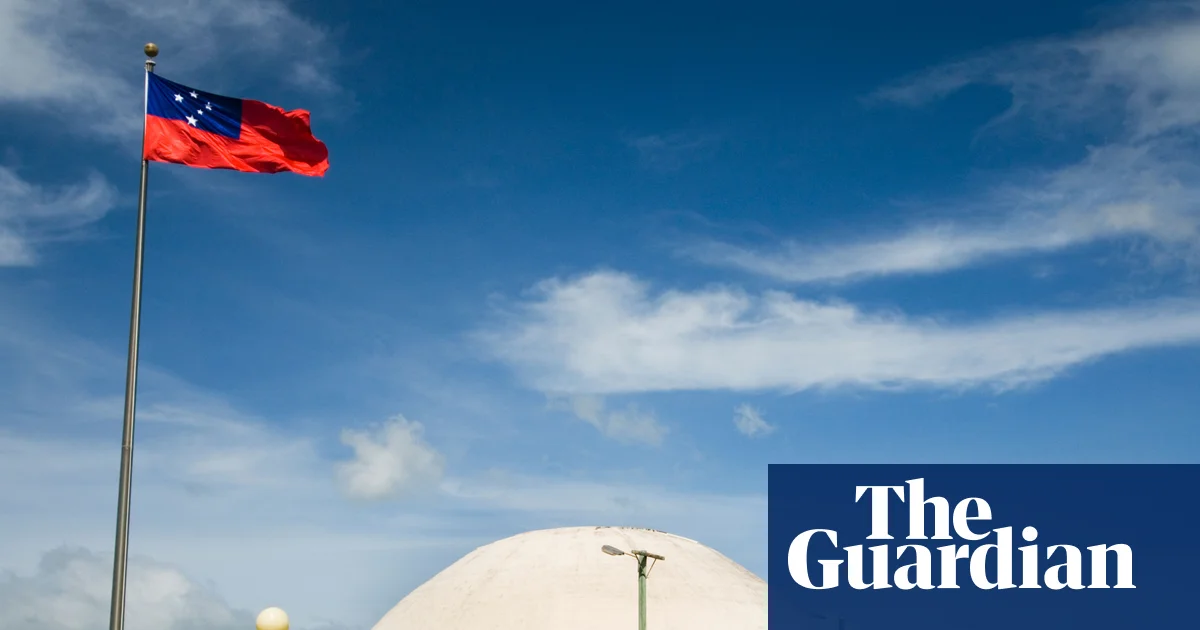
Samoa, often regarded as a model democracy within the Pacific region, now finds itself at a critical crossroads that could redefine its political landscape. The recent decision by Prime Minister La’aulialemalietoa Leuatea Polataivao Fosi Schmidt to ban Samoa’s only daily newspaper, the Samoa Observer, from attending press briefings signals a troubling shift towards authoritarianism cloaked as leadership. The move, reportedly in response to alleged inaccurate reporting during the prime minister’s medical absence in New Zealand, raises profound questions about how governments manipulate media to stifle accountability and transparency. Such actions serve as a stark warning to global observers: in the pursuit of consolidating power, democratic norms—particularly the freedom of the press—are under siege.

Historically, robust journalism has been the cornerstone of democratic governance, holding leaders accountable and providing citizens with vital information. In Samoa’s case, critics and international watchdogs, including the Pacific Freedom Forum, argue that this unprecedented ban is an effort to silence critical voices. Samoa’s government justifies the move by citing examples of alleged misinformation, yet many analysts contend that the timing reveals a calculated attempt at information control. The Samoa Observer’s editorial explicitly rejected the accusations, emphasizing its independence and commitment to public-interest journalism. Leaders and international observers warn that such restrictions threaten to weaken the very fabric of democracy, reinforcing a pattern seen in authoritarian-leaning regimes globally.

The ramifications extend beyond Samoa’s borders, influencing regional stability and international relations. Decisions to suppress media coverage can set dangerous precedents, emboldening other governments in the Pacific and beyond to crack down on press freedom. The Samoa Alliance of Media Practitioners for Development (Sampod), along with other regional bodies, highlighted the peril of undermining media independence. “Restricting access to critical scrutiny disarms citizens’ ability to hold leaders accountable,” explained Sampod’s representative, Lilomaiava Maina Vai. If unchecked, such measures risk normalizing hostility toward journalists, diluting democratic accountability, and fostering environments where dissent is considered a threat rather than a vital component of political discourse.

Outside Samoa, opposition figures have voiced their condemnation. Fiame Naomi Mata’afa, leader of the Samoa Uniting Party, and Tuilaepa Aiono Sailele Malielegaoi, former Prime Minister, both accused the government of attempting to suppress transparency. The controversy has ignited a debate about how leadership accountability is intertwined with media independence—an issue resonating throughout the Pacific region and many emerging democracies. As Samoa navigates this turbulent chapter, its internal struggles mirror a much larger narrative about the fragility of democratic institutions in a world where information has become the most potent currency.

The story remains unwritten, but the consequences are immediate and far-reaching. Samoa’s internal debate over press freedom exemplifies a pivotal question facing many nations in an era of misinformation and digital hostility: Can democracy survive when the very organizations meant to uphold truth are silenced? History will judge whether Samoa’s leaders recognize that true strength lies in transparency and accountability or continue down the path of silence and control. As the world watches, the echoes of this unfolding story serve as an urgent reminder: the battle for free information is the frontline in safeguarding the future of democracy, and its outcome may very well determine the legacy Samoa leaves behind in the annals of history.

Women claim Andrew Tate abuse, call out ‘misleading’ Spectator coverage.

Concerns have been raised over an interview featuring Andrew Tate, a controversial figure known for his inflammatory views, published in the Spectator magazine, which is edited by Michael Gove. Four women alleging sexual abuse by Tate have lodged a formal complaint with the Independent Press Standards Organisation (Ipso), challenging the portrayal of their accusations in the piece.

The women, who have filed a high court claim against Tate for serious allegations—including rape and coercive control—are claiming that the article, penned by Deputy Editor Freddy Gray, misrepresents their experiences and undermines the gravity of their claims. They believe that the publication failed to adequately address the impact of Tate’s actions, which they argue contributes to a broader culture of dismissing survivor voices.

This situation highlights an ongoing debate about how media outlets handle sensitive topics, especially when it involves high-profile figures. Critics argue that sensational interviews can inadvertently glorify problematic individuals while silencing the narratives of those who have suffered. The women in question are pushing back, advocating for responsible journalism that prioritizes truth and sensitivity over sensationalism.

As this story unfolds, the implications for media ethics and the accountability of influential voices remain significant. It’s a critical moment for young people to engage in discussions about representation and responsibility in media, ensuring that survivor stories are not merely used as a backdrop for flashy headlines but are respected and treated with the seriousness they deserve.

Social Media Auto Publish Powered By : XYZScripts.com



