
Matox News

Truth Over Trends, always!

Palantir Drops Bold Statement Opposing Progressive Cultures and Embracing Traditional Values

Palantir’s Latest Strategic Discourse Signals Disruption at the Intersection of Innovation and Power

In a move that underscores the shifting landscape of global technology, Palantir, the analytics and surveillance titan, has unveiled a revealing 22-point summary of CEO Alexander Karp’s recent book, “The Technological Republic.” This publication marks a pivotal moment in how private sector firms are articulating their influence over national security and geopolitical stability. With its emphasis on technological dominance and strategic foresight, Palantir is positioning itself at the forefront of what could be termed the “new era of deterrence,” heavily leveraging artificial intelligence (AI) to redefine our understanding of security and power.

Built on the assertion that the atomic age is ending and a new AI-driven era of deterrence is emerging, Palantir’s narrative intensifies the discussion surrounding innovation’s role in military and security domains. The company argues that adversaries are progressing unimpeded, regardless of moral debates, emphasizing that the development of AI weapons and sophisticated surveillance tools will proceed regardless of Western moral hesitations. According to industry analysts at Gartner, such rhetoric reveals a deliberate move towards disruption of traditional geopolitical norms—prompting a reevaluation of military preparedness, technological diplomacy, and the very fabric of international power structures.

Implications for Industry and Geopolitics

Palantir’s explicit positioning as a defender of the “West” and critic of “postwar neutering” demonstrates a strategic recalibration — aiming to protect Western priorities amid a rapidly evolving technological battlefield. Its focus on AI’s military potential—highlighted in the statement that “the question is not whether AI weapons will be built,” but rather who will build them and for what purpose— signals a clear intent to influence both policy and technological innovation. This stance is likely to accelerate investments in autonomous systems, AI-driven intelligence, and data-centric warfare, disrupting established industries and creating new opportunities for defense contractors and tech disruptors alike.

Furthermore, Palantir’s critique of “shallow” cultural pluralism and its emphasis on recognizing the accomplishments and threats posed by different cultures highlight a strategic narrative aimed at shaping a new ideological framework. This narrative aligns with emerging trends in “tech-power nationalism,” where innovation is intertwined with national sovereignty and strategic autonomy. Such a shift could lead to more aggressive policies around AI development, cybersecurity, and digital sovereignty, challenging both traditional alliances and fostering new blocks of technological influence.

Future Outlook: Innovation as the New Cold War

With companies like Palantir advancing their vision of a “Technological Republic,” the landscape of international security is inching towards a new paradigm—one where innovation and disruption are the currency of power. The upcoming TechCrunch event in San Francisco from October 13-15, 2026, is poised to spotlight these evolving dynamics, as thought leaders and industry pioneers debate the ethical and operational implications of AI-driven defense systems. Experts such as Elon Musk and Peter Thiel have long warned of the stakes involved; now, the industry is walking the line between revolutionary promise and potential peril.

In an era where technological superiority could determine geopolitical outcomes, the imperative for policymakers, entrepreneurs, and military strategists alike is clear: speed up innovation, secure strategic advantages, and prepare for a future where AI and data-centric technologies redefine the battleground of influence. Failing to act swiftly could cede dominance to adversaries who are unafraid of crossing moral boundaries in pursuit of strategic asymmetry. As Palantir’s bold ideological push underscores, this is a high-stakes game with profound implications for global stability, economic power, and national sovereignty.

Massive roadside Cheeto draws in crowds—snack culture’s newest icon hits the scene

Embracing the Quirks: How Unusual Landmarks Shape Our Lifestyle Perspectives

In a world increasingly characterized by a quest for authenticity and *memories worth sharing*, roadside attractions like the towering, brightly colored Giant Cheeto sculpture serve more than just as photo ops—they become symbols of local culture and lifestyle shifts. This larger-than-life snack, with its vibrant orange dust and exaggerated fingers, draws crowds eager to engage with the unexpected. Such landmarks resonate particularly with the young, adventure-seeking demographic that appreciates the blending of humor, nostalgia, and a touch of absurdity to enhance their personal experience.

Many wellness and lifestyle experts highlight the importance of embracing *quirky environments* as a pathway to **mental rejuvenation** and **community connection**. According to author and mindfulness advocate Dr. David B. Krantz, engaging with playful, unconventional settings can encourage a break from the monotony and foster a sense of shared joy. As travelers and locals alike flock to these eye-catching landmarks, they participate in a broader **cultural narrative**—one that champions **individuality** and **creativity** over conformity**. The Giant Cheeto, for instance, isn’t just a funny spectacle; it’s a reflection of local identity, illustrating how communities are seizing opportunities to infuse their everyday spaces with humor and vibrancy.

Beyond their entertainment value, these attractions subtly influence personal and collective *wellness* by promoting leisure pursuits that celebrate uniqueness and foster **positive social interactions**. When young explorers document their visits and share these moments online, they often report a sense of *rejuvenation*, inspiration, and a renewed appreciation for **the simple joys of life**. Practical tips for integrating such experiences into a lifestyle include:

  • Seek out quirky landmarks during road trips for spontaneous fun and photo opportunities.
  • Share your adventures on social media to inspire others and strengthen personal community bonds.
  • Balance adventure with wellness by pairing visits to playful sites with outdoor activities like hiking or picnicking.

Ultimately, the journey toward a well-rounded lifestyle involves embracing these moments of lightheartedness, which serve as reminders that **life is as much about discovery as it is about purpose**. Whether it’s a giant snack sculpture or an obscure roadside mural, these landmarks invite us to see the world not just through a lens of productivity but through a prism of **curiosity and fun**. As cultural historian Robert Hughes once mused, *“Every city has its landmarks, and they serve as *metaphors for the human condition*—sometimes amusing, often absurd, but ultimately essential in shaping how we see ourselves and the world around us.”* So, embrace the quirks, chase the roadside curiosities, and let each discovery encourage a fresh perspective—because in the pursuit of life, *it’s the unexpected that often leaves the most lasting impression*.

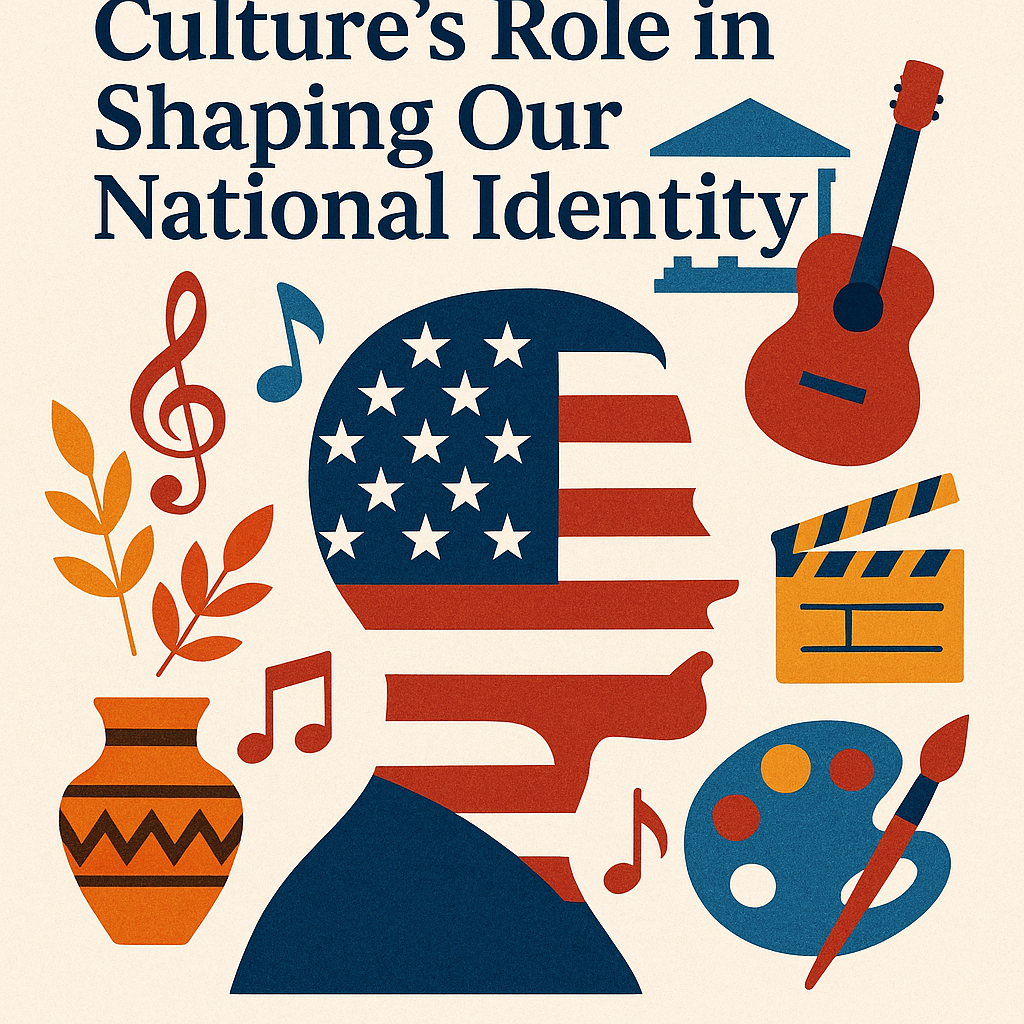
Culture’s Role in Shaping Our National Identity

At the core of a nation’s identity lies its culture — an intricate tapestry woven from history, traditions, language, and shared values. Critics often argue that in an increasingly globalized world, the preservation of cultural distinctiveness becomes a challenge, yet it remains the most powerful force shaping national character. Alexis de Tocqueville famously observed that culture provides the moral fabric that binds individuals to their collective destinies. Today, as nations face pressures from economic and cultural homogenization, it becomes essential to recognize how deeply rooted cultural narratives foster a sense of belonging and reinforce the social cohesion needed for a resilient nation.

Many contemporary analysts suggest that the identity crises faced by modern nations can be traced back to the erosion or neglect of cultural foundations. When policies prioritize economic growth over cultural preservation, societies risk losing their distinctiveness, leading to a dilution of their shared values. This concern has been passionately articulated by thinkers like Samuel P. Huntington, who argued that cultural identities are vital in shaping political stability and social harmony. A nation’s cultural narratives serve as a bridge connecting past, present, and future — fostering a collective memory that guides societal norms and expectations. When these narratives are deliberately marginalized, communities may experience fragmentation, weakening the social fabric that has historically held them together.

Furthermore, educational systems and media serve as battlegrounds for cultural transmission, playing a pivotal role in either strengthening or undermining national identity. Critics note that in many democracies, there is a tendency to soft-pedal the importance of shared cultural values to appease a globalized mindset that champions diversity at the expense of unity. However, as Roger Scruton emphasized, a vibrant national culture is essential for fostering patriotism and civic pride — qualities that underpin societal resilience in times of crisis. It is through the celebration of heritage, language, and traditions that young generations cultivate a deep-seated respect and understanding for their roots, ensuring that the spirit of the nation endures amid tides of change.

Ultimately, the weight of culture in shaping our national future resonates as an almost poetic truth: that in the silent depths of shared stories and customs lies the blueprint for survival and renewal. As history’s currents threaten to drown distinct identities in a sea of sameness, it falls upon each generation to carry the torch of cultural memory. For only then can a nation remain more than just a geopolitical entity — it becomes a living, breathing vessel of collective hope, resilience, and destiny. The future waits patiently in the shadows of history, whispering that a nation’s true strength is not merely in borders or armies, but in the enduring legacy of its cultural soul, beckoning us towards a horizon where identity is not lost but reborn anew in the flames of tradition and innovation alike.

Social Media Auto Publish Powered By : XYZScripts.com



