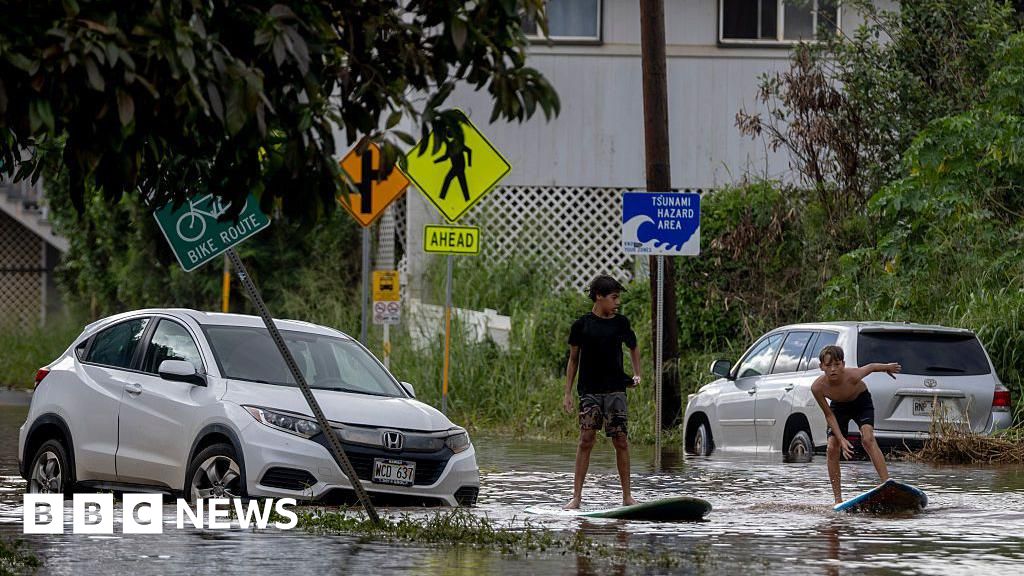

Recent weather calamities in Hawaii have underscored the devastating toll that climate-related disasters can impose on local infrastructure and economies. Governor Josh Green announced that the full extent of damages to roads, bridges, and essential services remains unassessed but emphasizes that the catastrophic flooding has already revealed vulnerabilities that could have broader geopolitical implications. As global climate change accelerates, such events threaten to destabilize regional stability and heighten the pressure on international aid agencies, prompting a reevaluation of resilience strategies in vulnerable areas.
The rains and flooding — described as some of the worst in recent memory — have caused widespread destruction that not only disrupts daily life in Hawaii but also serves as a stark warning to nations worldwide. Historically, such extreme weather events have been catalysts for policy shifts aimed at boosting infrastructure resilience, but critics argue that many governments lag behind in implementing necessary reforms. International organizations like the United Nations have repeatedly called for urgent action, yet debates persist over responsibility and funding, especially for impoverished or politically unstable regions. This calamity spotlights the ongoing climate crisis, which analysts warn could provoke increased geopolitical tensions as nations scramble for resources and aid.
Geopolitical impact extends beyond environmental considerations. As Hawaii contends with the aftermath, regional and global leaders are assessing how climate change can exacerbate existing tensions—particularly in areas prone to natural disasters. Allegiances are being tested, with some nations using such events as opportunities to leverage aid and influence, while others face internal criticism for inadequate preparedness. Many security experts, including those at the International Crisis Group, warn that in a world increasingly shaped by climate-induced disruptions, failing to prepare could lead to humanitarian crises that destabilize entire regions, causing ripple effects that threaten global peace.
Moreover, the ongoing situation in Hawaii, a U.S. state often perceived as a remote paradise, lays bare the importance of proactive governance in safeguarding national interests. History demonstrates that neglecting infrastructure and environmental preparedness in key strategic regions can have ripple effects far beyond local borders. As international institutions urge for coordinated responses, questions remain about the pace and adequacy of such measures. The unfolding catastrophe in Hawaii is not solely a regional issue—it is a mirror reflecting a world at a crossroads, where climate change, geopolitical contestation, and societal resilience intertwine in a dangerous dance.
As the waters recede and the dust settles, the true magnitude of this crisis will become clear. Yet one thing remains certain: the historical narrative that emerges from this tragedy could redefine how nations prepare for an uncertain future. In the shadows of impending global shifts, the enduring question echoes—will humanity learn to confront its most formidable challenge, or will this be yet another chapter in a story of lost opportunities and rising threats?