Matox News

Truth Over Trends, always!

Breaking Barriers: How Blind and Visually Impaired Adventurers Conquer the World

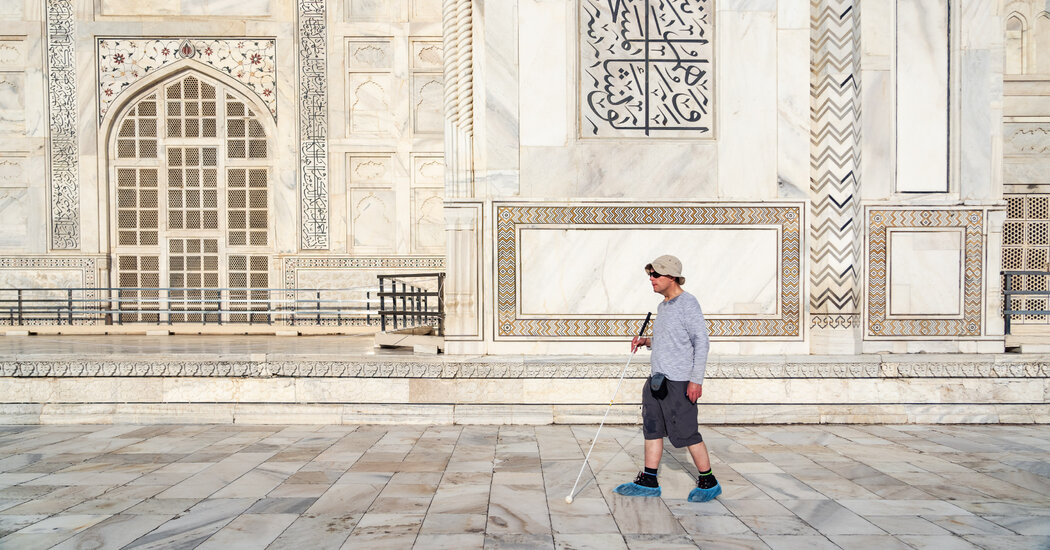
In the dawn of history, culture has been the vessel through which societies preserve their identity, remnants of tradition, and visions for the future. The contemplative journey of experiencing unfamiliar places—whether through sight or other senses—reminds us that culture is not merely a collection of artifacts or landscapes, but a living, breathing narration of human life across generations. Consider the story from the Taj Mahal’s grounds, where even the silence, the scent of perfumed air, or the echo of recited prayers, becomes a part of this grand narrative—an inner dialogue with eternity that transcends visual spectacle alone.

An Immersive Reflection on Perception and Humanity

The extraordinary narrative of a journey with Traveleyes reveals that perception is the bridge that connects the senses to our understanding of society. The founder Amar Latif, a British entrepreneur who lost most of his sight due to hereditary retinal disease, exemplifies how culture’s core lies in multisensory engagement. His company’s ingenious model—pairing blind and sighted travelers as equals—embodies a profound truth: the fullness of human experience is not confined to sight but flourishes through touch, smell, sound, and imagination. This approach reflects Ortega y Gasset’s philosophy that society’s authentic fabric is woven through shared perceptions, where empathy becomes the key to unlocking cultural depth.

The Heritage of Tradition and the Power of Imagination

As travelers of different backgrounds navigate the streets of Jaipur or Delhi, the stories they gather through tactile interaction, sensory descriptions, and emotional resonance reaffirm the belief that culture is a living memory that also prophesies the future. Chesterton’s idea that tradition is the democracy of the dead seems fitting here. These encounters remind us that cultural symbols—whether the carvings in an ancient temple or the bustling markets—are not static relics but part of a continuum that shapes identity and societal character. When Candie, who views the world through the lens of touch and scent, describes her experiences, it demonstrates that the essence of a society’s soul can be experienced beyond the visual, deepening our appreciation of its true character.

Culture Today: A Reflection and a Warning

In this age of digital spectacle, where images often dominate, the narrative of multisensory travel and shared human understanding is a timely reminder. Societies that forsake their cultural memory risk becoming nothing more than fleeting impressions, like film snippets rather than novels—engaging only the surface. Tocqueville, who explored the delicate balance between individual liberty and societal tradition, would warn against allowing the vivid and transient visual culture to drown out the subtler, enduring stories told by our customs and collective memories. Our youth, especially, must recognize that culture embodies the continuity of tradition and the prophetic voice of future generations, and that allowing it to decline is akin to losing the script of human history itself.

The Eternal Tapestry of Humanity

Ultimately, if we listen closely and look with more than just our eyes, we realize that culture is the long and lyrical story of humanity—its memory, its hopes, its prophetic visions of what humanity can become. Through the visceral experiences of sensory travelers, we find that the human spirit’s true voyage is inward as much as outward. As T.S. Eliot noted, “The only tradition that matters is the one alive in our ears and hearts today.” In this ongoing symphony of human history, we are both the custodians of a precious inheritance and the architects of a luminous future—dreamed into being through the persistent power of culture’s memory and prophecy.

Peppa Pig’s hearing loss story could help end society’s stigma on disabilities

Social Dynamics in Education: Embracing Diversity and Inclusion

In recent developments within the realm of special education, the leadership at a school serving the deaf community has emphasized initiatives aimed at fostering greater inclusion and social integration. The head teacher highlighted that certain episodes or activities are designed to help deaf children “not feel so different,” underlining a vital societal shift towards recognizing the importance of empathy, acceptance, and community cohesion. This focus underscores the fundamental understanding that social inclusion within educational settings not only benefits students’ individual development but alsoRipples across families and broader communities, impacting perceptions of diversity.

However, the pursuit of genuine inclusion often exposes the persistent challenges that families and communities face in bridging communication gaps and breaking down societal barriers. Social commentators and sociologists such as Dr. Mariana Ruiz suggest that when schools actively work to diminish feelings of marginalization among students with disabilities, they foster environments where every child can thrive. Nonetheless, such efforts often require significant resource investment, comprehensive training, and cultural sensitivity—elements that are not always adequately addressed. Therefore, the journey towards true inclusion demands a societal commitment to re-evaluate how educational institutions and public services recognize and support the diverse needs of their communities.

Moreover, these initiatives impact not only the students but also ripple into familial structures. The parents of deaf children frequently face social stigmas, misunderstandings, and a lack of adequate support systems. As noted by historian Dr. Robert Clarkson, historical narratives often marginalized deaf culture and undervalued the importance of linguistic and cultural identity. Today, however, a growing recognition of the cultural significance of deafness and sign language is fostering a paradigm shift—one that values differences as strengths rather than deficits. This shift is critical for helping families feel more connected and supported, aspiring towards a society where every family’s story is recognized as an integral thread in the social fabric.

In contemplating these social transformations, it becomes clear that the challenge lies in addressing the structural inequalities and cultural biases that still pervade many aspects of society.

  • Implementing inclusive curricula that validate multiple ways of learning and communicating
  • Training educators to be culturally competent and sensitive to diverse needs
  • Expanding community outreach programs to foster understanding and acceptance
  • Developing policies that ensure equitable access to resources for marginalized groups

These initiatives are essential stepping stones toward creating a society where diversity is celebrated and all children can genuinely feel they belong.

As society continues to grapple with complex issues of identity, communication, and belonging, the enduring question remains: how do we build a collective future where social acceptance replaces exclusion? In the quiet resilience of children learning to navigate their worlds and in the dedicated efforts of educators seeking inclusivity, there lies a spark of hope. Society’s capacity to transform itself—embracing cultural shifts and addressing social tensions—might ultimately forge communities where every voice is heard, and every child’s potential is realized. The dawn of such a future beckons, urging us to reflect on our shared responsibility: to craft a society that values not just tolerance, but genuine understanding and unity.

Social Media Auto Publish Powered By : XYZScripts.com



