Matox News

Truth Over Trends, always!

Bad Bunny Sparks MAGA Frenzy Amid Youth Wave

Innovation at the Intersection of Culture and Business

Over the past year, emerging trends in technology and entertainment reveal a clear shift toward disruption and cultural resonance. A prime example is the strategic partnership between the NFL and Bad Bunny, a move that exemplifies how traditional industries recognize the necessity of integrating cutting-edge cultural icons to stay relevant on the global stage. This collaboration signifies more than just an entertainment stunt; it embodies a deliberate effort to rebrand the league and tap into the fastest-growing demographic segments, particularly the Hispanic market.

Recognized as the most streamed artist worldwide from 2020 to 2022, Bad Bunny has become a pivotal figure in reshaping the entertainment landscape. His influence, fueled by innovation in digital distribution and social engagement, exemplifies how disruption in the entertainment industry leads to new revenue streams and audience segmentation. The NFL’s calculated move to secure such a global icon signals a broader shift: traditional sports franchises are now leveraging cultural relevance and social identity to amplify their brand equity and ensure sustainable growth in a rapidly evolving marketplace.

Technological Innovation Driving Cultural Relevance

This strategic synergy is reinforced by an industry-wide emphasis on integrating technological advancements to enhance engagement and appeal. For example, Gartner highlights how live streaming, augmented reality, and personalized content delivery are transforming how audiences connect with their favorite sports and entertainment icons. Such innovations not only facilitate global outreach but also enable brands like the NFL to harness data-driven insights for targeted marketing campaigns.

The NFL’s partnership with Jay-Z’s Roc Nation exemplifies this approach—melding cultural influence with technological sophistication to produce content that sparks social dialogue. Kendrick Lamar’s politically charged 2024 Super Bowl halftime show epitomized risk-taking—using American symbolism for critique—demonstrating that disruption in content can be a potent tool for media engagement and societal reflection. These shifts underscore the industry’s recognition that standing still is tantamount to losing market relevance, especially among younger, digitally-native audiences.

Business Implications and Industry Transformation

  • Traditional media consumption models are being challenged by interactive and immersive formats that promote engagement beyond the screen.
  • Brands that adopt a platform-agnostic approach—integrating music, sports, and social activism—gain a competitive edge by building authentic connections with diverse demographic groups.
  • The emphasis on representation and inclusion is no longer peripheral but central to marketing strategies, serving both cultural and shareholder value.

As expert analysts from institutions such as MIT and Forrester observe, these shifts are indicative of a new paradigm—where innovation and social relevance drive consumer loyalty and revenue in tandem. The rapid pace of technological evolution demands that industry players, from sports leagues to entertainment giants, prioritize agility and cultural intelligence. The next decade promises a landscape where disruption will be the norm, and those who fail to adapt risk obsolescence.

In conclusion, the convergence of technological innovation, cultural disruption, and strategic business positioning sets the stage for a future where industries are more interconnected, competitive, and dynamic than ever before. As figures like Elon Musk and Peter Thiel have long emphasized, embracing change is not optional—it’s essential for survival. The challenge now lies in leveraging these shifts swiftly and decisively, or else being left behind in the wake of relentless progress.

Trump calls on Microsoft to dismiss global affairs chief Lisa Monaco

Microsoft Under Scrutiny as Political Tensions Hit Tech Leadership

The intersection of politics and cutting-edge technology continues to reshape the landscape of corporate governance and national security. Microsoft has found itself embroiled in controversy following the appointment of Lisa Monaco as the company’s president of global affairs. Formerly a senior National Security aide under Barack Obama and Deputy Attorney General under Joe Biden, Monaco’s role grants her access to highly sensitive information, raising concerns among critics about potential conflicts of interest and security vulnerabilities. This political friction underscores a broader trend where deliberations over national security intersect directly with corporate decision-making—an environment that demands innovation in security protocols and strategic agility from tech giants.

In response to critics, notably former President Donald Trump, who called for her immediate dismissal citing national security concerns, the debate highlights the evolving business implications of such appointments. Trump’s administration rescinded Monaco’s security clearance earlier this year, reflecting ongoing efforts by political figures to influence corporate leadership roles through security and ideological lenses. Meanwhile, Microsoft’s response to the controversy remains cautious, with TechCrunch reporting that Monaco assumed her role in May, overseeing cybersecurity policies and international diplomatic relationships—an area where technological disruption is critical to maintaining security and competitive advantage.

Beyond the immediate political fallout, this controversy exemplifies the **disruption** occurring within the tech industry—particularly around national security and business strategy. Critics like right-wing activist Laura Loomer have used the controversy to allege unfair political bias, urging for termination of all Microsoft government contracts. This political activism amplifies the already complex challenges of balancing innovation and security with public relations and political pressures. It also signals a larger industry trend: tech firms are increasingly becoming battlegrounds for ideological influence, with the potential to impact major contracts, international negotiations, and global security strategies.

Strategic Market Shifts and Industry Disruption

As governmental oversight tightens, industry leaders must innovate rapidly—particularly in cybersecurity and geopolitical risk management—to sustain their competitive edge. The industry is witnessing unprecedented disruption in how tech companies navigate political landscapes. Notable milestones include increased partnerships with foreign governments, integration of advanced AI for threat detection, and hybrid policies that better align corporate governance with national security requirements.

Experts from institutions like Gartner warn that failures to adapt could threaten market stability, prompting a wave of strategic investments aimed at safeguarding data sovereignty and operational integrity. The forward-looking trajectory indicates that those who prioritize security innovation—such as deploying decentralized blockchain governance models or integrating AI-driven threat intelligence—will dominate the next decade. However, the evolving political environment necessitates bold, disruptive strategies, where swift executive decisions and unwavering commitment to security can spell both success and peril.

Conclusion: An Urgent Call for Innovation and Vigilance

The ongoing saga featuring Microsoft and its leadership exemplifies a broader narrative—where the future of technological dominance hinges on resilience, innovation, and the capacity to navigate geopolitical turmoil. Industry leaders must act swiftly, deploying disruptive innovations that secure both their platforms and their reputations amidst mounting political risks. As emerging technologies like AI, quantum computing, and blockchain continue to revolutionize the digital realm, the capacity to adapt to this rapidly shifting landscape will determine which firms lead—and which fall behind. The imperative for bold vision and relentless security innovation has never been more urgent in shaping a resilient, competitive global tech ecosystem.

Broadcast TV’s melting—Kimmel’s heating things up even more

Major Shift in Broadcast Media: Technology and Power Dynamics Evolve

This week’s controversy surrounding ABC and the suspension of Jimmy Kimmel highlights a brewing transformation within the media industry—one driven by technology, regulatory influence, and cultural polarization. The decision by Sinclair and Nexstar, two influential right-leaning affiliates, to refuse carriage of Kimmel’s show is emblematic of a broader shift that signals the accelerating decline of traditional television as the dominant distribution medium. It’s a wake-up call for media giants and startups alike, illustrating how disruption within the sector is poised to reshape business models and market power structures in the coming years.

The roots of this upheaval lie in the fundamental obsolescence of the regulatory framework governing TV broadcasting. The Federal Communications Commission (FCC), long a gatekeeper of broadcast licenses—originally designed to serve a predominantly over-the-air, antenna-based viewership—now faces irrelevance in an era where streaming services, internet platforms, and on-demand content dominate consumer habits. Industry analysts from Gartner and academic institutions like MIT concur that the era of “broadcast spectrum” as a critical asset is nearing its end, with some experts estimating that the burden of legacy regulation could soon be lifted entirely.

This impending transformation isn’t just theoretical; it’s already underway. Disney and other industry leaders are moving aggressively into streaming—Disney+, ESPN+, and similar outlets are pioneering direct-to-consumer models that bypass traditional affiliates entirely. The notion that broadcasters could be threatened with license revocation if they refuse to air controversial content or political viewpoints underscores how governmental influence is flexing to maintain control over an industry that no longer fits within its original design. Former FCC officials and industry insiders believe that this pressure is just the tip of the iceberg, with “broadcast is a melting ice cube”—a phrase that encapsulates the urgency for traditional companies to adapt or face obsolescence.

In response to these seismic shifts, innovative financial and strategic recommendations are emerging from think tanks and investment firms such as Needham. Their endorsement of Disney’s move to fully transition into streaming underscores a broader industry consensus: disruption is inevitable, and adaptation is paramount. The suggestion that Disney should immediately begin streaming its entire schedule exemplifies how the business model must evolve to maximize profit streams, enhance viewer engagement, and hedge against declining traditional ad revenues. The potential market implications are substantial; as streaming subscriptions and ad-based digital models proliferate, entrenched cable and broadcast revenue streams could be reduced to a fraction of current values. The overall market cap of major conglomerates like Disney could surge, driven by efficiencies and new consumer engagement avenues, leaving old-school broadcasters scrambling to stay relevant.

Looking ahead, the industry’s trajectory suggests a swift acceleration toward hyper-digital, decentralized content distribution. Regulatory bodies like the FCC may soon lose their grip, paving the way for a deregulated environment where innovation reigns supreme. Traditional broadcasters will need to pivot rapidly—embracing AI, data analytics, and direct-to-consumer streaming platforms—to avoid becoming relics of a bygone era. For youth-oriented investors and tech innovators, this is a defining moment: the rules are being rewritten, and the stakes have never been higher. The question now is whether legacy players can harness the disruptive wave or if new entrants—agile, tech-savvy companies—will take control of the future media landscape. The urgency to act is clear; if they fail to adapt now, they risk becoming footnotes in a burgeoning digital empire driven by innovation, disruption, and relentless competition.

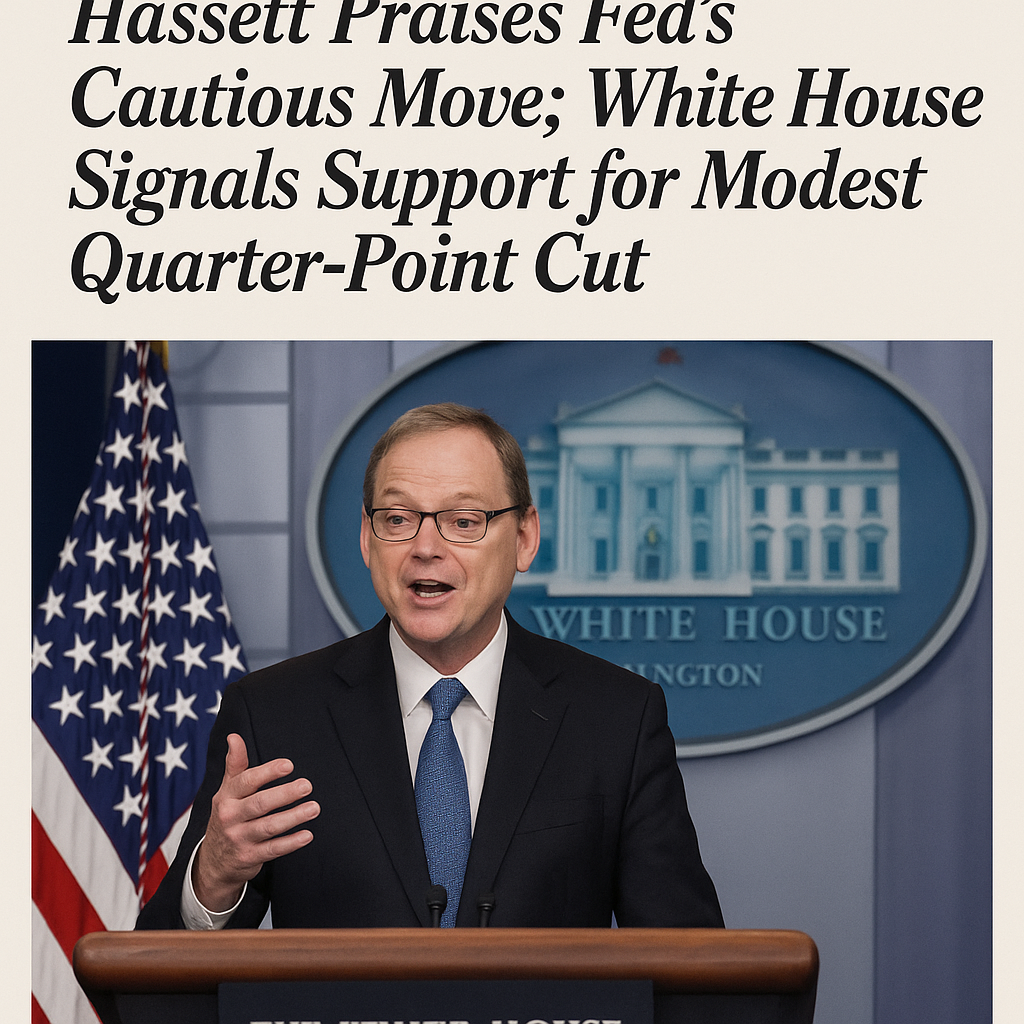
Hassett praises Fed’s cautious move; White House signals support for modest quarter-point cut

Federal Reserve’s Rate Cut Sparks Market Movements and Policy Debates

The Federal Reserve recently implemented a modest quarter-percentage-point cut to its key borrowing rate, signaling a cautious approach as it navigates a complex economic landscape. This decision, perceived by some as a step towards economic stabilization, comes amid shifting market sentiments and ongoing debates among policymakers, economists, and investors. As the global economy faces rising inflationary pressures yet remains resilient, the Fed’s move exemplifies the delicate balancing act it must perform—tamping inflation without stifling growth.

Notably, the White House expressed support for the Fed’s measured approach, with National Economic Council Director Kevin Hassett emphasizing the prudence of a “slow and steady” policy. While some within the administration advocated for a more aggressive half-point cut, the Fed’s decision reflects a consensus aimed at cautious optimism. The recent economic indicators show a robust third-quarter growth rate exceeding 3%, a figure that traditionally would argue against easing monetary policy. Still, inflation running above the Fed’s 2% target, combined with concerns about persistent financial risks, has prompted a nuanced response that favors gradualism over rapid cuts.

Market impacts from this decision are multifaceted. Investors remain vigilant, with equities, bonds, and commodities reacting to the delicate narrative of growth versus inflation control. The policy considerations extend beyond immediate market behavior, touching on policy consequences that could shape future economic stability. Analysts from think tanks and leading economists, including those linked to the Federal Reserve and major banks, indicate that this cautious move might set the stage for future rate adjustments. The decision also underscores ongoing debates about the policy trajectory—should the Fed prioritize containing inflation or supporting a thriving housing market and manageable debt levels?

Importantly, the political dimension persists, with President Donald Trump advocating for more aggressive cuts—arguing that the current rates are insufficient to boost the struggling housing sector and manage the national debt. Such political influences, though not directly altering Fed decisions, shape the policy environment and investor sentiment. As the Fed considers its next moves amid diverse economic signals, the broader implications for market impact and policy stability will be paramount. The coming months will test whether this measured approach will secure sustained growth or prompt future rallying cries for more rapid easing, reflecting the eternal tug-of-war at the heart of economic policy.

Looking ahead, the pulse of the economy remains a reflection of national strength and future global influence.

In this high-stakes game, where monetary policy acts as both shield and sword, the resilience of economies hinges on informed decision-making and bold leadership. Investors, policymakers, and citizens alike watch with anticipation, realizing that the economic landscape is a grand stage—an epic arena where the forces of innovation, policy, and global power collide. While uncertainties persist, the underlying momentum suggests that the future economy will be shaped by those willing to navigate its shifting tides with vision, precision, and resolve. This moment underscores the vital truth: **the economy is not merely a system of numbers, but the beating pulse of nations, heralding the dawn of a new era of global influence and economic ascendancy**.

Social Media Auto Publish Powered By : XYZScripts.com