Matox News

Truth Over Trends, always!

Is Canada losing its appeal for Indian students? The dream destination may be shifting.

Indian Students Reassess Canada as Educational Opportunities Face New Challenges

In recent months, Indian students aspiring to study in Canada are confronting a complex array of social and economic barriers that threaten to reshape the landscape of international education. Tighter immigration regulations, surging financial costs, and increased visa uncertainties are prompting a significant reconsideration of plans to pursue higher education abroad. These developments are not only impacting the individual trajectories of students but are also reverberating through families, communities, and educational institutions, raising questions about the future of international student mobility and its broader societal implications.

The Canadian government’s recent policy shifts have introduced stricter visa requirements aimed at ensuring national security and economic stability. This tightening of border controls is part of a broader trend seen across many Western nations, often justified as measures to regulate migration and foster national interests. However, for Indian families relying on educational opportunities as a pathway to social mobility, these restrictions create tangible fears. Many parents see education in Canada as a key to economic advancement and global integration, and the increased hurdles compromise their children’s ambitions. Sociologists emphasize that such policy changes underscore a shifting narrative in international education—less a mutual exchange and more a contest for national control, which fuels social tensions and alienation.

The financial landscape further complicates this scenario. As tuition fees continue to climb, students and their families are grappling with unprecedented costs that threaten equitable access. The economic strain disproportionately impacts working-class and middle-income families, which historically have relied on international education as a stepping stone toward stable employment and societal integration. This escalating expense, combined with fragile visa prospects, risks creating a social divide in access to higher education, fostering resentment and societal fragmentation. Social commentators warn that such stratification could weaken the very fabric of multicultural Canadian society, which has long thrived on the diversity and inclusion brought by international students.

Moreover, these logistical and economic hurdles have direct repercussions on educational institutions and local communities. Universities face diminished enrollments, affecting their revenue streams and potentially leading to decreased funding for community programs. Local economic ecosystems that depend on student spending—such as housing, retail, and service sectors—are experiencing downturns, which deepen the socio-economic divides. Historians and social critics argue that these shifts threaten to erode the multicultural harmony once celebrated as a cornerstone of Canadian identity. As Dr. Susan McGregor, a social historian, notes, “When the pathways that tie diverse communities together become obstructed, society risks fracturing along demographic fault lines.”

Amidst these challenges, voices of resilience and adaptation emerge, advocating for policies that balance national sovereignty with openness to talent and diversity. Scholars suggest fostering a more inclusive and flexible immigration framework that recognizes the vital role of international students in societal progress. They emphasize that restoring trust and access in the educational pipeline is not only a matter of economic strategy but also a moral imperative—ensuring families can dream of futures built on opportunity, not fear. As society stands at this crossroads, the hope persists that through thoughtful reform and community engagement, the societal tapestry can be reinforced rather than torn apart.
In the silent promise of tomorrow, families, educators, and policymakers alike must ponder the true essence of society: a collective commitment to bridging divides, nurturing potential, and shaping a future where the shared pursuit of knowledge brings us closer—despite the obstacles that threaten to keep us apart.

Score the ultimate sleep upgrade: Top-rated pillows, budget-friendly Ikea mattresses, and more—your dream bed awaits!

Unlocking the Power of Rest: A Lifestyle Revolution for Today’s Youth

In an era where wellness trends explode overnight—from mouth taping to potato beds—the pursuit of better sleep has transformed from a casual choice to an essential lifestyle shift. Among ambitious young individuals, there’s a growing awareness: the secret to success, vitality, and overall well-being begins with quality sleep. Today’s youth are increasingly willing to invest in their health not merely through fleeting fads but by adopting pragmatic routines—powerful routines that prioritize their body’s most vital needs. This movement is not only about catching more Z’s but about embracing a holistic lifestyle that values waking up refreshed, energized, and ready to conquer.

Organizations like the National Sleep Foundation recognize this cultural shift, dedicating weeks to raising awareness on sleep health. During Sleep Awareness Week, from March 8 to March 15, numerous brands offer enticing discounts on premium mattresses, pillows, and sleep accessories, making healthier sleep more accessible than ever. For young adults, investing in a foam mattress like the popular Helix Dusk, which contours with innovative dynamic foam, means more than just comfort—it’s an act of self-investment. Cutting-edge products such as adjustable pillows from brands like Coop Sleep Goods or the smart original adjustable pillow now come with discounts, making tailored sleep environments a reality for every budget.

Moreover, the importance of personal impact resonates deeply within this movement. High-quality sleep benefits mental clarity, physical health, and resilience—crucial elements for young people navigating a fast-paced world. Sleep psychologist Aric Prather emphasizes that the foundation of a productive life starts with a good mattress, as a bad mattress can aggravate injuries or create new ones—health risks often overlooked. Smart accessories like sleep earbuds and wearable sleep tech are revolutionizing how young adults block out distractions and maintain a daily rhythm. These innovations, coupled with beautifully crafted bedding like the Bed Threads linen duvet cover or the plush Brooklinen down comforter, facilitate an environment optimized for deep, restorative sleep—an essential element for fostering a resilient mindset.

  • Travel Hack: Use sleep masks and portable speakers to turn any environment into a sanctuary.
  • Lifestyle Hack: Dedicate 10 minutes before bed to relaxing routines, minimizing screens, and practicing **mindfulness** to enhance sleep quality.
  • Inspiration: Recognize that every night’s rest is a deliberate act of self-love—an investment in your dreams, your health, and your future.

As this journey towards _better sleep_ unfolds, it leaves an indelible impression: lifestyle is a continuous voyage rooted in self-awareness and proactive choices. By embracing quality sleep as a cornerstone of their daily routine, young individuals are not just improving their nights—they are setting the stage for triumphs in their days. The transformative power lies in commitment—a deliberate pact to nurture oneself through every dawn. The real awakening comes not merely from the rising sun but from recognizing that a well-rested mind and body are the ultimate tools for shattering barriers and redefining what is possible. As the pursuit of wellness evolves, so too must our understanding that our lifestyle choices today echo through our future—each night an opportunity to seize dreams and craft a life worth waking up for.

Iran dismisses Trump’s call for surrender, labeling it a “dream” amid US-Israel tensions

International Conflict Deepens as Iran and Israel Clash Amid Global Unrest

The ongoing conflict in the Middle East has entered a perilous new phase, threatening to reshape the geopolitical landscape. Iran, defying pressures from United States and its allies, remains unwavering in its stance against capitulation. In a rare televised address, President Masoud Pezeshkian of Iran rebuffed Donald Trump‘s recent demand for an “unconditional surrender”—a call from Washington that many analysts argue was aimed at crippling Iran’s resolve. Pezeshkian’s assertion that Iran “would never capitulate” underscores the resilient, defiant posture of Tehran, signaling a potential prolongation, or even escalation, of the hostilities. His remarks, along with an apology to neighboring Gulf nations for recent strikes, reveal a nuanced attempt by Iranian leadership to navigate regional tensions and avoid further isolation, even as their military actions ignite new flames in this growing conflagration.

The geopolitical impact of this conflict extends far beyond Iran’s borders. In response to Iranian strikes, Israel has launched a fierce counteroffensive, involving a wave of pre-dawn airstrikes on critical Iranian military sites, including airports, command centers, and missile facilities. Israeli officials confirmed the deployment of 80 fighter jets in this latest assault, targeting Tehran’s military infrastructure and setting Mehrabad International Airport ablaze. This escalation signals a profound shift—diplomacy appears all but abandoned as the conflict spreads across regional lines. Meanwhile, Iran’s retaliation has manifested in attacks on Jerusalem, Gulf cities such as Dubai and Manama, and near Riyadh, where Saudi Arabia reported intercepting a ballistic missile aimed at a U.S. host base. Experts warn that such exchanges risk igniting a broader regional war, with global oil supplies and international stability hanging in the balance.

Global institutions like the United Nations and NATO have called for restraint, yet the relentless cycle of violence suggests diplomacy remains elusive. From the Strait of Hormuz—a critical maritime choke point—Iran announced the targeted sinking of the oil tanker Prima, further threatening the flow of global energy resources. The dire toll, with over 926 civilians killed and 6,000 injured, paints a stark picture of the human cost behind the geopolitical chess game. As Hezbollah and other Iranian-backed groups extend the conflict into Lebanon and the eastern Mediterranean, the specter of a wider regional war looms, risking destabilization of entire societies. Experts from think tanks such as the Council on Foreign Relations warn that these developments could ignite a chain reaction, pulling in multiple nations into a conflict with the potential to redraw alliances and threaten democratic institutions worldwide.

As history watches silently, the unfolding narrative remains uncertain—each decision, each strike, fueling a conflict that no one can truly predict. The specter of war now casts its shadow across the region and beyond, a reminder that in the corridors of power, every action has a consequence, and the course of history is ultimately written by those willing to risk everything in pursuit of their vision. The world holds its breath as the stakes escalate—will diplomacy yet find a foothold amidst this chaos, or are we witnessing the dawn of a new, darker era of regional and global upheaval?

Matthieu Blazy’s Bold Launch: Chanel’s Haute Couture Dream Takes the Spotlight

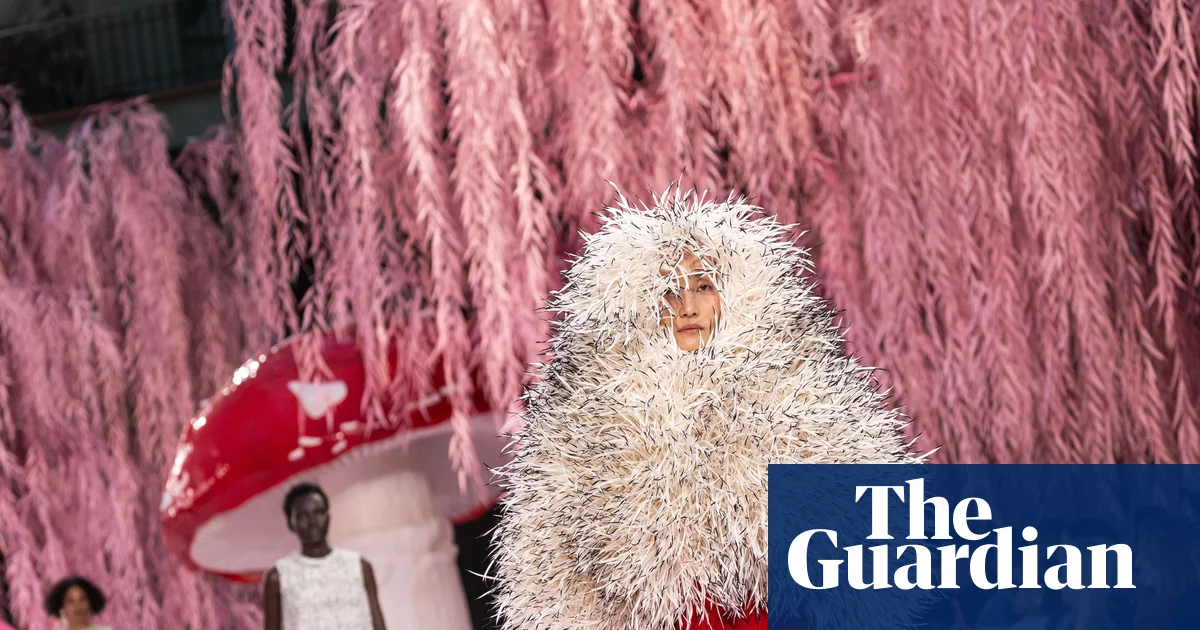
In a world where fashion giants often cling to tradition and legacy, the emergence of Matthieu Blazy at Chanel signals a seismic shift. The 41-year-old Belgian designer, once a relatively unknown name outside the industry, is now steering one of the most iconic brands in history through a curious blend of tradition and innovation. His recent debut Haute Couture collection, hosted at Paris’s Grand Palais, did not just earn applause; it ignited a cultural wave that challenges entrenched notions of beauty, age, and the role of storytelling in fashion.

The show’s aesthetic was a masterclass in redefining luxury. From a boxy suit in tissue-thin mousseline to daring transparent jackets adorned with ropes of gems, Blazy’s designs showcased craftsmanship that is both heroic and warm. In a deliberate break from the typical high-gloss runway, he included multigenerational casting, intentionally featuring models of diverse ages and backgrounds—women who “have lived” and “have seen the world.” According to the designer, this shift in casting isn’t just about visual representation but a statement that beauty, wisdom, and life experience are integral to modern femininity. This cultural impact resonates with a generation increasingly questioning superficial standards, turning their gaze towards authenticity and lived-in stories.

The influence of influencers like Dua Lipa and industry icons such as Anna Wintour backstage underscores a societal desire for brands to connect deeply with personal narratives and individual identities. Blazy’s request for models to incorporate personal items—a love letter, initials, a word like “kindness”—stands out as an extension of this shift. These intimate touches, stitched into garments by Paris’s renowned Lesage embroiderers, elevate fashion beyond mere aesthetics, making it a vessel for emotional storytelling. This approach is part of a broader trend where consumers seek a more meaningful engagement with brands, echoing a societal craving for authenticity and depth amidst a superficial influencer-driven culture.

What truly sets Blazy apart—and hints at the future of fashion—is how he balances youthful boldness with a reverence for craftsmanship. His use of trompe l’œil techniques, painted denim mimicking casual wear, and leather feathers crafted into dresses, all echo a conscious effort to blend fantasy with reality. This ‘fairytale’ era—exemplified by animated previews with Snow White bluebirds—serves as a metaphor for a collective desire for escapism and renewal. Yet beneath the enchantment, there is a strategic, almost revolutionary statement: fashion’s power to reflect societal shifts and redefine identity. As Blazy’s Chanel appears to embrace a storybook aesthetic, a question lingers: Could this fairy-tale phase be the new standard for aspirational society? Or is it just a temporary chapter in a larger movement towards genuine self-expression?

First Openly Gay Miss England Fulfills Dream, Inspiring a New Generation

In an era often overshadowed by chaos and fleeting trends, the enduring power of culture remains a testament to human resilience and the sacred connection to our roots. As philosophers like Ortega y Gasset have argued, culture forms the vital fabric of our collective identity, embodying both the memory of the past and the prophecy of our future. It provides a moral compass, grounding societies amid the tumult of modern life. Today, we witness a renewed emphasis on individual and national archetypes—figures who stand as living symbols of perseverance, pride, and tradition—reminding us that our cultural heritage is not only a mirror but also a blueprint for destiny.

Recent stories illuminate this truth with striking clarity. Consider the case of Grace Richardson, crowned as the first openly gay Miss England. Her journey from bullied schoolgirl in Leicestershire to a national icon encapsulates the transformative potential of embracing one’s true self. In her, we see a reflection of the cultural shift towards authenticity, a move away from superficial glamour towards substantive identity—challenging the postmodern tendency to reduce individuals to labels, and instead elevating them as symbols of hope and change. Richardson’s perseverance echoes the insights of T.S. Eliot, who advocated for a culture rooted in genuine experience rather than transient spectacle. Her triumph underscores the vital importance of defending societal tradition—an authenticity that breathes new life into archived values, laying the foundation for societal renewal.

Moreover, her victory is not merely personal but emblematic of a broader cultural renaissance—one that venerates resilience, individual talent, and the enduring significance of national pride. As Chesterton once observed, “The true cavalry of civilization is the everyday man,” and indeed, Richardson’s story inspires a generation to heed the call of tradition and courage. Her talents—shaped through years of musical theatre and ballet—are cultural milestones, showcasing how art serves as both a conduit for self-expression and a vessel of societal virtue. Such narratives serve as a reminder that culture is the armature upon which societies build their future, standing resilient against the erosion of moral compass and collective memory.

In the end, the preservation and celebration of culture are acts of defiance against nihilism, anchoring communities in the sacred soil of their history while gazing forward into the horizon of potential. Whether through the arts, traditional morals, or national symbols, these elements serve as prophets of human aspiration—foretelling a future rooted in the strength of our shared inheritance. As history’s great writers and thinkers have taught us, to remember is to forge, and to forge is to keep alive the eternal dance of memory and prophecy. Our culture, then, is not merely a reflection of who we are but a luminous road map to who we may become—a source of enduring inspiration and a testament that, through challenge and triumph, humanity’s noblest instinct remains to carve its destiny from the bedrock of its tradition.

From Adventure to I Do: She Met Her Dream Guide and Got Engaged in Just Two Weeks

Living Beyond Limits: A Journey of Love, Self-Discovery, and Resilience

In a world increasingly embracing *_the shifting tides of lifestyle and self-discovery_*, stories that challenge societal expectations serve as vibrant reminders of our capacity to forge new paths. Rachel Décoste’s transformative journey from Ottawa to West Africa exemplifies how stepping outside conventional boundaries can lead to profound personal impact. Her adventure, rooted in a heritage rediscovery and the pursuit of authentic connection, underscores an empowering message: it is never too late to embrace change, love, or to realign one’s purpose.

Rachel’s story intertwines her genealogical awakening with an unanticipated romance, unfolding against the rich backdrop of Benin. As a Canadian daughter of Haitian immigrants, she had long carried a sense of ancestral longing. Through a DNA test, she discovered roots in Senegal, Ivory Coast, Togo, Ghana, and Benin—places brimming with history and resilience. According to wellness experts like Dr. Mark Hyman, engaging with one’s ancestry can serve as a catalyst for *personal renewal and emotional healing*. Rachel’s emotional voyage, from the port city of Cotonou to the sacred sites of Ouidah, became a pilgrimage not only through space but within herself, reminding us that _our roots nourish the soil of our future_.

This trip of self-awareness soon blossomed into a story of unexpected love—a narrative fueled by trust, chance encounters, and cultural exchange. Rachel’s spontaneous decision to hop onto a local motorcycle with Honoré Orogbo, a Beninese entrepreneur, epitomizes the essence of seizing the moment. The modest act of accepting a ride forged a connection that defied societal norms, revealing a timeless truth: life’s most extraordinary moments often occur outside the comfort zone. Their journey, filled with heartfelt conversations in markets and sacred sites, led to a shared understanding that love transcends borders and, remarkably, reshapes destinies.

Among community, travel, and personal growth, the story also demonstrates that *a life most fully lived* requires courage. Rachel’s decision to leave her career and life in Washington DC, and Honoré’s willingness to face the uncertainties of immigration, showcase the power of following one’s authentic intuition. As cultural philosopher Alain de Botton suggests, embracing *the unpredictability of life* can open doors to newfound purpose and joy. Their eventual union, culminating in a Canadian wedding despite prior challenges, reflects a shared resolution that life’s true richness lies in *the connections we cultivate and the brave choices we make*.

Key Insights for the Aspiring Explorer

  • Seek your roots; understanding your ancestry can evoke profound emotional and spiritual renewal.
  • Embrace spontaneity; opportunities for growth often arrive in moments of uncertainty.
  • Follow your heart boldly; authentic love and purpose often require stepping beyond societal expectations.
  • Prioritize true connections over societal norms—relationships rooted in understanding and respect can transcend physical and cultural divides.

Rachel’s odyssey is a testament to the resilience of the human spirit and the transformative power of embracing life’s unpredictable journey. Her story, sparked by a simple DNA test and sustained by chance encounters, highlights that Living an authentic life is about daring to chase what truly matters. As she prepares to publish her memoir—a reflection of her journey of self and ancestry—she embodies a compelling call to action: to trust your instinct, pursue your purpose, and embrace the possibility that your most extraordinary chapter is yet to come.

Social Media Auto Publish Powered By : XYZScripts.com