
Matox News

Truth Over Trends, always!

US Marine pilot's appeal thwarted in Australia extradition case
US Marine pilot’s appeal thwarted in Australia extradition case

In a case that underscores the fragile balance of international relations and the complex web of military diplomacy, Daniel Duggan’s arrest in 2022 has ignited renewed debate over covert military training and the geopolitical stakes involved. Duggan, an Australian former fighter pilot, was detained over allegations that he illegally provided military instruction to the Chinese military within South Africa. This incident marks a significant flashpoint, revealing the intricate layers of modern warfare that transcend national borders and challenge the existing global order.

The geopolitical impact of Duggan’s case extends well beyond the immediate legal consequences. His detention exposes a shadowy arena where nations covertly extend their military influence, often through proxies and clandestine operations. As international organizations and analysts scrutinize the incident, concern mounts over the potential expansion of Chinese military capabilities facilitated through foreign partnerships. Critics warn that such activities threaten the strategic balance in Africa and Asia, regions already fraying under the weight of great-power competition. The case has prompted responses from North Atlantic Treaty Organization (NATO) allies and other Western powers, who view these covert operations as part of China’s larger effort to expand its global reach and challenge U.S. dominance.

Scholars and security experts emphasize that Duggan’s arrest is emblematic of a broader pattern of military diplomacy behind closed doors. Historians like Dr. Emily Turner have highlighted how, throughout history, covert military training has served as a critical tool for emerging powers to bolster influence without provoking open conflict. The South African government, itself navigating a complex regional landscape, finds itself at an uncomfortable crossroads—balancing diplomatic relations with Beijing against Western concerns about sovereignty and security. As for South Africa, this incident threatens to alter its diplomatic positioning, potentially positioning the nation as a battleground for proxy conflicts that could destabilize its internal security and economic progress.

The fallout from Duggan’s arrest presents a strategic dilemma for international security architectures. Agencies such as the United Nations and Western intelligence community are grappling with the implications of unchecked military aid crossing borders through unconventional channels. This incident serves as a cautionary tale—highlighting how decisions made in the shadows today can escalate into larger conflicts tomorrow. European and American leaders warn that allowing such clandestine activities to flourish could undermine decades of diplomatic progress and provoke a new era of instability. The ongoing saga underscores the importance of vigilance and the need for unwavering commitment to maintaining a balance of power rooted in transparency and mutual respect.

As history continues to unfold, Duggan’s arrest becomes more than a legal matter—it is a stark reminder of the currents shaping our contemporary world. In a geopolitical landscape fraught with shifting alliances and covert pursuits, the right to sovereignty and security often hangs in the balance. The decisions made today will dictate whether nations forge a path toward cooperation or succumb to the chaos of clandestine conflict—placing the very fabric of global stability at a crossroads for generations to come. Ultimately, the story of Duggan is a chapter in the ongoing narrative of power, influence, and the relentless march of history itself.
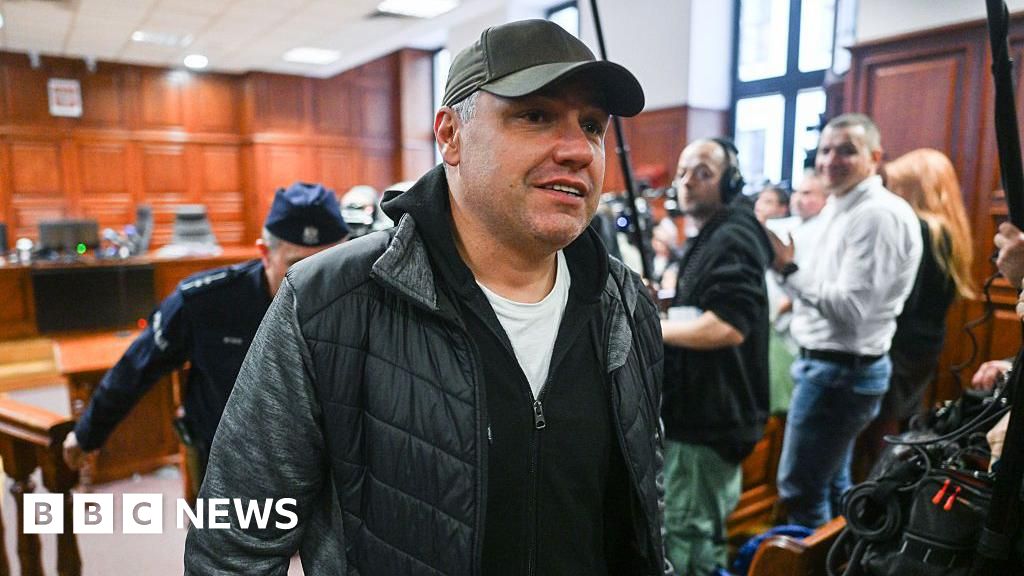

Polish judge refuses extradition of Nord Stream suspect, calls it a 'just act'
Polish judge refuses extradition of Nord Stream suspect, calls it a ‘just act’

In a development that underscores the escalating geopolitical tensions surrounding energy infrastructure and national sovereignty, a Polish court recently made a highly controversial ruling regarding the suspected sabotage of the Nord Stream pipelines—an incident that has reverberated across Europe and beyond. The court refused to extradite a Ukrainian suspect, Volodymyr Zhuravlyov, accused by Germany of involvement in the September 2022 detonation. The judge’s decision has ignited fierce debates about the legality, responsibility, and geopolitical ramifications, shifting the narrative in ways that threaten to unravel the fragile balance of international diplomacy.

Initially, blame for the explosions was pinned on Russia, given its major stake in the pipelines that crisscrossed the Baltic Sea, connecting Russia to Germany. However, signs of Ukrainian involvement emerged—an assertion vehemently denied by officials in Kyiv. The case takes on added complexity considering Poland’s own stance: a vocal critic of the pipelines, especially Nord Stream 2, which Poland viewed as a geopolitical tool used by Berlin to deepen Europe’s dependence on Moscow. Polish Prime Minister Donald Tusk vocalized support for the court’s ruling, stating that the case was “closed,” fostering speculation about whether political motives are intertwining with legal adjudication. Critics and experts contend that these events could stir a storm of diplomatic retaliation, as nations grapple with the blurred lines between what constitutes acts of war and legitimate resistance in a time of conflict.

The court’s ruling, which highlights the war in Ukraine as a backdrop, sparks provocative questions about international jurisdiction and national sovereignty. Judge Dariusz Lubowski’s passionate speech framed the incident within a context of “justified” acts of defense, citing historical figures such as Aristotle and Saint Thomas Aquinas to justify what, in peacetime, might be viewed as sabotage. His assertion that Ukraine’s alleged actions were a “rational and just” response to “Russia’s bloody and genocidal attack” reveals an underlying political commentary that critics argue could set a dangerous precedent—favoring the view that acts of sabotage during wartime are morally defensible. Such a stance resonates deeply with many analysts warning that it could embolden other nations to justify targeted attacks against strategic infrastructure, risking global destabilization in the pursuit of national interests.

The geopolitical impact of this legal saga extends to Europe’s energy security and alliance structures. Germany’s halting of the Nord Stream 1 pipelines and the delayed entry of Nord Stream 2 represent more than just economic shifts—they symbolize Europe’s grappling with energy dependency and the broader contest of influence between the West, Russia, and Ukraine. The case also exposes gaps in the EU’s legal framework, with judges questioning whether Germany has jurisdiction over acts carried out in international waters, with ownership and responsibility clouded by complex legal and political layers. Analysts warn that the verdict not only complicates efforts to hold perpetrators accountable but also deepens divisions within the European Union—divisions that could be exploited by adversaries seeking to weaken Western unity in the face of ongoing conflicts.

As history turns another page, the story of the Nord Stream sabotage continues to unfold, leaving a trail of questions that threaten to define the new era of international conflict. The decision in Warsaw is more than a legal verdict; it is a snapshot of a world where lines of morality and legality are blurred amid the chaos of war and power struggles. In the shadows of courtrooms and diplomatic corridors, nations are watching as the fabric of trust and sovereignty is tested—reminding us all that in geopolitics, the stakes are nothing less than the future of freedom and stability itself. The weight of history presses down, and the question remains: who will claim the next chapter—peace, or chaos?

Social Media Auto Publish Powered By : XYZScripts.com


