
Matox News

Truth Over Trends, always!

Arctic Monkeys’ Defiant Youth: How Resistance Fueled Their Rise to Fame

In the early 2000s, the city of Sheffield emerged as a crucible for a rebellious yet deeply rooted musical movement that challenged the sterile conformity of mainstream Western culture. It was an era marked by vernacular authenticity and a shared longing for something genuine—a counterpoint to the hollow gloss of globalized pop. Oasis’s definitiveRock ‘n’ Roll ethos, which once celebrated the grit and grit of working-class Britain, found a new extension in Sheffield’s scene where local bands, fueled by raw talent and an unyielding spirit, sought to redefine identity through sound. The emergence of Arctic Monkeys and their compatriots encapsulated a cultural renaissance where the tradition of regional pride and musical innovation coalesced into a movement that was at once insular and universally resonant.

Central to this phenomenon was a keen sense that culture functions as more than mere entertainment; it forms the very backbone of societal identity. As Ortega y Gasset observed, a society’s cultural expression is the act through which it affirms its unique existence against a homogenizing world. Sheffield’s young musicians, operating in basement gigs, sweaty clubs, and red-brick venues like The Boardwalk, exemplified this principle. Their art was an act of cultural defiance, deliberately rejecting the overearnestness and pretensions of traditional indie stereotypes by the band Long Blondes, who openly mocked the superficiality lurking within the scene. The irreverent, mischievous attitude of bands like Milburn echoed G.K. Chesterton’s notion of progressive tradition: it was not an abandonment of the old, but a deliberate reimagining—an invitation to renewal rooted in the rugged landscapes of Sheffield’s working-class pride.

What makes this story relevant today is the realization that cultural memory is intimately linked to the prophecy of future identity. The bands’ shared history—marked by fierce regional rivalry, familial bonds, and a collective shrug at industry pressures—created a cultural compact that transcends superficial fame. Turner’s lyrical improvisations, influenced by the raw energy of the John Cooper Clarke school, serve as a testament to the power of culture as a language of resistance. Even amidst waves of superficial hype—exploited by music managers who sought to harness the scene—these bands maintained an authenticity that is, perhaps, more precious than fame itself. This speaks to T.S. Eliot’s assertion that the ultimate role of tradition is to be “the memory of humanity,” and the prophecy that guides us toward a future where spirit and culture remain intertwined.

In this narrative of Sheffield’s musical awakening lies a reminder: culture is both memory and prophecy. It is the echo of ancestors who dared to forge new paths, and the whisper of generations yet to come—carrying in their hearts the enduring belief that human creativity, when rooted in authenticity, becomes the greatest act of rebellion and renewal. As we look to the past, we do so with the hope that tomorrow’s culture will continue to honor its sacred commitment to identity, tradition, and the eternal quest for meaning—a journey woven through the very fabric of our shared legacy, a story whispered by the wind, echoing into eternity, awaiting its next chapter in the unfolding poetry of human existence.
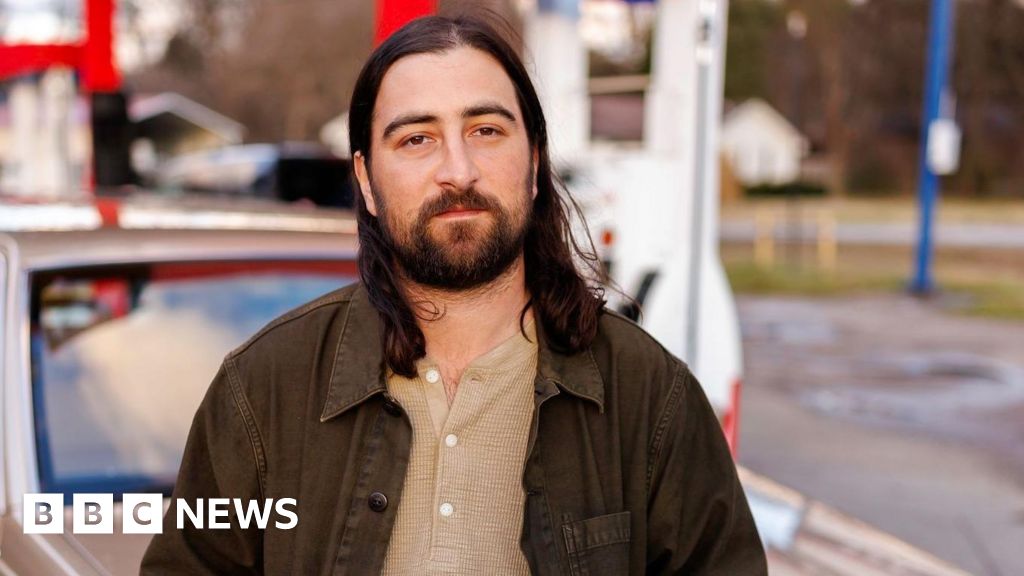

Noah Kahan Achieves Superstar Status, Rethinks the Price of Fame

In the turbulent currents of contemporary society, few phenomena exemplify the profound intertwining of culture, identity, and societal values as vividly as the ascendance of youthful musical icons. Consider the recent trajectory of a prominent US singer, whose rise to festival headliner status following the release of his third album has not only marked a milestone in his artistic journey but has also ignited a broader reflection on the significance of culture as a vessel of collective identity. Such moments are inherently layered, revealing the underlying fears, hopes, and aspirations of a generation eager to forge its narrative amid a landscape of rapid social change.

This phenomenon echoes the age-old understanding that culture is both a mirror and a blueprint—a mirror reflecting societal values and a blueprint shaping future generations. When an artist gains such prominence, it is not merely a matter of entertainment but a symbolic act that encapsulates the spirit of an era. As literary critic G.K. Chesterton once argued, “Culture is the way in which our civilization becomes most visible,” and in that visibility, we see the reflection of our collective convictions and conflicts. The youth, in particular, gravitate toward these cultural milestones — their music, their art, their voices — as expressions of their unique identities and as anchors in a swiftly disorienting world.

This rise, however, is not without its paradoxes. The very process of growth—often accompanied by a crisis of confidence—evokes the universal pattern of progress and upheaval that history repeatedly teaches us. Historically, movements of cultural renewal have often emerged from moments of tension, much like Ortega y Gasset observed in his discourse on the revolutions of the spirit, where established paradigms clash with emerging visions. The artist becoming a headliner is thus emblematic of broader societal shifts—an indication that culture remains a battleground of ideas, values, and identities.

Philosopher and social critic Alexis de Tocqueville warned of the subtle manner in which democratic societies can drift toward
masses and mediocrity, yet he also recognized that the spirit of individual creativity—particularly in its youthful audacity—serves as a vital counterbalance. It is in these cultural expressions that the seeds of tradition and innovation coexist, shaping a society that is both rooted and free. The youthful artist’s journey to the festival stage is more than personal achievement; it embodies the ongoing dialogue between the enduring values of the past and the emerging visions of the future.

In the end, culture—like the poetry of T.S. Eliot—serves as both a memory and a prophecy. It preserves what has been, fashioning it into a living history, while simultaneously whispering the possibilities of what could be. As we observe the ascent of a new generation’s voices, let us remember that their creative expressions are not merely transient phenomena but the very fabric of societal memory and the creative blueprint of tomorrow. Culture, therefore, remains mankind’s poetic act of both remembering and dreaming, a luminous bridge linking the established past with an uncertain but hopeful future.

Author Chris Kraus on Conquering Fame, Navigating Drugs, and the Cultural Power of I Love Dick — An Honest Reflection

In an era saturated with distraction and cynicism, the writings of Chris Kraus serve as a compelling reminder of culture’s vital role in shaping identity, tradition, and society. Her works—particularly I Love Dick—are more than autofiction; they are acts of radical disclosure that anchor us in the complex tapestry of human experience. Kraus’s candor exposes the raw underbelly of personal and collective life, transforming personal struggle into a form of cultural reportage. Just as Ortega y Gasset emphasized that “I am myself and my circumstances,” Kraus’s honest narrative frames her life within the broader societal currents that infiltrate every human endeavor. Her storytelling demonstrates that personal memory is a vital thread in the fabric of societal identity, and that through it, we glimpse both our history and our potential future.

Much like the cultural upheavals of the past that have reset societal norms, Kraus’s work recognizes that contemporary culture is a battleground of memory and prophecy. Her recent publication, The Four Spent the Day Together, delves into her own harrowing experiences—marriage, addiction, loss, and the brutal violence that pervades American working-class communities—reflecting a society plagued by nihilism and despair. Here, Kraus uses her journalistic rigor not merely to tell her story but to spectrally comment on the underlying currents shaping our collective destiny. As T.S. Eliot observed, “The past’ness confronts us uncomfortably, since it makes us realize that our present is layered upon the ruins of what was.” Kraus’s narrative practice distills this truth, reminding us that society’s foundation rests upon the memories we choose to confront and express, shaping the future we dare to imagine.

  • Culture as memory: Kraus’s meticulous use of diaries, photographs, and court transcripts anchors her stories in tangible reality, embodying a tradition of experiential truth that echoes Chesterton’s view that “the test of a good culture is whether it endures through the ages.”
  • Culture as prophecy: Her fearless engagement with the darkest aspects—addiction, violence, societal depravity—provides a prophetic warning about the illusions of progress and the importance of confronting uncomfortable truths.
  • Historical parallels: Kraus’s illumination of the American cultural landscape echoes Tocqueville’s insights into the democratic spirit—an ongoing struggle between individual authenticity and collective self-deception, where the language of culture becomes a tool for resistance or capitulation.

In her reflections, Kraus reminds us that culture is neither static nor inert. It is the memory of what was, and the prophecy of what might be, woven into the very fibers of society’s narrative. Her work challenges us to recognize our stories as essential acts of cultural resistance—an affirmation that human life, even in its most fractured and painful moments, is meaningful. As G.K. Chesterton famously urged, “A dead thing can go with the stream, but only a living thing can go against it.” And it is through this act of cultural defiance—by bearing witness, by telling the unvarnished truth—that we forge the continuity of tradition and light the way toward future horizons. For in the end, culture remains both a memory of humanity’s profound past and a prophecy of the enduring spirit yet to come—an eternal echo and an unending call to remember and create anew.

Social Media Auto Publish Powered By : XYZScripts.com



