Matox News

Truth Over Trends, always!

Experts slam Free Birth Society for dangerous misinformation threatening mothers and babies

International Ramifications of the Anti-Medical Birth Movement

In recent months, the Free Birth Society (FBS), a controversial organization founded and led by two former social media influencers, has garnered significant international attention. Purporting to promote women’s rights to give birth outside of traditional medical settings, FBS’s platform champions a radical approach that rejects conventional obstetric care. Their message, which claims that birth can be safely conducted at home without medical intervention, has found a global following among young women seeking autonomy. However, key investigations, such as the recent expose by The Guardian, have linked FBS’s unorthodox practices to a disturbing rise in infant fatalities and maternal health crises worldwide.

This movement’s geopolitical impact is profound. From the Western nations with advanced healthcare systems to low-income nations where medical resources are already strained, the encouragement of unassisted childbirth threatens to undermine decades of progress in maternal and child health. International health agencies, including the World Health Organization (WHO), have issued warnings about the dangerous misinformation circulating via FBS’s social media channels. Prominent analysts argue that such rhetoric amplifies risks, especially in regions lacking access to emergency medical care, potentially reversing hard-won gains in reducing maternal mortality and neonatal complications. This situation exemplifies how decisions driven by ideological extremism on social media can destabilize fragile health systems and trigger avoidable tragedies.

Experts, including maritime and medical historians, have identified this phenomenon as a **turning point**—a challenge to the authority of scientific consensus and the practice of evidence-based medicine. Dr. Michelle Telfer of Yale University warns that propagating dangerous myths about childbirth, such as dismissing the importance of sepsis prevention or resuscitation, can have catastrophic consequences. In low-income countries, where the burden of infections like sepsis remains high, these misguided beliefs risk driving infant mortality rates upward. The International Federation of Obstetrics and Gynaecology (FIGO) emphasizes that these extremities are not merely health issues but pose a threat to social stability, especially when communities adopt practices that contravene basic medical science.

As this controversy unfolds, it underscores a broader debate about the role of sovereignty versus international standards, especially in an era where social media platforms wield tremendous influence over health narratives. The rise of FBS is a clear indicator of a wider global shift—a desire among some segments of society to reject what they see as excessive state intervention in personal choices, even when those choices threaten public health. How nations respond to this challenge, balancing individual freedoms with societal safety, will shape the trajectory of global maternal health for decades to come. The story is not yet over, and the weight of history now hangs in the balance, its future written by decisions made in the coming years regarding healthcare regulation, digital misinformation, and the sovereignty of nations’ health policies. In this ongoing saga, the stakes are nothing less than the safety and survival of the most vulnerable among us, and the world can only wait and watch as this dangerous chapter continues to unfold amidst the shadows of history’s unfolding narrative.

Trump’s FCC drops cybersecurity rules amid Chinese hack fears — a bold move for youth, tech, and free markets

FCC’s Cybersecurity Rollback Sparks Industry Disruption and Security Concerns

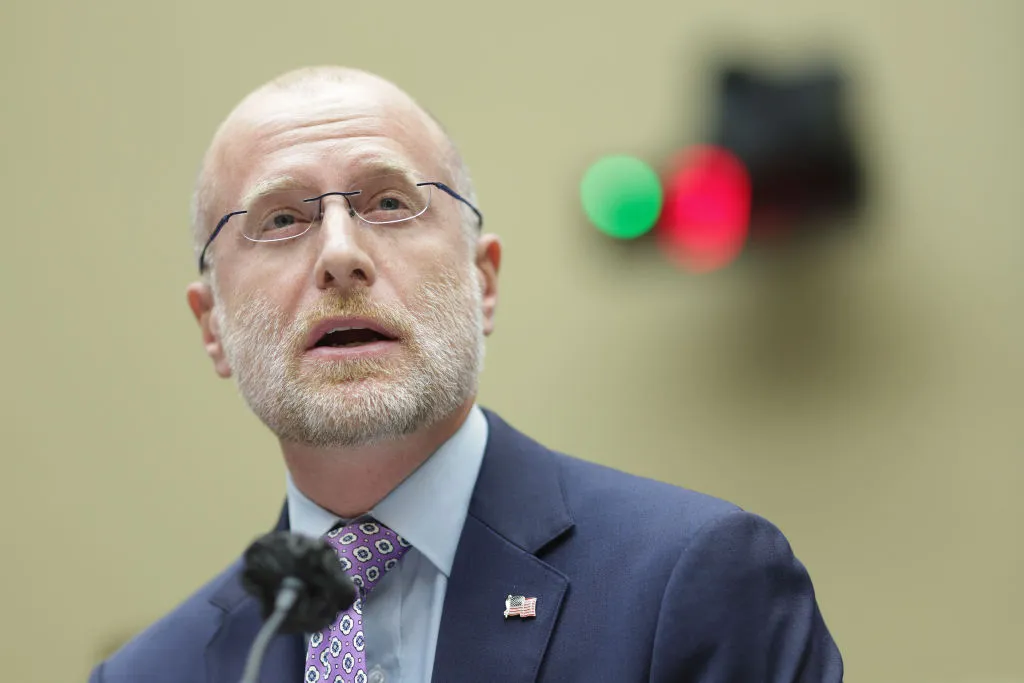
In a bold move signaling a shift in U.S. telecommunications policy, the Federal Communications Commission (FCC) voted 2-1 along partisan lines to rescind critical cybersecurity regulations previously enacted under the Biden administration. The decision, championed by the FCC’s two Republican commissioners, Brendan Carr and Olivia Trusty, effectively removes mandatory security standards aimed at safeguarding phone and internet networks from unlawful access and cyber threats. This strategic rollback aligns with a broader trend of deregulation in the tech sector, emphasizing market-led resilience over prescriptive government intervention.

The regulatory shift arrives amidst an escalating threat landscape, notably exemplified by the Salt Typhoon hacking campaign attributed to China-backed adversaries. This sophisticated operation compromised over 200 US telecommunications firms, including giants such as AT&T, Verizon, and Lumen. Hackers targeted fundamental infrastructure, including wiretap and surveillance systems mandated for law enforcement, exposing the fragility of existing security protocols. Industry analysts, including Gartner and MIT cybersecurity experts, warn that such vulnerabilities could be exploited further if regulatory oversight diminishes.

Adding complexity to the industry’s response are divergent opinions among policymakers. Democratic FCC commissioner Anna Gomez opposed the rollback, arguing it reverses the only meaningful cybersecurity efforts against nation-state cyber espionage. Critical voices, including Senators Gary Peters and Mark Warner, expressed alarm that deregulation will undermine national security, leaving critical communication channels exposed. Their assertions underscore a persistent industry question: Will market forces alone suffice to defend against increasingly sophisticated cyber threats, or is strategic regulation indispensable? Conversely, the NCTA, representing the telecommunications industry, welcomed the move, asserting that the existing rules were overly prescriptive and hampered innovation.

From a technological perspective, this deregulation potentially signals a disruptive phase for the industry, where innovation, rather than regulation, becomes the primary driver of security advancements. Cutting-edge solutions—such as AI-powered anomaly detection, blockchain-based integrity checks, and decentralized security architectures—are poised to redefine cybersecurity landscapes. Disruption driven by market competition could accelerate the deployment of these technologies, positioning nimble firms as leaders in the new security paradigm. Notable industry figures, including Elon Musk and Peter Thiel, have long championed decentralized innovation—foreshadowing a future where private entities spearhead cybersecurity guardrails, rather than bureaucratic mandates.

Looking forward, the industry faces a pivotal moment: balancing innovation and disruption with the safeguarding of national security interests. Policymakers, industry leaders, and technologists must collaborate to ensure that market-driven solutions do not come at the expense of foundational infrastructure resilience. As hackers refine their methods and geopolitical tensions escalate, the window narrows for meaningful action. The future of U.S. cybersecurity in telecommunications depends on adopting a proactive, forward-thinking approach that leverages technological innovation while maintaining robust safeguards—an urgent call for strategic agility in an increasingly volatile digital landscape. The coming months will determine whether deregulation fosters a pioneering security ecosystem or exposes critical vulnerabilities, with profound implications for the global tech frontier.

Tusheti: Ireland of the Caucasus — Europe’s Untamed Mountain Gem for the Bold and Free

Discovering Tusheti: A Mountain Wonderland of Tradition and Inspiration

Few regions in Europe embody the spirit of **adventure and resilience** quite like Tusheti. Nestled deep in the Caucasus mountains, this remote northeastern Georgian enclave is a testament to the enduring power of _local traditions_ and the unspoiled beauty of untamed landscapes. Accessibility itself is an adventure—only reachable via a treacherous, winding gravel road that ascends to over 10,000 feet during the brief summer months, revealing vistas that seem straight out of a storybook. For youthful explorers and culture seekers alike, Tusheti offers a _unique lifestyle_ experience—where rugged wilderness meets age-old customs, creating a place that beckons the **curious** to *embark on a journey of discovery*.

Stepping into Tusheti is like entering a _living museum_, where the remnants of medieval fortresses and traditional shepherding life tell stories of resilience amid **harsh winters**. Among the region’s highlights is Omalo, the gateway city crowned by the ancient Keselo Fortress, serving as the hub for _exploring the surrounding villages_. From the intricate wool textiles of Dartlo to the steep hilltop ruins of Kvavlo, each hamlet preserves its unique _heritage_, artfully woven into the fabric of daily life. The local cuisine, built around _pastoral dairy and hearty meats_, offers a taste of _authentic Georgia_, with dishes like **khinkali** and **khachapuri** serving as staples for travelers craving _simple yet flavorful_ fare. In a world increasingly driven by fast-food culture, Tusheti’s _slow-cooked traditions_ stand out as an inspiring reminder to prioritize **quality, community, and authenticity**.

Beyond its landscape and food, Tusheti’s _rich spiritual landscape_ fuses pagan practices with Orthodox Christianity—an unbroken thread that connects past and present. Visitors encounter _stone shrines, sacred spaces_, and _animal skulls_ that symbolize protec­tion and reverence for _deities and ancestors_. The region’s _festivals_, such as Mariamoba and Mzebudoba, celebrate _deceased loved ones_ and natural cycles, fostering a _sense of _linking past and future_. Such rituals underscore a core insight: _well-being_ is deeply rooted in _cultural identity_ and _connection to nature_. Engaging with these traditions offers more than just _curiosity_—it sparks _personal reflection_ on _purpose_ and the _value_ of _preserving _our roots_, inspiring a broader appreciation for _living in harmony with our _ancestral_ heritage_.

Embracing a Life of Adventure and Tradition

Living in today’s world often prompts a _rushing pursuit of _new experiences_, but Tusheti reminds us that _meaningful _lifestyle_ development is _about _balance_. From the _mountain pastures_, _shepherds_ lead _tens of thousands of sheep_ to graze, embodying _sustainability_ and _patience_. Meanwhile, _local artisans_ craft _woolen socks_ and _elaborate carpets_, demonstrating that _art_ and _craftsmanship_ can be _sources of _personal _and _community _renewal_. For the adventurous youth eager to _reshape their _lifestyle_, Tusheti offers a _blueprint_: embrace _authenticity_, cherish _tradition_, and activate _your _sense of _exploration_. Whether it’s _trekking ancient _paths_, _learning _new recipes_, or _participating in _rituals_, each moment _becomes a _brick_ in _building _a _more _resilient _and _meaningful life_.

Final Reflection

In a world obsessed with _speed_ and _instant gratification_, Tusheti stands as a _beacon of _slow living_ and _deep _connection_. Its _untamed serenity_ invites _all who seek_ to _embrace_ _their _own _adventure, _not just in _the _mountains, but _within themselves_. As Georgian writer Eka Tkadze once mused, _”To truly live, one must _seek _the _heart of _the _mountains, _where _tradition and _nature _converge.”_ For the _youth_ daring to _step _beyond _the familiar, Tusheti beckons as a _reminder_: that _a _fulfilling life_ begins when we _honor _our _heritage_, _pursue _adventure_, and _stay _true to _the _values_ that make us _whole_. #Embrace _the _journey, _and _let _it _lead _you _home_.

Hackers Break Free the Kinect: A Win for Gamers and Innovation

Revolution in Tech: How Open Source and Innovation Disrupt Legacy Systems

Over the past decade, the trajectory of innovative technologies has demonstrated a recurring pattern: initial failure often leads to profound disruption. The Microsoft Kinect, launched in 2010 as a flagship motion-sensing gaming device, exemplifies this trend. While its consumer application—evoking immersive gameplay—failed to meet expectations, its underlying technological foundation became a blueprint for a broad spectrum of disruptive innovations that transcended entertainment.

Today, the Kinect’s infrared depth sensing and gesture recognition capabilities are being leveraged in robotics, medical imaging, and AI-driven applications. The open-source community—notably spearheaded by hackers and developers like Kyle Machulis and Memo Akten—reclaimed this technology from corporate lock-in, transforming it into a versatile tool for democratized experimentation. Their clandestine work with open source drivers revealed that cost-effective access to sophisticated hardware could catalyze accelerated R&D and democratize innovation on a global scale.

Open Source: The Catalyst for Disruption and Business Transformation

The community-driven effort to reverse engineer Kinect was driven less by profit and more by a desire to break barriers. In 2010, the OpenKinect project emerged, igniting a wave of experimentation that showcased how accessible hardware could revolutionize various sectors. Beyond gaming, Kinect-inspired devices now facilitate real-time obstacle detection for autonomous robots, enable contactless surgical scans in healthcare, and serve as powerful tools for educational and artistic endeavors.

  • Lowered barriers for entry into advanced tech spaces
  • Enabled rapid prototyping and open innovation ecosystems
  • Birthed new markets for perception and interaction hardware

Furthermore, the business implications of this disruption are profound. Tech giants like Apple incorporated Kinect’s core sensors into their consumer devices, especially for facial recognition and 3D mapping, solidifying their place in next-generation device ecosystems. Meanwhile, consumer-level access to open-source hardware continues to foster a new breed of startups that challenge traditional R&D models, hinting at a future where corporate innovation will increasingly depend on community-driven advancements.

Future Horizons: Artificial Intelligence Paving the Way for New Disruptions

As the open-source community continues to democratize access to hardware like Kinect, the next frontier appears to be in artificial intelligence. Experts such as Peter Thiel and institutions like MIT predict that AI will serve as the principal driver behind the next wave of disruptive breakthroughs. What began as a punk-rock, hacker-driven movement for open hardware is now evolving into a full-blown AI renaissance: models are becoming more accessible, open data is proliferating, and entrepreneurial ventures are capitalizing on this trend.

However, this new era poses significant challenges and warnings. A growing concentration of AI development within corporate giants could threaten the open innovation spirit that fueled Kinect’s revolution. The risk isn’t just technological stagnation; it’s the potential for a monopolization of future technological breakthroughs, stifling the entrepreneurial spirit that historically pushed the boundaries of what’s possible. Enthusiasts like Elon Musk and Peter Thiel advocate for safeguarding open ecosystems—reminding us that the future of technology depends on the community’s ability to innovate ahead of the curve.

Ultimately, the parallels between the Kinect revolution and the burgeoning AI ecosystem underscore a key reality: innovation is best nurtured outside the corridors of corporate control. As open communities push forward, rapidly iterating and sharing knowledge, they threaten to reset the paradigm of technological progress—making it more accessible, more disruptive, and more aligned with the values of youthful explorers eager to shape the future. The clock is ticking; those who embrace this spirit now will define the next era of technological supremacy.

Score Big with Bosch: Buy One, Get One Free at Lowe’s – Don’t Miss Out!

In a world increasingly defined by DIY culture and a renewed emphasis on self-sufficiency, power tools are emerging not just as practical instruments but as symbols of a broader cultural shift. Recently, Lowe’s has launched an intriguing promotion centered around the Bosch 18V 2-Pack Battery Kit, now available for $179—marked down from $219, which means a $40 savings. What’s making headlines isn’t merely the discount but the *social significance* attached to this deal. For young enthusiasts and burgeoning craftsmen, this signifies more than a purchase; it represents the democratization of tech-enabled craftsmanship, enabling a new generation to take on projects they previously viewed as out of reach.

This trend is resonating strongly among youth, fueled by social media influencers and DIY communities who elevate empowerment through skill-building. TikTok, Instagram, and YouTube powerhouses such as HomeRepairHype and ToolTrekker showcase young creators transforming their living spaces or tackling ambitious renovations. Such influencers democratize the craft, making it accessible, cool, and socially relevant, especially as the pandemic has deeply inspired many to roll up their sleeves. Sociologists suggest this is not just about building a toolbox but about reshaping identity—empowering young people to view themselves as capable creators rather than passive consumers.

The deal’s allure extends beyond affordability. Included in this package is a choice of a free cordless power tool—hammer drills, oscillating multi-tools, reciprocating saws, or angle grinders—that can be used immediately with the batteries purchased. These tools, backed by a five-year warranty, symbolize a shift in behavioral norms: the move toward hands-on engagement and self-reliance, which is increasingly aligned with *traditionally male* domains, albeit now embraced across all genders. Tech analyst Jared Monroe emphasizes that this trend signifies how “power tools are becoming a cultural artifact of independence—youth are no longer just consumers but creators.”

Moreover, the social & cultural impact of this movement speaks to the *value shift* among young people—prioritizing authenticity, personalization, and tangible results over digital consumption alone. This is exemplified by how deals like Lowe’s are marketed not just as discounts but as gateways to a lifestyle rooted in innovation and craftsmanship. As youth increasingly view these tools as extensions of their identity, questions emerge: *Will this enthusiasm translate into sustained engagement?* Or is it a fleeting trend fueled by social media hype? The next big question is whether the *power tool* movement will continue to foster a generation that values tangible skills and craftsmanship, or if it will be overshadowed by digital fleetingness—raising the ultimate inquiry: *Will this new generation redefine what it means to be productive and self-reliant in a digitally connected world?* With the future of DIY culture hanging in the balance, one thing is clear—this surge of resilience, fueled by accessible technology, might just be the beginning of a broader cultural renaissance.

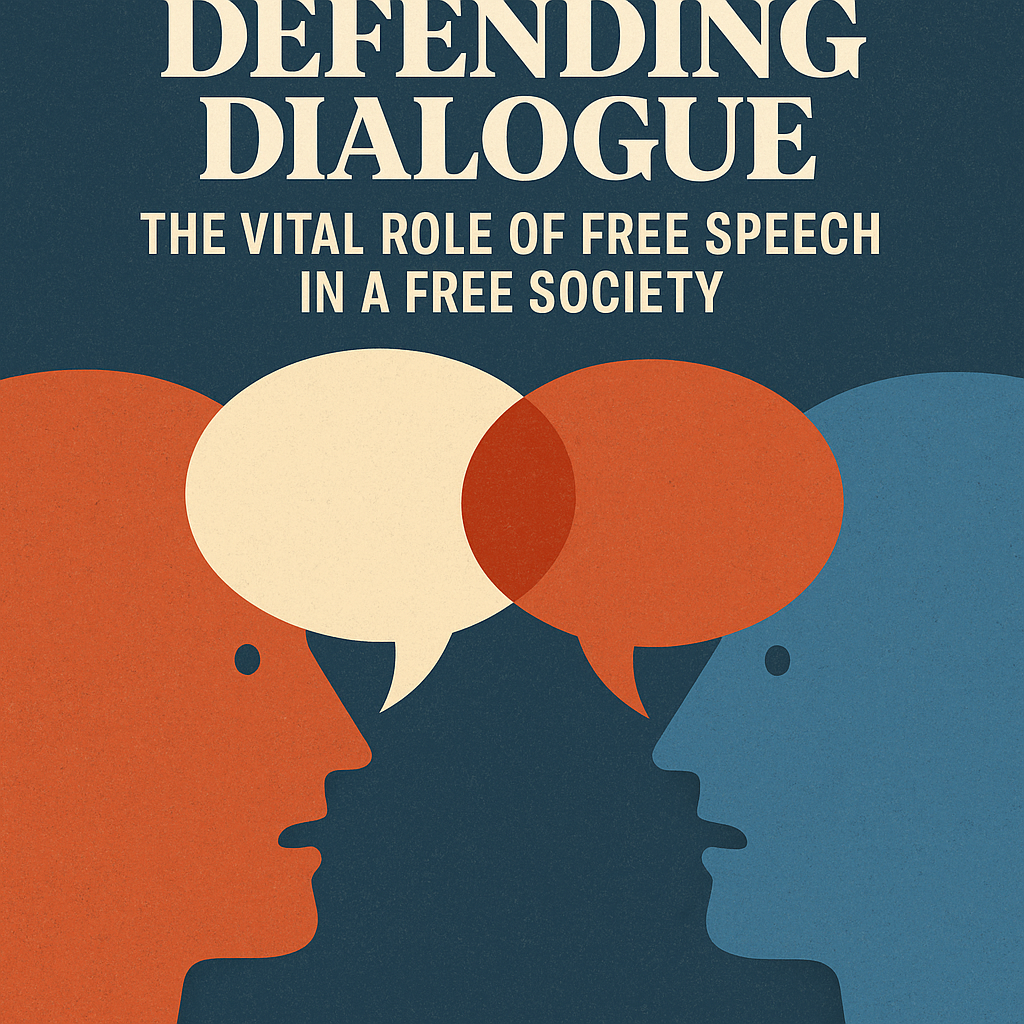
Defending Dialogue: The Vital Role of Free Speech in a Free Society

In an era marked by digital interconnectedness and rapid information exchange, the fundamental importance of free speech in maintaining a vibrant, healthy society cannot be overstated. Critics often posit that unchecked dialogue can foster divisiveness or misinformation, but history and empirical evidence suggest otherwise. John Stuart Mill, in his seminal work On Liberty, argued that the free exchange of ideas is essential not only for discovering truth but for preventing tyranny of the majority. When societies impose undue restrictions on speech, they risk silencing dissent, which can stifle innovation, suppress minority views, and erode the very foundations of democracy. The challenge lies in safeguarding open discourse without allowing harmful content to proliferate, a balancing act that underscores the importance of free and fair dialogue.

Supporters of free speech emphasize that censorship often backfires by driving controversial ideas underground, where they become more difficult to address openly. Economists like Friedrich Hayek have pointed out that free markets of ideas require safeguarding to foster societal progress. Moreover, the digital age has amplified the reach of individual voices, allowing youth-led movements and marginalized communities to challenge entrenched narratives effectively. Nevertheless, critics argue that platforms must moderate content to prevent harm; yet, overreach risks transforming these spaces into echo chambers. Protecting free speech entails constructing boundaries that deter abuse without curtailing authentic debate, a nuanced pursuit that defies simple solutions but remains central to societal resilience.

From a historical perspective, societies that champion liberty of expression tend to experience greater innovation and social cohesion. When citizens are empowered to voice dissent, governmental abuses are held accountable, and policies are scrutinized more effectively. Analysts suggest thatn an environment of robust debate fosters a culture of critical thinking—vital for adapting to complex challenges like technological change or global crises. Limiting speech, on the other hand, can cultivate a climate of conformity, where fear suppresses dissent and free inquiry diminishes. As thinkers like Alexis de Tocqueville observed, “Democratic societies flourish when the individual feels free to speak and think for themselves, even if their views are unpopular.”

Yet, amid the noise and chaos of our digital age, it is essential to remember that free speech is more than a right; it is a moral obligation. It demands responsibility—both from those who exercise it and from societies that protect it. If the future of free societies depends on anything, it is on their ability to defend this sacred space where ideas collide, challenge, and evolve. The weight of this responsibility is immense, for within the marrow of free speech lies the future of human progress itself—an enduring testament to our collective resilience and boundless aspiration, echoing through time as an unbreakable chorus that calls us to remain vigilant and unwavering in the pursuit of truth and liberty.

Israelites and Palestinians traded free, as Trump calls it a 'historic dawn' in Middle East
Israelites and Palestinians traded free, as Trump calls it a ‘historic dawn’ in Middle East

Middle East Ceasefire: A New Chapter or a False Hope?

The recent ceasefire agreement in Gaza marks a pivotal moment in the ongoing conflict that has ravaged the region for over two years. After relentless violence, Israel and Palestinian factions, primarily Hamas, have engaged in intense negotiations facilitated by the United States and supported by key regional players such as Egypt, Qatar, and Turkey. The deal, brokered in part by President Donald Trump during his visit to the region, signifies a major step toward potentially consolidating peace—at least temporarily—but also exposes the deep-rooted problems that threaten to undo this fragile truce. The initial hostage and prisoner exchange was celebrated across both sides, with families reuniting in scenes of raw emotion, reflecting the profound human longing for an end to years of suffering.

  • The first phase of the US-backed peace plan involved Hamas returning all living Israeli hostages, while Israel released nearly 2,000 Palestinian prisoners, including those serving life sentences. The exchange was hailed as a “historic dawn” by President Trump during his speech at the Knesset, emphasizing the potential for a new Middle East.
  • To sustain momentum, the parties agreed on a ceasefire that took effect Friday, accompanied by an increase in humanitarian aid into Gaza, aiming to mitigate the catastrophic damage wrought by years of conflict.

However, the true test now begins. Critics and experts, including historians and international observers, warn that this ceasefire and the diplomatic rhetoric mask an array of unresolved disputes that could threaten to plunge the region back into chaos. Key sticking points include the extent and timeline of Israeli troop withdrawals, the disarmament of Hamas—a group that has long rejected disarmament unless a Palestinian state is established—and the future governance structure of Gaza. The plan envisions Gaza under a temporary Palestinian technocratic authority overseen by a “Board of Peace,” with eventual sovereignty transferred to the Palestinian Authority after reforms. Yet, Hamas’s rejection of foreign governance and its demand for disarmament as a precondition for peace complicate the pathway forward, making the full realization of these agreements uncertain.

Despite the optimistic tones, many argue that geopolitical impact of this breakthrough is complex. Israel’s Prime Minister Benjamin Netanyahu and Trump administration appear determined to avoid a complete capitulation to Hamas’s demands, emphasizing security and sovereignty concerns. Meanwhile, regional rivals such as Iran and militant groups remain watchful, assessing whether this peace is genuine or merely temporary tactical maneuvering. Many security analysts, like those at the International Crisis Group, warn that without addressing the core issues—such as Hamas’s disarmament and broader Palestinian statehood aspirations—the cycle of violence could resume at any moment.

History warns that peace negotiations in this region are often mere pauses in a longer struggle, with each attempt at resolution exposing new fractures. Perversely, the international institutions that once aimed to oversee lasting peace are often hamstrung by their own political interests and inability to enforce agreements. As international organizations monitor developments, the perspective of many analysts remains skeptical about whether this latest ceasefire will hold. How subsequent phases unfold—regarding troop withdrawal, governance, and disarmament—will ultimately determine whether this is a genuine turning point or just yet another chapter in a seemingly endless saga of conflict.

As historic moments unfold on the stage of international diplomacy, the shadows of history loom large. The world continues to watch with bated breath—aware that beneath the surface of fleeting peace lies a struggle that has defined generations, and which may yet rewrite the future of the Middle East around the flames of renewed hope or the ashes of unfulfilled promises.

Skydiver loses life after tragic free fall—without a parachute

International Spotlight on Skydiving Safety as Tragic Incident Unfolds in Nashville

The recent fatal skydiving incident in Nashville, Tennessee, has ignited a global debate on the safety standards of extreme sports and the geopolitical implications of regulatory oversight. The incident, involving experienced skydiver Justin Fuller, underscores the risks faced by adrenaline enthusiasts worldwide, but it also highlights how national safety protocols can influence international perceptions and regulatory cooperation. As investigations unfold, analysts warn that such tragedies could prompt a reevaluation of safety standards across borders, potentially impacting the international skydiving industry.

The Federal Aviation Administration (FAA) has launched a comprehensive investigation into Fuller’s death, which authorities suspect resulted from a sudden separation from his client’s parachute during a tandem jump. Police reports confirm that Fuller, 35, appeared to have become disconnected from his parachuting rig, leading to his presumed fall from the sky, while his 46-year-old client survived by emergency parachute and was rescued hours later by Nashville Fire Department. This incident raises critical questions on international safety protocols and whether the current standards are sufficient to prevent such tragedies, especially for seasoned professionals like Fuller who dedicated their lives to teaching and advancing their sport.

From a geopolitical perspective, incidents like this resonate beyond local borders, affecting broader international discourse on regulatory harmonization. Historians and safety analysts argue that the globalization of extreme sports necessitates cohesive safety standards and transparent oversight, especially as international tourism and sports competitions grow. Notably, the skydiving community has seen increasing incidents worldwide, prompting calls for stricter international accreditation systems. Such evolutions could lead to potential treaties or agreements aimed at elevating safety benchmarks, yet they also risk complicating the industry’s competitive landscape.

  • The incident occurs amid rising scrutiny of safety practices following recent high-profile accidents in various countries.
  • Aviation and sporting authorities worldwide have debated the efficacy of current safety standards, with some advocating for stricter regulations modeled after FAA protocols.
  • International organizations, including the International Air Sports Federation, are under pressure to reinforce safety reforms, which could reshape industry norms.

As the world watches, the aftermath of this tragedy could serve as a catalyst for sweeping reforms that redefine international norms of adventure sports safety. While Nashville mourns its latest loss, the global community is reminded that the pursuit of thrill comes with profound responsibility — one that intertwines the fate of societies, the integrity of regulations, and the relentless march of history. The question remains: how many more must fall before the world collectively elevates the standards that safeguard human daring in the face of nature’s fury? In this unfolding story, the margins between safety and catastrophe are razor-thin, and the weight of history continues to press upon the present, demanding action before another life is lost to the skies.

Trump demands Israel halt Gaza bombings as Hamas agrees to free hostages

The recent developments in Gaza have sent shockwaves through the international community, illustrating the profound impact that decisive leadership can have on long-standing conflicts. Donald Trump, emerging once again as a pivotal figure on the global stage, ordered Israel to immediately cease bombing Gaza as he publicly welcomed Hamas’s tentative acceptance of a groundbreaking ceasefire plan. This unprecedented move signifies a potential turning point in what has become one of the most complex and entrenched conflicts of the 21st century. With the potential for a temporary halt to hostilities, the international system is watching closely, assessing whether this fragile alignment can evolve into a lasting peace that reshapes the geopolitical landscape.

The agreement, brokered under Trump’s unique diplomatic influence, involves Hamas’s willingness to release all hostages in exchange for Palestinian prisoners held by Israel, as well as an acceptance of newly proposed governance structures for Gaza. While Hamas’s response remains cautious—requesting further negotiations on the plan—they have nonetheless signaled a willingness to surrender some control, a move that, if sustained, could redefine power dynamics in the region. Notably, Hamas’s statement confirming approval for the release of prisoners and the transfer of authority in Gaza indicates a strategic shift, likely aimed at alleviating the catastrophic humanitarian crisis and securing political leverage amidst ongoing chaos.

In this context, Trump’s plan stands out as a comprehensive roadmap for peace—calling for an immediate ceasefire, swift exchange of prisoners, phased Israeli troop withdrawals, and the disarmament of Hamas fighters. It also emphasizes an urgent increase in humanitarian aid to address Gaza’s dire conditions, which have been exacerbated by Israel’s blockade and relentless military strikes. What makes this approach particularly significant is the fact that only Trump’s leadership has managed to push through such a coordinated diplomatic effort involving regional actors like Egypt and Qatar. This coalition, with its focus on a sustainable resolution, exemplifies a rare moment where international diplomacy finds common ground amid chaos—the kind of intervention the region has desperately needed for years.

However, the bigger geopolitical impact of this unfolding scenario cannot be overstated. While a ceasefire might bring immediate relief to Gaza’s suffering population, the underlying issues of disarmament, governance, and regional influence remain unresolved. Analysts suggest this could be either a genuine breakthrough or merely a lull before the storm—highlighting the fragility of peace in a region where history shows that negotiations often unravel as quickly as they are born. According to respected international scholars, the momentum generated by Trump’s intervention might influence future diplomacy, potentially setting a precedent for outsider-led solutions to entrenched conflicts. Yet, the deeper questions of sovereignty, ideology, and regional order linger, casting a long shadow over the current negotiations.

As history’s pages continue to turn, this moment in Gaza stands as a stark reminder of how geopolitics, driven by bold decisions and strategic interests, can quickly reshape entire nations and societies. With each negotiation, each promise broken or fulfilled, the narrative of the Middle East edges closer to a new chapter—one that may yet turn tragic or hopeful, depending on whether the choices made today stand the test of time. The weight of history presses down, and the world watches, aware that in the crucible of conflict, even the greatest efforts are only the beginning of a longer journey—one whose final destination remains uncertain amidst the ever-changing tides of power and peace.

Civic Duty: The Foundation of a Stronger, Free Society

At the very core of a thriving, free society lies the intangible yet powerful principle of civic duty. This foundational concept, often sidelined amid debates over policy and economics, actually fuels the social cohesion, accountability, and resilience necessary for national greatness. Critics of civic participation might argue that it is a relic of older times, replaced by individualism or reliance on government. However, scholars and historical analysts suggest that the decline in civic engagement correlates with rising societal fractures, economic polarization, and eroding trust in institutions. It is through the active participation of citizens—whether through voting, community service, or local activism—that democracies are fortified and the collective spirit of a nation is rekindled.

Historical exemplars demonstrate that societies which emphasize civic responsibility tend to enjoy greater stability and prosperity. Alexis de Tocqueville, in his seminal work Democracy in America, observed that active civic engagement by citizens creates a “civil society” that guards against tyranny and fosters a sense of shared purpose. Today, experts maintain that a strong civic culture not only encourages political stability but also cultivates resilience during national crises, whether economic recessions or external threats. The essential nature of this duty is underpinned by the understanding that freedom does not arise passively but must be actively defended and sustained by those who cherish it. In this way, civic duty becomes the bedrock upon which sovereignty and individual liberty rest.

Furthermore, proponents argue that fostering a sense of collective responsibility begins with education and community engagement, cultivating future generations of responsible citizens. Economists like Milton Friedman have emphasized that personal responsibility and civic participation are intertwined with economic freedom and social stability. In a world increasingly driven by technology and global interconnectedness, the value of local civic engagement persists—as it creates a buffer against fragmentation and alienation. As Victor Davis Hanson notes, “A society that neglects its civic roots risks losing its moral compass,” and the erosion of these duties can lead to creeping government overreach, apathy, and a decline in the shared values that make democracy possible.

Yet, the struggle remains clear: amidst modern distractions and complex bureaucracies, fostering an engaged, responsible citizenry requires deliberate effort and leadership. As history teaches, the strength of a society is measured less by its material wealth and more by the resilience of its civic fabric. May the future forge ahead—not in reckless pursuit of transient liberties, but in the profound recognition that the true power of freedom flows from the collective promise of civic duty. For in the vast expanse of history, it is this quiet pledge—made and renewed— that keeps the flame of liberty burning brightly against the encroaching darkness of indifference. And so, the story continues: a tapestry of millions, united not just by laws or borders, but by an unwavering resolve to uphold the sacred duty that sustains a free society’s most elusive, most precious gift: its freedom.”

Social Media Auto Publish Powered By : XYZScripts.com