Matox News

Truth Over Trends, always!

Supreme Court Takes Up Catholic Preschool Funding vs. LGBTQ+ Rights in Colorado

In a decisive move, the US Supreme Court has agreed to hear an influential case that underscores the ongoing tension between religious freedoms and secular state policies. The case involves St. Mary Catholic Parish and the Archdiocese of Denver, which are challenging Colorado’s exclusion of faith-based preschools from a state-funded universal preschool program. The schools argue that this exclusion violates their religious rights—particularly their policies on LGBTQ+ admissions—raising profound questions about the limits of government interference in religious institutions. This case signals the court’s continued engagement with religion-centric issues amid a broader ideological shift that favors religious expression, often at the expense of evolving social norms.

The controversy centres on Colorado’s 2020 ballot measure establishing a program that distributes public funds to preschool centers selected by parents. While the state asserts that participation requires adherence to nondiscrimination laws, the Catholic schools maintain that such mandates infringe upon their constitutionally protected religious practices. The conservative-majority court, which has a track record of adjudicating cases through the lens of individual religious liberty, now faces a pivotal decision with far-reaching geopolitical impact. A ruling in favor of the schools could embolden religious groups nationwide to challenge secular policies, potentially leading to a reconfiguration of how public funds are allocated and which social policies are deemed permissible under the First Amendment.

This case exemplifies a broader pattern where **internationally**, conservative legal principles are driving a redefinition of religious rights. Historian and legal analysts highlight the resurgence of judicial activism in cases involving religious expression, look particularly to Justice Antonin Scalia’s 1990 decision on peyote, which still influences legal debates about religious exemptions. The Supreme Court’s impending consideration of whether to narrow or uphold this precedent underscores the current ideological divide. Some commentators warn that such rulings could erode longstanding secular principles, paving the way for increased religious influence in education, healthcare, and public life—settings crucial for social cohesion and national identity.

  • The case is anticipated to serve as a barometer for how the Court balances religious liberty with anti-discrimination statutes, especially as public opinion shifts on LGBTQ+ rights across multiple nations.
  • Decisions made here could inspire similar legal challenges in other regions, influencing international debates about religious exemptions and the role of government in fostering inclusive societies.
  • International organizations and human rights advocates are closely watching, wary that a tilt towards religious privileging may result in societal polarization or undermine hard-won social justice gains.

As the fall verdict approaches, the weight of history hangs heavily over America’s courts and society. The decision will not merely determine the fate of faith-based preschools in Colorado, but will resonate across borders—calling into question the very nature of religious freedom in a rapidly changing world. Whether the court will uphold a vision of religious expression unbounded by secular law or enforce a more restrictive interpretation remains to be seen. In this unfolding chapter of legal and moral debate, the world watches, acutely aware that the decisions made today will echo through generations, shaping the history of liberty, faith, and social order in the centuries to come.

Yupp.ai shutters after $33M funding from a16z crypto’s Chris Dixon—what’s next for youth-focused tech?

Yupp.ai’s Sudden Shutdown Marks a Turning Point in AI Industry Disruption

In a striking demonstration of how swiftly the AI landscape is transforming, Yupp.ai, a promising startup recognized for its innovative crowdsourced model comparison platform, announced its closure less than a year after launch. Despite amassing 1.3 million users and collaborating with AI giants such as OpenAI, Google, and Anthropic, the company’s ambition to democratize AI model evaluation has come to an abrupt halt. This move underscores the rapid evolution and intense competition within a market increasingly driven by fast-paced technological breakthroughs and disruptive paradigm shifts.

Yupp.ai offered consumers a platform to test and compare results across over 800 AI models, providing valuable anonymized data that could shape future model development. By aggregating user feedback on multiple outputs—from information to images—the startup hoped to bridge the gap between consumer needs and AI model refinement. However, the company cited a failure to achieve product-market fit as a primary reason for shuttering, citing the incredible leaps in AI capabilities over the past months as exacerbating challenges. This dynamic reflects a broader industry trend: the rapid, continuous improvement of AI models makes ongoing data collection and feedback mechanisms increasingly obsolete or secondary in importance.

Market Disruption and the Future of AI-Driven Business

The story of Yupp.ai is a microcosm of how disruption is reshaping the AI industry at large. Industry leaders and analysts, including Gartner and MIT researchers, warn that we are near a critical inflection point—a shift towards autonomous AI agents that operate without human oversight. As AI models become more sophisticated and contextually aware, enterprise applications are moving away from user-facing tools to AI-to-AI communication. This evolution promises to turbocharge industries like finance, logistics, and customer service, where autonomous agents will soon dominate traditional models of human interaction.

Significantly, the market implications are profound:

  • Traditional crowdsourcing and feedback loops may give way to self-improving, self-optimizing systems.
  • Major AI labs are investing heavily in agentic systems, shifting the competitive landscape from model performance to system robustness and autonomy.
  • Emerging technologies challenge established players by enabling startups with disruptive infrastructure to scale rapidly, a trend emphasized by industry pioneers like Elon Musk and Peter Thiel.

What’s Next? Expect Urgency in Innovation and Strategic Realignment

The closure of Yupp.ai foreshadows an uncertain but exciting future where innovation and disruption accelerate the transformation of AI business models. Companies that can adapt to the increasingly autonomous AI ecosystem will pose a significant threat to legacy platforms, forcing incumbents to rethink their strategies. Industry watchers anticipate a wave of investments directed toward developing truly agent-centric AI systems, with potential breakthroughs in multi-modal understanding and contextual intelligence. As AI capabilities become more autonomous and integrated, businesses must act swiftly; those that fall behind risk obsolescence in this fast-changing frontier. The coming years will undoubtedly be decisive—marking a phase where AI evolves from a tool designed for humans to a complex, self-governing system poised to revolutionize the digital age.

DHS Funding Freeze Becomes Longest Partial Shutdown in U.S. History Under Trump

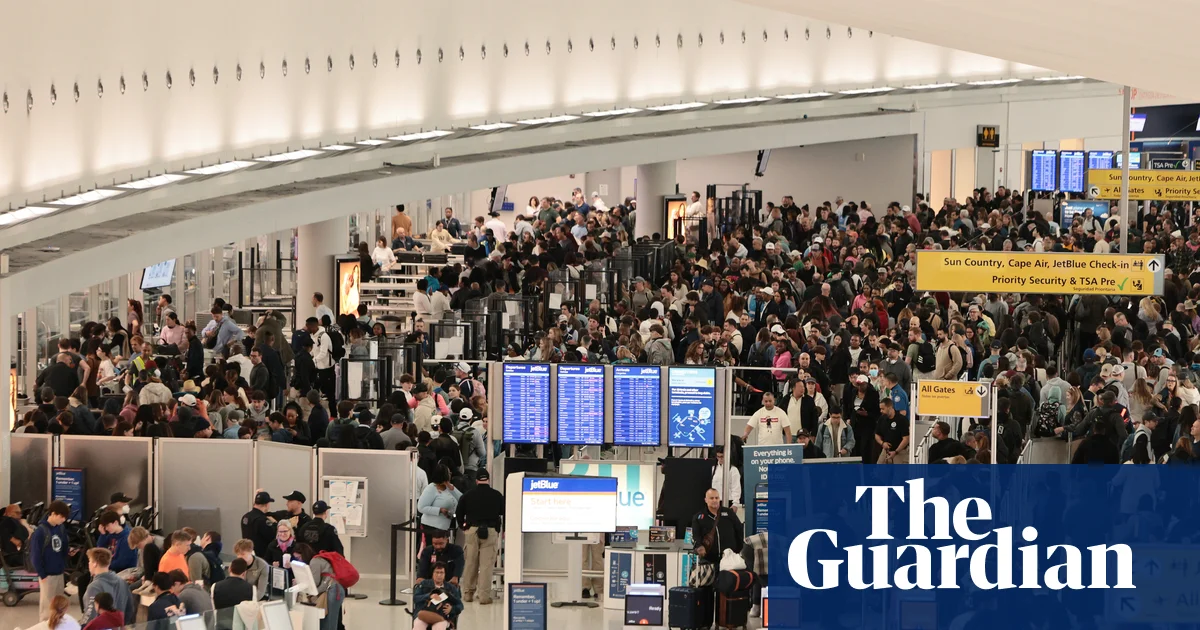
The ongoing partial shutdown of the United States Department of Homeland Security (DHS), now reaching the longest in American history, underscores a deepening crisis rooted in political stalemate. For over six weeks, the DHS, responsible for crucial national security and immigration enforcement, has operated with less than 10% of its workforce active, leaving nearly 200,000 employees, including airport security personnel, in limbo. This paralysis is not just a domestic mess but a signal that the fragile fabric of American governance is fraying. Such internal instability is bound to ripple outward, affecting international perceptions of the world’s most powerful democracy and its capacity to project stability in a turbulent global landscape.

The root of this crisis lies in Congress’s failure to bridge partisan divides concerning immigration and border enforcement policies. Despite numerous attempts by President Donald Trump to allocate emergency funds, negotiations have repeatedly collapsed, leaving agencies like FEMA and the US Coast Guard without resources. As the shutdown prolongs, the chaos at America’s airports epitomizes its consequences: overcrowded security lines, missed flights, and over 480 TSA workers having left service since the shutdown began. Notably, authoritative voices such as the American Federation of Government Employees president Everett Kelley have denounced this government failure as a betrayal of the American people. Kelley’s call for lawmakers to “return to Washington, honor their oath and do their job” underscores the urgent need for leadership that prioritizes national stability over partisan gamesmanship.

From a geopolitical perspective, the shutdown weakens America’s global credibility. As international institutions and allied nations watch the wreckage caused by internal political discord, they are forced to question whether the U.S. can sustain its commitments or lead global efforts. Meanwhile, organizations like Airlines for America and the Modern Skies Coalition warn of a broader economic fallout. These groups point out that the shutdown hampers vital transportation infrastructure, jeopardizes international trade, and signals a retreat from the American keystone role in global stability. As global analysts cautioned, such internal dysfunction leaves the door open for adversaries to exploit America’s vulnerabilities, further destabilizing an already volatile international order.

In the wider context, these government challenges are symptomatic of a deeper political polarization. Experts such as law professor Eric Chaffee warn that short-term legislative fixes are merely delaying the inevitable, emphasizing that the true solution demands a political environment where the public’s will and national interests are prioritized. The current deadlock, with bills rejected and leaders retreating into partisan bunkers, risks being a prelude to further crises—not just within the U.S., but across the world stage. As history continues to unfold and the weight of this crisis bears down, the question remains: will American democracy rally or falter under the weight of its own divisions?

As the shutdown drags on, the world watches a nation claiming to be a global leader caught in a spiral of self-inflicted chaos. The narrative remains unwritten, but the shadows of past conflicts suggest that history’s gaze will be unforgiving to those who let internal discord threaten to dismantle their nation’s sovereignty. The next chapter in this saga holds the power to redefine America’s reputation—either as a resilient beacon of democracy or as a fractured power adrift in a world with no room for weakness. With each passing day, the weight of history presses down, waiting for leaders to act before the nation’s legacy is forever altered.

Senate boosts Homeland Security funding to keep America safe

The current political landscape in the United States has taken a decisive turn, highlighting the deep fissures within its governing institutions. As partisan conflicts escalate over fiscal responsibilities, officials reveal that the failure to pass a comprehensive Homeland Security funding bill is rooted in ongoing disagreements between Democrats and Republicans. This unresolved deadlock has significant geopolitical implications, especially as the department tasked with national security faces chronic underfunding and operational uncertainty.

According to recent statements, the Democrats’ steadfast refusal to accept a bipartisan agreement has directly led to the absence of a unified funding package for the Department of Homeland Security (DHS). Instead, Republicans have attempted to circumvent the stalemate by allocating funds in piecemeal fashion, a strategy criticized for lacking coherence and strategic foresight. This approach, experts argue, undermines the department’s ability to effectively address emerging threats, from cyberattacks to domestic terrorism. As the global community watches, the United States’ internal struggles cast a shadow over its credibility and capacity to project stability on the world stage.

Many analysts and international think tanks warn that such internal disarray echoes a broader trend: the erosion of trust in traditional governance structures amid political polarization. The global geopolitical impact is palpable, raising concerns among allies and opponents alike. Historically, American stability has served as a bulwark for international order, but if domestic divisions hinder essential functions like homeland security, the ripple effects could destabilize regional security architectures. Organizations such as the United Nations and NATO have voiced cautious concern, emphasizing the importance of unity and resilient institutions in safeguarding global stability.

Civil society and national security experts emphasize that this crisis underscores a fundamental turning point in American governance. How the political elite navigates this impasse will determine not only the fate of the DHS but also the broader trajectory of U.S. influence worldwide. If the stalemate persists, it risks emboldening adversaries and complicating diplomatic negotiations. Furthermore, historians like Gordon S. Wood warn that prolonged internal divisions threaten to undermine the very fabric of American democratic resilience. As the nation teeters on the edge of institutional oscillation, the weight of history presses heavily upon its shoulders, reminding the world that the future of freedom and security is as fragile as the unity that sustains it.

In this moment of crisis, the global community must observe with cautious vigilance. The question remains whether the United States, a nation built on resilience and innovation, can overcome its internal conflicts and reaffirm its role as a custodian of stability. Or will these partisan struggles become the defining weakness that historical narratives will later mourn? The answer lies ahead, as events unfold with a gravity that leaves none unaffected—investors, allies, and opponents alike watch, knowing that history is unfolding in real time, with every decision shaping the landscape of the 21st century.

House Plans DHS Funding Deal to End Partial Shutdown—Stay Tuned, Youths

In a time marked by rapid geopolitical upheaval, the United States is retrenching its influence while forging new alliances and strategies in a complex international landscape. Following a partial government shutdown and fractious debates within Congress, the Biden administration appears to be pivoting towards a more assertive posture in the Middle East, especially concerning the Iran conflict. Reports suggest that JD Vance, the Vice President, has emerged as a key figure in negotiations aiming to de-escalate tensions with Iran, signaling a potential shift away from the previous confrontational stance. This pivot comes amidst a backdrop of ongoing diplomatic stratagems, economic pressures, and military posturing, with global repercussions that extend far beyond the narrow corridors of Washington or the Middle East.

Meanwhile, Saudi Arabia has increased its calls for intensified U.S. action against Iran, reportedly urging President Donald Trump to escalate military strikes. A Saudi intelligence source revealed that Crown Prince Mohammed bin Salman advocates for not only continuing but intensifying confrontations, viewing the ongoing campaign as a “historic opportunity” to reshape the Middle East. The recent assertions by Trump, claiming Iran is *”begging to make a deal”* and allowing oil tankers to pass through the Straits of Hormuz, signal a critical juncture where rhetorical bravado masks the underlying strategic stakes. These developments highlight a fragile balance, where international actors’ decisions directly influence regional stability and global energy markets.

In the European sphere, the G7 foreign ministers convened in Paris to discuss the crisis, amid indications that America’s allies remain skeptical of U.S. ambitions. Secretary of State Marco Rubio emphasized that the U.S. prioritizes the interests of its citizens, dismissing efforts to appease allies as secondary. This stance underscores an emerging rebellion against traditional multilateral diplomacy, where the West grapples with redefining its role and influence. The ripple effects are compounded by economic markets reacting sharply—U.S. stocks plummeted in the largest slump since the Iran-Israel conflict escalated, revealing investor anxiety over the stability of energy supplies and broader geopolitical risks. Analysts warn that these financial tremors could presage a more profound global economic downturn, as confidence in international stability wanes.

Furthermore, the Biden administration’s recent actions—such as the decision to feature President Trump’s signature on U.S. currency and proposed calls to overhaul voting processes—signal a broader shift towards a more domestically focused, nationalist posture. These decisions, coupled with legislative impasses over immigration reforms, reflect a nation redefining its core principles and confronts internal divisions that threaten to weaken its global standing. Historians and geopolitical strategists warn that such internal turbulence, if left unaddressed, could accelerate America’s decline from a unipolar superpower to a nation struggling to maintain its influence amidst rising powers like China and Russia.

As the dust settles over these critical debates and shifting alliances, the world stands at a crossroads where each decision could unleash either a new era of cooperation or the chaos of conflict. The unfolding drama, marked by geopolitical chess moves and national introspection, leaves the global community with a stark warning: that history’s most significant transformations often arrive unannounced, shaping the future in ways that few can fully comprehend. The pages of history are still being written, and the next chapter promises to test the resilience of nations and the resolve of civilizations.

Trump warns: ICE deployment at airports if funding talks stall

Global Stability in the Crosshairs as US Government Shutdown Threatens International Order

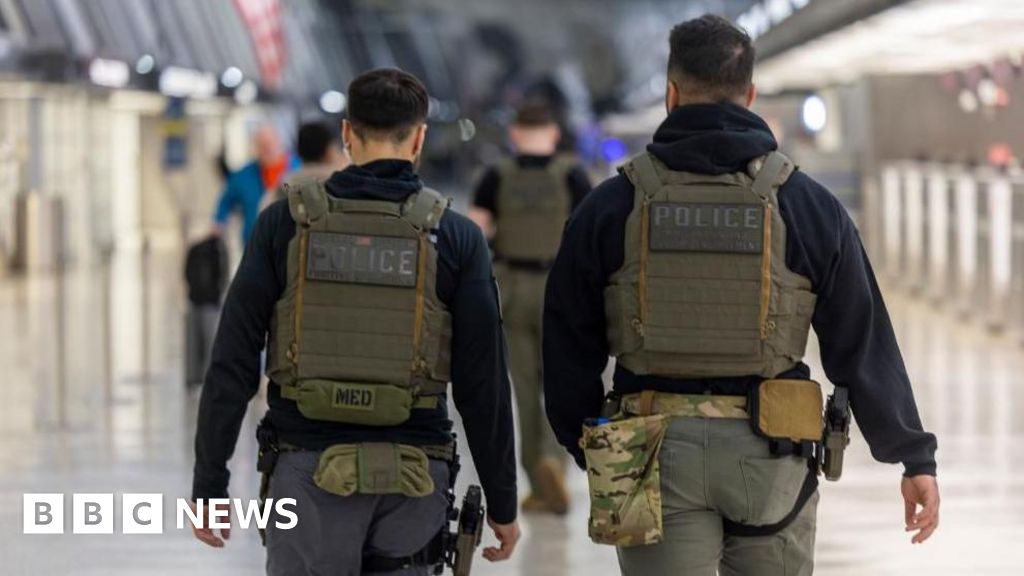
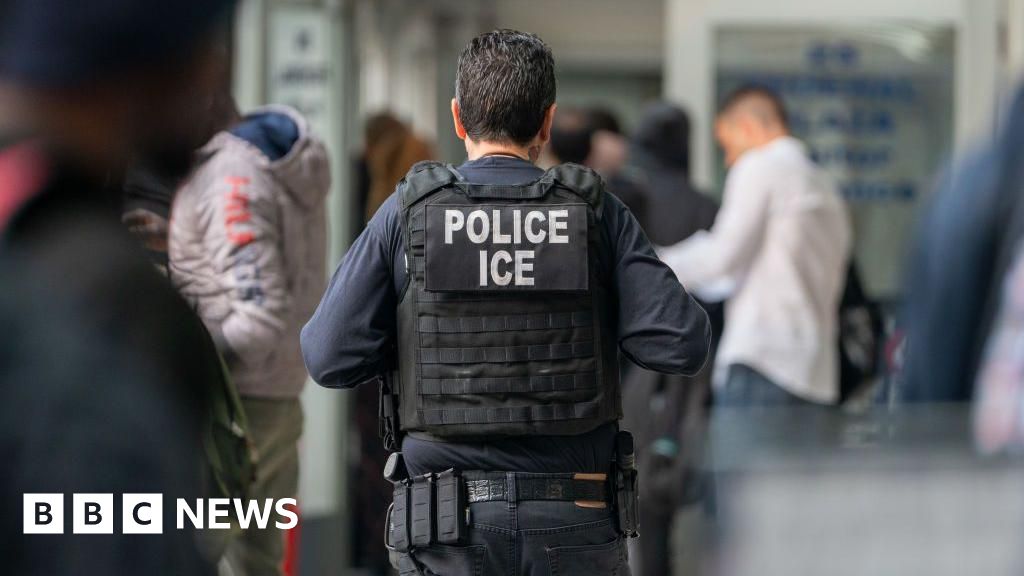
Amidst rising geopolitical tensions, the recent partial United States government shutdown has ignited concerns far beyond American borders. The shutdown, triggered by congressional deadlock over budget negotiations, has resulted in essential services, including immigration enforcement and airport security, operating under strained circumstances. The U.S. president’s statement that ICE (Immigration and Customs Enforcement) will “do security” underscores the government’s prioritization of internal security amidst internal chaos, but also raises questions about the long-term stability of U.S. commitments worldwide.

International experts and analysts have emphasized that the shutdown’s impact extends beyond domestic borders, affecting U.S. diplomatic leverage and global security cooperation. The failure to fund critical agencies not only hampers the country’s ability to enforce immigration laws but also signals internal instability to allies and adversaries alike. Many observers point out that the shutdown erodes the confidence that nations around the world often rely on when engaging with the United States on security and economic issues. As noted historian Dr. Robert Langley warns, “such interruptions threaten the foundational trust inherent in the American-led security architecture.”

Furthermore, the decision to keep airport security operational despite the lapse in funding demonstrates the government’s prioritization of critical infrastructure, yet it also highlights the fragility of an institution that once stood as a symbol of stability. The consequences ripple outwards, especially in an era of rising geopolitical rivalries with China and Russia, where America’s global influence hinges on consistent, reliable engagement. The International Monetary Fund and various international watchdogs have voiced concern that prolonged governmental dysfunction could undermine the economic stability of emerging markets, which are increasingly intertwined with U.S. leadership.

Writers and analysts warn of the “turning point” this crisis represents; some suggest this could mark a more profound shift in global power dynamics.

  • The undermining of U.S. credibility
  • The erosion of domestic confidence in government institutions
  • Potential emboldening of regional adversaries

As international societies watch intently, the American government remains caught in a maelstrom of political contention and fiscal paralysis. The decision-making gridlock underlines the urgent need for reform, yet the stakes continue to rise as the world’s most powerful nation struggles to maintain its internal cohesion. The future remains uncertain; with each passing day, the threads of stability tighten, woven into the fabric of history — a chapter yet unfinished, written in the moments when the global balance teeters on the edge of transformation. The weight of history now bears heavily on the shoulders of those who hold power in Washington, as the world watches with bated breath, awaiting the next move in this unfolding narrative of global consequence.

Ukraine-Hungary Oil Dispute Jeopardizes EU Funding

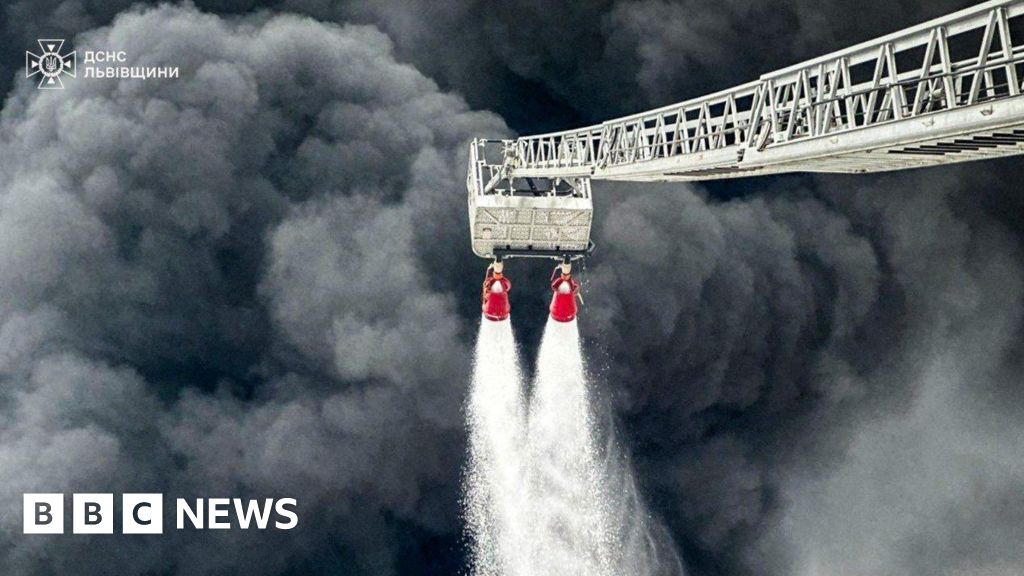
The ongoing conflict in Ukraine continues to reverberate across the geopolitical landscape, this time sharply intensified by a dispute between Kyiv and Budapest concerning the state of a critical oil hub in western Ukraine. This disagreement has not only exposed underlying tensions between the two nations but also highlighted broader issues related to regional stability, resource management, and international support amidst the protracted war.

Following the recent Russian missile strikes, reports diverge sharply on the extent of damage inflicted upon the strategic oil processing and transportation facilities in Ukraine’s western region. Kyiv claims the hub remains largely operational, asserting that damage was contained and that oil flows will resume promptly. Conversely, Budapest and some Eastern European allies argue that the facility has suffered significant destruction, resulting in a prolonged suspension of oil flow. This disagreement underscores not just differing intelligence assessments but also underlying geopolitical divides, with Hungary cautiously aligning more closely with Russia’s stance and interests in the ongoing conflict. Analysts warn that the prolonged suspension of oil supplies could have far-reaching consequences, destabilizing regional economies reliant on Ukrainian transit routes and complicating European energy security objectives.

The disruption in energy supplies is emblematic of the broader geopolitical contestation that defines the current era. International organizations such as the European Union and NATO are closely monitoring these developments, recognizing that control over energy infrastructure is a critical lever of influence and power projection. Western analysts emphasize that the damage to Ukraine’s oil infrastructure is not merely a localized incident but a symptom of Russia’s broader strategy to weaken Ukraine’s economy and isolate Kyiv diplomatically. The situation has also attracted comment from prominent historians and geopolitical strategists, who interpret the discord as a reflection of the rising contest for influence—where national interests often clash at the expense of regional stability and long-term peace prospects.

The United States and European Union have issued cautious statements emphasizing their support for Ukraine’s sovereignty and infrastructure recovery, yet behind the scenes, debates continue on the best course of action. Some officials warn that continued ambiguity over the oil hub’s status could embolden Russian military campaigns and embolden existing alliances that oppose Western influence. Furthermore, the decision by Hungary to sideline Ukraine in resource security debates signals a worrying shift among Eastern European nations—one that could fragment collective Western efforts and sway power balances in unpredictable directions. The tension over this oil hub encapsulates the complex calculus that nations must navigate: balancing national interests, regional security, and international commitments amidst unprecedented geopolitical upheaval.

As rhetoric escalates and diplomatic channels become strained, the potential for a wider escalation looms. The world watches as Kyiv and Budapest battle over an oil terminal that is, in many ways, a microcosm of the larger conflict—a contest over influence, sovereignty, and the control of critical resources. With each passing day, the stakes deepen, and history prepares to write the next chapter of a turbulent era—one where decisions echo far beyond borders, shaping the destiny of nations and societies. The weight of history remains on the horizon, awaiting the unfolding story of resilience, conflict, and the relentless quest for power in a divided world.

Nicolas Sarkozy Faces New Court Battle Over Libya Funding Scandal

The ongoing legal battles surrounding Nicolas Sarkozy, the former French president, embody a critical chapter in the intertwined narratives of politics, justice, and international influence. As Sarkozy prepares for his second trial on charges related to alleged illegal campaign funding from the regime of Muammar Gaddafi, the implications extend well beyond domestic French affairs. These events serve as a stark reminder of how international clandestine dealings can shape the political landscape and influence foreign policy, with reverberations that challenge the integrity of democratic institutions.

The first conviction of Sarkozy last year marked a historical milestone—it made him the first former EU leader to serve time behind bars. This unprecedented situation underscores a broader decline of impunity once thought protected by political stature. The case revolves around allegations that, during his tenure as interior minister and later as president, Sarkozy conspired to secure campaign funding from the Libyan dictator—a figure notorious for his human rights abuses and connections to terrorism, including the 1988 Pan Am bombing. Prosecutors contend that Sarkozy’s deal with Gaddafi involved exchanging campaign funds for diplomatic favors, supporting Libya’s international isolation’s reversal, and rehabilitating Gaddafi’s tarnished image—a move that in a geopolitical sense, significantly shifted Libya’s diplomatic trajectory, with enduring consequences for regional stability.

Such accusations reveal pivotal how leadership decisions and covert international arrangements can destabilize societies and distort the course of justice. Scholars and analysts note that Sarkozy’s actions—aimed at boosting his political career—also served to realign Libya’s global standing, effectively allowing Gaddafi to re-enter diplomatic channels that had been shuttered for decades. The geopolitical impact is profound; Libyan society, scarred by decades of dictatorship and ongoing turmoil, was temporarily manipulated for the internal political gains of a foreign leader. These events highlight the Erasure of moral boundaries in pursuit of personal and national interests, moving beyond simplistic notions of sovereignty into a realm where international power politics overshadowed justice.

As the international community watches this case unfold, the narrative becomes an allegory for the broader erosion of ethical standards in global diplomacy. The upcoming trial—which could see Sarkozy face up to ten years in prison—symbolizes a potential turning point where accountability begins to challenge the legacy of covert dealings and international manipulation. Nonetheless, the case also showcases the darker side of geopolitics: how a leader’s personal ambition can entangle nations in a web of clandestine diplomacy, ultimately destabilizing the postwar order and exposing the shadowy underbelly of power. Will justice prevail or will these historic accusations fade amid the chaos of international politics? The decision rests not only on a court in Paris but also on the global conscience, as the story of Sarkozy and Gaddafi leaves a haunting imprint on history’s ledger—a story still waiting to be fully written.

Billions in SEND funding to boost school inclusivity, government vows to fairer future

Government Initiatives Spark Debate Over Support for Children with Special Educational Needs

In a move that signals profound shifts in the landscape of education and social services, the government has announced sweeping reforms aimed at reshaping how children with special educational needs (SEN) receive support. These changes come amid vocal concerns from educators, families, and advocacy groups about the effectiveness and fairness of the current system, which many argue has left vulnerable students behind and strained communities at their breaking point.

The core of the reform efforts involves restructuring the support frameworks within local authorities and educational institutions. Critics fear that the decentralization plan might lead to inconsistency, with some regions potentially lacking the resources or expertise to adequately meet these children’s needs. As social commentators often point out, such shifts risk creating a fragmented system where families are left navigating complex bureaucratic hurdles, often feeling disempowered or misunderstood. This social upheaval underscores a persistent tension: how to balance equitable access to tailored education while managing limited resources within a decentralized framework.

The societal implications extend beyond the classroom, affecting families, communities, and the broader social fabric. When children with SEN are not supported properly, families experience heightened stress, financial strain, and emotional fatigue. These issues ripple outward, altering community dynamics and impacting local cohesion. Sociological insights, such as those from Dr. Emily Rodriguez, emphasize that *”access to quality support for vulnerable children is intertwined with societal resilience”* — a sentiment that underscores wider concerns about social equity and moral responsibility.

Furthermore, this reform initiative reveals underlying demographic shifts and cultural tensions that challenge the status quo. As historian Mark Lawson points out, societies that neglect their most vulnerable members risk risking societal fragmentation, where exclusion and inequality foster social divides. The proposed reforms aim to modernize and streamline the support system, but critics warn of a potential decline in inclusive education if implementations fall short. To address this, authorities propose targeted

  • training programs for educators
  • greater parental involvement
  • investment in community-based resources

, seeking to bridge gaps and foster a society where no child is marginalized.

As communities stand at this crossroads, questions about societal values and priorities loom large. It is a poignant reminder that the future of our neighborhoods depends on the moral choices we make today. Will these reforms create a cohesive society that upholds the dignity of every child, or will they deepen social divides? The challenge lies not only in implementing policy but in nurturing a collective conscience committed to building an inclusive society where every family can hope and every child can thrive. In the end, society’s resilience will be measured by its capacity to embrace its most vulnerable, transforming hope into tangible change, and fostering a future where unity and compassion prevail over neglect and indifference.

Council Leader Charges Local Authority Used ‘Bullying’ Tactics to Delay Elections for More Funding and Power | Local Elections

The recent turmoil within UK local governance has ignited a fierce debate about the limits of government authority, transparency, and the future of devolution initiatives. At the heart of this controversy lies Norfolk, where council leader Kay Mason Billig has publicly accused the UK government of “bullying” her authority into postponing elections in exchange for promises of additional funding and devolved powers. Her adamant withdrawal from the longstanding devolution plans signals a growing mistrust among local leaders regarding the national government’s role in regional autonomy, exposing underlying tensions that threaten to undermine a key component of the government’s decentralization agenda.

Billig’s stance follows the government’s abrupt reversal on plans to postpone local elections—initially scheduled across 30 councils—after persistent legal challenges by reform-minded parties such as Reform UK. This flip-flop has created chaos at a pivotal moment: officials now confront the daunting task of organizing ballots within an unexpectedly compressed timeframe, casting doubt on the very future of the largest local government restructuring in five decades. Historians and political analysts warn that such indecisiveness not only destabilizes local governance but also damages the credibility of Westminster’s broader decentralization efforts, risking a disillusionment that could resonate across the UK’s political landscape.

The broader geopolitical impact of this internal crisis extends beyond immediate administrative chaos. Britain’s experiment with devolution and local reform is often viewed as a key case study for other nations balancing central authority and regional independence. Critics argue that the government’s interventions, perceived as heavy-handed, undermine the very local democracy they seek to empower. As some council leaders like Daniel Elmer question the promised benefits—especially the purported financial and administrative efficiencies—concerns grow about whether UK policymakers truly understand the societal fabric they’re attempting to reshape. The implications are profound: should such reforms falter under internal dissent, it could send a destabilizing message to allies and adversaries alike about the UK’s capacity to manage its political evolution domestically.

International observers, including think tanks and global governance experts, highlight how internal political discord over devolution reflects a broader international trend: the delicate balancing act of decentralization amid the competing interests of central governments and local communities. As London faces mounting criticism from opposition factions and civil society, the question arises: will Britain sustain its devolved framework or revert to more centralized control? With key figures like Nigel Farage calling for accountability and demanding leadership accountability, and others defending the government’s stance as an adherence to the rule of law, the struggle embodies a fundamental challenge—how to uphold democratic decentralization without risking chaos or loss of cohesion.

Ultimately, the unfolding narrative in Britain underscores a pivotal moment in history—where decisions made in the corridors of Westminster could define the future structure of a nation, or perhaps, herald a period of profound internal realignment. As the dust settles on this political tempest, one thing remains clear: the fate of local governance, much like the tides of international diplomacy, is often dictated not by the calm of consensus but by the tumultuous forces of conflicting interests. The pages of history continue to turn, each chapter revealing new struggles, new compromises, and the unyielding march of time—reminding all that even in times of apparent chaos, the world watches and waits for the next move that could shift the course of nations forever.

Social Media Auto Publish Powered By : XYZScripts.com