The ongoing partial shutdown of the United States Department of Homeland Security (DHS), now reaching the longest in American history, underscores a deepening crisis rooted in political stalemate. For over six weeks, the DHS, responsible for crucial national security and immigration enforcement, has operated with less than 10% of its workforce active, leaving nearly 200,000 employees, including airport security personnel, in limbo. This paralysis is not just a domestic mess but a signal that the fragile fabric of American governance is fraying. Such internal instability is bound to ripple outward, affecting international perceptions of the world’s most powerful democracy and its capacity to project stability in a turbulent global landscape.
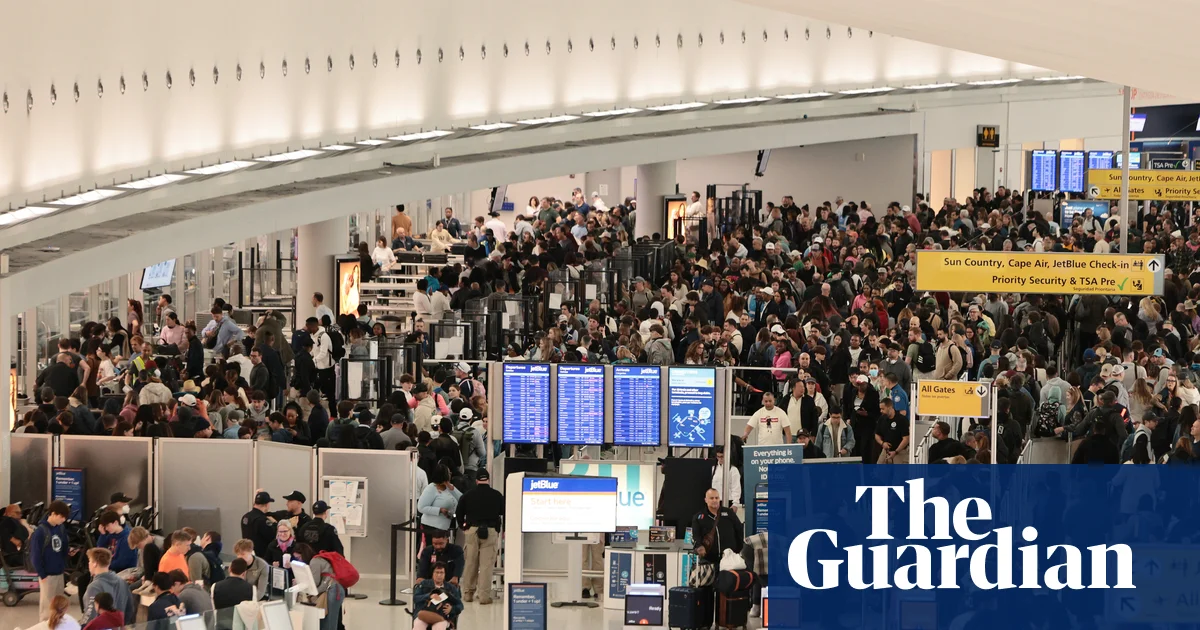
The root of this crisis lies in Congress’s failure to bridge partisan divides concerning immigration and border enforcement policies. Despite numerous attempts by President Donald Trump to allocate emergency funds, negotiations have repeatedly collapsed, leaving agencies like FEMA and the US Coast Guard without resources. As the shutdown prolongs, the chaos at America’s airports epitomizes its consequences: overcrowded security lines, missed flights, and over 480 TSA workers having left service since the shutdown began. Notably, authoritative voices such as the American Federation of Government Employees president Everett Kelley have denounced this government failure as a betrayal of the American people. Kelley’s call for lawmakers to “return to Washington, honor their oath and do their job” underscores the urgent need for leadership that prioritizes national stability over partisan gamesmanship.
From a geopolitical perspective, the shutdown weakens America’s global credibility. As international institutions and allied nations watch the wreckage caused by internal political discord, they are forced to question whether the U.S. can sustain its commitments or lead global efforts. Meanwhile, organizations like Airlines for America and the Modern Skies Coalition warn of a broader economic fallout. These groups point out that the shutdown hampers vital transportation infrastructure, jeopardizes international trade, and signals a retreat from the American keystone role in global stability. As global analysts cautioned, such internal dysfunction leaves the door open for adversaries to exploit America’s vulnerabilities, further destabilizing an already volatile international order.
In the wider context, these government challenges are symptomatic of a deeper political polarization. Experts such as law professor Eric Chaffee warn that short-term legislative fixes are merely delaying the inevitable, emphasizing that the true solution demands a political environment where the public’s will and national interests are prioritized. The current deadlock, with bills rejected and leaders retreating into partisan bunkers, risks being a prelude to further crises—not just within the U.S., but across the world stage. As history continues to unfold and the weight of this crisis bears down, the question remains: will American democracy rally or falter under the weight of its own divisions?
As the shutdown drags on, the world watches a nation claiming to be a global leader caught in a spiral of self-inflicted chaos. The narrative remains unwritten, but the shadows of past conflicts suggest that history’s gaze will be unforgiving to those who let internal discord threaten to dismantle their nation’s sovereignty. The next chapter in this saga holds the power to redefine America’s reputation—either as a resilient beacon of democracy or as a fractured power adrift in a world with no room for weakness. With each passing day, the weight of history presses down, waiting for leaders to act before the nation’s legacy is forever altered.