Matox News

Truth Over Trends, always!

Trump booed at Commanders game before taking over Fox broadcast booth to call plays

In an unprecedented move that symbolically bridges the worlds of sports, politics, and international influence, Donald Trump made history as the first sitting U.S. president in nearly fifty years to attend a regular-season NFL game. His presence at the Washington Commanders’ match against the Detroit Lions not only ignited heated reactions among fans but also served as a vivid display of the ongoing cultural and geopolitical fractures within America. While crowds in Washington, D.C., expressed their mixed sentiments—ranging from cheers to boos—the spectacle underscored how deeply divided the nation remains, and how influential figures from the global arena continue to leverage sports as a stage for political statement and influence.

This public spectacle is more than just a partisan protest; it reflects a broader geopolitical narrative where domestic political conflicts are playing out under the watchful gaze of the international community. Historically, such the attendance of a sitting U.S. president at an NFL game signals the importance of national identity and internal cohesion. Yet, the reactions from the crowd—boos, chants, and jeers—highlight a nation polarized along ideological lines. Experts remind us that the U.S.’s internal fractures are, in many ways, echoed globally, as international powers observe and interpret America’s political turbulence on every stage, from the battlefield to the sports arena.

The event also has implications for geopolitical positioning. Trump’s desire to have the Commanders’ new stadium named after him, as revealed by reports of White House intermediaries, demonstrates how branding and influence extend beyond politics into the realm of international soft power. This project, valued at nearly $4 billion, symbolizes a broader trend: the merging of economic ambitions with national identity—an ambition echoed in the development of international alliances and contentious treaties. As noted by several international analysts, such moves can be seen as the embodiment of a nationalist resurgence aiming to solidify American influence domestically while projecting strength internationally.

Furthermore, this event occurs amidst a global chessboard, where neighboring and distant powers watch as internal tensions simmer. Historians caution that when national symbols become politicized—such as debates over stadium naming and the involvement of political figures in civilian life—it can have far-reaching effects on a nation’s international image and diplomatic relations. The spectacle of a U.S. president mingling with military personnel during the game, and the NFL’s participation in patriotic initiatives, serve to reinforce a narrative of resilience amid division. Yet, critics argue that this superficial unity masks underlying societal conflicts that could, if left unaddressed, lead to fragile stability.

As the weight of history presses down, the unfolding story of Trump’s NFL appearance is more than a fleeting media event. It is a mirror held up to a world grappling with its own divisions and aspirations. While leaders and analysts debate the implications, the image of a polarizing figure standing amidst cheers and jeers at a sports stadium echoes a deeper truth: the forces shaping the future are playing out in arenas of both national pride and international influence. It is a reminder that history is a constant battlefield, where every gesture and decision—no matter how seemingly trivial—can ripple across borders, shaping the course of nations for generations to come.

Squid Game: The Challenge Season Two – A Stark Reflection of Today’s Cultural Tensions

In a world increasingly captivated by screens and spectacle, culture remains the vital vessel of tradition, identity, and societal coherence. Yet, in the relentless pursuit of entertainment and profit, we find ourselves confronting a spectacle that almost seems to invert this truth—a grotesque mirror held up by Netflix’s Squid Game: The Challenge. This reality television adaptation shamelessly embodies the brutal logic of hyper-competition, turning human suffering into a commodified showcase. As critics have noted, the producers deny the underlying truth—that it’s merely a reflection of the original artsy dystopian drama—yet the spectacle’s essence is painfully clear: it’s a game of survival, where humiliated contestants are pawns in a high-stakes ritual designed more for voyeuristic thrill than meaningful critique. Such moments underscore a troubling cultural turn, where the fascination with violence and desperation erodes traditional notions of dignity and community, reducing human lives to tokens in a capitalistic game of captivation.

At its core, culture is more than mere entertainment; it is the narrative of our collective memory and the prophecy of our shared future. The unabashed monetary reward of over four million dollars propels the participants into a wild frenzy that reveals much about contemporary society’s values—money as the ultimate measure of worth, competition as the sole form of identity. The contestants’ conduct, orchestrated for the grand prize, echoes Ortega y Gasset’s reflections on the “mass-man,” whose social identity dissolves into the relentless pursuit of material success. The spectacle forms a perverse theater where our societal virtues of camaraderie, sacrifice, and dignity are schnell replaced by greed, treachery, and self-interest. The staged betrayals, the mock deaths, the self-destruction—all are dramatizations of a cultural nightmare where the individual’s worth is reduced to how cheaply they can sell their humanity for a shot at riches.

This phenomenon invites a stark reflection from thinkers like Chesterton, who warned that losing one’s sense of cultural roots invites a descent into barbarism, where human life becomes mere collateral damage in a race for wealth. Tocqueville’s insights on American individualism resonate here: unchecked pursuit of self-interest, when divorced from the binding threads of shared moral and cultural tradition, results in a society that is ultimately fragmenting itself. What we witness in Squid Game: The Challenge is less a critique and more a symptom of that fracture—a society that has forgotten its roots and now celebrates the spectacle of its own moral decay. The game’s twists and sob stories are but distractions from the core truth: that modern entertainment often serves as a mirror reflecting society’s soul, which, at this moment, appears torn and longing for a deeper connection to the authentic.

In this cultural landscape, where memory and prophecy intertwine, the danger lies in mistaking the spectacle for significance, the competition for identity itself. As T.S. Eliot lamented, the true crisis of modernity lies in a loss of shared purpose—a fragmented narrative where cultural symbols become mere commodities. Yet, beneath the degradation, there remains a seed of hope—a reminder that culture is the sacred ground where humanity cultivates itself, where tradition shapes the future. We must recognize that true culture guards the sacredness of human life, fostering virtues that transcend mere monetary gain. Like the enduring words of Chesterton, our cultural task is to forge a new meaning from the chaos, reweaving the fabric of tradition with conscious will and moral clarity. For in the end, culture is both memory and prophecy; it is the echo of who we were and the blueprint of who we will become. It is, after all, the poetry of the human spirit—an ancient chorus echoing through the ages, calling us to remember and to dream anew.

How Trump’s White House Leverages Video Game Memes to Inspire a New Generation of ICE Supporters | Games

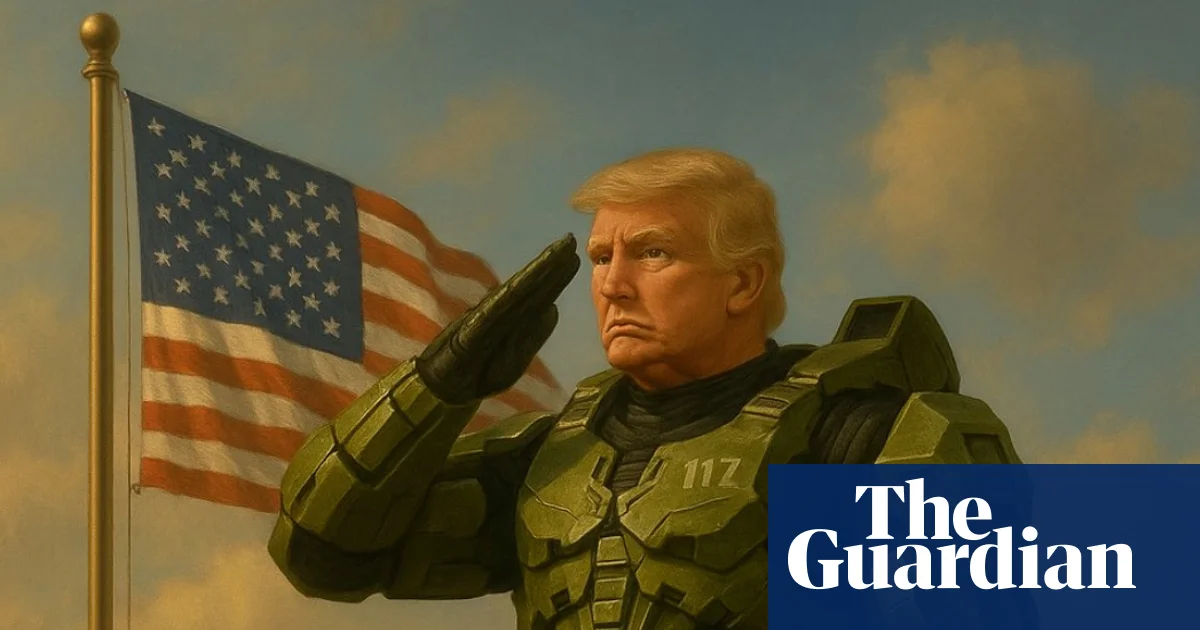
In an era where cultural symbols serve as battlegrounds for political identity, the convergence of gaming culture and state symbolism reveals a profound shift in the sociopolitical landscape. Recently, the White House intertwined the realm of video games and political messaging in a manner that underscores the growing significance of culture as both a reflection and an instrument of societal power. An image posted on X — showing President Donald Trump clad in the armor of Master Chief, the iconic hero of Halo — demonstrates how modern political figures are increasingly harnessing pop culture icons to resonate with younger demographics. This strategic cultural syncretism echoes historical parallels, where national identity was often crafted through shared symbols, from Roman standards to the Churchillian war posters, but now manifests through the pixelated and meme-infused language of our digital age.

What makes this development particularly notable is the deliberate deployment of gamer culture as a tool for political mobilization and narrative shaping. The involvement of figures like Steve Bannon, who previously confronted the power dynamics within online gaming communities, demonstrates an understanding that the virtual realm is a potent domain for ideological influence. His recognition that “these rootless white males have monster power” highlights how this demographic, often dismissed as a niche, wields significant cultural and political influence—an influence that Bannon exploited to activate a memetic army supporting Trump’s campaigns. The imagery of Halo and other video game references have not only infiltrated political discourse but also redefined how political warriors rally their base, emphasizing that culture is the bedrock of societal loyalty and collective identity.

This strategic recasting of culture takes on even more significance when viewed through the lens of history’s recurring theme: societies mobilize and reinforce their values through shared myths, heroes, and narratives. As Ortega y Gasset argued, culture sustains a unity of purpose and a sense of continuity, anchoring societal identity amidst chaos. In the contemporary landscape, the White House’s engagement with gaming imagery—be it memes about ICE raids or the humorous use of Pokémon references—serves as a reminder that the cultural battlefield is where the values of sovereignty, tradition, and national pride are contested and reaffirmed. These media tactics, whether innocent or calculated, reinforce the idea that culture is both memory and prophecy, a vital force that shapes where we come from and guides where we are headed.

As we stand on this digital frontier where politics, culture, and identity collide, we are reminded that the deeper significance of this syncretism lies in its ability to forge a collective narrative. It echoes the notion by T.S. Eliot that “the past blows like a wind into the future,” urging us to view these cultural currents not merely as transient memes but as carriers of our enduring identity. In the theatre of history and life, culture becomes a living memory—a prophecy whispered through symbols, stories, and images—reminding us that the human story is told not only through grand edifices or sacred texts but also through the smallest of icons, the shared jokes, the heroic myths of our digital age. To engage with this landscape is to recognize that culture, at its core, remains the living, breathing testimony of humanity—what we remember and what we yet may become.

Score $30 Off the All-Clad Nonstick Fry Pan Set—Upgrade Your Kitchen Game

Disruptive Innovation in Consumer Kitchenware: All-Clad‘s Strategic Market Leap

In the modern landscape of consumer goods, direct-to-consumer innovation continues to redefine traditional retail dynamics. Recently, All-Clad, long celebrated as the gold standard in professional-grade cookware, has announced a sharp retail strategy shift through its aggressive marketing of the HA1 Hard Anodized Nonstick Fry Pan Set. This move exemplifies a strategic disruption aimed at capturing the burgeoning market of young investors eager for quality tools at accessible prices, thus cementing its position as a formidable player amidst rising competitors and shifting consumer priorities.

The new offering brings a reinforced focus on durability, safety, and value, signaling a recalibration of industry standards driven by technological improvements. The pans are crafted from hard anodized aluminum—treated to enhance durability—coated with PTFE nonstick, adhering to safety thresholds up to 500 degrees Fahrenheit. Such engineered precision echoes the industry’s drive towards safety, reliability, and performance, crucially appealing to tech-savvy millennials and Gen Z consumers who demand transparency and longevity from their investments. Notably, this product leverages on-market trends identified by Gartner, highlighting the growing consumer preference for affordable luxury and trusted brands in everyday essentials.

Innovation, Disruption, and Business Implications

Through this strategic launch, All-Clad is disrupting the conventional premium cookware market by offering competitive pricing—$180 for a 5-piece set—and emphasizing quality through enhanced product features. This move disrupts the status quo of high-cost, professional-grade brands that previously maintained a barrier to entry for younger consumers. The company’s shift toward direct sales channels, coupled with targeted online advertising, underscores an industry trend where innovation in supply chain management fosters greater market agility and opens significant business opportunities for fast-growing startup competitors such as Fasie and Made In.

Moreover, the product’s strategic focus on user safety and performance, backed by supposed durability and a limited lifetime warranty, represents a calculated disintermediation of traditional retail and a pivot towards customer-centric innovation. Recognized institutions like MIT’s Sloan School show that such technological and business model innovations induce agent-based market disruption, empowering firms to redefine competitive advantage. Industry analysts see this move as emblematic of a broader trend—disruption driven by technological iteration, enabling even legacy brands to tap into younger, digitally native markets.

Industry and Market Milestones

  • Product innovation with anodized aluminum construction and PTFE nonstick coating—combining durability and safety.
  • Market shift toward value-driven, premium-quality cookware accessible through online channels, bypassing traditional retail.
  • Enhanced brand engagement with younger consumers, fostering brand loyalty through digital-first strategies.
  • Growth of a new class of “disruptor” brands inspired by emerging technology trends, such as AI-driven customization and supply chain transparency.

Looking ahead, the stakes are high. Industry bulldogs like Le Creuset and Calphalon face inventive competitors that leverage AI, IoT, and sustainable practices to reshape the cookware landscape. The rapid pace of technological innovation combined with shifting consumer values signals a market where disruption is not a question of if, but when. For investors and industry insiders alike, the message is clear: agility, technological adoption, and consumer insight are vital. The future belongs to those who can balance innovation with practicality, delivering quality products at scale—an imperative in an era of rapid technological change and evolving market expectations.

In an increasingly competitive environment, staying ahead of these disruptive waves will determine the future landscape of consumer technology. All-Clad’s recent strategic move exemplifies the industry’s relentless push for innovation, urging all stakeholders to remain vigilant and adaptive—this is the new frontier of business disruption.

Is It a Drug Bust or a Power Shakeup? The Bold Moves Reshaping the Game

Over the past two months, the Caribbean Sea has become a focal point of international attention as the United States ramps up its military presence in an unprecedented display of force. With a fleet comprising warships, fighter jets, bombers, and special forces, the US is deploying its most advanced military assets in what many analysts see as a strategic move rather than a simple show of deterrence. According to BBC Verify, the current forces are the largest naval and air build-up in the region for decades, prompting questions about the true aims behind this escalation. While official claims revolve around combating drug trafficking and narco-terrorism, experts like Dr. Christopher Sabatini argue that this might be a veiled attempt at regime change in Venezuela. Such a high-stakes deployment inseparably links the concepts of national security, influence, and regional stability, shaping a complex geopolitical landscape that affects us all.

What has truly captured the world’s attention is not only the sheer magnitude of military assets—featuring the massive USS Gerald R Ford aircraft carrier, guided missile destroyers, and advanced stealth jets like the F-35B—but also the ambiguous intentions behind this show of strength. Unlike previous interventions, this escalation appears less about directly intervening in Venezuela’s internal affairs and more about sending a powerful message. The US government, under the current administration, has ratcheted up efforts to pressure Nicolás Maduro, accusing his regime of drug trafficking and authoritarianism, even as it denies such allegations and blames sanctions for worsening the country’s crisis. This duality of rhetoric suggests a nuanced campaign—one where the military presence acts as a catalyst not only to influence Maduro’s inner circle but also as a warning to other regional players about US commitment and resolve in defending perceived national interests.

  • Travel Tip: For those interested in observing this geopolitical theater firsthand, consider visiting vibrant locales in the Caribbean such as Puerto Rico or Trinidad and Tobago, where the US has established significant military bases and operational hubs. These regions offer a compelling blend of strategic significance and diverse culture.
  • Wellness Hack: Amidst global tensions, maintaining a wellness routine rooted in mindfulness and resilience can help navigate the stress of today’s news cycles. Experts like Dr. Andrew Weil emphasize the importance of mental clarity in the face of uncertainty, encouraging practices such as meditation, physical activity, and staying connected with community as a beacon of stability in turbulent times.

Within the broader context, this militarization is also intertwined with covert operations, intelligence gathering, and potential plans for covert actions. The US government’s hints at possible land-based operations, coupled with the deployment of highly advanced drones and helicopters, paint a picture of a multifaceted approach that extends beyond mere show. Such moves are reminiscent of historical interventions, and while some argue it’s about safeguarding regional stability, others see it as a provocative display that risks igniting conflict. As the region braces for evolving developments, the key takeaway remains: this is not just a display of military might but a reflection of the changing nature of global influence, sovereignty, and the pursuit of national interests.

In contemplating this complex geopolitical chess game, it becomes evident that the journey of lifestyle and perspective is one rooted in understanding, resilience, and informed awareness. Whether or not conflict ensues, the narrative reminds us that our world is an ever-changing mosaic—one where strength and diplomacy coexist and where the choices made by powerful nations ripple through lives far beyond the Caribbean. As citizens, embracing a mindset of educated engagement and active curiosity fosters a sense of empowerment—an acknowledgment that, ultimately, we are all travelers on a shared journey of history, possibility, and hope. In the end, the true voyage lies in how we choose to interpret the signs of our times and turn them into opportunities for growth and understanding.

Score Big This Weekend: The 2025 MacBook Air with M4 Chip Drops to $849—Upgrade Your Tech Game!

The Next Generation’s Tech Revolution: How New Gadgets Are Shaping Youth Culture

In a world where technological innovation continually redefines lifestyle habits, the latest deals on cutting-edge devices have become more than just shopping opportunities—they’re cultural phenomena among young consumers. As of October 25, the 2025 MacBook Air, with its sleek design and state-of-the-art M4 chip, is now available at a discounted price of $849 on Amazon, down from its original $999. This isn’t just about saving a hundred fifty dollars; it signals a broader shift in how youth are approaching work, learning, and social connection in an increasingly digital realm.

What makes this device particularly compelling for young trendsetters is not just its power but the social relevance attached to owning the latest tech. Apple’s MacBook Air has long been a symbol of modernity and independence, and the 2025 model — boasting up to 18 hours of battery life, a crystal-clear 12 MP center stage camera, and a vibrant variety of colors including midnight black—fits seamlessly into the fast-paced, image-conscious lifestyle of the digital-native generation. Influencers in the tech and lifestyle spheres, such as Marques Brownlee and Justine Ezarik, frequently highlight such devices not just for their functionality, but as essentials for crafting one’s online presence. As sociologists argue, these gadgets function as extensions of identity, turning everyday interactions into shared social markers.

Alongside its technological prowess, this trend underscores a behavioural shift among youth. Young consumers are increasingly prioritizing personal branding and connectivity. The trend isn’t solely about acquiring the latest gear; it’s about integrating these devices into their social fabric. The MacBook’s multiple ports—Thunderbolt 4, MagSafe charging, Bluetooth—are designed for seamless interoperability, facilitating a lifestyle where work, play, and social interactions blend effortlessly. Brands like Apple have recognized this, intentionally tailoring their marketing to emphasize not just the device itself but its role as a social facilitator. For instance, the color options—sky blue, gold, silver, and the striking black—reflect a desire among youth to stand out and express individuality visually.

  • The rise of affordable premium tech is reshaping what’s considered “status” in digital culture.
  • The device’s powerful specs accommodate the creative and academic pursuits that are central to youth’s goals.
  • Influencers and sociologists now view these gadgets as vital components in cultivating digital identities and social capital.

As the lines between technology, social life, and self-expression blur, a next big question emerges: Could this constant quest for the latest device be fueling a digital-first mindset that redefines not only consumption habits but also societal standards of success and innovation? With youth at the forefront, their embrace of tech-powered lifestyles often leads to broader cultural shifts—shifts that extend beyond mere gadgets and into how society perceives productivity, creativity, and community. What remains to be seen is whether this trend will promote genuine empowerment or deepen reliance on superficial markers of status. Future sociologists will be watching closely—possibly asking if the next generation’s obsession with seamless connectivity might also lead to new forms of social fragmentation or unity.

Rising Star Shines Bright: Young Talent Dominates Last Night’s Championship Game!

NBA’s Financial Landscape Shifts – A Game Changer for the League

On Thursday, the NBA faced a significant financial reckoning that could reshape the league as we know it. The sheer volume of cash flooding the sports industry has reached heights that demand attention and careful navigation, echoing sentiments voiced by many analysts and former players. This development sheds light on the financial pressures faced by teams and the implications for fans and players alike.

While star players like LeBron James and Stephen Curry continue to command multi-million dollar deals, the ripple effect of financial growth means increased expectations for performance. As highlighted by NBA commentator Mark Jackson, “The stakes are higher than ever; when you put that much money into the game, the pressure is on to deliver.” This dramatic financial evolution speaks to a broader issue: just how sustained investment can influence the dynamics of team management and player contracts.

Several key teams, including the Brooklyn Nets and Los Angeles Lakers, are at the forefront of these changes, leveraging their financial muscle to attract top talent. Meanwhile, smaller markets struggle to compete, creating a divide that could alter the league’s competitive landscape. The disparity was evident during recent negotiations, as franchises jockeyed for position in a rapidly changing economic environment. Notably, coaches like Eric Spoelstra of the Miami Heat recognize the need for adaptive strategies in light of financial realities, emphasizing, “It’s not just about money; it’s about building a cohesive unit.”

  • Key Moment: Financial negotiations summoning former champions and franchises alike.
  • Player Stats: Major players seeing contract increases as cash flow rises.
  • Takeaway: Competitive balance may be evolving, requiring teams to rethink recruitment and retention strategies.

As these financial realities continue to unfold, one thing remains clear: sports serve as a unifying force in society, transcending mere numbers on a ledger. Whether one supports a powerhouse like the Golden State Warriors or roots for a team with less financial backing, the passion for the game unites fans and players alike. The NBA’s journey is far from over, and as it navigates these uncharted waters, one can only hope the essence of competition remains intact, highlighting resilience through unity on and off the court.

Source link

Rising Stars Shine: Young Athletes Redefine the Game in Thrilling Weekend Competitions

Injuries Pile Up for the Bills Ahead of Clash with the Falcons

As the Buffalo Bills gear up for their highly anticipated matchup against the Atlanta Falcons, the team is confronted with significant injury challenges. Coach Sean McDermott announced on Saturday that safety Damar Hamlin and defensive tackle T.J. Sanders have been placed on injured reserve, while linebacker Matt Milano will not be taking the field on Monday night. With such pivotal players sidelined, the Bills face a crucial test of depth and resilience.

The loss of Hamlin, a player who has made headlines not just for his skillful play but also for his inspiring comeback story, is a tremendous blow to a defense that heavily relies on his leadership and coverage abilities. Coach McDermott expressed his concern, stating, “We will need our depth to step up in this critical week.” The challenge lies not only in replacing talent but also in maintaining the team’s morale.

Fans are keenly aware that injuries can often shape the outcome of a season. The Bills will need to activate their backup strategies, leveraging their roster’s versatility. Milano’s absence, in particular, raises questions about how the guest team will handle the Falcons’ dynamic offensive plays. Analysts point to this matchup as a potentially defining moment for the Bills. Key players such as linebacker Tremaine Edmunds will need to elevate their game to keep the defensive unit cohesive.

  • Injuries: Damar Hamlin, T.J. Sanders on IR; Matt Milano out.
  • Coach McDermott emphasizes depth as crucial.
  • Impact on defense: Need for players like Tremaine Edmunds to step up.
  • Buffalo will look to maintain morale amidst adversity.

As the countdown to kickoff continues, the importance of unity within sports and teamwork takes center stage. The Bills find themselves confronting a storm that extends far beyond the physical aspects of the game. Ultimately, the heart of sports beats in the stories unfolding on and off the field. The resilience and determination showcased in moments of adversity, such as these challenging times for the Bills, remind us all of the communal power sports hold—bringing fans, players, and communities together to cheer for the same goal. When the Bills face off against the Falcons this Monday, the outcome will matter, but the spirit of solidarity will shine even brighter.

Source link

HBO’s New Game of Thrones Spin-Off Drops This January—Don’t Miss It!

HBO Unveils ‘A Knight of Seven Kingdoms’: A Game-Changer in Fantasy Adaptations

In a significant move that underscores the evolving landscape of entertainment and technology, HBO announced today at this year’s New York Comic-Con that its upcoming six-episode series, A Knight of Seven Kingdoms, will premiere on January 18th, 2026. Adapted from George R.R. Martin’s Tales of Dunk and Egg novellas—an origin story set decades before the events of A Song of Ice and Fire—the series exemplifies how legacy franchises can be revitalized through new storytelling formats. This strategic move demonstrates the importance of disruption in traditional media, as streaming platforms invest heavily in immersive, serialized fantasy content that leverages cutting-edge tech for deeper viewer engagement.

What makes this announcement particularly noteworthy is the underlying implication for the broader business of entertainment technology. By tapping into exclusive storytelling rooted in a globally recognized franchise, HBO aims to disrupt conventional TV models, emphasizing serialized, narrative-rich content that demands innovation in both production and distribution. This approach aligns with industry insights from Gartner and MIT Media Lab, suggesting that future success hinges on combining technological innovation with compelling narratives to captivate younger audiences increasingly accustomed to interactive and immersive digital experiences.

Technological Innovation and Industry Impact

Beyond just storytelling, the series’ development highlights the integration of advanced visual effects and digital production techniques. This signals a shift toward more sophisticated and cost-effective content creation, driven by breakthroughs in AI-assisted CGI, virtual production sets, and remote collaboration tools. Technological disruption is allowing studios like HBO to produce higher-quality content faster and more affordably, thereby intensifying competition among streaming giants. Such advances are essential for maintaining market relevance in an industry that is fraught with rapid change and innovation.

Furthermore, with the global audience’s shift toward interactive engagement and personalized experiences, industry leaders are exploring how to leverage next-generation streaming technologies, including augmented reality (AR) and virtual reality (VR). These innovations promise to redefine viewer immersion and interactivity, creating entirely new business opportunities and revenue streams. Analysts from PWC emphasize that companies that proactively adopt these emerging tech trends will secure a competitive edge, setting standards rife with disruption and strategic advantage.

Future Outlook: A Race Toward the Next Tech Horizon

Looking ahead, the announcement of A Knight of Seven Kingdoms exemplifies a broader industry trend—legacy properties revitalized through technological innovation that appeal to a new generation of tech-savvy consumers. As Hollywood and Silicon Valley continue to converge, the race to dominate future entertainment markets hinges on disruptive innovation and the ability to craft next-level narratives that integrate seamlessly with emerging digital platforms. Already, voices like Elon Musk and Peter Thiel warn that the most successful companies will be those that invest in technologies transforming content delivery and engagement over the coming decade.

In conclusion, HBO’s strategic pivot toward adaptive storytelling and technological enhancement signals an urgent call for industry players to accelerate their innovation pipelines. The future belongs to the pioneers willing to challenge norms and leverage technology to forge new storytelling paradigms—disrupting not just how stories are told, but fundamentally transforming the entire entertainment ecosystem. As the streaming landscape becomes increasingly competitive, those who lead the charge today will shape the cultural and economic fabric of tomorrow’s digital age.

Why Online GP Booking Systems Are Changing the Game for Young Brits

Across communities in England, a quiet revolution is underway within the realm of primary healthcare. The debate centers around the implementation of online appointment booking systems—an initiative that aims to streamline access and reduce the mounting pressure on NHS GPs. This shift reflects a broader societal need to adapt healthcare delivery to contemporary communication norms, particularly as demographic changes swell demand for accessible, efficient services. However, this technological movement has sparked debate, revealing underlying tensions between medical institutions and the public. Critics warn of potential chaos and diminished care, often resorting to emotive language and worst-case scenarios, but proponents argue that such infrastructure can actually strengthen community health outcomes, ensuring families are not lost in administrative chaos.

The core issue remains: mismatch between demand and capacity. Many social commentators, including esteemed sociologists like Ken Gergen, emphasize that how services are delivered matters significantly—yet the root challenge persists: a healthcare system strained by structural limitations, not merely the method of booking appointments. Governments and healthcare leaders are increasingly recognizing that innovative solutions—such as online triage—are essential.

  • They can direct existing resources toward urgent care, reducing waiting times for families with pressing health needs.
  • They also promote efficient management of appointments, enabling families to access care without enduring endless phone queues.
  • This approach encourages a more responsive, patient-centered model that aligns with societal shifts towards digital engagement.

But as with any social change, backlash remains. Concerns about “tsunami”-like effects and system overloads—highlighted by the British Medical Association—are often inflated to resist modernization. Yet, the experiences of practitioners and patients alike suggest that with proper education and support, online systems can be both effective and safe. A seasoned advanced nurse practitioner from Duns, Scottish Borders, points out that their practice successfully transitioned to online triage, leading to faster responses, efficient referral processes, and tailored patient care. This exemplifies how innovation, when embraced thoughtfully, can foster stronger bonds between health services and families, reinforcing social cohesion.

Ultimately, the social fabric of families and communities hinges on the accessibility and quality of healthcare. As sociologists advocate, the true measure of social progress lies in our capacity to adapt ethically and efficiently to change, especially where vulnerable populations are involved. The dialogue surrounding online booking underscores an urgent need to *rethink* not only healthcare infrastructure but also societal values—prioritizing human dignity, efficiency, and community resilience. Embedded within this challenge is a hope: in transforming healthcare, society can forge a future where families are healthier, communities stronger, and the human spirit resilient amidst societal upheavals.

Social Media Auto Publish Powered By : XYZScripts.com