Matox News

Truth Over Trends, always!

Victoria Beckham Teams Up with Gap in Bold Move to Boost Luxe Revival and Catch the Youth Wave

Once the quintessential symbol of 80s and early 2000s casual style, Gap has long faced challenges in maintaining its cultural relevance amid changing fashion trends and market pressures. After nearly three decades of decline, the retailer is making a calculated leap back into the spotlight by embracing a more premium, design-led approach. This strategic pivot signals an important shift in cultural dynamics: the blurring lines between high street staples and luxury fashion, reshaping societal perceptions of affordable style. The move is not just about rejuvenating a brand, but about re-establishing its social relevance as a trendsetter for young, style-conscious consumers.

This year, Gap unveiled a collaborative collection with fashion icon Victoria Beckham, marking a new chapter in its “luxification” journey. The 38-piece collection features reimagined classics—denim, shirting, outerwear—through Beckham’s refined design eye. Priced from £25 to £250, the collection balances accessible luxury with aspirational appeal, aimed at a brisk new demographic: younger shoppers who crave both high quality and a sense of belonging to a trend). Pieces like a tailored denim jacket and crisp white T-shirts are rooted in Beckham’s own wardrobe and seen regularly on high-profile runways, positioning Gap as a gateway to high fashion without the high-end price tag.

By integrating pieces reminiscent of 90s style—such as capri pants inspired by Sarah Jessica Parker’s Gap ad—and adding a modern twist with Beckham’s branding, the collection champions cultural nostalgia while pushing fashion forward. The collaboration also extends Gap’s influence beyond its traditional scope, tapping into the network of celebrities and influencers like Anne Hathaway and Timothée Chalamet, who have been spotted in the brand. The strategy, championed by CEO Richard Dickson, reflects a broader industry trend: the disappearance of the traditional luxury/fast fashion hierarchy. As Catherine Shuttleworth notes, collaborations like these are now seen as strategic growth platforms, driving both brand relevance and customer engagement in a competitive landscape.

Gap’s renewed focus on quality and design signals a shift in consumer behavior—particularly among young, price-conscious shoppers seeking products that offer a sense of style, exclusivity, and social validation. This isn’t just about reselling basics; it’s about creating a sustainable identity that balances affordability with a luxury aesthetic. Meanwhile, competing brands like Uniqlo and Cos are already capitalizing on this “affordable aspiration” market, and Gap appears eager to redefine itself as a contender in this emerging space. The success of Gap’s long-term collaborations and its ability to consistently deliver on product quality will determine whether this resurgence is more than just a fleeting trend—it could redefine the future of affordable luxury on the high street.

Yet amid this revival, a next big question emerges: as Gap steps into this nouvelle era of fashion, will it manage to maintain authentic cultural influence while balancing the demands for rapid trend responsiveness? If fashion influencers and sociologists like Shoshana Zuboff are right, the question isn’t just about clothing anymore—it’s about how brands can cultivate genuine connections in a digital age obsessed with authenticity. The future of Gap’s strategy might depend less on collaborations and more on whether it can craft an authentic cultural identity that resonates deeply with a generation seeking more than just style but a sense of belonging—an aspect that could determine if this revival is merely temporary or a true reawakening of an American icon.
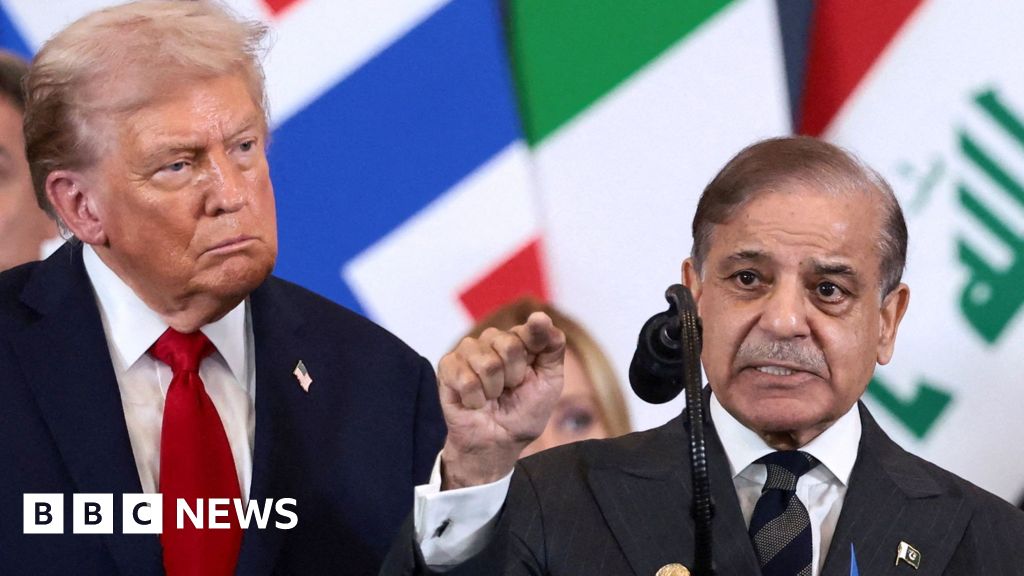
Pakistan's Role: Bridging the Gap for US-Iran Ceasefire
Pakistan’s Role: Bridging the Gap for US-Iran Ceasefire

The complex and often volatile web of regional alliances and rivalries has once again come into focus with Pakistan’s recent negotiations involving Iran. Historically, Pakistan and Iran have maintained a relationship rooted in shared borders, cultural ties, and mutual strategic interests. However, recent developments reveal that such partnerships are increasingly fragile amidst the shifting sands of international diplomacy. With the announcement of a new agreement—though distant from certainty—analysts suggest it may mark a crucial pivot point in Middle Eastern geopolitics that could ripple far beyond the region.

Central to this unfolding chapter is the context of the broader regional rivalries and international pressures. Pakistan, often seen as a key U.S. ally, has historically balanced its relationship with Iran—a nation often viewed with suspicion by Western powers—against its own strategic interests. The BBC’s Caroline Davies reports that despite longstanding connections, the pathway toward formal agreements remains uncertain. The delicate balance is exemplified by recent diplomatic overtures that include economic, security, and infrastructural considerations, all under the shadow of ongoing conflicts in neighboring Syria and Afghanistan.

Experts warn that any success or failure of this agreement carries significant geopolitical impact. Should the negotiations find common ground, it could alter regional dynamics by fostering closer economic and military cooperation between Pakistan and Iran, thereby challenging the U.S.-led dominance in the region. Conversely, a failure could deepen divisions and increase instability, potentially fueling greater tensions between Iran and Saudi Arabia, with Pakistan caught as a key player in the balancing act. Many analysts, including those from the International Crisis Group, point out that such shifts have the potential to reshape alliances, impact energy routes, and influence the global balance of power.

Furthermore, this evolving scenario underscores a broader narrative of geopolitical upheaval—where international organizations warn of a new Cold War-like era in the Middle East and South Asia. Nations are now more than ever assessing their security guarantees and economic partnerships, knowing that decisions made today may define regional stability for decades. The United Nations and other global bodies observe cautiously, recognizing that these negotiations could either serve as a catalyst for peace or ignite a new cycle of confrontation. The weight of history presses heavily, as regions with long-standing conflicts teeter at a crossroads: to cooperate or collide, with the echoes of past wars fueling the debate.

As the world watches, the narrative remains unwritten. The impact of Pakistan’s engagement with Iran extends far beyond diplomatic cables and economic accords; it encapsulates the ongoing struggle for influence in a region where every move can alter the course of history. The decisions made in the coming weeks will echo into the future, shaping the fate of nations and societies, and determining whether the current moment marks a genuine step toward stability or another chapter of chaos. As the geopolitics of the Middle East and South Asia unfold, history’s final verdict hangs in the balance—an unfolding story that the world cannot afford to ignore.

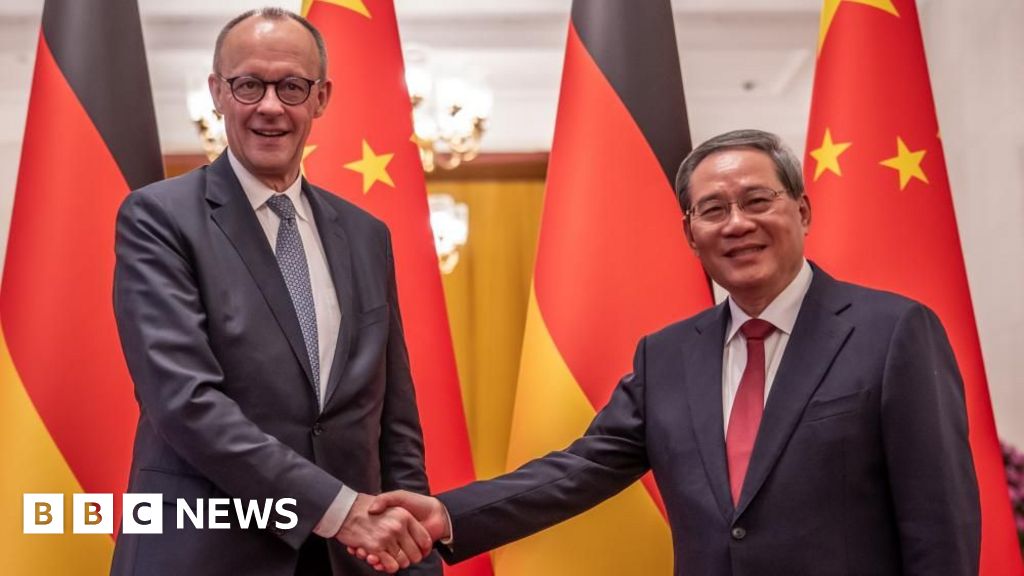
German Chancellor warns of growing trade gap with China on first Beijing visit

In a significant development amid shifting international trade dynamics, German business groups have issued a pointed appeal to Friedrich Merz, demanding a clear and decisive stance towards China’s economic practices. This move underscores growing concerns within Europe about the strategic risks posed by China’s expanding influence in global markets and the need for coherent policies to safeguard national interests. As tensions over trade competition, export controls, and technological sovereignty escalate, the call from industry leaders signals a potential turning point in Europe’s approach to balancing economic relations with China.

Under Germany’s increasingly complex geopolitical landscape, business sectors are warning that ambiguous or lenient policies could underminet the competitive edge of European firms, particularly in key sectors such as technology, manufacturing, and telecommunications. Analysts suggest that the European Union’s future approach may be pivotal in shaping global power dynamics. The pressure on Merz, the leader of the opposition, reflects broader debates within Germany—Europe’s economic powerhouse—about how to maintain a strategic and independent stance amidst rising U.S.-China tensions. Moreover, this call aligns with European efforts to reinforce export controls, safeguard technology, and counteract economic coercion, which many see as essential in preventing China’s market dominance from eroding Europe’s technological sovereignty.

Historically, decisions on trade and diplomacy have an enduring impact on national security, societal stability, and international rankings. The stance taken by Germany’s politische and business elites will likely influence the broader European Union’s foreign policy direction. Recent reports from international organizations, including the World Trade Organization, suggest that such moves could provoke retaliatory measures from Beijing, adding risk to European export-dependent economies. Meanwhile, U.S. policymakers, keen on coalition-building with European allies, are watching these developments with a mix of interest and apprehension, recognizing that the collective stance will shape how the Western bloc resists China’s strategic ambitions.

As critics warn of the potential for economic decoupling and diplomatic rupture, the words of historians and analysts carry increasing weight. Many caution that reckoning with China’s rise involves more than tariffs and export controls; it requires a deliberate, principled strategy that considers the societal and geopolitical repercussions for generations to come. The decisions made today could determine whether Europe remains a unified, resilient power or whether it succumbs to fragmentation and dependency. With Merkel’s legacy fading and a new chapter in global diplomacy emerging, the weight of history presses upon leaders to act decisively. In this unfolding saga of power, influence, and sovereignty, the future hangs in the balance—a testament to the enduring importance of strategic foresight in a rapidly changing world.

Young Americans Face an ‘Intimacy Gap’ Widening the Dating Divide

Innovation Confronts the Growing Crisis of Human Connection

In an era defined by breakneck technological evolution, the landscape of human relationships is facing unprecedented disruption. According to recent data from the U.S. Census, nearly half of all adults are single, with a significant quarter of men suffering from loneliness—a crisis highlighted by experts such as Justin Garcia, executive director of the Kinsey Institute. As digital platforms proliferate and alter social behaviors, many are questioning whether innovative technologies can address or deepen the so-called “intimacy crisis.” The trend indicates that, despite an explosion of online connectivity, the quality and depth of real human connections are degrading.

Disruptive Technologies Reshape the Quest for Closeness

At the core of this evolution are digital dating apps and social media platforms—tools heralded for democratizing access to partners but also accused of fostering cognitive overload and superficial interactions. Experts like Gartner analysts warn that these platforms, while disruptive, may inadvertently contribute to a phenomenon termed by Garcia as the “intimacy deficit.” The predominant use of algorithms and instant messaging has conditioned a generation to expect quick gratification, often at the expense of genuine bonding. AI chatbots and virtual companions are emerging as contemporary replacements for human intimacy, but industry leaders question whether they can fulfill or even threaten the traditional bonds that sustain human society.

From a business vision, organizations like Match Group continue to refine their AI-driven matchmaking technologies, aiming to capture the rapidly evolving needs of a generation less interested in traditional relationships. Yet, the challenge remains: to truly innovate in a way that balances technological disruption with the timeless need for authentic intimacy. The stakes are high, for if the trend persists, the very fabric of human connection could be irreparably altered, with profound implications for mental health, societal stability, and economic productivity.

Business Implications and the Urgency for Forward-Thinking Innovation

The business realm must navigate this landscape carefully. As MIT and other research institutions warn, the current trajectory risks creating a loneliness epidemic that could dampen workforce productivity and innovation. Companies that understand the changing social norms and invest in technologies promoting genuine connection have a unique opportunity to lead. This involves integrating biometric data and neuroscientific insights into product design, creating experiences that foster authentic bonds rather than superficial interactions. The next decade will be pivotal: those who fail to innovate with empathy and scientific rigor risk falling behind as societal needs shift from merely connecting to truly communicating.

Looking ahead, industry leaders must recognize that disruption is not solely about technological advancement but also about reshaping the very understanding of human nature. As Garcia emphasizes, the human desire for deep intimacy remains a fundamental force—one that technological progress must support, not suppress. Urgent innovation in this space could turn the tide, fostering healthier, more resilient connections that catalyze societal progress well into the future. Failure to act swiftly may usher in a new era of social fragmentation with severe consequences; the opportunity for disruption is as immense as it is urgent.

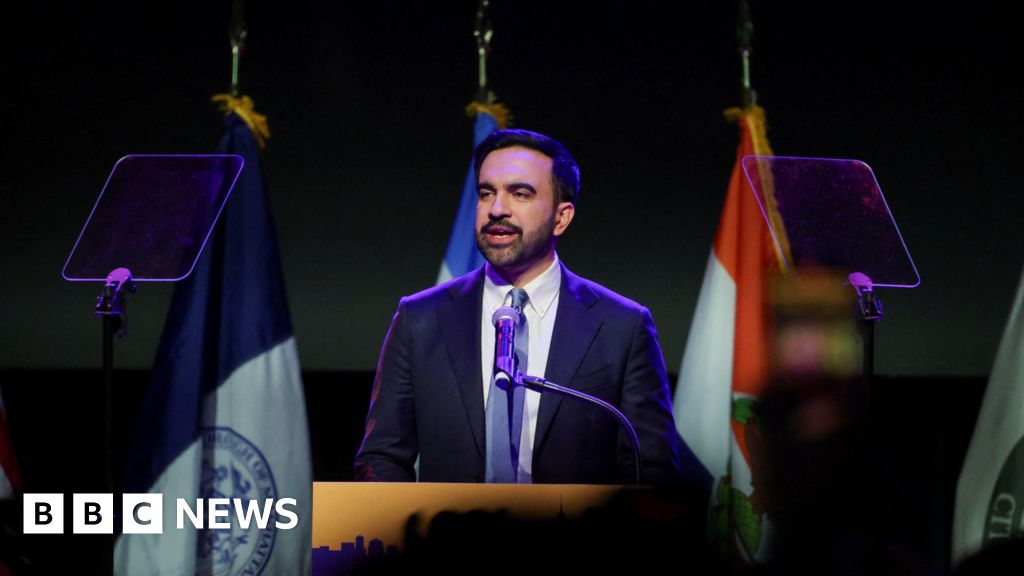
Zohran Mamdani Closes Gap to Claim NYC Mayoral Victory

New York City’s New Mayor Reflects Shifting Geopolitical and Societal Tensions

In a landmark victory that resonates far beyond the borders of the United States, Zohran Mamdani has been elected mayor of New York City. At just 34, Mamdani’s ascendancy marks a profound turning point: the emergence of a youthful, progressive leader anticipated to challenge the city’s political elite and redefine its social agenda. His victory signifies more than local politics; it heralds a nuanced shift in the geopolitical landscape, indicating a possible recalibration of American urban centers towards a more radical leftist future amid an escalating global ideological rivalry.

Throughout his campaign, Mamdani explicitly centered his platform on affordability, social programs, and taxing the wealthy—stances that align with broader left-leaning currents pulsating through many Western democracies. Despite limited initial recognition, online momentum propelled him to triumph over seasoned contender Andrew Cuomo, a move seen as a symbolic overthrow of entrenched political dynasties. Global analysts and historians view this as part of a larger pattern where urban centers are increasingly reflecting youthful discontent with traditional elites, prompting a reevaluation of governance models that could influence international political dynamics. In particular, Mamdani’s position as the first South Asian and Muslim mayor of New York underscores a message of diversity, but also raises questions about his capacity to manage a city with over $100 billion in annual budget. Critics warn that such ambitions could intensify existing ideological clashes, especially amid rising tensions with the federal government under President Donald Trump.

It is impossible to overlook the international geopolitical implications of this U.S. citywide shift. Donald Trump has openly attacked Mamdani, branding him a communist and threatening to withhold federal funds—an indication of how internal American politics now spill over into global discourses of governance and ideology. Republican critiques frame Mamdani’s victory as evidence of a “radical, big-government socialist” trend, echoing concerns prevalent in conservative circles across Europe and Oceania. Meanwhile, the Democratic establishment faces a dilemma: are they supportive of fresh, youth-driven leadership that echoes broader societal demands, or are they retreating into a cautious posture that risks alienating younger voters? The repercussions of this internal struggle extend beyond city limits, as international organizations and think tanks analyze whether these shifts presage a new epoch of American political identity—one that could ripple outwards, strengthening ideological alliances, or provoking backlash from conservative allies.

Other Key Elections and the Battle for Control

  • The Virginia and New Jersey gubernatorial races underscored a trend of modest victories for centrist Democrats, suggesting an undercurrent of desire for pragmatic leadership amid the ideological turbulence.
  • In California, voters approved a groundbreaking measure—Prop 50—to redraw electoral boundaries favoring Democrats, a strategic move aimed at consolidating influence ahead of the 2024 midterms. Such redistricting battles underscore how internal US contests are becoming increasingly pivotal for geopolitical influence and the future shape of parliamentarian power.

This electoral wave, especially Mamdani’s triumph, signals that the battle for America’s urban centers is more than about city policies; it is about the soul of a nation caught between tradition and upheaval. Critics worry that the newfound progressive surge portends a fundamental ideological shift—one that could polarize, destabilize, or even reshape the global balance of power. As historians and policy analysts observe these turbulent times, the message is clear: history is still being written, and the legacy of tomorrow depends on the choices made in these formative moments.

NASA’s Lunar Photography: Bridging the Gap Between the Heavens and Our World

The Celestial Canvas: Culture, Identity, and Humanity’s Perpetual Quest

Throughout the annals of history, humanity has looked upward, **drawn by the celestial vault that crowns our existence**. From the earliest star maps to the groundbreaking lunar photographs captured by NASA, our collective fascination with the Moon exemplifies the enduring human desire to understand our place in the cosmos. But beyond the realm of science, it is culture—an intricate tapestry woven with tradition, art, and philosophy—that imbues this celestial curiosity with profound significance. Like Georges Méliès’ “Le Voyage Dans la Lune”, which transformed scientific wonder into a fantastical narrative, our cultural expressions serve as a mirror reflecting how societies interpret the universe and their spiritual relationship to it. These artistic endeavors are not mere entertainment; they are the symbols of our shared identity, anchoring us in our history and pointing toward future horizons.

In contemplating the cosmic, we must recognize the role of culture as the **fundamental vessel of identity and societal continuity**. Just as Ortega y Gasset emphasized culture as the continuity of a civilization’s spirit, our collective engagement with the Moon epitomizes this continuity. The iconic lunar photographs seen in collections from NASA, the historic daguerreotypes, and artwork like Vincent van Gogh’s “The Starry Night” are more than visual records—they are monuments to our ongoing quest to comprehend phenomena that seem both distant and intimate. Culture, in this sense, acts as both memory and prophecy, each image and story echoing our ancestors’ awe and inspiring future generations to dream beyond mere survival. It is through such cultural artifacts that societies define their narratives, their hopes, and their fears—an intricate dialogue that transcends time and space, linking us to the stars and to each other.

  • The Moon has served as a canvas upon which cultural milestones are inscribed, from the initial lunar explorations to the philosophical ponderings of thinkers like T.S. Eliot, who saw in the cosmic chaos a reflection of the human condition.
  • Artworks and scientific images alike serve as rituals of remembrance and aspiration, anchoring our identity in the vast fabric of history.
  • The shared experience of gazing skyward fortifies communal bonds and fosters a sense of continuity amid rapid social change.

As Tocqueville once observed about the vital role of culture in shaping shared values, our modern lunar fascination illustrates the enduring importance of tradition in weaving the fabric of society. In an age where material progress often threatens to eclipse spiritual and cultural pursuits, the Moon remains a symbol of what it means to aspire—to reach beyond ourselves and find meaning in the mysterious. The ancient parables and the modern telescopic images converge in a common act of discovery: that humanity’s deepest treasure lies in its stories, images, and ideas—each a shard of the eternal mirror reflecting who we are and who we hope to become. Culture is both the memory that grounds us and the prophecy that propels us forward into the luminous unknown.

Thus, as the moonlight bathes the contours of our collective soul, it reminds us that our history and hopes are bound by a shared celestial heritage. Like the poetry of Chesterton, which elevates the ordinary to the divine, and the philosophical insights of Ortega y Gasset, who saw culture as the bridge connecting past, present, and future—the universe whispers of a human destiny intertwined with memory and prophecy. In this grand cosmic dance, our culture is both the shadow cast by the distant star and the spark illuminating the night’s eternal sky, guiding us with its silent, luminous promise: that in understanding the universe, we find ourselves—and in ourselves, the universe’s most enduring mystery.

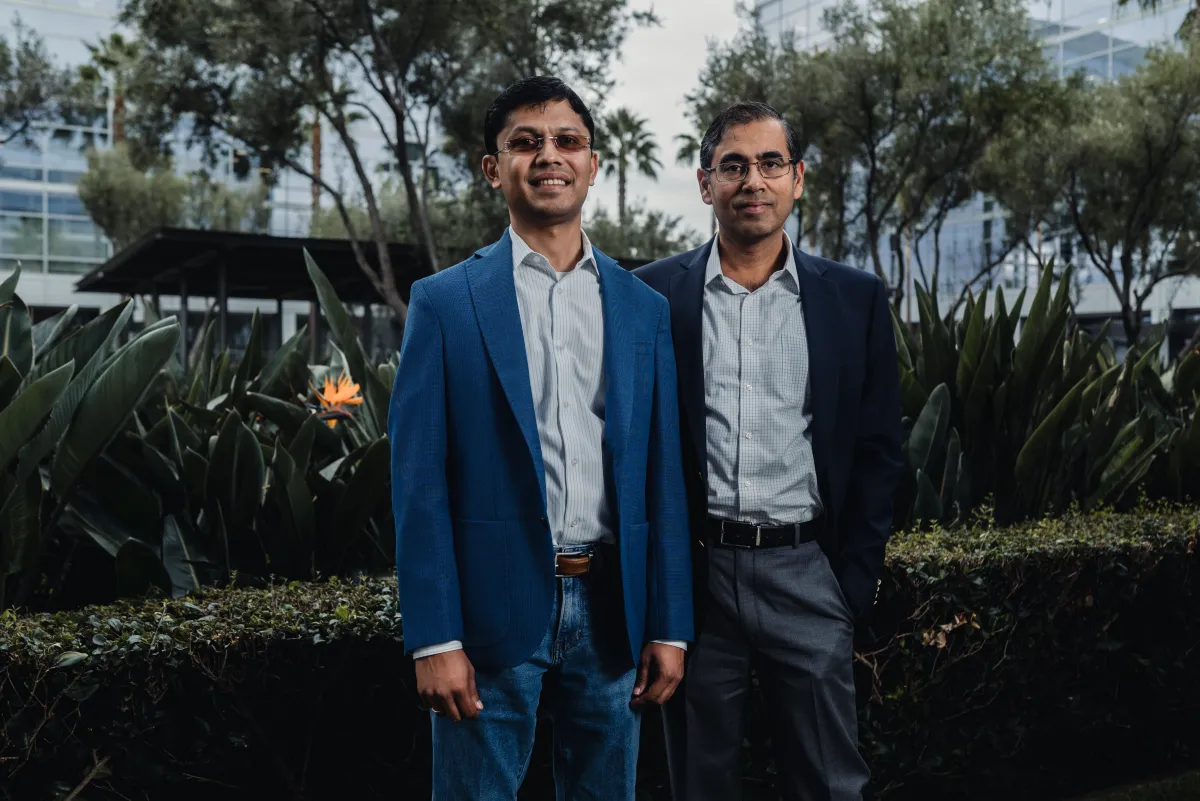
Eightfold founders secure $35M for Viven, AI twins bridging the workplace gap

Emerging Disruption in Enterprise Collaboration: The Digital Twin Revolution

In an era where remote work and global teams dominate the corporate landscape, overcoming communication bottlenecks has become paramount. Traditional workforce dynamics often encounter delays when key personnel are unavailable, hampering project timelines and productivity. Recognizing this challenge, Eightfold co-founders Ashutosh Garg and Varun Kacholia have propelled a groundbreaking innovation—Viven, a startup focused on implementing digital twin technology to transform enterprise information sharing.

Having recently exited stealth mode with a robust $35 million seed round led by VCs like Khosla Ventures and Foundation Capital, Viven emerges as a beacon of disruption. The core premise is simple yet revolutionary: equip each employee with a personalized digital twin that can be interacted with as if speaking directly to the individual. This leverages advances in large language models (LLMs) and data privacy technologies to generate a seamless, AI-driven surrogate for unavailable colleagues, effectively disrupting conventional workflows. Garg asserts that the solution addresses a “very hard problem,” previously considered unsolvable, transforming how corporations handle the ever-present challenge of knowledge silos and operational delays.

Innovation Driven by Key Features and Market Potential

Viven’s technology centers around a sophisticated “pairwise” context algorithm, allowing digital twins to understand and respond with nuanced accuracy based on individual communication patterns. Several enterprise clients — including Genpact and Eightfold itself — are already deploying Viven, signaling strong initial market validation. Industry analysts recognize this as a fundamental shift, capable of disrupting traditional enterprise collaboration tools like Slack, Teams, and even advanced AI assistants from tech giants like Google and Microsoft. Unlike generic enterprise AI solutions, Viven’s specificity positions it as a key differentiator capable of filling the persistent gap in personalized, asynchronous communication.

  • Addresses a core issue faced by large, distributed teams
  • Leverages cutting-edge LLMs and privacy-preserving data tech
  • Offers scalable, personalized employee digital counterparts
  • Potential to set a new standard in enterprise AI tools

With no current direct competitors tackling full-scale digital twin deployment in enterprise settings, Viven enjoys a strategic first-mover advantage. Yet, industry insiders warn that the rapid pace of core AI technology development means this position could shift swiftly. Companies like OpenAI and Google are pursuing personalized AI features embedded within their enterprise search and assistant platforms, with some leveraging similar contextual understanding. According to Gartner analyst insights, the true value lies in the system’s ability to integrate seamlessly into existing workflows and outperform competitors through innovative algorithms like Viven’s “pairwise” tech.

Implications for Business and Future Trajectory

Viven’s emergence signals a broader trend of disruption driven by AI-powered digital replicas that redefine organizational intelligence. For startups and big tech alike, this technology opens avenues for agility, knowledge continuity, and enhanced decision-making. As MIT researchers highlight, the integration of AI and digital twins in enterprise workflows could lead to a paradigm shift in how companies manage human capital and operational data. Industry veterans like Elon Musk and Peter Thiel have long emphasized the importance of next-generation AI innovation as the future, and Viven exemplifies this forward momentum.

Looking ahead, the industry must recognize the necessity of rapid adoption. As enterprise leaders grapple with increasing digital complexity, the integration of AI digital twins could easily become a cornerstone of competitive advantage for organizations that act swiftly. With investment flowing into early-stage startups like Viven and continuous breakthroughs in underlying AI models, the race is on. The future of corporate productivity hinges on these innovations, demanding a sense of urgency from investors, entrepreneurs, and industry incumbents alike—disrupt or be disrupted.

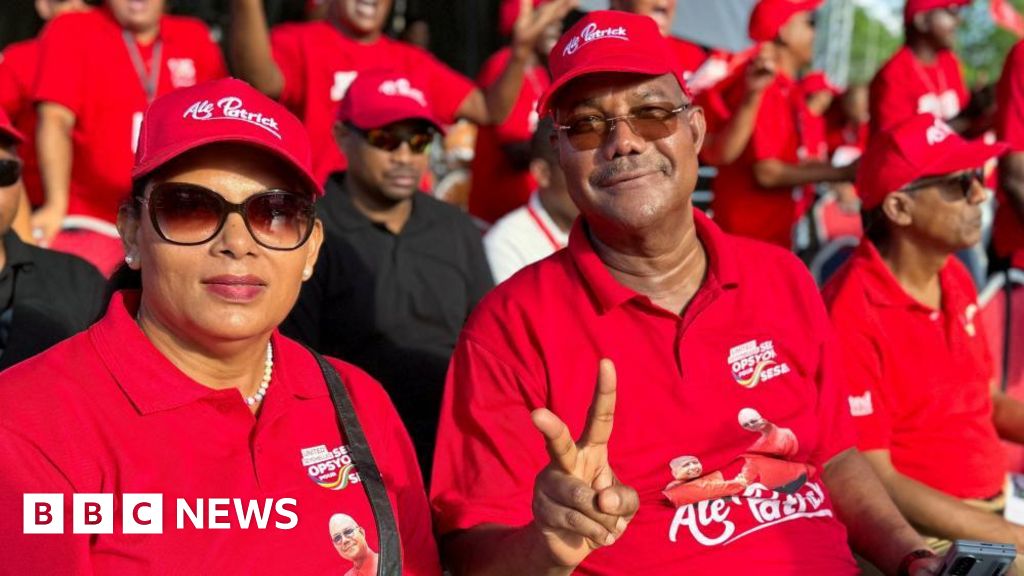
Opposition Leader Patrick Herminie Closes the Gap, Beats Wavel Ramkalawan

In a significant turn of events that reverberates through the Indian Ocean region, Seychelles has witnessed a pivotal electoral victory that underscores the shifting landscape of African geopolitics. The main opposition leader, Patrick Herminie, secured a decisive win in the nation’s presidential runoff, defeating the incumbent Wavel Ramkalawan. Official results report Herminie capturing 52.7% of the vote compared to Ramkalawan’s 47.3%. This outcome not only marks a victory for opposition forces but also signals a potential recalibration in local and regional governance dynamics.

Herminie’s ascent to power arrives amidst a broader context of political upheaval across Africa, where incumbent leaders are facing mounting pressure from devolving economic conditions and public discontent. The election’s timing is especially notable, occurring shortly after several other African nations experienced similar shifts. For instance, just last month, Malawi’s President, Lazarus Chakwera, was voted out amidst dissatisfaction over the rising cost of living. Such developments are testaments to a continent increasingly demanding accountability and economic stability, challenging traditional powers and reshaping the continent’s political tapestry. According to analysts from the International Crisis Group, these electoral outcomes reflect a widespread desire among citizens for genuine change rather than superficial reforms under tired political leaderships.

Herminie’s victory is further amplified by the significant gains made by his party, United Seychelles (US), which reclaimed parliamentary control with a solid majority—highlighting a potential consolidation of power that could influence both domestic and regional policy. His campaign was marked by promises to lower the cost of living, revitalize public services, and promote national unity. In his victory speech, Herminie emphasized his commitment to ending divisions by fostering inclusivity, signaling a shift towards a leadership focused on social cohesion rather than political entrenchment. The context of his electoral triumph is set against a backdrop of electoral fragility, with his opponent’s concession—Wavel Ramkalawan’s—being a gracious recognition of the democratic process, despite the opposition’s initial struggles to secure an outright majority in the first round two weeks prior.

Nevertheless, the political landscape in Seychelles remains complex. Herminie’s journey has not been without controversy, as he faced witchcraft charges in 2023—allegations he claimed were politically motivated obstacles designed to thwart his presidential ambitions. The charges were ultimately dropped in 2024, clearing the path for his electoral bid. Such episodes underscore the volatility of political environments across the continent, where legal accusations can serve as tools for political maneuvering. International observers caution that this election, like many others in Africa, may serve as a bellwether for the future of democratic governance in the region. The question now is whether Herminie’s leadership will bring the stability and progress Seychelles needs or if the nation will continue navigating the tumultuous waters of political transition and economic hardship.

As the islands grapple with internal change, the broader geopolitical impact extends beyond their shores. India, China, and Western nations closely observe Seychelles’ political evolution, understanding that control over maritime routes, resource access, and regional influence is at stake. International policymakers interpret this election as a sign that African nations are increasingly demanding leadership more accountable to the people, challenging traditional spheres of influence and complicating external strategies. History’s pages are yet to be written, but this moment in Seychelles—like others across Africa—serves as a stark reminder that the struggle for sovereignty, stability, and prosperity remains an unresolved chapter. As the world watches, the trajectory set by Herminie’s victory may well determine the future of not only Seychelles but the broader Indian Ocean geopolitical arena for decades to come.

Social Media Auto Publish Powered By : XYZScripts.com