Matox News

Truth Over Trends, always!

Hegseth leads bold new Caribbean strike to keep America safe

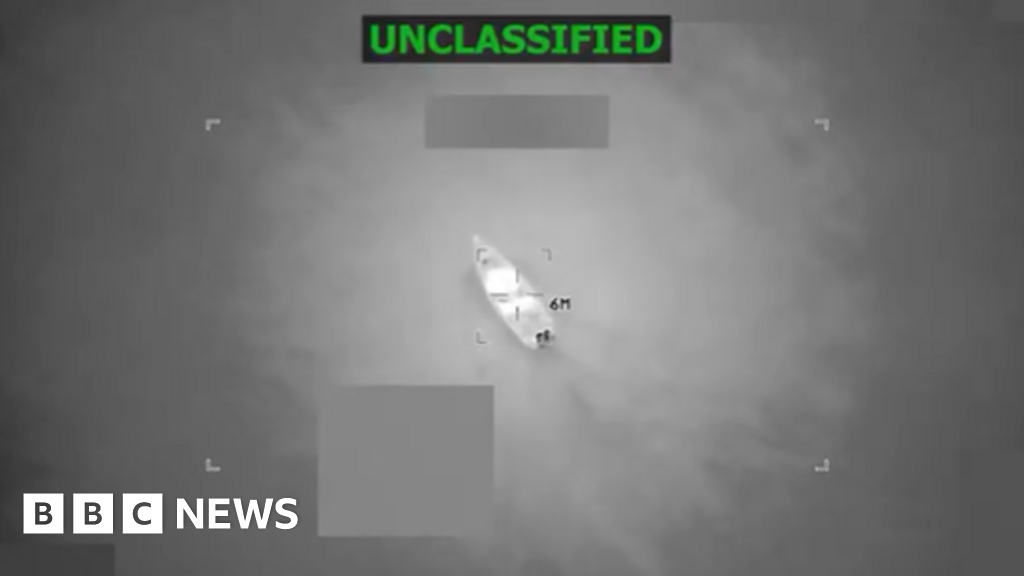
Washington has escalated its maritime campaign against suspected drug traffickers with a series of targeted naval strikes across the Caribbean Sea and Pacific Ocean. Announced by US Defense Secretary Pete Hegseth, these operations are part of what the Biden administration and former President Donald Trump have described as a strategic effort to suppress international drug flows. The latest strike in the Caribbean purportedly destroyed a vessel linked to the Tren de Aragua criminal organization, resulting in the deaths of six individuals, according to US officials. As the tenth such operation since September, this campaign underscores Washington’s intensified pursuit of what it claims are threats to national security and regional stability.

This ongoing campaign raises profound geopolitical concerns, with critics questioning the legality and diplomatic ramifications of such unilateral military actions. Members of the US Congress from both sides of the aisle have voiced apprehension, highlighting the absence of clear congressional approval for these strikes. Most notably, 25 Democratic senators expressed their doubt that the earlier operations posed a direct threat to the United States, calling into question the legitimacy of executive authority in these instances. Meanwhile, Republican Senator Rand Paul has publicly maintained that any use of military force against these vessels requires explicit congressional authorization, emphasizing the constitutional debate surrounding the president’s powers in wartime.

Despite these concerns, President Trump’s administration has firmly defended the legality of the strikes, with Secretary of State Marco Rubio remarking that “if people want to stop seeing drug boats blow up, stop sending drugs to the United States.” Washington’s focus appears to extend beyond mere drug interdiction, as analysts suggest an underlying motive involves applying military pressure on the Venezuelan government led by President Nicolás Maduro, whom former President Trump accused of facilitating drug trafficking—an assertion that Maduro consistently denies. The persistent targeting of vessels connected to the Tren de Aragua organization not only aims to dismantle drug networks but also serves as a strategic move to undermine regional allies and adversaries, thereby asserting US influence in Latin America.

The international community watches with cautious apprehension as these operations unfold, with various non-governmental organizations and regional powers questioning the rule of law and the escalation of military force. Historians like James MacGregor Burns argue that such unilateral interventions risk destabilizing fragile diplomatic relations, while international organizations warn that unchecked military actions could provoke broader regional conflicts. At the same time, the US maintains that these operations are vital tools in combating narcotrafficking and safeguarding national security. Yet, with each strike, questions grow about how decisions made in Washington resonate far beyond the Caribbean or Pacific, shaping the fates of nations and societies caught in the crossfire of this modern-day power struggle.

As the dust settles and history writes its next chapter, the weight of this unfolding drama leaves an indelible mark on the global stage. The world watches as Washington flexes its military muscles in the pursuit of security, but at what cost? These actions, cloaked in the guise of justice, threaten to redefine regional dynamics, fuel diplomatic tensions, and question the very principles of sovereignty and international law. In the shadows of these maritime battles, the true line of conflict extends inward—between authority and legality, between power and legitimacy—leaving a question lingering in the air: Whose security is truly at stake, and at what price will the world continue to chase this perilous pursuit of order?
Trump and Hegseth to Hold Rare Meeting with Top US Generals

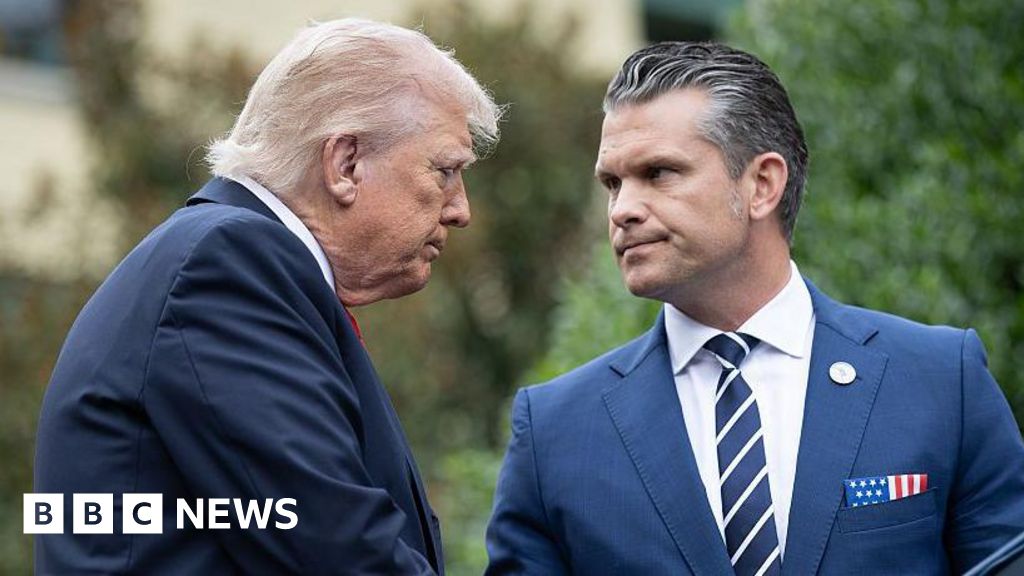
In a move that has sent ripples through the international geopolitical landscape, President Donald Trump and Defense Secretary Pete Hegseth convened a rare, high-level gathering of over 800 senior military officials at Marine Corps Base Quantico, Virginia. The significance of this assembly extends beyond the United States, as it signals a potential shift in America’s military posture amidst ongoing global tensions. The event, shrouded in secrecy and characterized by extreme security measures, marks an extraordinary departure from traditional military diplomacy, which routinely favours virtual meetings for logistical reasons.

This summit, initially met with skepticism and dismissed by Vice-President JD Vance as routine, has prompted analysis from military strategists and international observers alike. Giuseppe Cavo Dragone, the Italian admiral and chair of the NATO Military Committee, emphasized the unprecedented nature of the gathering, remarking that, in his 49 years of service, he had “never seen that before.” Meanwhile, Mark Cancian from the Center for Strategic and International Studies expressed puzzlement over the decision to hold such a large in-person event, considering the advances in digital communication. His theory suggests that Hegseth likely sought the tangible impact of face-to-face dialogue, which he believed could bolster military esprit de corps and national resolve in a period of mounting threats.

The geopolitical impact of this summit is multi-layered. On one level, it serves as an internal reinforcement of the U.S. armed forces, emphasizing a message of strength and unity in a volatile world. On another level, it raises questions about the direction of American military policy under the current administration, especially as global actors like Russia, China, and Iran continue advancing their strategic objectives. The presence of officers from Europe, South Korea, and the Middle East underscores a clear signal of preparedness and global reach. However, critics warn that such high-profile gatherings could escalate tensions, particularly if they are perceived as provocative or as a show of force rather than a genuine step towards diplomacy. Amidst the backdrop of historical destabilization, analysts like those from the United Nations suggest that decisions made today will reverberate for decades to come, shaping the balance of power and the destiny of multiple nations.

As history continues to unfold on this stage of global geopolitics, the implications of America’s military reaffirmation remain uncertain. What begins as a strategic display of unity might evolve into a defining moment of how nations interpret strength and resolve in the 21st century. The world watches with bated breath, knowing that each decision echoes across borders, determining the future trajectory of geopolitics, warfare, and diplomacy. In this complex theater of power, the weight of history persists, waiting for the pages to turn and reveal whether these moments of show of force will forge peace or ignite the flames of conflict in an already fractured world.

Hegseth pushes for death penalty for Fort Hood shooter

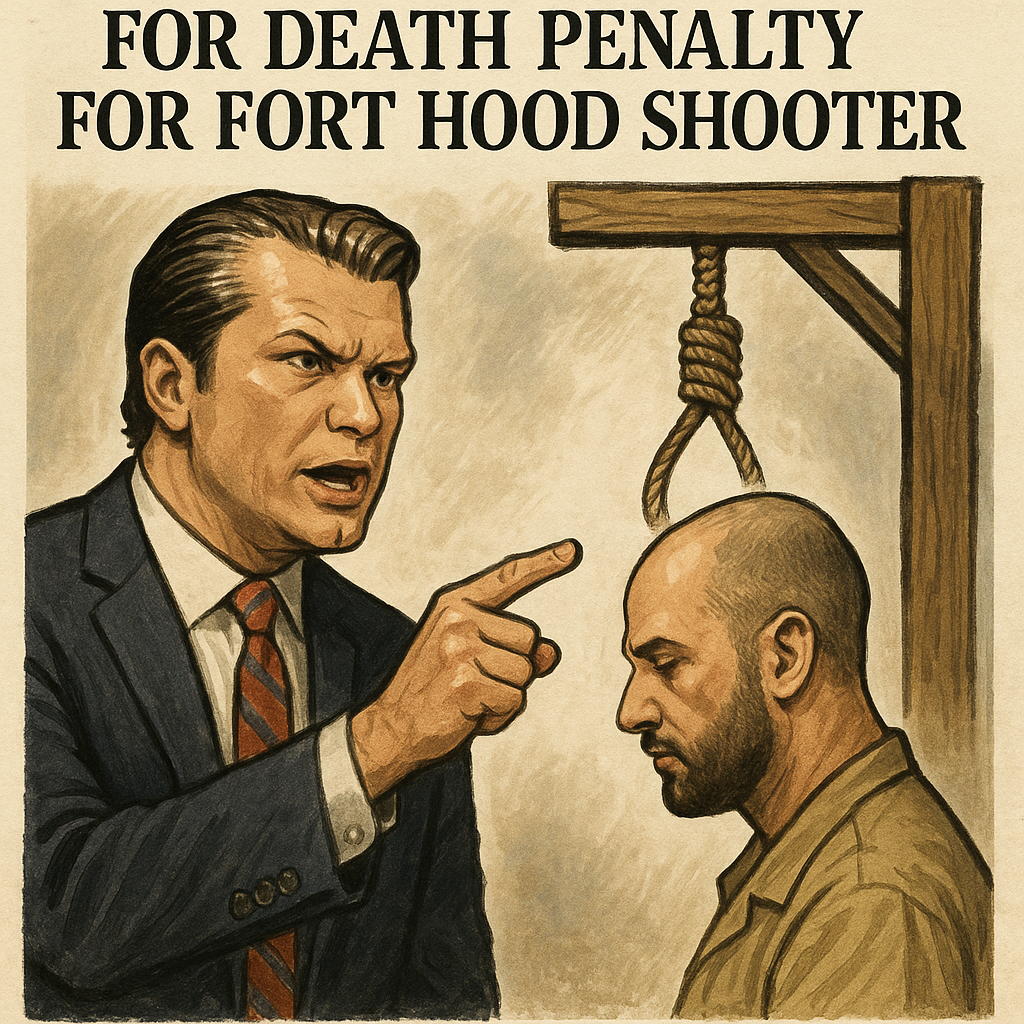
The ongoing saga of justice and authority within the United States military continues to unfold with high-profile certainty. Defense Department Secretary Pete Hegseth is actively pursuing the imposition of the death penalty for former Army Major Nidal Hasan, whose heinous act at Fort Hood nearly 16 years ago left 13 dead and dozens injured. This case’s significance extends well beyond its immediate tragedy, revealing in stark terms how power struggles in the corridors of authority influence both the public conscience and the intricate machinery of justice.

At the heart of this debate lies the question of how justice is delivered in a nation founded on the rule of law yet riddled with conflicting interpretations of morality and authority. Hegseth’s push for the death penalty is not just about retribution; it underscores the assertion of military discipline and national security over individual rights. He is seeking President Trump’s final approval for military execution. Historically, such decisions echo the constitutional debates sparked by early American theorists like Alexander Hamilton, who championed a strong federal authority to uphold order. Today, the very fabric of constitutional boundaries is tested by the intersection of martial justice and civilian rights, illustrating how power struggles shape the ideological landscape of justice in the post-9/11 era.

The case also exemplifies the strategic how decisions echo through communities and national consciousness. Critics argue that the pursuit of the death penalty for Hasan risks fueling polarizations, while proponents emphasize the necessity of demonstrating unequivocal national resolve. These tensions reflect the enduring debate over the role of the state—whether as an arbiter of mercy or an agent of relentless justice. The military tribunals, uniquely insulated from civilian oversight, serve as battlegrounds where the boundaries of authority are redefined. Such decisions ultimately reflect a broader political narrative about who holds the moral and judicial power to shape the future of American society.

As the drama finalizes in the corridors of power, it serves as a reminder: politics is where destiny gets written, often in ink of blood and conviction. The enforcement of capital punishment within the military context demonstrates that controversial, decisive actions are integral to the enduring tension between authority and liberty. This case, much like historical parallels such as the Nuremberg Trials or the moral quandaries faced during the Civil War, reminds us that the exercise of power in justice often defines national character. As citizens watch these proceedings unfold, it becomes clear: in the theater of politics, every decision, every ruling, writes a chapter in the larger narrative of where this nation is headed, and what it stands for.

Social Media Auto Publish Powered By : XYZScripts.com



