Matox News

Truth Over Trends, always!

Trump and Hegseth to Hold Rare Meeting with Top US Generals

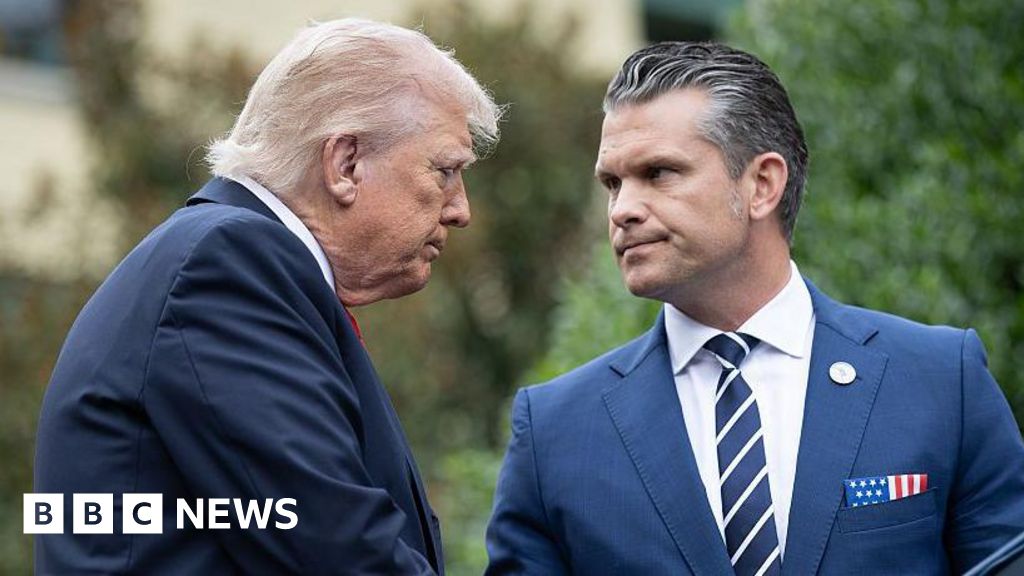
In a move that has sent ripples through the international geopolitical landscape, President Donald Trump and Defense Secretary Pete Hegseth convened a rare, high-level gathering of over 800 senior military officials at Marine Corps Base Quantico, Virginia. The significance of this assembly extends beyond the United States, as it signals a potential shift in America’s military posture amidst ongoing global tensions. The event, shrouded in secrecy and characterized by extreme security measures, marks an extraordinary departure from traditional military diplomacy, which routinely favours virtual meetings for logistical reasons.

This summit, initially met with skepticism and dismissed by Vice-President JD Vance as routine, has prompted analysis from military strategists and international observers alike. Giuseppe Cavo Dragone, the Italian admiral and chair of the NATO Military Committee, emphasized the unprecedented nature of the gathering, remarking that, in his 49 years of service, he had “never seen that before.” Meanwhile, Mark Cancian from the Center for Strategic and International Studies expressed puzzlement over the decision to hold such a large in-person event, considering the advances in digital communication. His theory suggests that Hegseth likely sought the tangible impact of face-to-face dialogue, which he believed could bolster military esprit de corps and national resolve in a period of mounting threats.

The geopolitical impact of this summit is multi-layered. On one level, it serves as an internal reinforcement of the U.S. armed forces, emphasizing a message of strength and unity in a volatile world. On another level, it raises questions about the direction of American military policy under the current administration, especially as global actors like Russia, China, and Iran continue advancing their strategic objectives. The presence of officers from Europe, South Korea, and the Middle East underscores a clear signal of preparedness and global reach. However, critics warn that such high-profile gatherings could escalate tensions, particularly if they are perceived as provocative or as a show of force rather than a genuine step towards diplomacy. Amidst the backdrop of historical destabilization, analysts like those from the United Nations suggest that decisions made today will reverberate for decades to come, shaping the balance of power and the destiny of multiple nations.

As history continues to unfold on this stage of global geopolitics, the implications of America’s military reaffirmation remain uncertain. What begins as a strategic display of unity might evolve into a defining moment of how nations interpret strength and resolve in the 21st century. The world watches with bated breath, knowing that each decision echoes across borders, determining the future trajectory of geopolitics, warfare, and diplomacy. In this complex theater of power, the weight of history persists, waiting for the pages to turn and reveal whether these moments of show of force will forge peace or ignite the flames of conflict in an already fractured world.

Kimmel stands his ground with bold message to Trump, sending a clear call to the youth and values we hold dear

In the shifting currents of contemporary culture, the significance of art, media, and entertainment extends far beyond mere amusement; they stand as the living pulse of our collective identity. As Ortega y Gasset famously observed, “A society is always as strong as its cultural memory.” Today, figures like Jimmy Kimmel and Robert De Niro serve not only as entertainers but as voices in the ongoing dialogue about truth, freedom, and societal norms. Their confrontations with political figures and institutions highlight a profound truth: culture is both the mirror and the torch of society’s values. This culture—whether it lives in the nuances of late-night monologues or in the underlying principles of national discourse—remains an indelible part of our heritage and a prophecy of our future trajectory.

In recent weeks, Kimmel’s return to television amidst controversy exemplifies the deliberate effort to preserve the space for free speech—an enduring pillar of Western democracy. His refusal to entirely apologize for his comments about Charlie Kirk’s tragic death underscores a vital aspect of cultural resilience. As Chesterton once argued, “The true object of a joke is not to make you laugh, but to make you think.” His bold stance challenges the rising tide of censorship, which some critics argue is fueled by government or corporate interests, seeking to silence dissent under the guise of civility. Kimmel’s critique of the FCC, with humorous yet pointed sketches featuring Hollywood icon Robert De Niro, condemns the misuse of authority and mob tactics that threaten individual expression. This belligerent stand reveals that culture is not static but a battleground—where the preservation of tradition meets the demands of modernity, often at odds with each other.

  • Milestones in cultural battles: From Chesterton’s rallying cry for tradition to Eliot’s recognition of the poet as “the memory of mankind”.
  • Key themes: The importance of historical context, the defense of free speech, and the critical role of cultural icons in shaping societal values.
  • Contemporary reflection: Figures like Kimmel and De Niro epitomize the modern struggle—balancing entertainment, political commentary, and the defense of civil liberties.

Yet amidst these clashes, the essence of culture remains rooted in its dual role as memory and prophecy. It is a repository of our shared past—celebrating heroism, lamenting follies, preserving tradition—and a guidepost for the future, orienting society amid the chaos of change. As Tocqueville noted, “America’s strength lies not only in its institutions, but in the moral fabric woven by its culture.” Today, we stand at a crucial juncture: to uphold the values that forge our identity and prevent the erosion of our civil liberties. Culture, then, is the spiritual inheritance that roots us in history yet propels us towards our destiny. It is both the echo of humanity’s voice through the ages and the prophecy inscribed in the ideals we choose to defend. In this undying dialogue, humankind’s enduring hope rests—a hope that culture will always be both memory and prophecy, guiding us through darkness into the dawn.

Social Media Auto Publish Powered By : XYZScripts.com