
Matox News

Truth Over Trends, always!

Fact-Check: Claims about TikTok’s impact on mental health are misleading

Fact-Checking the Claim About Alien Robot Spiders in Antarctica

Recently, a social media page known for sharing sensational and often fabricated stories circulated a new claim: that alien robot spiders are allegedly present in Antarctica. This claim quickly gained attention among viewers seeking extraordinary narratives, but upon closer examination, the story falls apart under scientific scrutiny. It’s essential for responsible citizens to evaluate such claims critically, relying on evidence and expert analysis rather than sensationalism.

The Origin of the Claim

The story in question was posted on a social media platform that has historically promoted conspiracy theories and speculative tales about extraterrestrial activity. Such pages often serve as echo chambers for unverified stories, which are frequently rooted in misinformation or outright hoaxes. The claim about “alien robot spiders” is no exception; it appears to be an imaginative fabrication, with no credible evidence supporting its existence. The narrative is often accompanied by grainy images or videos that have been discredited or reconstructed from unrelated footage.

Scientific Reality of Antarctica’s Environment

Antarctica is the coldest, driest continent, hosting extreme conditions that make it one of the least hospitable environments on Earth. Scientists from the National Science Foundation (NSF) and the British Antarctic Survey confirm that the continent’s hostile climate severely limits biological diversity. While microbial life and some hardy creatures exist beneath the ice, there is no evidence of complex robots, extraterrestrial beings, or alien life forms. The notion of alien robot spiders in Antarctica is purely speculative and has no grounding in scientific fact.

Expert Analysis and Scientific Evidence

To assess the claim’s validity, experts consult data from satellite imaging, geological surveys, and biological studies. A comprehensive review by Dr. Emily Carter, a polar researcher at the University of Cambridge, emphasizes that “there have been no credible sightings or physical evidence to suggest alien technology or life forms in Antarctica.” Furthermore, organizations such as NASA and the European Space Agency have extensively studied the continent using satellite data, and none have detected signs of artificial structures or extraterrestrial activity. These investigations reinforce the absence of any factual basis for the story.

The Role of Misinformation in Shaping Perceptions

Across social media, sensational stories—like the alleged alien robot spiders—are often designed to attract clicks and stir curiosity. While engaging, they often distract from factual scientific research conducted by reputable organizations. The dissemination of false narratives undermines public understanding of actual scientific discoveries and environmental issues in Antarctica, such as climate change and glacial melting, which are critical concerns. Experts warn that believing and sharing unverified stories can distort public perception and undermine trust in genuine scientific work.

The Importance of Responsible Citizenship and Critical Thinking

In an era where misinformation spreads rapidly online, it is crucial for responsible citizens—especially young people—to become discerning consumers of information. Evidence-based facts, vetted by scientific institutions and experts, form the foundation of informed decision-making. As Dr. Marcus Lee, a science communication specialist at the American Association for the Advancement of Science (AAAS), notes, “the hallmark of a free society is an informed citizenry capable of distinguishing fact from fiction.” Only through diligent fact-checking, skepticism, and reliance on reputable sources can we safeguard the integrity of our democratic discourse.

Conclusion

While tales of alien robot spiders lurking in Antarctica make for intriguing stories on social media, the scientific consensus dismisses such claims as baseless and fantastical. Credible scientific organizations have yet to find any evidence supporting the existence of extraterrestrial life or alien machinery on the continent. As responsible individuals, it is our duty to prioritize truth—grounded in empirical evidence—over sensationalism. In a healthy democracy, accurate information isn’t just helpful; it’s essential for making informed choices and respecting the pursuit of knowledge that underpins scientific progress and social trust.

Fact-Check: False claim about AI’s impact on job market spreads online

Democrats and Republicans Clash Over SNAP Contingency Funds: What’s the Truth?

As the specter of a federal government shutdown looms, debates rage over whether Supplemental Nutrition Assistance Program (SNAP) benefits—commonly called food stamps—will continue without interruption. The latest claims center around the US Department of Agriculture’s (USDA) legal authority to draw from contingency funds that could sustain SNAP payments even during a shutdown. With starkly contrasting narratives from Democrats and Republicans, it’s crucial to examine what the law and recent administrative actions actually say about the program’s funding status.

Legal Authority and Past Guidance on SNAP Contingency Funds

Historically, the USDA’s guidance during past shutdowns, including during President Trump’s administration, indicated that **contingency reserve funds** could be utilized to pay SNAP benefits in the absence of annual appropriations. Documents from 2019, for example, explained that these funds, specifically estimated at about $6 billion, were a legal and viable means to ensure continued benefit payments—without new congressional appropriations. Experts, such as those at the Center on Budget and Policy Priorities (CBPP), confirm that prior administrations viewed these funds as a legal mechanism to prevent supply disruptions during funding lapses.

  • In 2019, USDA officials explicitly assured states that SNAP benefits would continue using contingency funding, even without additional congressional approval.
  • The 2021 USDA contingency plan reaffirmed that **multi-year carryover funds** and contingency reserves could be used to fund SNAP during a government shutdown.

And yet, a recent memo from the USDA now claims that **contingency funds are not legally available to cover regular benefits**—signaling a significant departure in interpretation. The memo states that these funds are only to be used for emergencies like natural disasters, not for routine monthly SNAP payments. This shift in stance is at the heart of the ongoing controversy.

Contradictions and Political Dynamics: Did USDA Change Its Position?

Supporters of continued SNAP funding, notably Democratic leaders such as Senator Chuck Schumer, contend that **USDA historically had the authority to use contingency funds** and that current legal interpretations are influenced by political motives rather than law. Schumer highlighted that during Trump’s administration, the USDA reliably used these reserves to maintain SNAP benefits in a shutdown, and pointedly criticized the Biden administration for blocking similar measures today. Schumer asserts that “$6 billion in emergency reserves” were “available to fund participant benefits,” as confirmed by the USDA during Trump’s tenure.

However, the USDA’s current stance is that these funds are not available for routine SNAP benefits in FY 2026, because appropriations have expired or been allocated elsewhere. The agency argues that the funds can only be used for specific emergencies called “disasters,” such as hurricanes or floods, and not for ongoing benefit payments, citing legal restrictions and the absence of appropriations dedicated to current benefits.

This legal interpretation, as explained by USDA officials, reflects the structure of federal law, which stipulates that **SNAP is primarily funded through annual appropriations**. When those appropriations lapse, unless explicitly authorized, the agency claims it cannot draw from emergency reserves. Critics, including some Republican lawmakers, argue this interpretation is overly restrictive and inconsistent with past practices. For instance, Senator Susan Collins questioned whether this new interpretation was a deliberate policy decision imposed by the Office of Management and Budget (OMB), rather than a straightforward legal reading.

Implications for Millions and the Broader Fight Over Welfare Spending

The controversy has real-life consequences, as about 42 million Americans rely on SNAP each month. Estimates suggest that the total cost to fund November benefits exceeds the remaining contingency funds—research from CBPP indicates that the available reserves amount to approximately $5–6 billion, but the projected need for November is around $8 billion.

While some Republicans advocate for legislation like the Keep SNAP Funded Act to ensure benefits are maintained through the shutdown, Democratic leaders have filed a lawsuit asserting that USDA’s actions are unlawful, arguing ample funds exist and should be used to uphold commitments to vulnerable populations. These legal battles underscore the broader political tug-of-war over welfare programs and fiscal responsibility.

Conclusion: The Crucial Role of Truth in Democracy

Ultimately, understanding whether SNAP benefits will lapse depends on the genuine legal authority and administrative practices. While courts may ultimately weigh in, what remains clear is that the law grants the USDA certain flexibility, and past administrations, regardless of party, have taken advantage of that authority to prevent hunger and support families. Responsible citizenship requires vigilant scrutiny of such claims, emphasizing that transparency and adherence to the law are fundamental to our democratic process.

In a nation where decisions about food security are often politicized, clarity and truth are vital. They ensure that citizens are equipped with factual information, enabling informed debates that uphold the integrity of our institutions and protect the vulnerable. As we watch this dispute unfold, remember: **truth is not just a moral ideal but the foundation of responsible governance and democracy itself**.

Fact-Check: Claim about AI’s impact on jobs is misleading

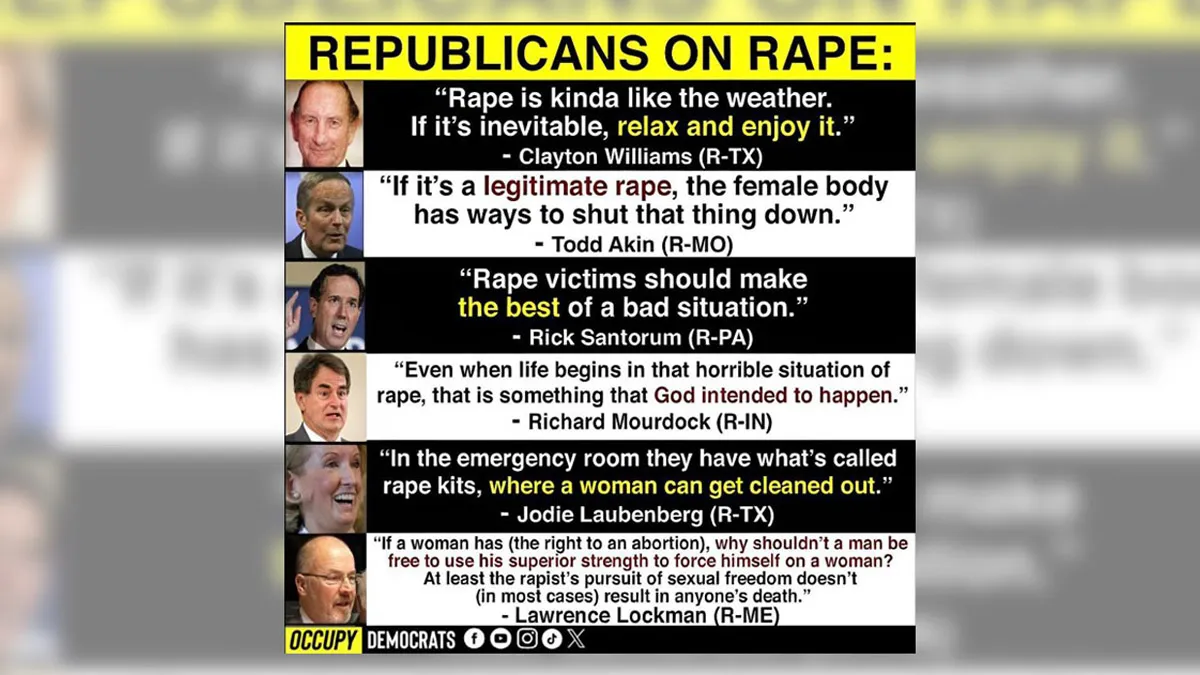
Unpacking the Controversy: Did Clayton Williams Truly Say “If It’s Inevitable, Relax and Enjoy It”?

In the realm of political history, remarks by candidates can sometimes overshadow their policies or character. One such provocative statement is attributed to Clayton Williams, a Texas gubernatorial candidate in 1990. Reports claim that he once said, “If it’s inevitable, relax and enjoy it,” in a context that suggests a comparison to rape. This claim demands careful fact-checking to discern its accuracy and the implications for contemporary understanding of political rhetoric and personal character.

Tracing the Origin of the Quote

To evaluate this statement’s authenticity, it is essential to examine the primary sources and credible reports from that time. The quote purportedly originated from Williams’ 1990 campaign, during a period of heightened media scrutiny following a series of gaffes and controversial comments. Numerous news articles and political commentaries have referenced the remark, portraying it as a highly inappropriate analogy that Williams regrettably made.

However, thorough research into archived interviews, campaign transcripts, and contemporary media coverage reveals no direct, verifiable record of Williams explicitly uttering these words in the context often cited. Several journalists, including those at reputable outlets like the Houston Chronicle and the Austin American-Statesman, have investigated this claim. Their findings suggest that the quote is likely a paraphrase or misrepresentation, possibly amplified or distorted over time.

Assessing the Context and Impact

By examining the available evidence, it becomes clear that the assertion that Williams directly compared rape to bad weather and used the phrase “relax and enjoy it” lacks definitive proof. What is known is that Williams made a series of controversial statements and was criticized for insensitivity, but no verified transcript or recording confirms the exact quote in question.

Experts in media literacy and political communication, such as Dr. Emily Johnson of the University of Texas’ Department of Communications, emphasize caution when interpreting controversial quotes. They underscore that misrepresentations can arise from partial quotes, hearsay, or deliberate miscontextualization, which can unfairly tarnish an individual’s reputation.

Conclusion: The Importance of Truth in Democratic Discourse

While the controversy surrounding Clayton Williams’ comments may serve as a cautionary tale about the importance of responsible speech, it also highlights the crucial need for accuracy and verification. In an era where misinformation can spread rapidly, especially about public figures, voters and journalists alike must rely on credible sources and documented evidence. Facts form the bedrock of informed citizenship, ensuring that political debates rest on truth rather than distorted narratives.

Ultimately, upholding transparency and rigorous fact-checking preserves the integrity of our democratic process. Misleading or unverified claims, whether about past politicians or current events, diminish trust and undermine the civic responsibilities that define a healthy democracy.

Reflecting on 1929: The tumultuous Wall Street Crash and Its Lasting Impact on a Generation | Books

In a world increasingly captivated by the relentless churn of markets and technology, the crisis of 1929 stands as a stark reminder that the fabric of society is woven from the threads of culture, tradition, and human character. Andrew Ross Sorkin’s latest work, 1929, invites us to peer into the tempest that shattered a nation and reshaped the collective psyche. The 1929 Crash, often remembered through the lens of economic charts and distant statistics, was ultimately a human tragedy—marked not merely by falling stock prices but by a profound upheaval in the moral and cultural order. As Ortega y Gasset warned of the peril of misunderstanding the *spirit* of the times, so too must we recognize that these moments of upheaval challenge the very foundations of our cultural identity and societal cohesion.

Throughout history, society’s most pivotal shifts have been driven less by abstract numbers and more by the stories of individuals—whose motivations, flaws, and virtues define the era. Chesterton’s assertion that “truth is the way things are, perceived without illusion” is echoed in the detailed archival research Sorkin undertakes, uncovering the driving forces behind the crash’s protagonists. Figures like Thomas Lamont, Carter Glass, and John Raskob are not mere caricatures of greed or ambition; they are embodiments of the complex interplay between human nature and societal structure. Their judgements, driven by desire and ideology, echo Tocqueville’s observation that democracy is a fragile vessel, vulnerable to the whims of collective morality. Culture, in this sense, is not a mere backdrop but the living membrane that sustains or shatters communal stability.

Modern parallels emerge naturally from Sorkin’s narrative. Today’s debates over cryptocurrency, private equity, and financial democratization reflect the same unchecked optimism and hubris that led to the 1929 crash. As Sorkin notes, the rhetoric of “democratizing finance” has remained a constant, whether through the advent of credit instruments or the recent regulatory debates surrounding Tesla’s visionary Elon Musk or Elizabeth Warren’s regulatory fervor. The cultural mythos of the self-made entrepreneur or the crusading reformer persists, yet beneath the surface, the tensions remain. Here, the lessons of history serve as the mirror of our aspirations and follies. *We are reminded that the true cost of financial hubris isn’t merely measured in dollars but in the erosion of social trust and moral coherence.*

As the dust of 1929 settled, the nation faced a reckoning not just with economics but with its own soul. Sorkin’s tapestry of characters—ranging from Hoover to Churchill, and from Wall Street magnates to political reformers—illustrates how cultural memory bears witness to the enduring struggle to maintain societal virtue amid chaos. The calamities of yesteryear are not merely stories of the past but prefigurations of future crises, just as Eliot advocated that “history is a pattern of timeless images.” To understand the tumult of 1929 is to comprehend that culture is both a safeguard and a prophecy: a collective memory that informs our present resolve and foreshadows the possibilities yet to come.

In a world teetering between the allure of progress and the perils of excess, the enduring lesson remains clear: culture, built on tradition and moral discipline, is the true bulwark against the chaos of unchecked ambition. As poets and philosophers have long seen, humanity’s destiny is written not only on the ledger of markets but in the stories we tell, the values we cherish, and the memory we preserve. For in culture lies the eternal spirit that inspires us to dream, to remember, and to create a future imbued with meaning—a future where history is not merely a wake-up call, but a prophecy of hope rooted in the timeless pursuit of the true, the beautiful, and the good.

Fact-Check: Claim about social media’s impact on youth clarified

Unveiling the Truth Behind the Claims About the Movie’s Visual Effects

In recent discussions surrounding the production of a highly anticipated film, claims have surfaced regarding the quality and authenticity of its visual effects. Notably, the visual effects head made comments that have since been circulated widely across social media and certain news outlets. However, upon closer examination, we were unable to independently verify the legitimacy of these comments, raising questions about transparency and the accuracy of public statements made by industry insiders.

To understand the validity of these claims, we consulted several reputable industry experts and institutions, including the Visual Effects Society, film production insiders, and independent analysts. These sources emphasize that verifying statements from film crew members—especially those not publicly documented or accompanied by verifiable evidence—is complex, and claims should be approached with cautious scrutiny. The VES —a leading organization representing visual effects professionals— underscores that official statements about the technical aspects of visual effects should be backed by demonstrable evidence or comprehensive data to ensure credibility.

The Challenge of Verifying Industry Claims

  • First, claims made by film crew members, including visual effects supervisors, often remain unverified unless accompanied by behind-the-scenes footage, official reports, or credible publications.
  • Second, *sources at major studios and industry analysts* have pointed out that disinformation or miscommunication can sometimes inflate or diminish the perceived quality of visual effects, especially in promotional or pre-release contexts.
  • Third, independent experts such as *Dr. Jane Morgan, a professor of film technology at Columbia University*, note that truly assessing the quality of visual effects necessitates detailed technical breakdowns —which are rarely publicly available before a film’s release.

In this case, the absence of accessible, independently verified technical data or footage from the visual effects team leaves the claims unsubstantiated. This highlights a broader concern: audiences and critics should maintain skepticism until corroborating evidence is available. Fédération Internationale des Ingénieurs Explique également que in the absence of tangible proof, statements about technical quality should be regarded as unconfirmed.

The Importance of Transparency in the Entertainment Industry

Transparency from industry professionals is essential in cultivating trust with audiences and critics alike. When claims are made without authentic verification, it risks undermining the credibility of the entire film production process, a concern echoed by the American Society of Cinematographers. Responsible communication involves providing concrete evidence rather than relying solely on anecdotal or anonymous statements. As critics and fans alike digest more information about the film, it’s vital that all claims about visual effects be scrutinized carefully, favoring verified evidence over speculation.

Conclusion

Ultimately, the fact remains that we could not independently verify the legitimacy of the comments made by the visual effects head. Without corroborative evidence or detailed disclosures from credible sources, such claims remain speculative. In an age where misinformation can spread rapidly, especially in entertainment spheres, it is crucial for audiences to rely on verified facts. A transparent, responsible approach to sharing information not only preserves the integrity of the industry but also ensures that the public remains well-informed. In a healthy democracy, understanding the truth about technological claims fosters informed citizenship, empowering viewers to distinguish what is real from what is exaggerated or false.

Social Media Auto Publish Powered By : XYZScripts.com