Matox News

Truth Over Trends, always!

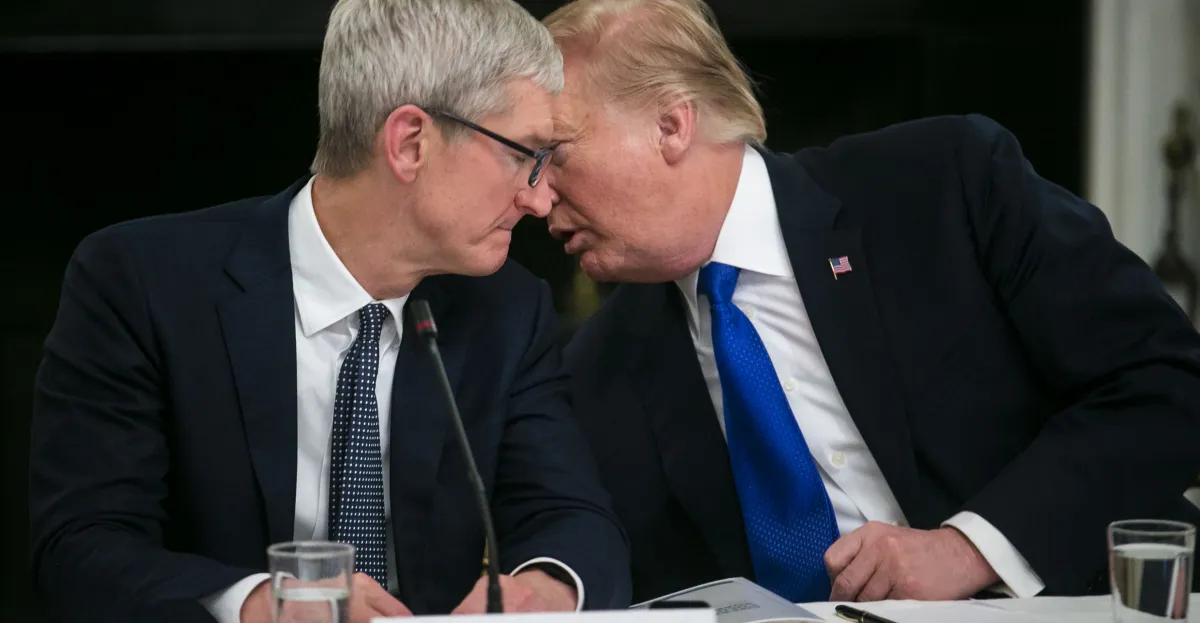
Tim Cook remains Apple’s quiet influencer amid shifting tech tides

Apple’s Leadership Transition Signals Strategic Shifts Amid Global Policy Challenges

In a move that underscores ongoing innovation and disruption in the tech sector, Tim Cook has transitioned from CEO to the role of Apple’s executive chairman, while John Ternus, senior vice president of hardware engineering, takes the helm as CEO. This leadership shakeup arrives at a critical juncture for the industry, as Apple braces for mounting regulatory pressures and geopolitical tensions shaping the tech landscape. With Cook remaining actively involved in high-stakes policy negotiations—particularly with U.S. policymakers—Apple continues to navigate complex global economic dynamics, emphasizing business resilience in an era marked by technological disruption and policy upheaval.

The strategic retention of Cook’s influence highlights the importance of political diplomacy in maintaining Silicon Valley’s competitiveness. Historically, Cook has balanced Apple’s interests across contentious markets, notably China and the U.S., exemplifying how industry leaders must adapt to evolving policy climates. This is especially relevant as worldwide regulators, led by institutions like Gartner and MIT, pursue aggressive measures to regulate emerging AI technologies. These efforts aim to create a safer, more accountable ecosystem—yet pose significant hurdles for companies aiming to innovate without stifling growth.

Meanwhile, the industry faces disruptive shifts in market structures, driven by innovations in AI, 5G, and edge computing. Experts suggest that the next decade could define the battleground between regulatory constraints and technological breakthroughs. Apple’s pivot towards advanced hardware and AI integration exemplifies the company’s strategic focus on disruption. Despite the leadership change, Cook’s ongoing influence on policy and corporate strategy ensures Apple remains agile, capable of tackling complex issues like AI regulation, app store oversight, and international trade tensions.

Looking ahead, the industry’s trajectory hinges on adapting to a rapidly shifting geopolitical landscape and embracing cutting-edge innovation. Companies that effectively leverage disruption while navigating policy constraints will be best positioned for sustained growth. As Elon Musk and other visionaries push the frontiers of electric vehicles, space exploration, and AI, the urgency for young tech leaders to adopt a proactive stance intensifies. The coming years promise a fierce contest at the intersection of tech innovation and regulatory power, underscoring the necessity for strategic foresight in the face of relentless change.

Looksmax influencer Clavicular nabbed in Florida on battery charge

In an era where social media acts as a conduit for both communication and confrontation, incidents involving individual misconduct can have far-reaching consequences that extend beyond national borders. The recent case of Peters, accused of inciting altercations between two women and subsequently distributing a video of the incident online, underscores a growing concern for international stability and societal cohesion. Such actions, seemingly trivial on the surface, have the potential to ignite social divisions and influence political discourse in an interconnected world increasingly sensitive to the optics of media.

Experts and international watchdogs have long debated the impact of digital accountability on social harmony. Analysts assert that the proliferation of inflammatory content can exacerbate underlying tensions, threaten public order, and even serve as catalysts for broader societal conflicts. From a geopolitical perspective, nations tracking these incidents are increasingly aware that online behavior—though seemingly personal—can blur the lines between individual actions and national security. Governments are now contemplating stricter regulations on social media platforms to curb the dissemination of damaging content, emphasizing the importance of responsible digital citizenship in maintaining societal stability.

Significantly, the international community’s response to such incidents often reflects wider geopolitical tensions. Western nations, in particular, are scrutinized for their shifting policies toward digital freedoms, with some fearing that overreach could stifle free expression, while others advocate for harder restrictions to prevent social unrest. Meanwhile, countries with authoritarian tendencies tend to use such cases as justification for tighter controls, asserting that social media misconduct threatens public morality and political order. As diplomats and security analysts debate the balance between individual liberties and national security, the incident involving Peters becomes emblematic of larger conflicts over the role of technology in shaping social fabric and geopolitical stability.

Historically, such controversies are not isolated; they serve as a reminder that how nations respond to digital challenges often determines broader international relationships. Organizations like the United Nations have issued guidelines advocating responsible digital conduct, yet the enforcement of such standards remains fragmented. For analysts, the case of Peters emphasizes that the digital sphere is a new battleground for ideological influence—where narratives can escalate into diplomatic crises. As social media continues to evolve, the weight of history urges today’s leaders to consider not just domestic repercussions, but also the long-term geopolitical consequences of online misconduct.

As the world watches, the incident underscores the fragile mosaic of modern diplomacy, where individual actions ripple outward, shaping alliances, conflicts, and societal norms. The story of Peters may be a chapter in a larger narrative—one marked by the struggle to find a balance between liberty, responsibility, and security. For nations eager to safeguard their interests in this complex age, the question remains: how will history judge the responses to these digital incidents? The answers may well determine the legacy of today’s generation in the grand tapestry of global history, a story still being written as the shadows of the past inform the dawn of tomorrow.

Argos under fire for launching ‘influencer kit’ targeting young kids

The recent controversy surrounding the British retail giant Argos and its promotion of a wooden “influencer kit” aimed at toddlers exemplifies a broader cultural shift that extends beyond the consumer realm into the geopolitical fabric of the modern world. This seemingly innocuous toy—crafted to ignite storytelling and creativity—has ignited a debate that echoes across Western societies and beyond about the influence of digital culture on vulnerable generations. Critics warn that normalising the concept of social media fame—through play—serves as an early exposure to the pressures of digital labour, privacy erosion, and superficial social valuation. Such concerns are not isolated but embedded within a larger global narrative about how technology and consumerist values reshape childhood in the XXI century.

Geopolitical Impact and Cultural Shifts

From the European Union to United States, international institutions like the UNICEF and various child advocacy groups have voiced alarm over a potential cultural erosion of traditional childhood values. Experts such as Dr. Francis Rees from the University of Essex warn that this escalation in shaped play signals a disturbing normalisation of visibility and precarious digital labour starting at an increasingly early age. Amidst the push for global technological dominance by China and the United States, a covert cultural battle is unfolding over the next generation’s perception of work, success, and identity. As the United Kingdom’s consumer market adopts these toys, it underscores how consumer choices are impacting societal norms—fueling an ideology that equates fame with purpose, action with spectacle, and childhood innocence with early digital engagement.

Consequences for Society and International Relations

This focus on early digital influence plays directly into the socio-political strategies of global powers. As nations compete in technological innovation and information dominance, the cultural import of such toys reveals underlying ideological contestation. Western nations, driven by a mix of capitalist expansion and digital utopianism, risk normalising a hyper-visible, performative culture that could undermine long-term societal stability. Critics argue that this represents a subtle yet profound shift in how societies foster resilience and authentic human interaction. Meanwhile, China and other authoritarian regimes actively promote digital literacy, but within tightly controlled narratives that emphasize discipline and collective identity rather than individual fame. The international community must consider how these cultural elements inform children’s understanding of their roles within both their national societies and the global order, especially as the UK and the EU navigate their futures amidst post-Brexit recalibrations.

Historical and Analytical Perspectives 

Throughout history, societal paradigms have been shaped by the toys and cultural symbols propagated during formative years. Historians such as Niall Ferguson highlight the importance of childhood socialization in building national character and global influence. Today, as digital culture rapidly infiltrates daily life, the debate over children’s play extends beyond trivial consumer choice to a battle for the cultural soul of Nations. Analysts warn that unchecked normalization of digital labour and performative identities could exacerbate inequalities, intensify social stratification, and insidiously alter the fabric of democratic societies. This ongoing transformation does not merely reflect societal change; it actively participates in international power plays, with cultural soft power becoming a vector for ideological influence and future geopolitical realignments.

The Final Word: Toward a New World Order

As history continues to unfold, the choices made—including the innocent seeming decision of what toys children should play with—will echo through generations. The profound question remains: what kind of future are societies forging—a future of genuine human connection or an era defined by digital spectacle and performative identity? In this complex web of economic, political, and cultural forces, the scholar’s warning persists: the age of digital influence is not merely about technology—it is about shaping the very destiny of nations. The weight of history now rests in the hands of those who dare to decide what legacy this new generation will inherit, as the world watches and history’s pen continues to write its uncertain chronicle.

AI influencer awards season kicks off—who’s leading the future?

Changing the Game: AI Influencers Take Center Stage in Digital Economy

The emergence of the AI influencer economy has transitioned from a niche curiosity to a disruptive force reshaping the digital landscape. Recently, the industry has announced its latest milestone: the inaugural AI Personality of the Year contest, created through a strategic alliance between OpenArt, a leading generative AI studio, and the innovative Fanvue platform. Backed by AI voice pioneer ElevenLabs, this competition symbolizes a significant evolution—highlighting how disruption in virtual influence is now mainstream.

The contest aims to recognize the creative talent behind AI-driven personas, emphasizing the commercial and cultural influence these virtual characters now wield. With a total prize pool of $20,000, contestants are competing across categories like fitness, lifestyle, comedy, and even fictional fantasy personalities. The organizers are positioning the event as the “‘Oscars’ for AI personalities,” signaling the industry’s blowout push into mainstream recognition and prestige. Such initiatives are indicative of a broader trend: AI influencers are transforming from quirky experimental projects into valuable assets that can redefine branding, advertising, and entertainment industries at their core.

This development raises crucial business implications. Tech giants and startups alike are investing heavily in AI-powered virtual personas that not only generate revenue but also deepen consumer engagement. The growing reliance on AI influencers introduces new dynamics in marketing, allowing brands to target highly curated virtual ambassadors who can operate 24/7, adapt in real-time, and foster authentic-seeming connections. However, this also raises critical issues concerning transparency and accountability. Despite the contest’s claim to celebrate creativity anonymously, critics warn of potential misuse. The space already faces challenges from false personas and fabricated stories—examples include the controversial AI rapper Danny Bones and MAGA-aligned AI characters, which undermine trust in digital content and pose ethical quandaries about authenticity in a synthetic age.

Industry Disruption and Future Outlook

As industry analysts from Gartner and MIT observe, the rapid evolution of AI-driven personas signals a paradigm shift in digital entertainment, marketing, and even political influence. The ability to craft believable, engaging virtual characters at scale unlocks unprecedented opportunities, but also calls for stricter regulation and industry standards. The fact that creators can remain anonymous may seem like a protective measure but complicates accountability when AI personas are exploited for grifts or manipulative agendas.

Looking ahead, the implications are clear: the virtual influence economy is only in its infancy. Key players like OpenArt and Fanvue are establishing infrastructure that could dominate the next wave of digital engagement—one where AI personalities become central to branding, entertainment, and even political campaigns. The deployment of such technology by major corporations and entrepreneurs signals a future where virtual personas are not just supplementary but essential components of the business ecosystem. As the industry accelerates, those who harness AI’s disruptive potential with innovation and strategic foresight will lead the charge into a new digital frontier—one where authenticity is redefined in the age of synthetic competitors.

Social Media Auto Publish Powered By : XYZScripts.com