Matox News

Truth Over Trends, always!

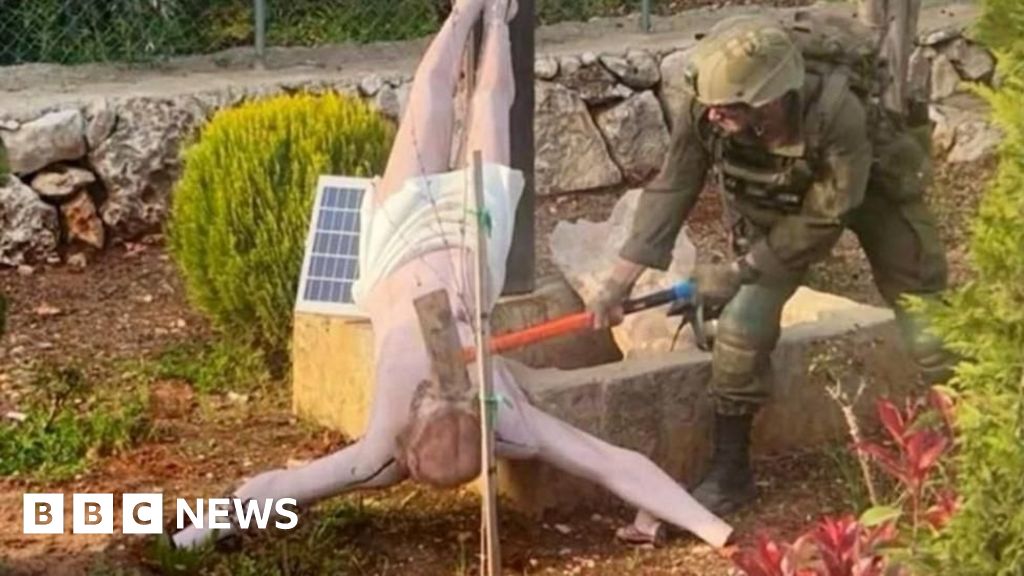
Israeli troops face scrutiny after damaging Jesus statue in Lebanon

In a decisive move that underscores the Israeli Defense Forces’ (IDF) strict stance against misconduct, Israel announced the temporary removal of two soldiers from combat duty, accompanied by 30 days of military detention. This disciplinary action signals a pivotal moment reflecting internal military discipline amid ongoing regional tensions. While seemingly routine, such measures carry significant implications for the broader geopolitical landscape of the Middle East and influence both domestic stability and international perceptions of Israel’s commitment to uphold military standards.

Experts and analysts have closely scrutinized this incident, viewing it within the context of escalating conflicts and Israel’s need to project strength and discipline. According to military officials, the decision was made in accordance with established protocols following infractions deemed detrimental to operational readiness and unit cohesion. Historians observing Israel’s military practices note that maintaining discipline in such a volatile environment is essential for national security. Yet, the gesture also serves as a stark reminder that even in a force highly trained for combat, human conduct remains under constant scrutiny—especially as the region’s political waves ripple with uncertainty.

On the international scale, this disciplinary act resonates far beyond Israel’s borders.

  • The United Nations, often criticized for its perceived inability to influence lasting peace in the Middle East, continues to watch Israel’s internal military affairs with interest, understanding that discipline within the IDF impacts regional stability.
  • Neighboring countries such as Lebanon and Syria, routinely volatile zones themselves, interpret such actions as indicative of Israel’s unwavering discipline and readiness, affecting their regional strategies and military postures.

Meanwhile, Washington and other western allies advise caution, emphasizing that internal military discipline is a crucial component in a complex regional security puzzle. International security organizations warn that any perceived weakening of Israeli military standards can embolden groups hostile to Israel, potentially escalating unforeseen conflicts.

In the broader strategic calculus, these internal measures reflect a determination by Israel to project strength in a region rife with uncertainty. As global analysts and historians observe, such disciplinary actions are more than internal affairs; they are emblematic of Israel’s effort to reinforce its deterrence posture. This is especially critical as diplomatic efforts, peace negotiations, and regional alliances continue to shift, highlighting how delicate the balance of power remains in this nation’s ongoing saga. With each disciplinary decision, Israel underscores that it is prepared to uphold its sovereignty through discipline, resilience, and unwavering commitment to its security. Yet as history unfolds in real-time, the question persists: will such internal measures suffice to deter or merely delay the tempest brewing beyond its borders? The answer remains veiled in the shadows of an uncertain future, where the weight of history presses heavily upon the present, and the fate of the Middle East continues to hang in the balance.
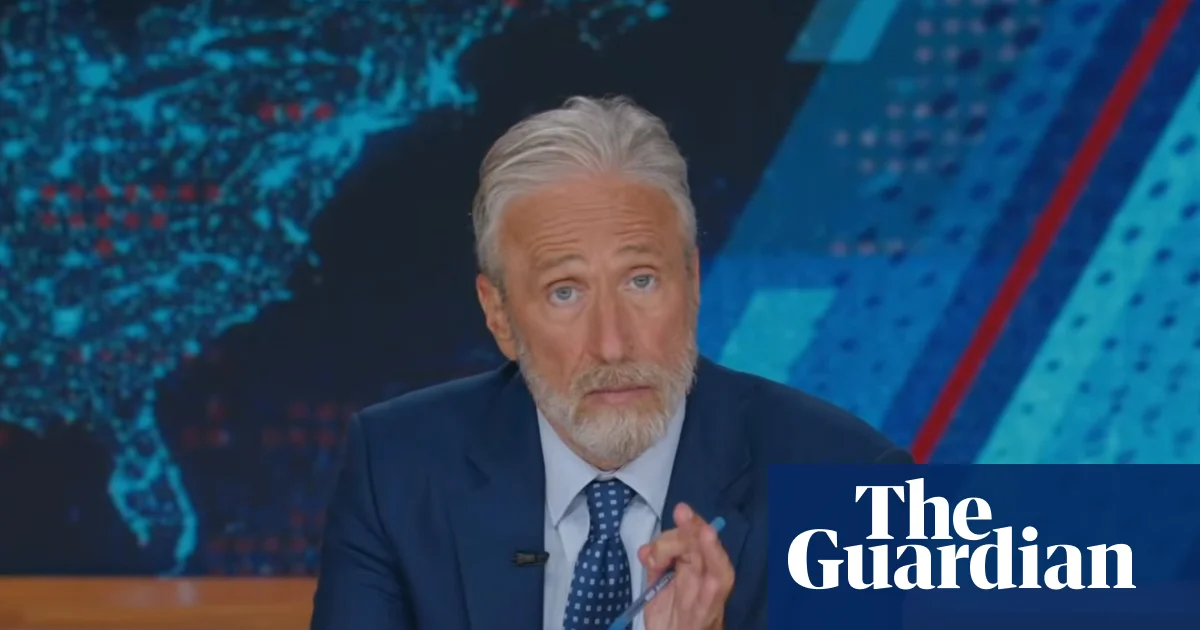
Jon Stewart confronts Trump’s denial of Jesus photo: “Do you even care about lying to us anymore?” | Late-night TV roundup

In an era where the fabric of society appears increasingly frayed by the spectacle of political theater and celebrity culture, the importance of culture as the foundation of identity remains paramount. It is not merely a matter of aesthetic or tradition but the very soul of a community’s collective memory and future prophecy. Philosopher Ortega y Gasset reminds us that a society’s vitality hinges on its ability to sustain a sense of shared purpose rooted in its cultural expressions. Today, this is under threat from the cacophony of superficial narratives, where even spiritual figures like Pope Leo XIV are dragged into the mud of social media disputes, revealing how the political and cultural elite often forget their roles as custodians of moral and spiritual continuity.

This cultural tumult echoes the historical shifts described by Alexis de Tocqueville, who warned of the perils of individualism unchecked by traditions that bind communities. In the humorous yet pointed commentary of Jon Stewart, the clash between President Donald Trump and the papacy becomes a microcosm of this larger upheaval. Stewart’s satire underscores a society where the sacred and the profane intertwine—a culture that increasingly confuses public spectacle with moral substance. The spectacle culminates in Trump’s bizarre AI-generated image portraying him as a messianic healer, a grotesque distortion of symbolic language that reveals how modern culture can degenerate into parody at the expense of higher ideals. Stewart’s critique is not merely comedic but a lament for a society that loses sight of its spiritual roots, allowing ego and spectacle to supplant genuine leadership grounded in tradition.

Meanwhile, Stephen Colbert and Jimmy Kimmel emphasize the gravity of diplomatic failures and the absurdity of their political actors, highlighting, through satire, the erosion of societal consensus and respect. Colbert’s witty remarks about the collapse of Iran-U.S. talks and Trump’s reckless naval escalation showcase how modern leadership often conflates bravado with strategy, stripping away the philosophical reflection that once informed statecraft. Kimmel’s observation of Trump’s deletion of the Jesus image, claiming it was intended as a healer, exposes a troubling penchant for public deception—a cultural sickness where truth is malleable and the sacred reduced to spectacle. These moments serve as a stark reminder that the culture of honesty, reverence, and moral clarity must be vigilantly preserved if society is to remain resilient against the tide of nihilism and relativism.

As T.S. Eliot famously reflected, “The past is never dead; it’s not even past.” Our cultural memory, imbued with tradition and shared stories, functions as both inheritance and prophecy, guiding future generations. The current battle is as much about safeguarding these spiritual and cultural symbols as it is about politics or diplomacy. We stand at a crossroads where the soul of society can either be reclaimed through a reverence for its moral and spiritual foundations or succumb to the spectacle of superficiality. Ultimately, culture—its memory and prophecy—remains the vital force that sustains humanity’s highest aspirations, reminding us that from the depths of our shared history arises the hope for a nobler future, rooted in the enduring power of tradition, truth, and purpose.

Trump removes controversial AI Jesus image after uproar

In a dramatic display of the volatile intersection between U.S. domestic politics and international religious diplomacy, recent events have underscored the profound geopolitical impact of leadership decisions and rhetorical battles. Former President Donald Trump ignited a firestorm after a provocative social media post where he depicted himself as a Jesus-like figure, sparking outrage across faith communities and political spheres worldwide. While Trump quickly deleted the image, the damage was done — exposing discord within core conservative allies and prompting international condemnation. The incident exemplifies how personal acts by political figures can ripple outward, affecting not only national cohesion but also influencing global perceptions of America’s moral and political authority.

  • Trump’s post, which portrayed him as a healing, messianic figure, was defended by some as satire, but critics labeled it blasphemous and an affront to religious sensibilities.
  • Public figures from Fox News commentators to Italian politicians condemned the imagery, emphasizing the importance of respecting religious figures in a time of societal revival.
  • Simultaneously, Trump’s verbal attacks on Pope Leo XIV fueled a diplomatic rift, with the former president calling the Pope “weak on crime” and accusing him of pandering to “the radical left,” further complicating U.S.-Vatican relations.

This clash reflects a broader shift in global geopolitics where the juxtaposition of faith, nationalism, and sovereignty is more pronounced than ever. The Vatican, under Pope Leo XIV, has voiced concerns over America’s foreign policy, criticizing what it perceives as “delusions of omnipotence” driving U.S. actions—particularly regarding the ongoing tensions with Iran and the Middle East chaos. These comments, while not directly targeting Trump, have become a diplomatic backdrop to escalating tensions and ideological battles within the international community. Analysts warn that such open disagreements could weaken multi-lateral cooperation on global crises, undermining efforts to foster peace and stability in an increasingly unpredictable world.

Historian and geopolitical analysts emphasize that these incidents are not isolated, but part of a larger narrative where the moral authority of nation-states is being challenged by both political rhetoric and social media’s aggressive culture of controversy. With international organizations like the United Nations urging restraint and diplomacy, well-respected voices remind that leadership among nations must transcend petty disputes and focus on shared human values — or risk plunging the world further into chaos. If history teaches anything, it is that the unchecked expression of nationalistic fervor and religious provocation can be a spark for conflict, not resolution, transforming personal ego into the tinder for global instability.

Ultimately, these fresh fissures—born from political brinkmanship and provocative narratives—serve as a stark warning. As the world witnesses a historic moment where faith, power, and morality collide on the international stage, the future remains shrouded in uncertainty. The course of history, once like a steady river, now seems poised to surge in unpredictable directions, leaving the global community to grapple with the consequences of decisions that threaten peace and undermine the moral fabric of societies. The weight of this unfolding saga reminds us that, in a world on the brink, the line between foresight and folly is razor-thin, and history’s verdict is yet to be written.

Social Media Auto Publish Powered By : XYZScripts.com



