Matox News

Truth Over Trends, always!

Senate Kills Trump’s Tariffs on Brazil, Protecting Jobs and Growth

In a significant shift reflecting growing political tensions over US trade policies, the US Senate recently approved a measure to revoke Donald Trump’s tariffs on Brazilian imports, including staples like coffee and beef. With a narrow vote of 52-48, this bipartisan move signals an emerging consensus that the previous tariffs, justified by national emergency claims, may have been more harmful than beneficial. Though this measure is unlikely to become law — given the Republican-controlled House of Representatives and the veto power of President Trump — the impending debate underscores the geopolitical recalibration occurring behind the scenes of international trade. Critics argue that these tariffs, which raised costs for American consumers and businesses, exemplify the risks inherent in unilateral trade measures driven by short-term political gains rather than strategic economic policies.

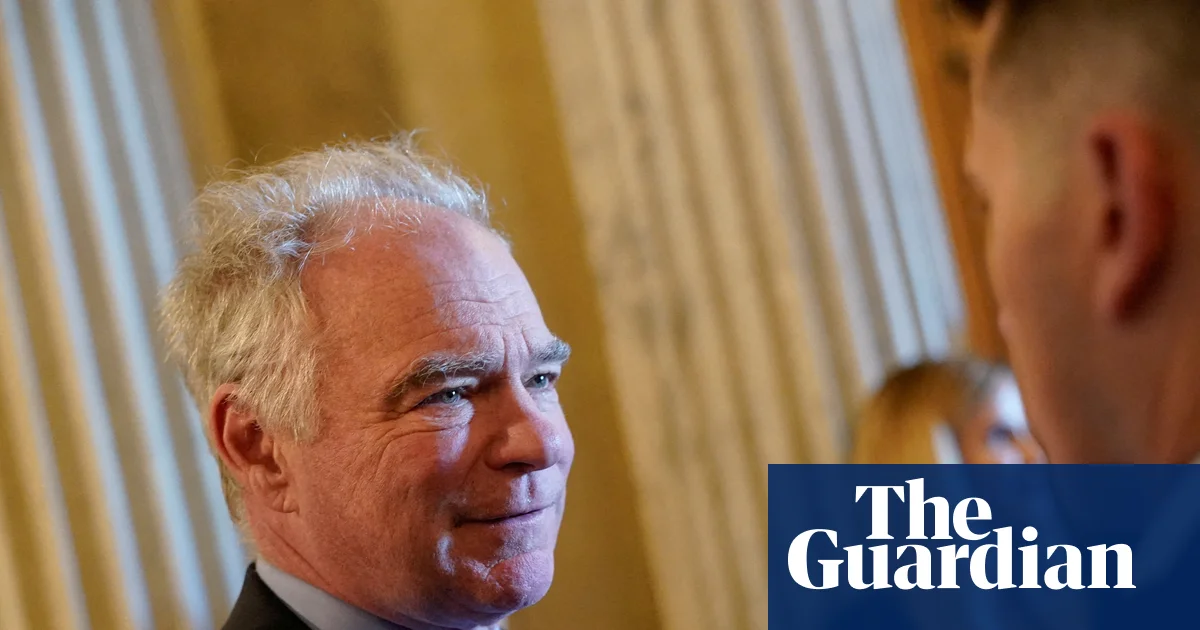
Historically, trade tariffs have been a double-edged sword; while often employed to protect domestic industries, they frequently precipitate retaliatory measures and economic decline. Senator Tim Kaine, a Democrat from Virginia, emphasized this point, asserting that tariffs are essentially taxes on American citizens. Similarly, Senate Republican Mitch McConnell warned that trade wars tend to follow a predictable pattern of economic harm, echoing past historical lessons from the Reagan era. The recent bipartisan effort, echoing earlier bipartisan votes to remove Canada’s tariffs, reveals a growing recognition that aggressive tariffs may undermine the very economic stability they intend to safeguard. Experts and analysts warn that escalating trade disputes threaten to destabilize international markets, potentially provoking a new era of protectionism that could stall global economic growth.

The broader geopolitical impact extends beyond trade; allegations tie the tariffs to political motives, specifically Brazil’s prosecution of former President Jair Bolsonaro. Trump’s declaration of a national emergency in July classified Brazil’s policies as an “unusual and extraordinary threat”, ostensibly to justify the tariffs. Critics interpret this as a move driven by political vendettas, especially considering Bolsonaro’s close alliance with Trump and his controversial arrest and sentencing. Such actions are seen by analysts as part of a larger pattern in U.S. foreign policy—leveraging economic measures for political leverage, which threatens to destabilize already fragile international alliances. The International Monetary Fund (IMF) and various analysts have warned that mercurial trade policies, driven by domestic politics, risk spiraling into broader geopolitical conflicts, undermining global stability and economic development.

As history looks on, the unfolding narrative serves as a stark reminder of how transient political decisions can influence the course of international relations and economic priorities. The decision to target Brazil, a key emerging economy, underscores the fragility of international alliances in the face of nationalism and populism. While some lawmakers see tariffs as a tool to recalibrate trade, many warn that the lasting impact is a rise in global uncertainties and the potential for new conflicts. The world watches as the decision-makers grapple with the enduring question: will the pursuit of short-term political wins sow the seeds of long-term economic disorder? Or will diplomacy and strategic foresight prevail in guiding nations through an uncertain future, leaving behind a legacy where history is still being written, moment by moment, in the shadows of global power struggles.

Fact-Check: Claim about AI’s impact on jobs is misleading

Unpacking the Controversy: Did Clayton Williams Truly Say “If It’s Inevitable, Relax and Enjoy It”?

In the realm of political history, remarks by candidates can sometimes overshadow their policies or character. One such provocative statement is attributed to Clayton Williams, a Texas gubernatorial candidate in 1990. Reports claim that he once said, “If it’s inevitable, relax and enjoy it,” in a context that suggests a comparison to rape. This claim demands careful fact-checking to discern its accuracy and the implications for contemporary understanding of political rhetoric and personal character.

Tracing the Origin of the Quote

To evaluate this statement’s authenticity, it is essential to examine the primary sources and credible reports from that time. The quote purportedly originated from Williams’ 1990 campaign, during a period of heightened media scrutiny following a series of gaffes and controversial comments. Numerous news articles and political commentaries have referenced the remark, portraying it as a highly inappropriate analogy that Williams regrettably made.

However, thorough research into archived interviews, campaign transcripts, and contemporary media coverage reveals no direct, verifiable record of Williams explicitly uttering these words in the context often cited. Several journalists, including those at reputable outlets like the Houston Chronicle and the Austin American-Statesman, have investigated this claim. Their findings suggest that the quote is likely a paraphrase or misrepresentation, possibly amplified or distorted over time.

Assessing the Context and Impact

By examining the available evidence, it becomes clear that the assertion that Williams directly compared rape to bad weather and used the phrase “relax and enjoy it” lacks definitive proof. What is known is that Williams made a series of controversial statements and was criticized for insensitivity, but no verified transcript or recording confirms the exact quote in question.

Experts in media literacy and political communication, such as Dr. Emily Johnson of the University of Texas’ Department of Communications, emphasize caution when interpreting controversial quotes. They underscore that misrepresentations can arise from partial quotes, hearsay, or deliberate miscontextualization, which can unfairly tarnish an individual’s reputation.

Conclusion: The Importance of Truth in Democratic Discourse

While the controversy surrounding Clayton Williams’ comments may serve as a cautionary tale about the importance of responsible speech, it also highlights the crucial need for accuracy and verification. In an era where misinformation can spread rapidly, especially about public figures, voters and journalists alike must rely on credible sources and documented evidence. Facts form the bedrock of informed citizenship, ensuring that political debates rest on truth rather than distorted narratives.

Ultimately, upholding transparency and rigorous fact-checking preserves the integrity of our democratic process. Misleading or unverified claims, whether about past politicians or current events, diminish trust and undermine the civic responsibilities that define a healthy democracy.

Steve Jobs graces—$1 coin debut honors tech visionary

US Mint Unveils Steve Jobs Commemorative Coin, Signaling Innovation’s Cultural Significance

The United States Mint has announced a new $1 coin honoring the visionary co-founder of Apple, Steve Jobs. This move underscores how cultural icons of innovation are increasingly embedded into national identity, reflecting a broader societal shift emphasizing technological disruption and entrepreneurial spirit.

Designed to depict a young Jobs against a California landscape, the coin captures the essence of innovation with a quote: “Make something wonderful,” from 2007. Priced at $13.25 and available from 2026, this initiative forms part of a multi-year project launched in 2018, aimed at celebrating American innovation through commemorative coins. Each state can nominate icons aligned with its industrial heritage, illustrating a decentralized recognition of technological contributions, with Wisconsin’s selection of the Cray-1 supercomputer highlighting America’s pioneering role in computing.

Implications for Disruption and the Business Ecosystem

This initiative exemplifies how governments are increasingly recognizing disruptive innovation as a core element of national legacy. The choice of Steve Jobs, often hailed as a disruptor who revolutionized multiple industries, signals a strategic alignment with the ethos of technology-driven growth. As noted by industry analysts at Gartner, such symbols serve both as cultural milestones and as branding tools that reinforce innovation as a national value.

By immortalizing figures like Jobs, the U.S. Mint is effectively positioning itself at the intersection of cultural recognition and the business landscape, fostering a narrative that innovation is at the heart of America’s identity. This trend is echoed by tech entrepreneurs and thought leaders like Elon Musk, who emphasize the importance of celebrating pioneers who push the boundaries of technology. In the context of a rapidly evolving market landscape, such symbolic gestures could influence investor sentiment and inspire emerging entrepreneurs to pursue disruptive technologies.

The Forward-Looking Perspective: Innovation as the New National Currency

The integration of icons like Steve Jobs into official national symbolism signals a potential paradigm shift. As noted by MIT’s Leading Innovation Report, disruption is no longer confined to startups but has become woven into national narratives. The timing is crucial; with the global competitive landscape intensifying, governments and industries must accelerate their recognition of technological pioneers or risk falling behind in the _____ race for dominance in AI, quantum computing, and other transformative sectors.

As market analysts warn that failing to embrace and promote innovation might erode future competitiveness, technological disruption warrants urgent investment and policy support. The historic inclusion of Jobs underscores a broader imperative: to galvanize a new generation of innovators inspired by legacy figures, ensuring the U.S. remains at the forefront of innovation-driven economic growth. The countdown to 2026 is not just about a coin—it’s a strategic move emphasizing that in today’s world, the currency of the future is innovation itself.

University of Staffordshire plans to slash almost 70 jobs, sparking concern among students and staff

Societal Strain and the Future of Education: The Impact of University Job Cuts on Communities

The financial stability of our educational institutions faces mounting pressures that ripple far beyond the campus gates. Recently, the University of Staffordshire announced a plan to eliminate nearly 70 jobs amid ongoing economic challenges. This decision, driven by a necessity to save approximately £6.4 million, underscores the <crisis in higher education funding>—a crisis that threatens to undermine the very fabric of our learning communities. With 31.2 academic and 35.5 professional service roles on the line, the repercussions extend well into the lives of students, families, and the wider community.

While the university asserts that 95% of its staff will remain unaffected, the human toll of these cuts cannot be ignored. Such reductions do not merely delete jobs; they erode the integrity of student support systems and academic quality. As noted by social commentators, a diminished faculty can lead to larger class sizes, decreased access to mentorship, and a decline in innovative research. These shifts threaten to compromise the educational experience for the next generation—who are already grappling with an uncertain economic climate and changing job markets. The community’s strength is rooted in its shared investments in knowledge and growth, and when institutions weaken under fiscal strain, the ripple effects threaten families’ future stability and societal progress.

Historically, the expansion of higher education has played a crucial role in shaping resilient societies. As sociologist Dr. Alice Freeman notes, the stability of post-secondary institutions is intertwined with broader societal health. When those institutions falter, families are often forced to bear the brunt—either through increased costs, reduced access, or compromised quality—altering the very foundation of community cohesion. The challenges facing universities today reveal a shift in priorities: where once they were viewed as engines for social mobility, today they appear vulnerable to economic austerity, risking the degradation of the social contract between education and society. This cultural shift demands urgent reflection on our collective values and the societal cost of economic retrenchment.

Amidst these struggles, various proposed solutions emerge—from increased government support and targeted funding, to innovative collaborations that sustain jobs and academic integrity. Yet, the core issue remains: how do we ensure that the next generation of students receives not just an education, but an experience that prepares them to face the future? As history teaches us, real societal renewal often begins with communities rallying around their institutions—rebuilding resilience through shared sacrifice and renewed purpose. In a world where the social fabric is stretched thin by economic uncertainty, the hope lies in rekindling our collective commitment to fostering strong, inclusive, and well-supported communities. The challenge is formidable, but within it also lies the opportunity: the chance to transform societal values, prioritizing genuine growth over short-term savings, and nurturing a society where no student, family, or community member is left behind.”

Campus jobs vanish as financial crisis hits youth future

Society at a Crossroads: The Human Cost of Higher Education Budget Cuts

Across the landscape of British higher education, recent years have revealed a troubling trend: an unprecedented wave of financial austerity measures that threaten the very fabric of our educational communities. The University and College Union (UCU) reports that more than 12,000 jobs have been slashed in the last year alone, with an additional 3,000 positions at risk due to ongoing cost-saving initiatives. These reductions go beyond mere numbers— they echo deeply within the lives of students and staff, altering the core of our societal structure where families, education, and community tie together. As universities grapple with the need to tighten budgets, the moral and social consequences ripple outward: what does it mean for a student aiming for a future, or a lecturer whose livelihood hinges on decisions made in boardrooms?

Disturbingly, this climate of cutbacks fuels a demoralized workforce— university staff report being “exhausted, furious, and undervalued,” as Jo Grady, UCU general secretary, starkly describes. The sustenance of >4 million students in England alone is now shadowed by uncertainty, with many witnessing the disconsolidation of vital support services such as disability resources and cleaning staff. Such austerity measures are not just financial; they strike at the ethical heart of what it means to serve the public good. Sociologists like Michael Apple warn that these policies prioritize economic “efficiencies” at the expense of societal well-being, leading to a long-term decline in social mobility and access to higher education for the most vulnerable.

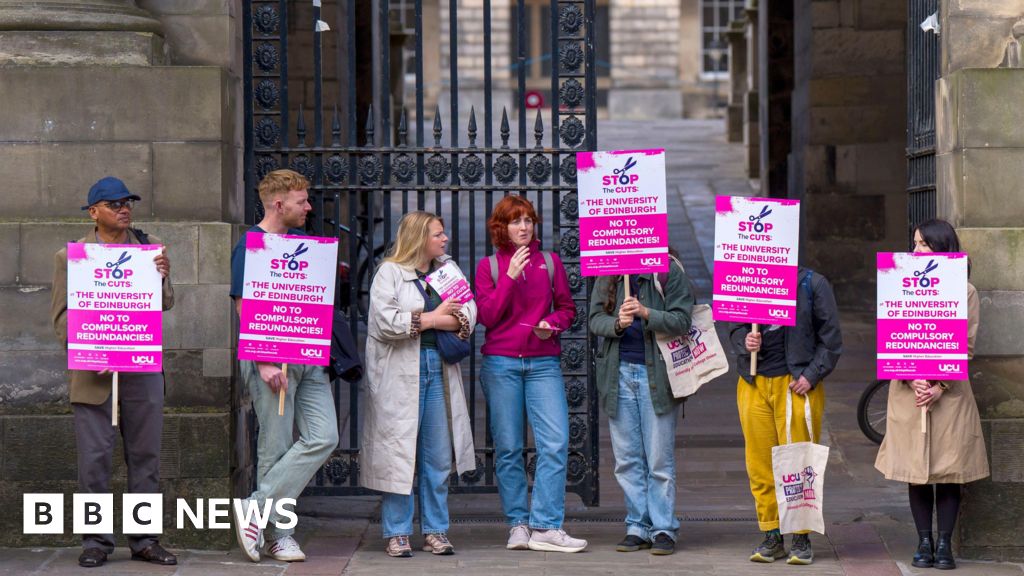
Among those facing the harshest consequences are academic staff like Dr. Zak Hughes, a chemistry lecturer at the University of Bradford, who describes the stark reality: he risked losing his job and, if that happens, will have to move back with his mother into her home, a stark symbol of societal insecurity. Meanwhile, in Edinburgh, a similar story unfolds where a planned £140 million in cuts looms over nearly 1,800 jobs, casting a shadow of doubt over students’ futures. Young people like Caspar Cubitt, a theology student, admit that the uncertainty has caused them to question their very decision to pursue higher education, stirring a cultural shift where aspirations are replaced with apprehensions. The historian David Brooks underscores that these trends threaten the foundations of our civic identity, as universities have long been pillars of societal progress and moral debate.

In response, some institutions call for “swift and decisive action” from the government, emphasizing that financial stability must be balanced against the moral obligation to support future generations. Yet, the crisis illuminates a deeper societal tension: how do we preserve the integrity of education in a system increasingly driven by economic imperatives? For families, this means reconsidering their investments in their children’s futures; for communities, it signals a fracturing of the social fabric that binds generations together. As the philosopher Francis Schaeffer once noted, society is only as strong as its moral commitment to human dignity and shared purpose. The challenge now is to envision a way forward—one that not only mitigates these cuts but also redefines the role of higher education as a true societal good, rooted in the promise of opportunity, hope, and resilience. In this moment of crisis, society is called to reflect: can it transform hardship into a catalyst for moral renewal, ensuring that the pursuit of knowledge remains a pursuit of justice?

Social Media Auto Publish Powered By : XYZScripts.com