
Matox News

Truth Over Trends, always!

Joe Eszterhas Reflects on Reckless Past and the Unconventional Paths to Creative Revival — A Bold Take on Woke Culture and the Future of Basic Instinct

In an era where Hollywood often leans toward uniformity and sanitization, the figure of Joe Eszterhas emerges as a testament to the enduring resilience of authentic storytelling—a reminder that culture is neither mere entertainment nor superficial spectacle but a vital reflection of identity, tradition, and societal values. Eszterhas’s journey from a restless immigrant boy in war-ravaged Hungary to the legendary screenwriter of blockbuster classics reveals that culture forms the core of a society’s collective memory. It embodies both the remembrance of battles fought and a prophecy of what humanity aspires to, even amid chaos and moral ambiguity.

His work, such as Flashdance, Jagged Edge, and Basic Instinct, exemplifies this fierce, unfiltered spirit. They are not just cinematic indulgences but cultural milestones that challenge the sanitized narratives often preferred by modern Hollywood. In the words of Ortega y Gasset, the true definition of culture is “the horizon of human consciousness”; Eszterhas’s stories push that horizon outward, confronting uncomfortable truths and provoking debate. Today’s culture war, with its political overtones and ideological battles, risks reducing art to propaganda. Yet, when we look at Eszterhas’s philosophy, we recognize a fundamental lesson: culture thrives on controversy, conflict, and the courage to confront. His desire to reboot Basic Instinct as “anti-woke” underscores the persistent hunger for authentic, unvarnished narratives that dare to offend—reminding us that true engagement comes from disagreement, from *living* differences rather than suppressing them.

The cultural landscape of the past echoes in our present; as Tocqueville observed, democracy’s vitality depends on a populace that can debate freely, unafraid of offending or being offended. Eszterhas’s perspective—his willingness to court controversy—embodies this democratic ideal. His own life, filled with struggles against addiction and exile, exemplifies the truth that culture is a crucible where personal memory becomes societal prophecy. His immigrant experience from war-torn Hungary, his reporting on historical tragedies, and his later Hollywood battles are threads tightly woven into the fabric of American cultural identity. As Chesterton might argue, the culture is a kind of living tradition—an ongoing conversation through time that refuses stagnation and seeks renewal in every generation’s voice.

In the end, the story of Eszterhas reminds us that culture is both a mirror and a map—a record of past wishes, fears, and conflicts, and a prophecy guiding us toward what we might become. It echoes the timeless assertion that humanity is not just the sum of its moments but a continuous creation—an infinite scroll of memory and hope. As T.S. Eliot eloquently observed, “We shall not cease from exploration, and the end of all our exploring will be to arrive where we started and know the place for the first time.” In this cycle of remembrance and prophecy, culture remains the heartbeat of a civilization, a testament to our enduring human craving for meaning amid chaos, and a beacon urging us toward the future we have yet to conceive.
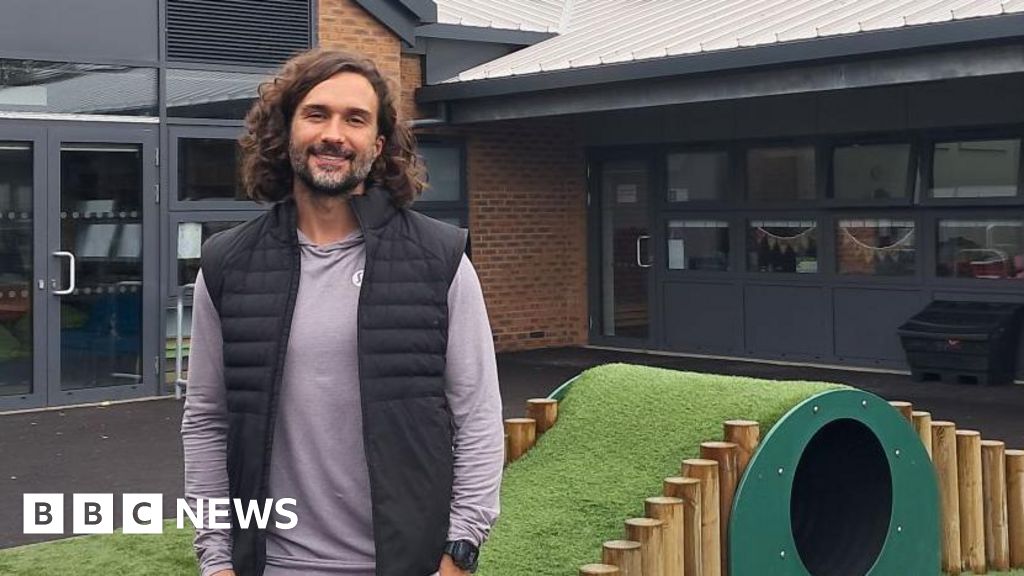
Joe Wicks comes back to rally community at fire-damaged school reopening

Society faces persistent challenges when it comes to supporting families, education, and community resilience. Recent occurrences, such as the devastating fire at Yatton Infants School in Somerset, illustrate not just the physical destruction of a building, but also the profound social and emotional upheaval experienced by those impacted. In May 2023, half of the school’s roof was consumed by flames, leaving approximately 200 young pupils and dedicated staff devastated, with their belongings and hopes reduced to ashes. The aftermath of such an event exposes a society under strain, highlighting gaps in safety, mental health support, and community preparedness that sociologists argue must be addressed proactively.

For the families and communities involved, the repercussions extend far beyond the loss of bricks and mortar. The emotional trauma of witnessing a school—an institution symbolizing safety, growth, and future—burn to the ground can have lasting impacts on children’s sense of security and well-being. The deputy headteacher reflected on the scene of shock and sadness that initially engulfed the school, emphasizing how vital community cohesion becomes in the wake of tragedy. As historian Dr. Ian McDonald notes, “The social fabric of a community is often tested during crises, revealing both its fractures and its capacity for healing.” The rebuilding process, therefore, becomes not just about new classrooms but about restoring hope and confidence in society’s collective commitment to its youngest members.

  • Southwest England’s local authorities and community groups rallied to hasten the rebuilding effort, recognizing that education continuity is essential for family stability and childhood development.
  • Yet, the displacement caused by the fire—forcing children into different schools—highlighted how social issues such as educational disruption can negatively influence learning outcomes and peer relationships.
  • Addressing mental health needs in young survivors became a priority, emphasizing the need for comprehensive support services that foster resilience in children and help them navigate the emotional aftermath.

While the refurbished Yatton Infants School reopens as a symbol of community perseverance, the social issues it exposes require ongoing vigilance and deliberate action. Sociologists like Daisy Reed argue that “The resilience of communities hinges on proactive policies that prioritize not only physical reconstruction but also social healing and inclusive educational environments.” The experience of children, who faced the upheaval and then the joy of returning to a rebuilt school, underscores the importance of fostering a social environment where children can feel safe, supported, and inspired to dream big once again. As this community begins the process of recovery, it leaves us pondering: in a society that often moves too swiftly, how do we ensure that no child’s future is left smoldering in the ashes of tragedy? The hope lies in recognizing that societal strength is measured not only by physical infrastructure but by the capacity to nurture resilience, unity, and hope within every family, every school, and every community.”

Social Media Auto Publish Powered By : XYZScripts.com



