Matox News

Truth Over Trends, always!

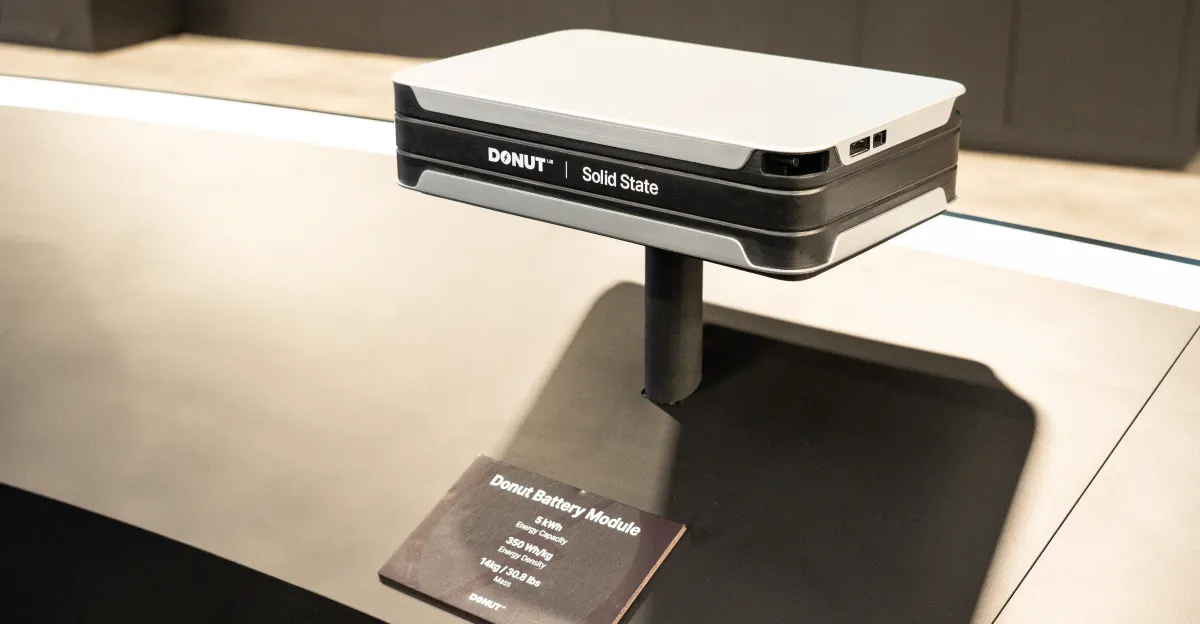
Donut Lab’s new battery tech hits a snag after damage—hope for durability remains in question

Disruption in Energy Storage: Donut Lab Demonstrates Promising Safety in Solid-State Battery Testing

In a bold stride towards disrupting the electric vehicle (EV) and energy storage sectors, Donut Lab has released initial results from rigorous testing of its innovative solid-state battery. The tests, conducted by VTT Technical Research Centre in Finland—renowned for their extensive battery research—mark a crucial milestone in the pursuit of safer, more durable energy solutions. While traditional lithium-ion batteries have long grappled with safety concerns and limited cycle life, Donut’s latest experiments suggest that its proprietary technology could herald a new era of resilience and longevity.

During targeted high-stress simulations, the battery was subjected to conditions designed to mimic extreme real-world scenarios, including high temperatures and physical damage. Notably, the pouch encapsulating the battery lost its vacuum seal during the heat tests, a condition known to induce thermal runaway—an event that can cause fires or explosions in conventional lithium-ion cells. While the damage led to a significant capacity degradation—down from 24.7 Ah to approximately 11.2 Ah—public statements from Donut emphasize that the battery “fails gracefully,” avoiding catastrophic failures such as fire or thermal runaway. This safety profile starkly contrasts with the risks associated with traditional lithium-ion batteries, which remain vulnerable under similar conditions.

Implications for Industry and Market Disruption

The results underscore the potential for solid-state batteries like those developed by Donut to catalyze a fundamental shift in markets spanning EVs, portable devices, and renewable energy storage. Experts such as Gartner analysts highlight that solid-state technology’s disruption could dramatically lower safety concerns, reduce manufacturing costs, and extend product lifespans—addressing longstanding barriers that have hindered widespread adoption of battery-powered solutions. The company claims its batteries could endure up to 100,000 cycles—an astonishing figure translating to roughly 270 years—far surpassing the 1,000-2,000 cycles typical for current EV batteries.

  • Advantage: Significantly increased cycle life implies longer-lasting batteries, reducing waste and costs.
  • Innovation: Solid-state architecture inherently prevents liquid electrolyte failures, enhancing safety and performance.
  • Potential: Disrupts market dominance of traditional lithium-ion giants by providing safer, more durable solutions.

However, critical questions remain, especially regarding the long-term performance under repeated charge-discharge cycles, a test that remains unverified at this stage. The industry watches closely as Donut approaches this milestone, as iterative aging tests will determine whether this promising prototype can withstand real-world demands. As MIT researchers and tech analysts warn, the transition from promising lab results to commercial viability remains an arduous journey, often fraught with scaling and manufacturing hurdles. Nonetheless, the trajectory of Donut Lab’s innovation hints at a future where safer, longer-lasting batteries could redefine mobility and energy use worldwide.

The Road Ahead

As investment flows into next-generation energy storage, accelerated adoption of solid-state technology appears inevitable. Industry leaders such as Tesla and Apple are racing to develop their own versions, recognizing the game-changing potential of these batteries in creating more reliable and safer devices. The recent tests by Donut Lab serve as a stark reminder of the urgent need for technological disruption—stability, safety, and longevity are no longer optional but imperative in shaping the future energy landscape.

The next phase will be critical: validating long-term cycle durability and manufacturing scalability. If Donut’s claims hold true, the traditional battery paradigm will be irrevocably altered, ushering in an era dominated by innovation, disruption, and strategic advantage for those who lead the charge. The race to dominate this emerging market is on, and the future belongs to the agile, the daring, and the forward-thinking.
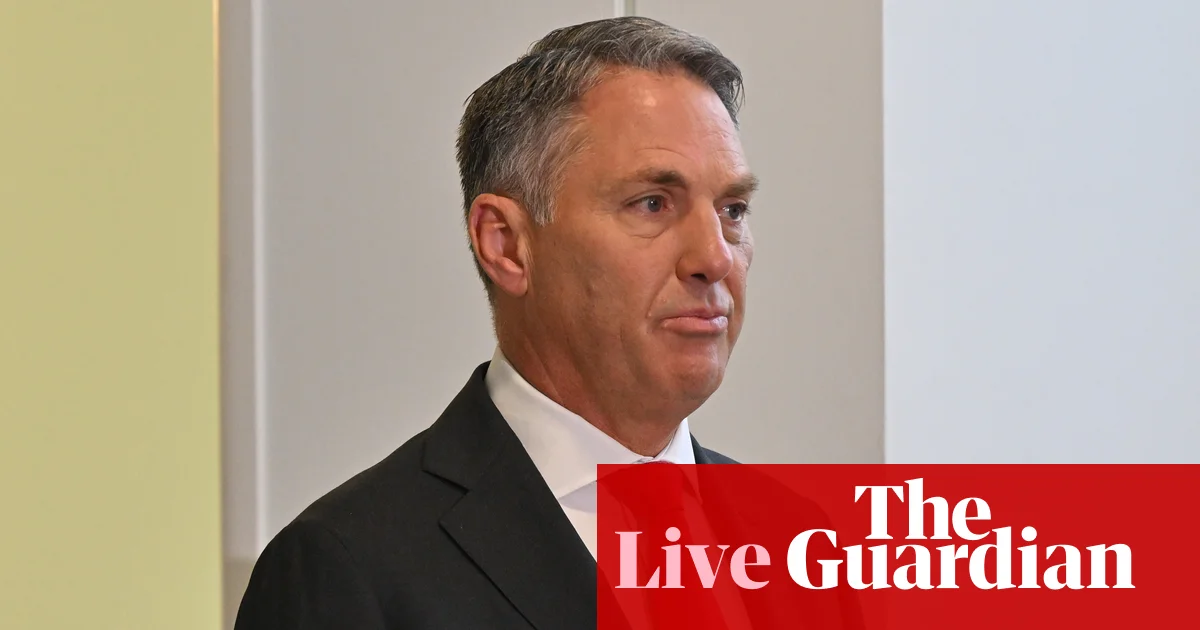
Politics LIVE: Marles Labs Down on Long Consular Waits for Aussies in Middle East, Promises Action on Contingency Plans | Australia News

Global Power Plays and Australia’s Strategic Dilemmas Amid Middle Eastern Turmoil

As the geopolitical landscape shifts rapidly, Australia finds itself caught in a web of regional conflicts and international diplomacy that could have lasting consequences. The recent escalation of violence in the Middle East, specifically the conflict ignited by US and Israeli airstrikes targeting Iran’s ballistic missile program, has thrust the region into a new era of instability. While countries like Canada and Australia denounce violence, they grapple with the reality of limited influence and the potential economic fallout stemming from these high-stakes tensions. The Australian government’s cautious approach, exemplified by minister Richard Marles’s guarded statements on military involvement, underscores a broader struggle to define Australia’s role on the global stage amidst rising superpower rivalries.

The conflict in Iran has invoked a complex mix of diplomatic sensitivity and strategic ambiguity. Australian Prime Minister Anthony Albanese has made clear that Australia is what he describes as a “long way” from the Middle East and thus not a direct participant. With no formal request from the United States for Australian military assistance, the government remains non-committal about intervening, emphasizing instead the importance of contingency planning and the safety of its citizens. International analysts observe that Australia’s stance is emblematic of a broader pattern seen among middle powers—avoiding direct confrontation while navigating an increasingly volatile geopolitical environment. The rising tension highlights the *qualitative change* in international norms surrounding regional conflicts—marking a new era where even distant powers must carefully calibrate their foreign policies.

Meanwhile, the international community watches with bated breath as Canada’s Mark Carney arrives in Australia for a rare parliamentary address, signaling the importance of middle-power diplomacy in this fractured geopolitical landscape. Carney’s discussions are set to touch on critical issues such as climate change, critical minerals, and collaborative defense strategies. His emphasis on the potential for middle powers to act as a unified bloc in addressing global security challenges aligns with recent calls by analysts for a reconfigured international order—one where the U.S. and China are no longer the sole arbiters of global stability. As Carney and Anthony Albanese explore avenues for enhanced cooperation, the message is clear: in an era of rising superpower tensions, regional alliances and shared interests hold the key to maintaining equilibrium.

Simultaneously, the Australian government is contending with controversial internal issues. Reports of memorials mourning Iran’s late Supreme Leader Ali Khamenei have sparked debate about the expression of political sentiments within Australia’s multicultural society. Prime Minister Albanese condemned such gatherings as “inappropriate,” reflecting a cautious stance amid growing tensions with Iran. Deputy Prime Minister Richard Marles explicitly refused to direct police action against mosques inviting mourners, emphasizing Australia’s respect for religious freedoms but also highlighting the delicate balance between liberty and national security. With domestic perspectives diverging sharply, policy-makers face the challenge of maintaining social cohesion during a period marked by international unrest and domestic controversy.

As the geopolitical chessboard becomes increasingly complex, the latest developments underscore a broader truth: the decisions taken today—whether in the corridors of Canberra, Westminster, or Davos—will shape the course of history. The persistent questions about how middle powers like Australia, Canada, and others will navigate this turbulent era evoke a sobering vision of a world teetering on the edge of a new Cold War or, worse, open conflict. With strategic calculations being made behind closed doors, the weight of history presses heavily, reminding us that the unfolding saga of the 21st century remains an unfinished story—we are all players and witnesses, standing at the crossroads of an uncertain future.

Social Media Auto Publish Powered By : XYZScripts.com



