Matox News

Truth Over Trends, always!

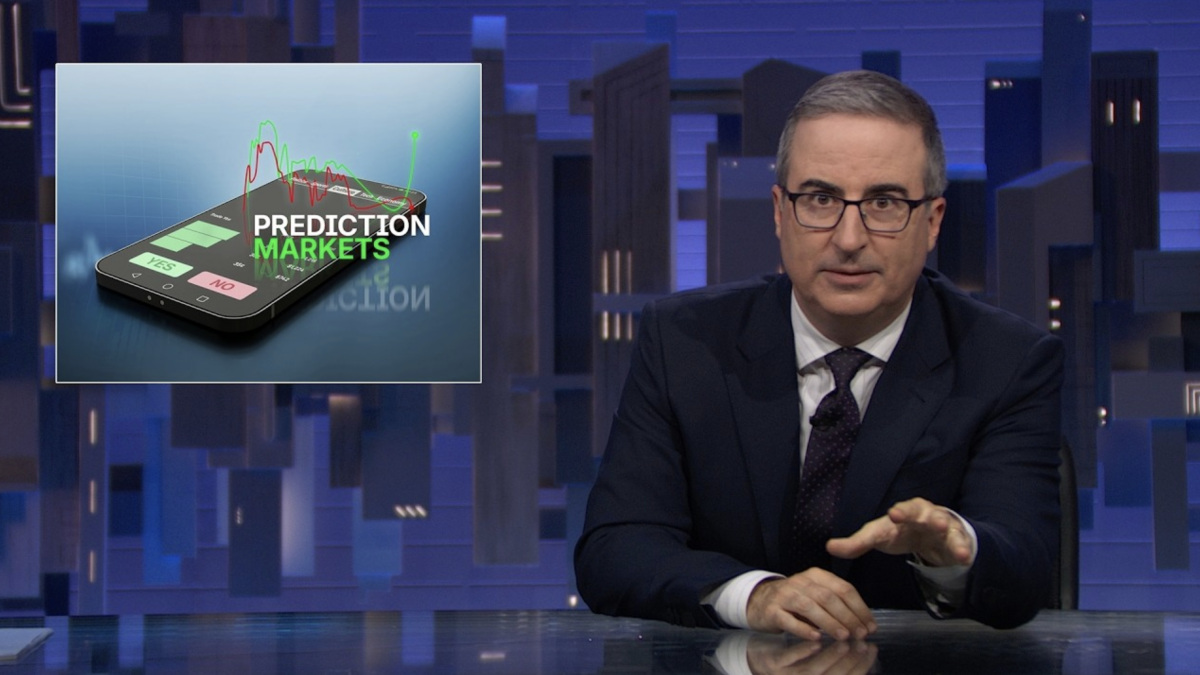
John Oliver explores the bold future of predictions markets — what’s next for your money and our society

Prediction Markets: The Rise of Betting on Future Events

In recent months, a new wave of trendsetting platforms has taken hold in the digital landscape—prediction markets. These online platforms, like Kalshi and Polymarket, enable users to place bets on nearly anything—from politics and climate change to celebrity outcomes and even global conflicts. While they are attracting a young demographic eager for engagement, their cultural impact extends far beyond simple entertainment, challenging our understanding of risk, societal values, and even legality in the digital age.

This phenomenon is prompting intense debate among sociologists, legal experts, and digital activists about the social relevance of such betting markets. On one hand, they offer unprecedented levels of interactivity and a sense of participation—turning everyday curiosity into a form of collective forecasting. Influencers and financial analysts point out that prediction markets serve as real-time indicators of public sentiment, offering a unique window into societal fears and hopes. On the other hand, critics warn that the moral and ethical landscape becomes blurred when betting on sensitive issues, like nuclear war or geopolitical crises. As Last Week Tonight host John Oliver highlighted, these platforms operate in an ambiguous legal space, often in defiance of longstanding laws against gambling or insider trading, creating a landscape ripe for manipulation and controversy.

Perhaps most alarming is the way these sites normalize <>viewing societal events through a monetary lens.

  • Increased participation from younger audiences who see these markets as a cool way to engage with the world
  • Media outlets inadvertently giving these platforms legitimacy by reporting odds like they are news, not speculative gambling
  • Growing concerns among watchdog groups about insider trading and their potential influence on actual policy or conflict escalation

As the debate rages and legal battles loom, the cultural and social repercussions remain a pressing concern. The core question being, are we embracing these prediction markets as tools for societal insight or sliding toward a future where every aspect of reality is commodified—where even the unpredictability of world events is reduced to a betting game? Sociologist Dr. Emily Shaw warns that the next wave of societal shifts might not be about whether we can regulate these platforms, but whether we are prepared to face what it means when society itself starts to see uncertainty as a gamble.

The big question for future generations is: Will these prediction markets help us better understand the world, or are they simply encouraging a culture of superficial engagement and financialized fear? As society navigates this digital frontier, one fact remains clear: the next big challenge isn’t just about regulation, but about reevaluating how we assign value—whether in money or meaning—and whether our societal priorities are prepared to change in response to these emerging trends.

Oil rises as Trump announces seizure of Iranian vessel—shaking up markets.

The recent attack on Iran by the United States and Israel on 28 February has ignited a volatile shift across global energy markets. Since this aggressive move, traders and analysts worldwide have noted unprecedented swings in oil prices, which threaten to destabilize economies dependent on stable energy supplies. The move signals a possible escalation of regional conflict with profound implications for global security and economic stability. In minutes, markets reacted with volatility, sending shockwaves through oil futures and prompting reevaluations of risk by investors and policymakers alike.

The attack, widely condemned as a significant escalation in tensions surrounding Iran’s controversial nuclear program, has prompted alarm among international observers. According to analysts from the International Energy Agency (IEA), this conflict could trigger supply disruptions in the Middle East—a region that accounts for a substantial share of global oil production. Historical patterns suggest that such conflict-driven disturbances tend to drive prices sharply upward, creating economic headwinds for nations across Europe, Asia, and North America. Experts warn that a prolonged military campaign or escalation could lead to an energy crisis that reverberates far beyond the Middle East, impacting everything from transportation costs to manufacturing output worldwide.

Beyond raw energy costs, the geopolitical impact extends into diplomatic territory. Many nations are compelled to reassess their alliances and strategic interests as regional stability hangs in the balance. Countries like Russia, China, and the European Union have started calling for restraint, though some are also hinting at their own strategic interests in the current chaos. Decisions made in the coming weeks could reshape energy dependencies and influence global power structures. The United Nations has urged de-escalation, but critics warn that the current trajectory risks transforming a regional conflict into a broader confrontation, especially if other powers are pulled more directly into the fray.

Historically, such moments of conflict have often illustrated how fragile the foundation of global peace and economic stability can be. As noted by several distinguished historians and geopolitical analysts, the current crisis echoes past instances where regional conflicts rapidly expanded, prompting intervention or escalation that reshaped the international order. The G7 nations and other major economic blocs are closely monitoring developments, aware that the fallout from this attack could influence the trajectory of international policymaking for years to come. This is a diplomatic test for the global community — a moment where choices carry enormous weight, determining whether the world trends toward cooperation or descends into chaos.

As the dust settles, the world watches with bated breath, the shadow of history looming large. The decisions made today—whether to pursue cautious diplomacy or unleash further military strikes—may set the course for future generations. The unfolding saga in the Middle East is not just a regional dispute; it is a defining chapter in the ongoing struggle for global stability, where every move echoes through the corridors of power and every headline marks a turning point in history’s relentless march.

White House staff barred from betting on prediction markets

In recent years, social media and betting platforms have experienced unprecedented growth, transforming from mere entertainment avenues into influential tools that shape public opinion and geopolitical discourse. With some users engaging in bets surrounding international events and conflicts, the boundaries between entertainment and political influence are increasingly blurred. These platforms not only reflect societal anxieties but also contribute to a new geopolitical landscape where information spreads rapidly and sentiment sways opinions at an unprecedented scale.

This surge in activity, particularly among youth demographics, serves as both a mirror and a catalyst for wider societal shifts. Analysts argue that the granular engagement of younger populations with global issues—whether through online betting, commentary, or social media—creates a vibrant but volatile space where perceptions are formed and manipulated. Such trends are scrutinized by international organizations and thinkers, warning that how nations and societies interact within these digital forums could have lasting effects on diplomatic stability and national security. The phenomenon also raises questions about responsibility and regulation, as governments across the globe grapple with controlling misinformation and safeguarding civic integrity in digital spaces.

Historically, the influence of emerging technologies on geopolitics has been profound—from the advent of radio and television broadcasting to the rise of the internet. Today, platforms that combine social interaction with betting on global events are emerging as a new frontier of influence, with tangible _impact on diplomacy, military strategy, and international relations_. As noted by international analysts, this convergence of entertainment, information, and wagering creates an arena where narratives can be shaped or distorted in real time, often aligning with geopolitical interests of powerful nations.

Most concerning is the potential for these digital spaces to escalate conflicts or influence electoral processes. Countries such as the United States, Russia, and China are increasingly aware of the strategic importance of controlling online narratives, as well as the flow of information that fuels civic unrest or geopolitical instability. As historians emphasize, moments of rapid technological adaptation can leave lasting scars or forge new alliances—both of which have monumental implications for global security. The decisive influence of digital platforms today is a stark reminder that history is not merely being made in the halls of power but in the interconnected maze of virtual spaces.

As the world stands at this digital crossroads, one thing remains clear: the decisions made—by governments, corporations, and everyday users—will determine the direction of future conflicts and alliances. The unfolding story is far from over, but one truth persists—history’s pen continues to inscribe our collective fate, and in this modern age, the lines between reality and perception are thinner than ever, leaving humanity to grapple with the profound consequences of every comment, bet, and shared story within the vast digital domain.

Anthropic Rises, but SpaceX Could Steal the Show in Private Markets

Market Shifts Signal Disruption: SpaceX Nears Historic IPO Amid AI Market Uncertainty

In the midst of a rapidly evolving technological landscape, SpaceX is positioning itself as a dominant force not only in aerospace but also in the broader financial markets. Recently, the private aerospace giant filed confidential paperwork for what could become one of the largest IPOs in history, potentially raising $50-$75 billion and valuing the company at over $1.75 trillion. This move sets a new benchmark for tech companies, illustrating how strategic valuation discipline and cautious funding rounds foster exponential growth and market stability. Industry analysts such as Gartner suggest that the timing of this IPO could redefine the stage for future tech offerings, forcing competitors and investors alike to adapt quickly or fall behind.

Meanwhile, the AI sector is witnessing a wave of disruption driven by companies like Anthropic and OpenAI. Despite the high-profile status of OpenAI, sources indicate that the secondary market’s excitement has shifted towards Anthropic, which remains largely untradeable due to the scarcity of available sellers. Much of this stems from the company’s growing reputation as a ‘hero’ standing up against big government and established players. With institutional investors eagerly seeking exposure, the dilemma remains: which AI model will emerge as the dominant force? As Anderson, president of Rainmaker Securities, highlights, the market’s momentum for Anthropic is surging, while OpenAI’s allure is waning, at least in secondary trading. This signals a potential shift in industry consensus, emphasizing innovation and strategic positioning in disruptive tech sectors.

In the arena of business strategy, SpaceX exemplifies disciplined growth, choosing to avoid the common pitfall of maximizing prices at every fundraise. Anderson credits SpaceX’s management for playing it conservatively—restraining greed and fostering investor confidence. This approach has yielded enormous gains for early backers, with valuations soaring from $12 billion in 2015 to over a trillion today. Such a trajectory underscores how prudent management, coupled with disciplined pricing, can unlock game-changing value in high-stakes markets. Elon Musk’s company is now poised to test investor appetite on a scale never before seen, with its IPO potentially rewriting the rules of market access and investor participation. The implications are clear: timing, discipline, and strategic foresight will determine the next era of technological dominance and investment success.

Looking forward, the coming months are likely to be pivotal as AI firms explore public offerings, with SpaceX blazing the trail. Anderson warns that the liquidity pool may become increasingly concentrated around SpaceX’s IPO, leaving less capital for AI companies that follow. The market’s capacity to absorb such immense capital will shape the future of innovation and disruption. As the tech giants prepare to go public, the strategic calculus will intensify: those who move first could seize the lion’s share of available liquidity, but at the risk of less favorable valuations or increased scrutiny. Maintaining agility and foresight in this fiercely competitive landscape will be essential for stakeholders looking to capitalize on the next wave of technological transformation.

In sum, the current market environment underscores a clear message: innovation and discipline are at the heart of future success. Companies that understand the importance of timing, strategic valuation, and maintaining investor confidence will define the playing field for years to come. As SpaceX’s IPO preparations unfold and AI firms await their turn, discerning investors and industry leaders must stay vigilant. The future belongs to those who can disrupt, innovate, and adapt—before markets move beyond reach and opportunities become fleeting relics of a competitive landscape in relentless flux.

Oil soars to record monthly surge amid Iran tensions shaking markets

The recent escalation in Middle East tensions, triggered by the eruption of war involving Iran, has rapidly transformed financial landscapes worldwide. The international benchmark, Brent crude oil, has surged by a staggering 51% in March—the largest monthly increase on record—shattering previous historical peaks associated with significant geopolitical upheavals like the 1990 invasion of Kuwait. Analysts highlight that this escalation has undercut the fragile stability of global energy markets, especially as Iran all but sealed off the Strait of Hormuz, through which roughly 20% of the world’s oil passes, risking a supply disruption that could resonate for years. The consequences are evident: crude prices soared to over $119.50 a barrel during the month, compounding fears of inflationary spirals and global economic slowdown.

The chaos in oil markets has spilled over into broader financial sectors, pressing Wall Street into correction territory, with the Dow Jones industrial average dropping more than 10% from its peak—an ominous sign for investors worldwide. Despite a coordinated release of 400 million barrels from emergency reserves, oil prices refused to stabilize, reflecting deep concerns about persistent supply disruptions. Notably, US crude prices jumped 48%, marking their most aggressive monthly climb since the pandemic’s onset in 2020. Meanwhile, European markets echoed this turbulence; London’s FTSE 100 saw an 8% decline, wiping out months of gains and signaling a loss of confidence in the stability of economic recovery post-pandemic. Financial experts, including analysts at City Index, note that markets are increasingly discounting geopolitical risks rather than reacting to mere rhetoric, marking a clear shift in investor sentiment from optimism to caution.

This volatile backdrop underscores the geopolitical impact of decisions made by global powers. President Donald Trump and other leaders attempted to manipulate markets with rhetoric—initially claiming progress in negotiations with Iran—yet the escalation continued unabated. His declaration of a 10-day extension for Iran to reopen the Strait of Hormuz was met with immediate market repercussions, signaling a loss of control in managing energy prices, which shrinks the space for diplomatic maneuvering. Similarly, governments across Europe find themselves hamstrung; European bonds, including Italy’s two-year debt, plunged to their worst monthly performance since 2018. Economists like Modupe Adegbembo from Jefferies warn that declining fiscal resilience—exacerbated by higher borrowing costs—limits the scope for large-scale intervention. This intricate web of sovereign debt and geopolitical instability demonstrates how decisions in one corner of the world can ripple globally, destabilizing economies and societies that are still grappling with pandemic recoveries.

As markets tremble and policymakers grapple with mounting pressure, a narrative of profound change emerges—an unfolding chapter in the ongoing contest for influence and stability. The strategic decisions of major powers today will echo through the corridors of history, shaping the inescapable contours of the 21st century. The shifting tides in oil, gold, and sovereign debt markets serve as stark reminders: in this new era of global uncertainty, the outcome is far from decided. The weight of history presses down, and the world watches, tense and unyielding, as the first pages of a new geopolitical saga are written in the flames of conflict and the shadows of economic volatility.

Prediction Markets and Nuclear War Risks: Will the UK Embrace This Bold New Gamble?

Society at a Crossroads: The Impact of Prediction Markets on Families, Education, and Communities

Amidst escalating global conflicts and societal upheavals, a new phenomenon has emerged which threatens the moral fabric of our communities — prediction markets. Originally rooted in traditional betting exchanges like Betfair, these platforms have evolved into arenas where individuals wager on everything from political outcomes to cultural phenomena, often expressed in percentages or binary yes/no formats. They encapsulate a *cultural shift* where the realm of chance infiltrates serious discussions on current affairs—sometimes in ways that deprive families and communities of their moral grounding. The recent controversy surrounding Polymarket, a prediction platform that invited wagers on nuclear apocalypse, exemplifies this disturbing trend. The backlash reflects society’s discomfort with dollar signs placed on events that impact millions, exposing a moral dilemma that echoes through the halls of families, schools, and local communities.

This paradigm not only distorts moral boundaries but also impacts families and education systems. The commodification of critical issues like war, propaganda, and societal crises threatens to desensitize youth, who are vulnerable to the seductive allure of quick gains and sensationalism. Sociologists like George Ritzer warn that the pervasive influence of late capitalism turns complex societal challenges into trivialized markets, eroding the capacity for genuine civic engagement. Moreover, the rise of prediction markets complicates the ethical landscape, with signs of manipulation and insider trading—highlighted by recent scandals involving bets placed shortly before significant military actions or political upheavals. Such behaviors cast a shadow over the societal trust essential for cohesive communities, making families increasingly wary of the moral consequences of engaging with these platforms.

The *demographic appeal* of prediction markets extends beyond gambling enthusiasts, targeting a *youthful demographic* attuned to the language of financial trading. As regulators in the UK and US scrutinize these markets, questions arise about their influence on *public morals* and societal values. In the US, legislative efforts to curb what many argue is disguised gambling illustrate a broader societal concern: the fragile line between entertainment and exploitation. The danger lies in fostering a culture where insider knowledge, manipulation, and unethical speculation threaten to undermine trust in democratic institutions, skew political discourse, and trivialize the sanctity of life and human suffering. For families and communities, this represents a moral wound, as society grapples with maintaining its ethical compass amidst the allure of instant gratification.

Despite these challenges, there remains a *glimmer of hope*—the capacity for societal reflection and ethical renewal. Education systems, community leaders, and policymakers have a role in safeguarding moral boundaries, emphasizing values of integrity, respect, and human dignity. As social commentators like Rodney Stark suggest, societal progress hinges on reaffirming our moral commitments and nurturing resilient communities that refuse to commodify human suffering. The future may yet be shaped by a collective effort to prioritize ethical considerations over fleeting gains, to stand against manipulation, and to protect families from the corrosive influence of profit-driven social practices. In this ongoing struggle, society’s greatest victory will be in choosing empathy over exploitation—an enduring reminder that behind every wager lies a human story, and that true societal strength rests in our shared commitment to uphold human dignity in all its forms.

OpenAI dismisses employee over insider trading in prediction markets

Insider Trading Scandal Signals Disruption and Urgency in Prediction Market Technology

In a move that underscores the increasing risks associated with technological innovation, OpenAI has terminated an employee amid investigations linking them to the misuse of confidential data on prediction market platforms like Polymarket. The incident reveals a critical vulnerability at the intersection of advanced AI development and blockchain-based trading, highlighting how emerging technologies are being exploited for personal gain. This breach not only disrupts trust within the industry but also raises broader questions about the integrity and regulation of these rapidly growing markets, which are poised to redefine the landscape of financial and technological disruption.

The surge in popularity of prediction markets over recent years exemplifies their capacity to impact industries ranging from sports and entertainment to the core of tech innovation. These platforms, allowing users to bet on the outcomes of future events—from corporate earnings to geopolitical decisions—represent a disruptive force capable of altering traditional information symmetry. Companies like Kalshi have taken steps to combat insider trading, reporting suspicious activities to regulatory agencies such as the Commodity Futures Trading Commission. Meanwhile, Polymarket remains largely silent on the burgeoning scandal, prompting concern among industry analysts about the potential for unchecked manipulation and abuse.

Experts warn that the underlying technology underpinning prediction markets is ripe for exploitation. Insider knowledge, when combined with pseudonymous blockchain transactions, creates a fertile ground for market manipulation and unfair profit-making. The recent findings, including clusters of suspicious activity surrounding OpenAI-themed events prior to major product launches, evoke memories of the infamous “Google whale,” a pseudonymous trader who profited over $1 million by trading on Google-related events. This pattern signals that even highly innovative platforms are vulnerable to malicious activities, forcing industry leaders and regulators to confront the risks of technology-driven insider trading.

Innovation in disclosure and regulation is imperative for industry stability

The promising trajectory of prediction markets as tools for real-time forecasting and market intelligence is now under threat from these shadowy activities. What was once heralded as a revolutionary way to democratize information dissemination and disrupt traditional finance is now facing the pressing need for robust oversight and technological safeguards. Institutions such as MIT and industry analysts like Gartner emphasize that integrating AI-driven monitoring systems and increasing transparency could mitigate market manipulation, fostering investor confidence and regulatory compliance. The implications are profound: without intervention, the very essence of innovation within these platforms risks being undermined by misconduct and lax oversight.

Looking ahead, the tension between disruption and stability in prediction markets represents a defining challenge for the emerging tech economy. The rapid pace of innovation demands that companies and regulators act swiftly to establish rigorous compliance frameworks and leverage AI for fraud detection. As industry figures like Elon Musk and Peter Thiel champion, the future belongs to those who can balance cutting-edge development with responsible governance. The evolving landscape of prediction markets will undoubtedly be a battleground for technological supremacy, regulatory influence, and ethical standards — with the stakes higher than ever for the future of innovation.

Trump’s FCC drops cybersecurity rules amid Chinese hack fears — a bold move for youth, tech, and free markets

FCC’s Cybersecurity Rollback Sparks Industry Disruption and Security Concerns

In a bold move signaling a shift in U.S. telecommunications policy, the Federal Communications Commission (FCC) voted 2-1 along partisan lines to rescind critical cybersecurity regulations previously enacted under the Biden administration. The decision, championed by the FCC’s two Republican commissioners, Brendan Carr and Olivia Trusty, effectively removes mandatory security standards aimed at safeguarding phone and internet networks from unlawful access and cyber threats. This strategic rollback aligns with a broader trend of deregulation in the tech sector, emphasizing market-led resilience over prescriptive government intervention.

The regulatory shift arrives amidst an escalating threat landscape, notably exemplified by the Salt Typhoon hacking campaign attributed to China-backed adversaries. This sophisticated operation compromised over 200 US telecommunications firms, including giants such as AT&T, Verizon, and Lumen. Hackers targeted fundamental infrastructure, including wiretap and surveillance systems mandated for law enforcement, exposing the fragility of existing security protocols. Industry analysts, including Gartner and MIT cybersecurity experts, warn that such vulnerabilities could be exploited further if regulatory oversight diminishes.

Adding complexity to the industry’s response are divergent opinions among policymakers. Democratic FCC commissioner Anna Gomez opposed the rollback, arguing it reverses the only meaningful cybersecurity efforts against nation-state cyber espionage. Critical voices, including Senators Gary Peters and Mark Warner, expressed alarm that deregulation will undermine national security, leaving critical communication channels exposed. Their assertions underscore a persistent industry question: Will market forces alone suffice to defend against increasingly sophisticated cyber threats, or is strategic regulation indispensable? Conversely, the NCTA, representing the telecommunications industry, welcomed the move, asserting that the existing rules were overly prescriptive and hampered innovation.

From a technological perspective, this deregulation potentially signals a disruptive phase for the industry, where innovation, rather than regulation, becomes the primary driver of security advancements. Cutting-edge solutions—such as AI-powered anomaly detection, blockchain-based integrity checks, and decentralized security architectures—are poised to redefine cybersecurity landscapes. Disruption driven by market competition could accelerate the deployment of these technologies, positioning nimble firms as leaders in the new security paradigm. Notable industry figures, including Elon Musk and Peter Thiel, have long championed decentralized innovation—foreshadowing a future where private entities spearhead cybersecurity guardrails, rather than bureaucratic mandates.

Looking forward, the industry faces a pivotal moment: balancing innovation and disruption with the safeguarding of national security interests. Policymakers, industry leaders, and technologists must collaborate to ensure that market-driven solutions do not come at the expense of foundational infrastructure resilience. As hackers refine their methods and geopolitical tensions escalate, the window narrows for meaningful action. The future of U.S. cybersecurity in telecommunications depends on adopting a proactive, forward-thinking approach that leverages technological innovation while maintaining robust safeguards—an urgent call for strategic agility in an increasingly volatile digital landscape. The coming months will determine whether deregulation fosters a pioneering security ecosystem or exposes critical vulnerabilities, with profound implications for the global tech frontier.

Global Markets tumbling as Tech Slumps and China's Economy Sparks Worries
Global Markets tumbling as Tech Slumps and China’s Economy Sparks Worries

The world economy finds itself at a critical juncture, as recent trading sessions reveal a landscape marked by volatility and uncertainty. Across continents, markets have responded sharply to a confluence of economic signals, geopolitical shifts, and internal political crises. The FTSE 100 in UK experienced a significant dip of 1.1%, closing near the 9,700-point threshold as banking giants like Barclays, Lloyds, and NatWest fell between 2.7% and 3.6%. Despite earlier hopes that the index might breach the 10,000 mark, signals from political circles—particularly the abandonment of the planned income tax hike—destabilized investor confidence. Meanwhile, the pound weakened against the US dollar, illustrating the deepening impact of fiscal indecision on the British economy.

Across the Atlantic, US markets displayed similar trepidation. Despite a brief rally, the S&P 500 and Dow Jones faced downward pressure, with the Nasdaq Composite falling as much as 1.8%, then rebounding slightly by the end of the day. Wall Street investors appeared preoccupied with two dominant concerns: the lingering government shutdown—the longest in US history—and the reevaluation of artificial intelligence sector valuations. Notably, Nvidia, a titan in AI technology valued at $4.5tn, saw its stock tumble 3.6%, reflecting a broader sector reassessment, particularly following SoftBank‘s decision to liquidate its entire stake.

This adjustment in technological valuations sent shockwaves through Asian markets as well. In Japan’s Nikkei, stock prices declined by 1.8%, while South Korea’s Kospi plunged 2.6%, and Australia’s equities fell 1.5%. The decline was driven partly by fears that the recent tech sell-off in the West signals a cooling economy with repercussions extending beyond regional borders. An expert from the International Monetary Fund noted that the persistent collapses reveal a fragile confidence in long-term growth prospects, exacerbated by geopolitical tensions and unpredictable fiscal policies. Meanwhile, China’s economic data revealed a distressing picture: *record* drops in fixed-asset investment, totaling a 1.7% decline for the first ten months of the year. The CSI 300 fell by 0.7%, with Hong Kong’s Hang Seng and Taiwan’s Taiex dropping by 0.9% and 1.4%, respectively—signs of a dawning slowdown that could ripple globally.

Amid these tumultuous shifts, attentions are keenly focused on *how* the United States manages this economic turbulence. The ongoing shutdown has stymied key data releases, heightening uncertainty over the direction of monetary policy. Some analysts warn that this could force the Federal Reserve to reconsider rate cuts already factored into markets, which could further dampen investor sentiment. Experts like Jim Reid from Deutsche Bank warn of a *volatile week*, marked by balancing relief over the shutdown’s end with cautious optimism about AI valuations and 📉dovish signals from the Fed. Meanwhile, UK markets and politicians face their own political headwinds, with Rachel Reeves’s repudiation of the income tax hike fueling speculation about future fiscal stability.

This confluence of economic fragility and political unrest sets the stage for a *turning point* in global history. As nations grapple with internal disarray and external shocks, the world’s geopolitical fabric undergoes a quiet but inexorable transformation. Some see this as the prelude to a new era—one marked by instability but also ripe for profound change. The decisions made today—about debt, trade, and governance—will echo for generations. The weight of history presses ever harder, suggesting that this volatile epoch is not merely a passing storm but the forge of a new geopolitical order, where resilience and adaptability will determine the future of nations and peoples.

Reeves’ U-turn sends markets into a spin, hikes borrowing costs—UK politics live | Politics

Global Political Turmoil Escalates as UK Budget Shifts Shake Markets

In a striking display of political and economic chaos, the recent developments in Britain’s government paint a picture of a nation on the brink of financial and institutional disintegration. As Prime Minister Keir Starmer and Chancellor Rachel Reeves maneuver through a rapidly changing political landscape, their U-turns and strategic missteps threaten not only domestic stability but also the geopolitical standing of the United Kingdom. The core issue remains rooted in their apparent inability to uphold manifesto promises amidst a turbulent fiscal environment, echoing concerns voiced by international analysts about the risks posed by domestic political instability to global markets.

Historians and financial experts warn that political indecisiveness at such a critical juncture can have repercussions far beyond the shores of London. The UK’s bond markets have already begun reacting negatively, with yields on long-term gilts experiencing their worst day since July, reflecting a perception of increased fiscal risk. This market turmoil underscores the fragile confidence within the international financial community, which is closely watching British politics for signs of fiscal irresponsibility. Such volatility indicates a growing breach of trust in the UK’s ability to manage its debt, thereby undermining its influence and threatening to destabilize global financial corridors.

The internal political strife is amplified by the debate over taxes and public spending. Originally, Reeves had signaled a plan to increase income tax, a move that would have jarred with her manifesto commitments. However, the recent *dramatic U-turn*—prompted by an improved fiscal forecast—has seen the government ditch this unpopular initiative. Yet, this retreat raises questions about the true stability of the UK’s fiscal policy; critics argue it signals a government beholden to financial markets rather than steadfast policy principles. Meanwhile, the Conservative Party has seized on this shift, claiming victory while warning that the underlying issues—such as the possibility of cutting thresholds for higher income taxes—remain unresolved, risking further market instability.

The international community watches as the UK’s political whiplash exposes deeper systemic flaws. Economists argue that such indecision erodes investor confidence, which in turn jeopardizes the UK’s borrowing ability and raises borrowing costs. The International Monetary Fund, along with independent financial analysts, have repeatedly cautioned that unpredictable policymaking can cause long-lasting damage to a nation’s economic credibility. As the European economy and global markets tremble, the UK’s internal crises serve as a stark warning: political instability is no longer an internal affair but a signal that the global order remains vulnerable to the caprices of national politics.

As the dust settles on the UK’s turbulent political landscape, history will judge these events as a critical juncture—yet the narrative remains unfinished. The decisions taken today could ripple through the corridors of power for generations, shaping how nations respond to internal crises amid an interconnected world economy. For now, the UK stands as a testament to the perils of political brinkmanship, with the shadows of uncertainty looming large. Will it find its footing again, or will the current chaos be remembered as the moment the foundations of the mighty British Empire finally shook? Only time, still silently writing its story, will tell.

Social Media Auto Publish Powered By : XYZScripts.com