Matox News

Truth Over Trends, always!

Colombia’s president slams U.S. crackdown on drug boats as a tyrannical move

The recent US military strikes in the Caribbean Sea have ignited a fierce international debate over sovereignty, legality, and the future of U.S.-Latin American relations. The Biden administration, continuing a contentious policy from the previous Trump era, launched airstrikes targeting alleged drug-trafficking vessels in what they frame as a necessary crackdown on narcotics entering the United States. However, Colombia’s President Gustavo Petro has denounced these strikes as an “act of tyranny,” warning that such unilateral military actions threaten regional stability and violate international laws. His outspoken opposition underscores a broader sense of Latin American mistrust toward U.S. interventions, especially when international norms appear to be sidestepped in pursuit of drug interdiction goals.

This confrontation is not merely about drug traffickers but reflects a deeper battle over sovereignty and the rule of law across the hemisphere. The Biden administration’s secrecy around the operation—failing to disclose targets, identities of those killed, or legal justifications—has prompted outrage among international legal experts and lawmakers. Many question whether such targeted killings in international waters contravene international human rights laws or if they constitute extrajudicial executions, as flagged by UN authorities. The lack of transparency fuels accusations that the U.S. is prioritizing aggressive tactics over diplomatic efforts, risking to alienate critical regional allies.

Analysts from various international organizations warn that these actions could set a dangerous precedent, transforming the Caribbean Sea into a theatre of shadow warfare where sovereignty is disregarded in the name of combating narcotics. Historians point out that the United States’ history of military interventions in Latin America has often led to long-term instability, interference that has historically favored strategic interests over regional welfare. The question remains: How will such policies reshape the geopolitical landscape? Already, Venezuela and other neighboring nations voice increasing apprehension, seeing the strikes as provocative attempts to destabilize their governments and economic systems.

Meanwhile, President Petro has clearly framed this conflict as an assault on national sovereignty. His call for criminal investigations into U.S. officials involved in these strikes underscores a broader warning—interventionism breeds resentment and undermines mutual trust. As tensions intensify, the implications extend beyond immediate security concerns: they threaten to fracture regional alliances, fueling anti-American sentiment and strengthening nationalist narratives. The international community, including dissenting voices within the UN, is watching closely, with some experts warning that this escalation could unravel decades of diplomatic progress and usher in a new phase of proxy conflicts and rivalries.

As the world grapples with this unfolding crisis, the echoes of history remind us that such decisive moments often _determine the fate_ of nations for generations to come. With the weight of sovereignty, legality, and societal stability hanging in the balance, the geopolitical impact of these decisions will ripple across continents. Public sentiment in Latin America, influenced by a legacy of intervention and resistance, hints at a rising tide of nationalistic resilience—an obstacle that the United States now faces as it navigates an increasingly complex and divided world stage. The pages of history are being written at this very moment—with each strike, each diplomatic rebuff, shaping a future where control is contested not just in the halls of government, but in the minds of nations and peoples threatening to forge their own destinies amid the chaos of international power struggles.
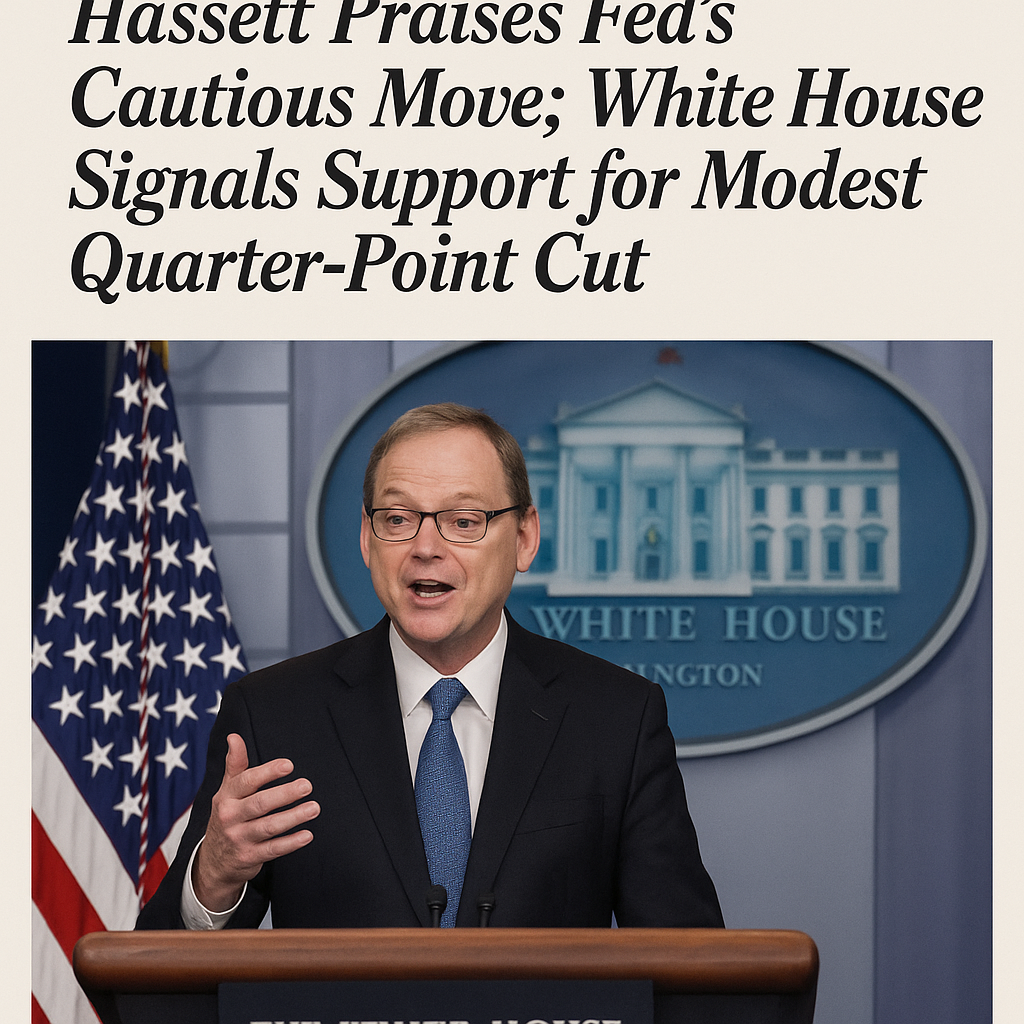
Hassett praises Fed’s cautious move; White House signals support for modest quarter-point cut

Federal Reserve’s Rate Cut Sparks Market Movements and Policy Debates

The Federal Reserve recently implemented a modest quarter-percentage-point cut to its key borrowing rate, signaling a cautious approach as it navigates a complex economic landscape. This decision, perceived by some as a step towards economic stabilization, comes amid shifting market sentiments and ongoing debates among policymakers, economists, and investors. As the global economy faces rising inflationary pressures yet remains resilient, the Fed’s move exemplifies the delicate balancing act it must perform—tamping inflation without stifling growth.

Notably, the White House expressed support for the Fed’s measured approach, with National Economic Council Director Kevin Hassett emphasizing the prudence of a “slow and steady” policy. While some within the administration advocated for a more aggressive half-point cut, the Fed’s decision reflects a consensus aimed at cautious optimism. The recent economic indicators show a robust third-quarter growth rate exceeding 3%, a figure that traditionally would argue against easing monetary policy. Still, inflation running above the Fed’s 2% target, combined with concerns about persistent financial risks, has prompted a nuanced response that favors gradualism over rapid cuts.

Market impacts from this decision are multifaceted. Investors remain vigilant, with equities, bonds, and commodities reacting to the delicate narrative of growth versus inflation control. The policy considerations extend beyond immediate market behavior, touching on policy consequences that could shape future economic stability. Analysts from think tanks and leading economists, including those linked to the Federal Reserve and major banks, indicate that this cautious move might set the stage for future rate adjustments. The decision also underscores ongoing debates about the policy trajectory—should the Fed prioritize containing inflation or supporting a thriving housing market and manageable debt levels?

Importantly, the political dimension persists, with President Donald Trump advocating for more aggressive cuts—arguing that the current rates are insufficient to boost the struggling housing sector and manage the national debt. Such political influences, though not directly altering Fed decisions, shape the policy environment and investor sentiment. As the Fed considers its next moves amid diverse economic signals, the broader implications for market impact and policy stability will be paramount. The coming months will test whether this measured approach will secure sustained growth or prompt future rallying cries for more rapid easing, reflecting the eternal tug-of-war at the heart of economic policy.

Looking ahead, the pulse of the economy remains a reflection of national strength and future global influence.

In this high-stakes game, where monetary policy acts as both shield and sword, the resilience of economies hinges on informed decision-making and bold leadership. Investors, policymakers, and citizens alike watch with anticipation, realizing that the economic landscape is a grand stage—an epic arena where the forces of innovation, policy, and global power collide. While uncertainties persist, the underlying momentum suggests that the future economy will be shaped by those willing to navigate its shifting tides with vision, precision, and resolve. This moment underscores the vital truth: **the economy is not merely a system of numbers, but the beating pulse of nations, heralding the dawn of a new era of global influence and economic ascendancy**.

Sinema’s move tightens Democrats’ 2024 Senate race prospects

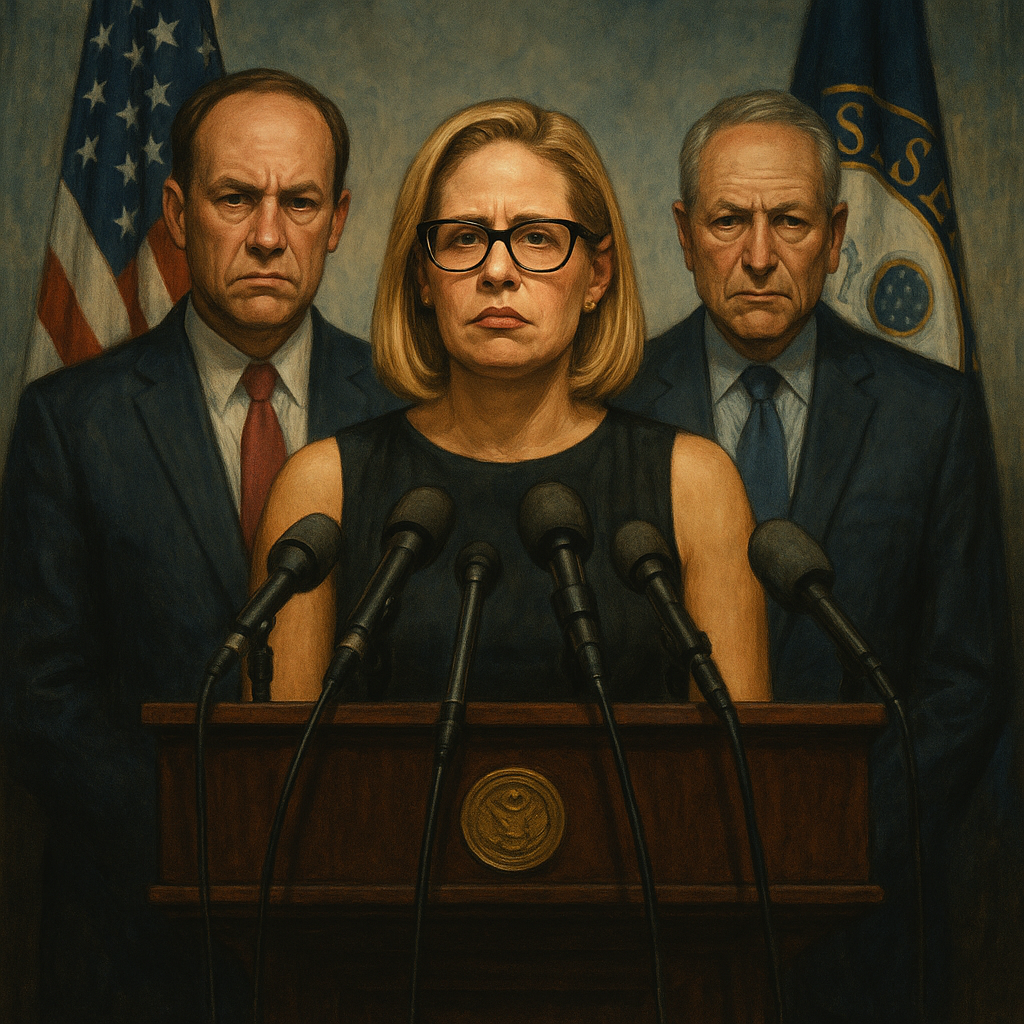
The political landscape in the United States is once again witnessing a moment of seismic change. Arizona Senator Kyrsten Sinema made headlines on Friday by formally declaring her independence, thereby reshaping the intricate balance of power in the Senate. Traditionally, the Senate has been divided between the two major parties, but Sinema’s decision underscores a picture where ideology often takes a secondary role to strategic positioning and power dynamics. Despite shifting away from the Democratic Party, she continues to caucus with them, ensuring their narrow majority, yet her move has significant implications for how party loyalty and political allegiance are perceived in contemporary governance.

Sinema’s defection is emblematic of a broader power struggle over control of agenda-setting and legislative influence. Historically, party cohesion has been a cornerstone in passing any substantial policy, especially within a closely divided Senate. Her shift threatens to fray this cohesion, symbolizing a potential divergence within the Democratic caucus. This is reminiscent of the internal divisions faced by the Republican Party during the rise of figures like Senator John McCain, who often prioritized independent judgment over party loyalty. Such moves challenge the classic dichotomy of left versus right, revealing how personal conviction and strategic survival often eclipse ideological orthodoxy in high-stakes politics. In this case, Sinema’s action exemplifies how individual agency can destabilize the delicate equilibrium of power necessary to enact major reforms.

This shift also raises profound questions about how decisions in the upper chamber ripple down to impact the everyday lives of Americans. The Senate’s composition directly influences critical battles over

  • economic policy
  • immigration reform

and

  • judicial appointments

. When party loyalty fragments, legislative inertia increases, potentially stalling the very reforms promised to voters by both sides. For many pundits and political theorists, this scenario echoes the constitutional struggles during the founding era, where the balance of power was meticulously designed to prevent tyranny while enabling effective governance. Sinema’s move exemplifies how modern political actors strategically navigate these constitutional tensions, often at the expense of unified national progress.

Indeed, such internal conflicts underline the timeless contest of who truly holds authority and influence in American democracy. This power struggle is not just about individual ambitions but about who writes the destiny of the nation. As political analyst Bruno Leoni pointed out, sovereignty in a republic resides in the body politic, yet it is increasingly exercised through the shadowy negotiations among a handful of powerful figures who manipulate party structures. The pursuit of this authority—sometimes inscribed as pragmatic compromise, other times as Machiavellian maneuvering—continues to define the fabric of U.S. politics. Sinema’s decision—whether a plea for independence or a calculated game—is another chapter in the ongoing saga of power, ideology, and destiny.

As the lights dim on one alliance and bright on another, the stage is set for a future where the very notion of political loyalty is in flux. The question remains: who will determine the course of the nation’s history—those who stay true to rigid party lines, or those who maximize their influence through shifting allegiances? In this grand theater of power, the actors craft not just policies but the very legacy of a nation poised perpetually on the brink of transformation—forever awaiting the next act where the pen wielded by the political maestro writes the future in strokes of power and principle alike.

Social Media Auto Publish Powered By : XYZScripts.com