Matox News

Truth Over Trends, always!

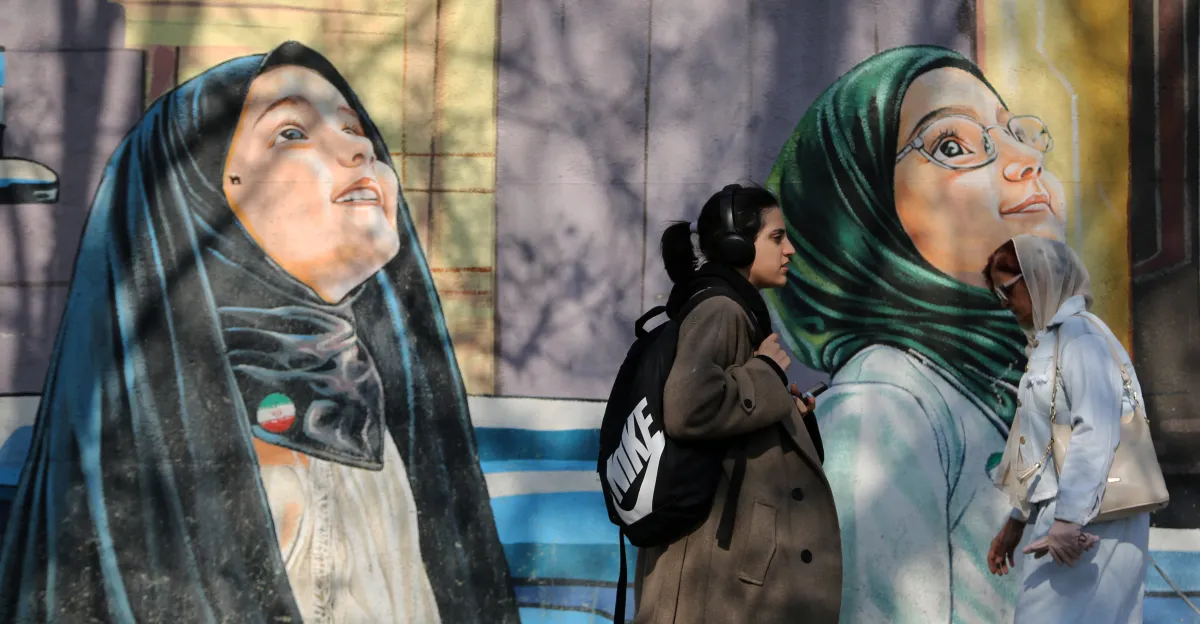
Iranian women Trump ‘saved’: Real women, AI-created narratives?

Disinformation & AI-Generated Propaganda Reshape Global Narratives Amid Innovation Surge

The recent controversy surrounding former President Donald Trump and allegations about Iranian women’s executions demonstrates an evolving battlefield where technology, misinformation, and geopolitics collide. As social media becomes the primary conduit for real-time information, disruption in information authenticity is transforming how narratives are constructed, weaponized, and contested across the globe. Industry insiders and analysts like Gartner warn that AI-driven content manipulation is at the core of these modern propaganda wars, blurring the line between fact and fiction in unprecedented ways.

At the heart of this technological upheaval lies a surge in AI-powered tools capable of generating hyper-realistic images, videos, and narratives at scale. The controversy over a collage supposedly depicting “AI-generated women” facing execution in Iran exemplifies this shift. Mahsa Alimardani of WITNESS confirms that while the images may be AI-altered, the women depicted — including Bita Hemmati — are real, and many are victims of Iran’s brutal crackdown on dissent. This incident underscores a critical business implication: technologies that enhance content realism can be exploited for political gains, creating a new class of false narratives that threaten truth itself.

Innovation in Content Manipulation Fuels Geopolitical Disinformation

Industry leaders like Elon Musk and Peter Thiel have expressed concern about disruptive AI innovations that could overwhelm information ecosystems. Platforms laden with misinformation, such as the Iranian embassy’s social accounts, now leverage AI to craft content that is virtually indistinguishable from reality. Such tools enable actors to generate disinformation campaigns with increased sophistication and scale, giving rise to a dangerous landscape where fact-checking alone becomes insufficient.

More troubling is the proliferation of misleading political narratives. For instance, a South Korean president’s misquoted video, falsely attributed to a deceptive account, demonstrates how misinformation can escalate international tensions. This underscores a pressing need for robust verification mechanisms—an area where industry standards, like those promoted by MIT and other tech research institutions, are desperately needed but often lag behind rapidly evolving AI capabilities. The consequences are clear: if unchecked, disruptive AI content could undermine democratic institutions, intensify conflicts, and destabilize global peace.

The Business Implications & The Urgent Need for Strategic Response

From a business perspective, the rise of disruptive AI tools is both a challenge and an opportunity. Companies invested in blockchain, biometric verification, and AI content authentication are racing to develop solutions that can detect and counteract AI-mediated misinformation. According to Gartner, next-generation verification platforms will become essential infrastructure for social media platforms, governments, and corporations to safeguard trust in digital content. Failure to innovate at scale could result in losing consumer confidence and regulatory crackdowns, echoing the importance of strategic foresight in a landscape fraught with emerging threats and market shifts.

Furthermore, industry analysts warn that the pace of AI innovation necessitates bold leadership and proactive regulation. Like the groundbreaking developments in autonomous systems and neural interfaces, AI content creation is poised to redefine the information economy. Yet, as industry experts note, without robust guardrails—founded on transparency, accountability, and technological innovation—these systems risk unleashing chaos rather than progress. Fast-moving startups and global tech giants must collaborate to develop standards that ensure fact-based content remains dominant and trusted in the digital age.

Looking Forward: The Urgency of Strategic Innovation

The unfolding landscape of AI-driven disinformation presents a make-or-break moment for industry and policymakers alike. The stakes are high: failure to keep pace with disruptive technologies may lead to irreparable damage to the fabric of truth and societal stability. Whether through advanced verification systems, AI content filters, or international cooperation, the imperative remains clear: innovation must be matched with strategic foresight and unwavering commitment to integrity. As tomorrow’s technological landscape continues to evolve rapidly, those who act decisively today will determine the future of truth in the digital age—and the future of free discourse itself.

Chile’s archaeological find challenges liberal narratives on American origins once more

Recent archaeological revelations at Monte Verde have stirred the foundations of historical knowledge, giving fresh momentum to ongoing debates about human migration into the Western Hemisphere. Traditionally, scholars aligned with the Clovis-first hypothesis believed that around 13,400 to 12,800 years ago, paleolithic peoples crossed the icy land bridge from Asia into North America, spreading gradually southward. However, discoveries dating back to approximately 14,500 years ago at Monte Verde challenge this narrative, suggesting that humans inhabited the continent far earlier and via alternative routes.

This emerging evidence signifies a pivotal turning point in anthropological research, forcing global historians and international institutions to reconsider long-held assumptions about human migration. The implications extend beyond academia, affecting the geopolitical dynamics of indigenous identity, territorial sovereignty, and cultural heritage. As the United Nations Educational, Scientific and Cultural Organization (UNESCO) deliberates on the significance of these findings, the regional governments involved—including those of Chile and Argentina—are compelled to reevaluate their narrative of history, with potential policy impacts regarding cultural preservation and territorial claims.

Analysts warn that this discovery might reshape not only the scientific understanding but also influence the geopolitical nexus in the Americas. Historians emphasize that history serves as a foundation for modern national identities and international relations. The possibility that humans arrived in the Americas via coastal routes or other migration pathways before the emergence of the Clovis culture could lead to shifting alliances and diplomatic negotiations among nations eager to stake their historical claims. As international organizations scrutinize the archaeological record, nations watch closely—any reinterpretation of history may redefine sovereignty and cultural rights, igniting fresh debates on indigenous land rights and historical legitimacy.

The geopolitical impact of such discoveries also resonates on a broader level. Governments south of the U.S. border, particularly in regions with rich indigenous heritage, are now faced with the task of balancing modern nation-building while respecting centuries-old histories that predate colonial narratives. Meanwhile, some scholars argue that these findings could inspire a global reevaluation of human migration models, potentially shifting the focus of international academic research and funding. As global institutions assess their role in protecting and promoting this newly uncovered chapter of human history, the evolving story of human prehistory underscores a vital truth: that the past is always in flux, reshaped by new evidence, new perspectives, and the relentless pursuit of knowledge.

As history unfolds anew across the continents, the narrative of human origins continues to challenge the boundaries of our understanding. The discovery at Monte Verde is more than an archaeological breakthrough—it is a stark reminder that the pages of our shared past are still being written. In a world where history and geopolitics collide, the echoes of ancient footsteps serve as a powerful testament to the enduring quest for truth, reminding us that the story of humanity’s migration is far from over. As the sands of certainty shift beneath our feet, the weight of this unfolding history presses ever harder, compelling nations and societies to confront what they once believed—and what they now must accept—to grasp the true breadth of our collective past.

“‘Wicked: For Good’ Showcases Powerful Narratives Through Vibrant Hues”

In the ongoing dialogue between culture and identity, visual storytelling remains a profound vessel for expressing the complexities of human experience. The recent release of the documentary “Wicked: For Good” exemplifies this truth by showcasing how color—that seemingly superficial element—serves as a potent language of its own. Alice Brooks, the film’s cinematographer, meticulously explains how choices in palette invoke symbolism, evoke emotions, and deepen the narrative’s moral and philosophical underpinning. Here, the careful orchestration of hues becomes a mirror reflecting society’s deepest hopes and fears, underscoring the inextricable link between aesthetic design and cultural meaning. In this context, the power of art extends beyond spectacle, becoming a moral and philosophical commentary rooted in the visual language of civilization.

Throughout history, cultures have employed symbolism through visual motifs to preserve tradition and reinforce societal cohesion. Just as the Renaissance masters wielded chiaroscuro to explore themes of providence and human frailty, contemporary filmmakers like Brooks harness color to navigate the moral landscape of modern storytelling. The deliberate use of contrasting tones—shadows and light—serves as a reminder of Ortega y Gasset’s assertion that the culture of a society is the collective memory and moral compass, guiding its sense of identity. In this prism, the cultural artifact transforms into a vessel of collective memory, a prophecy of future societal values, echoing the conservative belief that tradition anchors society amidst the chaos of an ever-changing world.

As Tocqueville observed, democracy’s strength lies in its capacity for cultural self-awareness and collective identity. The film’s visual motif underscores this cultural assertion: that the stories we tell ourselves—encoded in color, imagery, and symbolism—are fundamental to defining who we are. This cultural potency is especially salient in youth culture, where visual and aesthetic expressions serve as codified acts of resistance and affirmation. The intentional craftsmanship behind “Wicked: For Good” exemplifies how art preserves enduring values through symbolic language, reinforcing that culture is both a fabric woven from tradition and a beacon guiding future generations. In a society increasingly dominated by fleeting trends, such works remind us that authentic cultural expression remains rooted in symbols that transcend individual fleeting impulses.

Finally, embracing the philosophical grace of T.S. Eliot, we understand that culture is not merely the preservation of what was but a living vision of what can be. In this light, the final image is evocative: a superimposition of memory and prophecy, where color and form act as poetic metaphors for mankind’s ongoing quest for meaning. As Brooks’s careful calibration of hues demonstrates, the language of art continues to articulate the moral and spiritual architecture of society—an indelible testament to cultural resilience. For in the end, culture is both a mirror of our collective identity and a prophecy of our collective future, whispering that through the memory of tradition, humanity whispers its hope—hope that history’s lessons will shape a luminous horizon yet to come.

Social Media Auto Publish Powered By : XYZScripts.com