Matox News

Truth Over Trends, always!

President Under Fire for Disrupting National Stability

Post-Election Violence Unveils Tanzania’s Fragile Stability and Shifts Geopolitical Dynamics

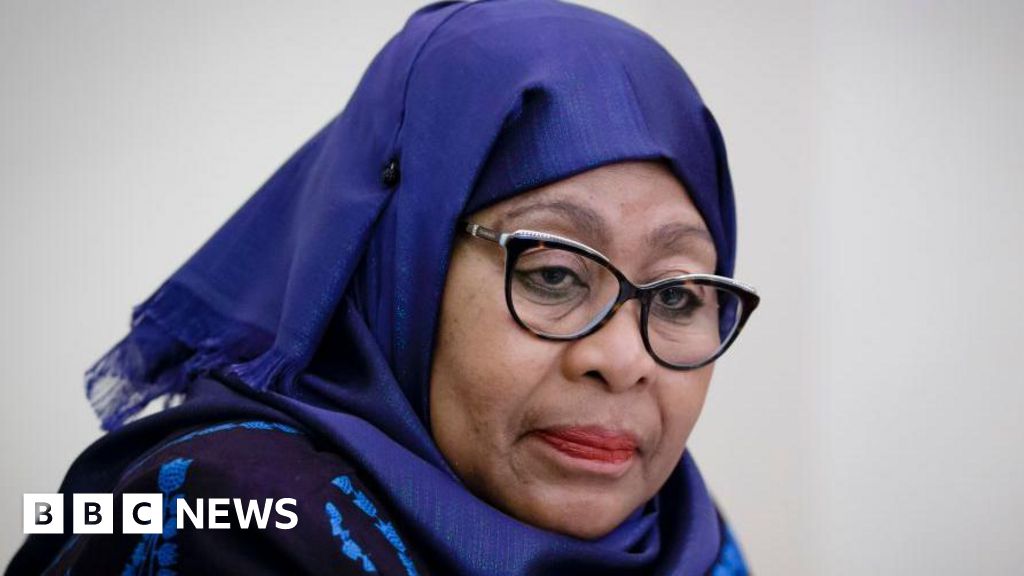
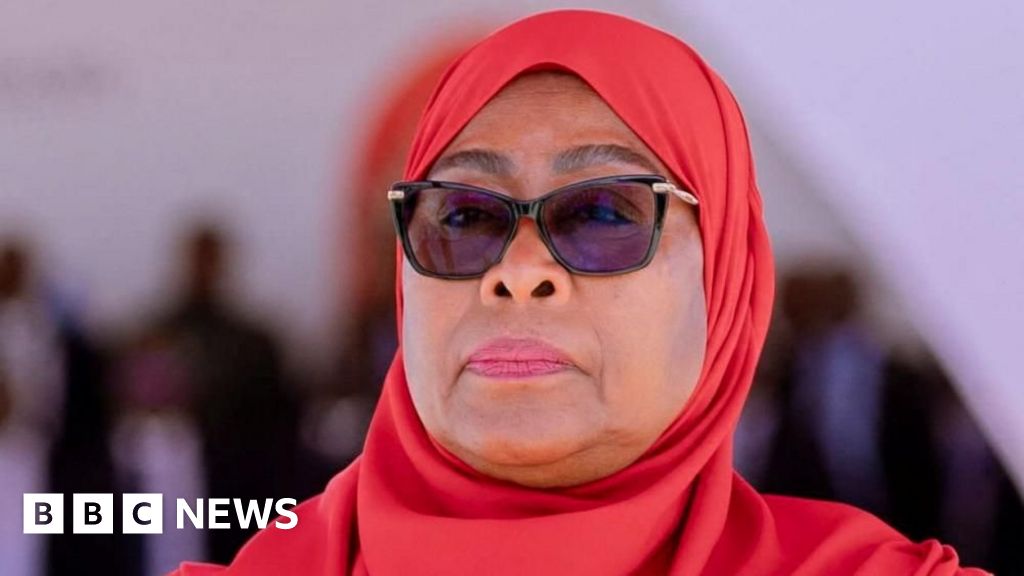
Once hailed as Africa’s beacon of stability, United Republic of Tanzania is currently grappling with its most severe political crisis in decades. The tumult follows the recent presidential election, which has cast a long shadow over the nation’s reputation for peace. The contested poll, which resulted in President Samia Suluhu Hassan securing a 98% victory, has sparked widespread unrest and international criticism, exposing the underlying fractures within Tanzanian society and its political fabric.

According to multiple analysts, the election was marred by systemic flaws, including *ballot-stuffing, repression, and a crackdown on opposition figures*—a stark departure from Tanzania’s traditional image of calm order rooted in Julius Nyerere’s legacy. Key opposition candidates were either detained or disqualified, effectively removing genuine contestation from the electoral process. As regional bodies like the African Union and the Southern African Development Community voiced concerns over *electoral irregularities*, international observers signaled that the election did not meet accepted democratic standards, shaking the legitimacy of Samia’s presidency. This crisis underscores a critical moment in Tanzania’s post-independence history, as the nation faces questions about its democratic resilience and future trajectory.

At the heart of this turmoil lies what some experts deem a *systemic betrayal of Tanzanian ideals*. Long regarded as an island of calm, the recent violence and protests, driven largely by youth disillusionment, economic grievances, and political marginalization, reveal a society that has become increasingly hostile to authoritarian tendencies. Historians like Professor Samuel Moyo warn that the *myth of Tanzanian exceptionalism*—a narrative of peaceful progress—has been shattered. The escalation of protests, which culminated in casualties and funerals for those killed in the unrest, signals a turning point—*a society swelling with anger, pushed to the brink by decades of ignored grievances and a throttling political environment*. This unrest echoes globally, reminiscent of youth-led mobilisations demanding representation and reform, like those seen in *Kenya* and *South Africa*.

As President Samia Suluhu Hassan consolidates power, her leadership has come under unprecedented scrutiny. From initial promises of transparency, reconciliation, and reform, her government’s recent crackdown, including *the detention of opposition leaders*, signals a return to *centralized authority and political repression*. Political analyst Prof. Peter Kagwanja notes that her move towards *authoritarian consolidation* risks tarnishing her legacy, especially as her internal political maneuvers—marked by cabinet reshuffles and loyalty tests—mirror the autocratic tendencies of her predecessor, John Magufuli. The narrative of the “lioness” protector has given way to fears of a *ruler sharply detached from the democratic aspirations of Tanzanian youth*. The *international community* watches warily, with European and American officials warning that continued repression threatens to isolate Tanzania further, undermining its influence in East Africa.

History remains unwritten, yet the weight of this unfolding drama is felt acutely across the continent. As Tanzania descends into a phase of *increasing internal strife and international censure*, the question looms: Will this nation, birthed from a legacy of unity and anti-colonial resilience, be able to emerge from the shadows of its internal crises?* The international stage holds its breath as the story of Tanzania’s next chapter unfolds—a story that could either reaffirm its place as a pillar of stability in Africa or serve as a stark warning of Democracy’s fragile veneer in an increasingly turbulent world.

Rising Stars Shine: Young Athletes Break Records at National Championships

MLB Qualifying Offers: A Spotlight on Key Players

In a significant move heading into the offseason, Kyle Tucker of the Chicago Cubs and Kyle Schwarber of the Philadelphia Phillies are among the 13 players to be tendered the impressive $22.025 million qualifying offer, as reported by ESPN. This decision reflects not only the potential these athletes have exhibited but also a strategic play by teams eager to fortify their rosters as they prepare for the upcoming season.

The two Kyles have garnered attention for their performances, showcasing undeniable talent and consistency throughout the last season. Tucker’s ability to elevate his game during critical moments has earned him accolades, while Schwarber’s power at the plate has made him an invaluable asset for the Phillies. Analysts and commentators alike, including noted MLB analyst Tim Kurkjian, emphasize the importance of retaining these players: “Both Tucker and Schwarber bring something extraordinary to their teams, and a qualifying offer solidifies their status as franchise players.”

  • Kyle Tucker: Key player for the Cubs, known for decisive batting and fielding.
  • Kyle Schwarber: A reliable slugger for the Phillies, delivering home runs in clutch situations.
  • 13 players in total have been tendered qualifying offers this year.

This offseason could serve as a turning point for the franchises involved, as both the Cubs and Phillies aim to reshape their rosters. The significance of the qualifying offers cannot be understated, especially in a competitive MLB landscape where every decision can have far-reaching repercussions. Coaches are counting on their star players to continue their upward trajectory, with onlookers keen to see how this plays out during the spring training ahead.

As the sport continues to evolve, it remains a potent symbol of unity, bringing together fans from all walks of life under the banner of teamwork and sportsmanship. The heart of baseball beats not only in the competitive spirit but in the camaraderie it fosters among fans and players alike. With the stage set for an exciting offseason, all eyes will be on how these essential players perform as they look to elevate not just their teams, but the sport itself, forging connections that last beyond just the final scores.

Source link

Future Stars Shine: Young Athletes Break Records at National Championships

USMNT Set to Face Paraguay and Uruguay in Upcoming Friendlies

In a move that has stirred excitement among fans, USMNT head coach Mauricio Pochettino announced his 25-player roster for the upcoming friendlies against Paraguay and Uruguay. These matches, scheduled to take place next month, present a critical opportunity for the national team to refine their tactics and build momentum ahead of future competitive fixtures. Pochettino’s selections include a blend of established stars and emerging talent, showcasing his intent to craft a cohesive unit as he settles into his new role.

The 25-player roster consists of highly skilled athletes, including fan favorites and international stars. Among the notable inclusions is Christian Pulisic, who has consistently been a pivotal figure for the team. His ability to change the dynamic of a game is evident, particularly when he steps on the field representing the red, white, and blue. Pochettino emphasized the importance of building team chemistry, stating, “These matches are not just about the result; they’re about finding the right balance and preparing for the challenges ahead.”

This new chapter for USMNT comes after a series of promising performances in recent tournaments, where the squad has demonstrated its capability to compete against top-tier international teams. The friendly matches will allow for experimentation with different formations and tactics before the World Cup qualifiers loom larger on the horizon. According to sports analysts, a well-executed strategy in these encounters could solidify Pochettino’s vision for the team and reinforce the players’ confidence moving forward.

As the excitement builds for these upcoming clashes, here are some key takeaways to watch for:

  • Christian Pulisic expected to lead the team offensively.
  • Goalkeeper Zack Steffen is poised to showcase his shot-stopping ability against challenging opponents.
  • Emerging talents such as Giovanni Reyna will look to make their mark in international play.

In conclusion, the significance of these friendly matches goes beyond mere statistics or scores. The games against Paraguay and Uruguay offer a chance to unite fans and players alike under the banner of a common goal: success on the international stage. This spirit of togetherness, fueled by the love of the beautiful game, has the power to inspire not only athletes but also a nation, reinforcing the conviction that sports serve as an enduring bridge, transcending barriers and unifying individuals in the pursuit of excellence.

Source link

Thursday Briefing: Labour’s Bold Push to Redesign the National Curriculum

Global Power Shifts and National Crises: A Tipping Point in World Politics

Amid the rising tide of international upheaval, the geopolitical landscape is witnessing a series of profound shifts that threaten to redefine the global order. China, driven by its relentless pursuit of technological dominance, has publicly claimed its intention to surpass the United States in the AI race, as highlighted by Nvidia’s CEO Jensen Huang’s recent remarks. Such declarations signal an intensifying competition that is not only about economic supremacy but also about influence over emerging global standards. Analysts from institutions like the Council on Foreign Relations warn that if Western nations fail to adapt and loosen regulations that hinder innovation, they risk ceding technological leadership to Beijing, thereby affecting the international balance of power for generations to come.

This struggle for supremacy has critical implications for regional stability and international alliances. Meanwhile, Russia continues its strategic maneuvers, witnessing ongoing conflicts in the Ukraine that threaten to escalate further, and drawing in support from various nations that see this as a pivotal moment to challenge NATO’s influence. The conflict is not merely territorial but also ideological and economic, with the EU and the U.S. imposing sanctions while Russia seeks new alliances in Asia and Africa. Such realignments threaten the fragile stability of the international system, where economic sanctions and military posturing could spiral into larger forced reckonings.

The West’s Internal Struggles and the Evolving Global Order

Within this context of external threats, Western democracies confront their own crises, with deteriorating political climates and economic pressures exacerbating vulnerabilities. Britain’s ongoing mismanagement of justice exemplifies these internal challenges, as UK authorities grapple with the fallout from mistakes such as the wrongful release of prisoners, including dangerous offenders. This internal disorder weakens the societal fabric at a moment when cohesion is vital to face external adversaries. Furthermore, France faces its own upheaval, with the dramatic theft of €88m worth of crown jewels from the Louvre highlighting both security failures and the social undercurrents of unrest, fueled by inequality and political discontent.

Meanwhile, the European Union is watching closely, aware that if internal divisions deepen, the continent could become a secondary theater of global power tussles rather than a unified front. The United States, under pressure from both internal political polarization and international crises, risks losing its strategic edge if policy incoherence persists. The window of opportunity is closing for the West to recalibrate its approach, or it may find itself increasingly marginalized in the emerging global hierarchy. Thought leaders from institutions like the International Crisis Group warn that these internal cracks could leave Western societies vulnerable to authoritarian influences seeking to exploit discord.

A Future While the Present Unravels

History bears witness to the fact that these formative moments often come with sacrifices and upheaval. Governments are under intense pressure to adapt quickly, but real change takes time—a luxury that the precarious state of today’s world politics does not afford. With a timeline extending to 2029 for the reform of England’s educational system, and the next round of elections poised to influence policy directions, the decisions made now will echo through decades. As nations scramble to secure their futures, the weight of history presses hard upon the present—reminding us that the unfolding story of power, conflict, and resilience is far from over. In this relentless march of history, the choices of today may well determine whether the world remains a place of freedom and stability, or falls under a new shadow of dominance and chaos.

Rising Stars Shine: Young Athletes Break Records at National Championships

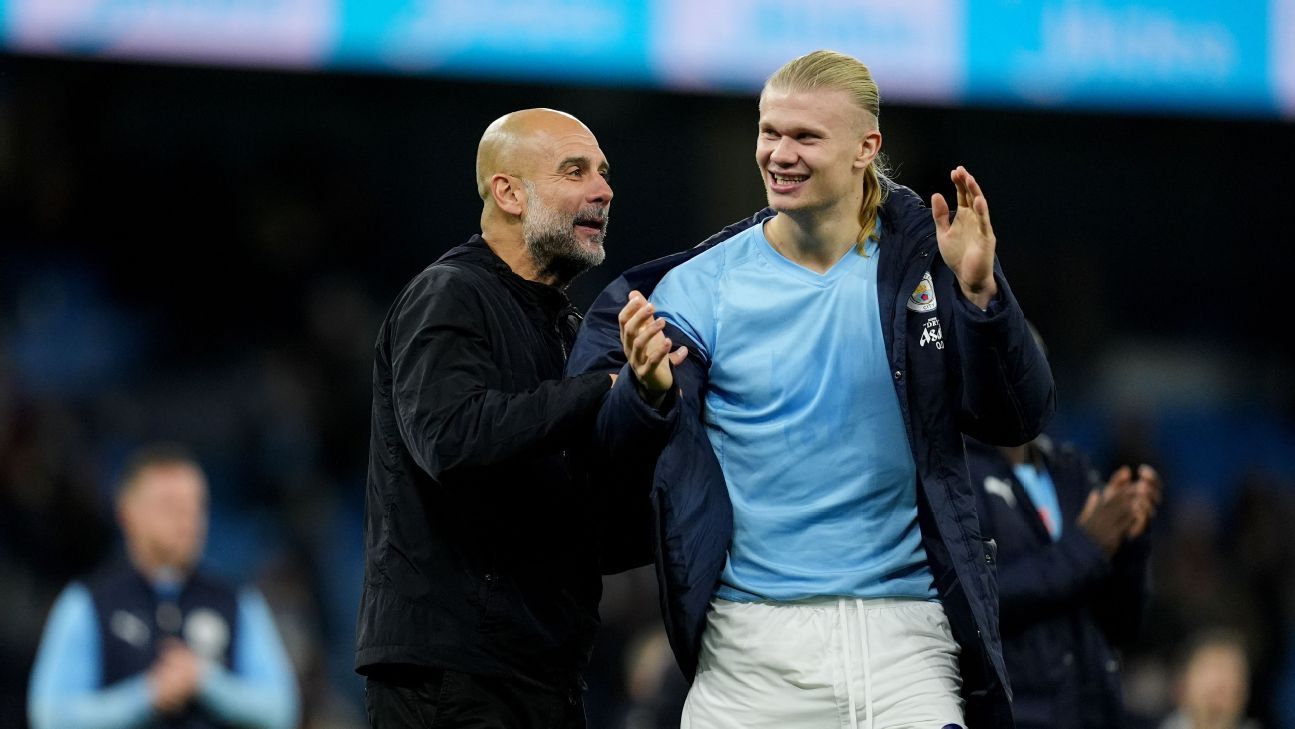
Haaland Ascends to Legendary Status in Manchester City Victory

In a thrilling encounter at the Etihad Stadium, Manchester City claimed a decisive 3-1 victory against Bournemouth, with star striker Erling Haaland once again making headlines. With this performance, Haaland has firmly established himself as a goalscoring powerhouse, prompting Manchester City coach Pep Guardiola to declare that the Norwegian international has now reached the same elite level as football legends Lionel Messi and Cristiano Ronaldo.

Haaland’s contributions were pivotal, as he netted two goals during the match, bringing his total to an astounding eight goals in just four fixtures this season. His ability to find the back of the net with such consistency showcases not only his extraordinary talent but also his understanding of the game. Guardiola emphasized this sentiment post-match, stating, “Erling has the instinct, the quality—he is now in the same bracket as Messi and Ronaldo when it comes to goalscoring.” The coach’s endorsement highlights the rising star’s impact not only on this match but on the entire league.

  • Manchester City dominated possession, maintaining 65% throughout the game.
  • Bournemouth struggled to contain Haaland, failing to suppress their defensive lapses.
  • Haaland’s goals early in the match shifted the momentum, paving the way for a strong team performance.
  • Defender Ruben Dias also contributed with a commanding display at the back, ensuring Bournemouth remained frustrated offensively.

As the whistle blew signaling the end of the match, the electric atmosphere resonated not just within the stands, but throughout the footballing community. This victory solidifies Manchester City‘s status as a formidable contender for the season. Yet, beyond the statistics and the trophies, sports remind us of their unifying power. In moments such as these, the beauty of football transcends mere rivalry, bringing fans and communities together in celebration of skill, passion, and shared excitement. The relentless spirit of the game continues to shine brightly, connecting individuals and fostering camaraderie among supporters, making each encounter more than just a contest of skill but a celebration of humanity itself.

Source link

Samia Suluhu Hassan secures 98% victory amid national unrest

Election Controversy and Political Stability in Tanzania

In a decisive yet turbulent moment for East Africa, President Samia Suluhu Hassan has been officially declared the winner of Tanzania’s recent presidential election. According to the electoral commission, she secured an overwhelming 98% of the votes cast in a process marred by unrest and claims of widespread fraud. This victory cements her position in a country that, since independence, has been a haven of stability under the dominance of the Chama Cha Mapinduzi (CCM) party, which has never lost power in post-colonial history. However, beneath the veneer of electoral success lies a nation teetering on the brink of political and social upheaval, with reports of violence, deaths, and suppressed dissent raising concerns about Tanzania’s sovereignty and future trajectory.

Internal Struggles Reflect Broader Regional Tensions

Analyzing the domestic turmoil, international observers and analysts have raised alarm over credible reports of hundreds of casualties amid ongoing protests. While the government attributes the violence to “isolated incidents”, opposition leaders and diplomatic sources estimate that fatalities could be as high as 700. This level of violence signals a fundamental challenge to democratic legitimacy in Tanzania, which has experienced recurrent repression of opposition figures—most notably the detention of key challenger Tundu Lissu. Historians and rights groups, such as Amnesty International, have condemned the crackdown, describing a “wave of terror” involving enforced disappearances and extrajudicial measures against dissenters. Such measures threaten not only political stability but also regional reputation and refugee flows, which already strain neighboring nations’ resources.

Geopolitical Impact and How International Shifts Shape Outcomes

The repercussions extend beyond Tanzania’s borders, with foreign diplomatic and regional institutions closely monitoring the unfolding crisis. As East Africa’s largest economy faces internal disorder, tensions ripple across the region, impacting trade routes, security cooperation, and the ongoing struggle for influence among China, the United States, and European powers. Beyond the immediate violence, the election’s integrity has become a litmus test for democracy in Africa, emphasizing how authoritarian tendencies threaten stability and pseudo-legitimate health of democratic processes. Scholars warn that if Tanzania’s government consolidates power through repression, it could set a dangerous precedent for rising authoritarianism across the continent. As the African Union and United Nations call for calm and transparency, the country’s future hinges on whether leadership can reconcile the legitimate demands of its youth and opposition with the relentless pressures of regional and global geopolitics.

A History in the Making: A Nation’s Fate at the Crossroads

From the streets of Dar es Salaam to the halls of international diplomacy, Tanzania’s election has become emblematic of a larger geopolitical chessboard, where power, influence, and democracy itself are continuously redefined. As a new chapter begins amidst chaos and controversy, history remains unwritten. The fate of Tanzania—much like that of its neighbors—depends on whether its leaders prioritize trust, transparency, and respect for human rights or succumb to the temptations of authoritarian rule. This moment is a stark reminder that the arc of history is long, yet sometimes, it bends sharply toward conflict—leaving little room for error as the world watches a pivotal story unfold.

Trump limits refugee admissions to 7,500 to prioritize national security and sovereignty

Washington’s New Refugee Admission Limits and Its Impacts on International Relations

President Donald Trump’s administration has announced a significant reduction in the number of refugees permitted into the United States, capping the intake at 7,500 for the upcoming fiscal year—a stark contrast to the 125,000 set during the previous administration of President Joe Biden. This decision, delivered via an official notice, has raised eyebrows across global diplomatic circles, not least because no explicit reasons were provided apart from vague references to “humanitarian concerns or national interest.” It marks a continuing trend from Trump’s early days in office, including the suspension of the US Refugee Admissions Program (USRAP) in January 2025, which aimed at prioritizing national security and public safety.

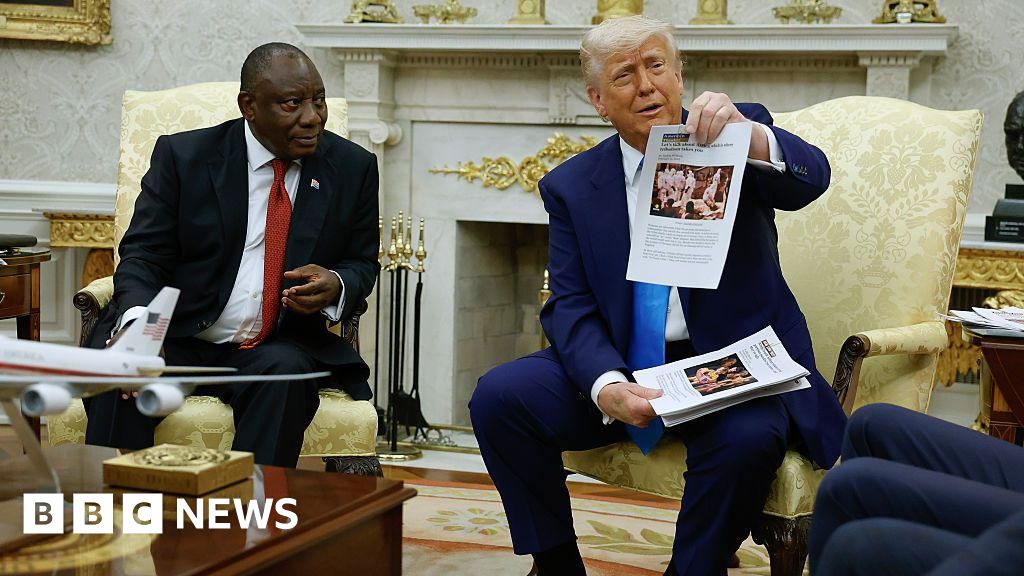
The focus of this new policy appears to favor white South Africans, primarily Afrikaners, with a sizable portion of the quotas allocated to victims of what the White House describes as “illegal or unjust discrimination” in South Africa. During a meeting in May, Trump sharply criticized South African President Cyril Ramaphosa, accusing his government of persecuting white farmers and showcasing disturbing images of burial sites representing murdered farmers—all scenes later clarified to be from protests material dating back to 2020. The White House’s overt regard for these victims underscored an overarching shift in U.S. refugee policy, apparently influenced by geopolitical and ideological considerations.

Geopolitical Impact and Rising International Tensions

Global analysts and historical experts have expressed concern that such selective refugee policies threaten the longstanding credibility of U.S. humanitarian commitments. Krish O’Mara Vignarajah, CEO of Global Refuge, contended that the decision “lowers our moral standing,” especially during a time when crises persist in Afghanistan, Venezuela, Sudan, and beyond. Critics argue that by focusing heavily on a specific demographic, the United States risks alienating its allies and betraying its reputation as a defender of human rights. Meanwhile, accusations of unfair treatment and discrimination against other persecuted groups have surfaced, suggesting a dangerous shift away from the country’s traditional openness.

Furthermore, this policy comes with serious geopolitical ramifications. As the U.S. tightens its refugee admissions, other nations are watching closely, questioning American values and leadership. Some analysts interpret this move as a sign of Trump’s broader desire to reshape U.S. foreign relations—favoring nationalist policies that prioritize domestic security over international cooperation. The impact is palpable: allies in Europe and Africa are now reconsidering their own approaches to asylum and diplomatic engagement. Historically, shifts in refugee policy have often prefigured more profound geopolitical realignments, and experts warn that the current trend could contribute to a fracturing of international consensus on humanitarian obligations.

Societal and Cultural Consequences: A Turning Point in U.S. Policy

As the policy unfolds, the consequences extend beyond diplomacy—deepening societal divisions in the U.S. itself. Immigration advocates have criticized the move as a betrayal of American values, arguing it discriminates against vulnerable populations and undermines the moral foundations of the nation. Critics further point out that this narrowed focus risks fueling policy shifts that favor ethnonational interests at the expense of universal human rights. The decision is emblematic of a broader ideological clash over identity, security, and what it means to be a nation of immigrants in a rapidly changing world.

Meanwhile, the undercurrent of international skepticism grows stronger. As a major power, the U.S. has long wielded influence over global norms surrounding refugees and human rights. With recent decisions seemingly departing from this tradition, the global community stands at a crossroads, watching whether the United States will uphold its commitments or retreat into a more insular approach. The unfolding story remains a dramatic chapter in the larger narrative of a world grappling with new realities—where decisions on refugee intake are less about compassion and more about geopolitical leverage. Indeed, the yet-to-be-written pages of history continue to turn, leaving the world uncertain if the U.S. will remain the beacon of hope it once was or drift into a new era of nationalist retrenchment.

Trump vows to revive U.S. nuclear tests to boost national strength

President Trump’s Nuclear Posture Shift Signals Potential Disruption in Global Security and Tech Sectors

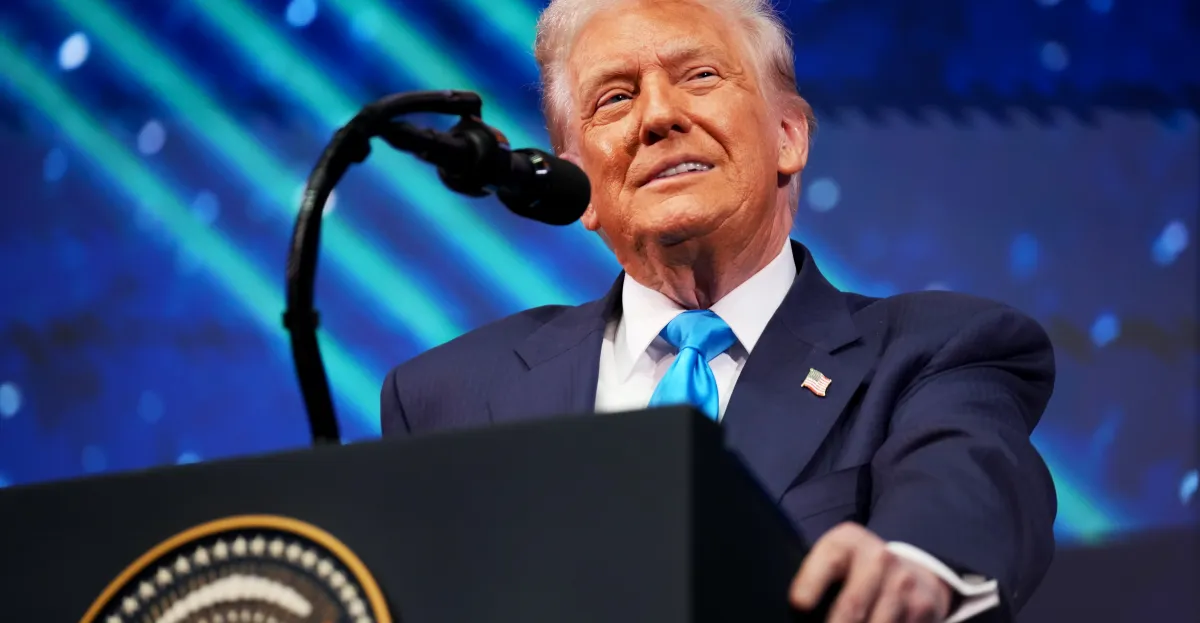
In a bold and controversial move, President Donald Trump has directed the Pentagon to resume testing nuclear weapons, citing the necessity to match other nations’ testing programs. This decision marks a significant departure from the longstanding post-Cold War nuclear testing moratorium, which has largely shaped global strategic stability over the past three decades. While few details have been disclosed, the announcement signals a possible new phase in military innovation, pushing the boundaries of nuclear capabilities and their associated tech ecosystems. The immediate implications could be profound, affecting international diplomacy, defense industries, and technological innovation in related sectors.

This move comes at a complex geopolitical juncture. Just before a high-stakes summit with China’s Xi Jinping, Trump’s statement appears to upend decades of American policy. Historically, the US maintained a strategic restraint on nuclear testing, aligning with global efforts for non-proliferation. However, Trump’s directive suggests a strategic pivot, possibly aimed at reasserting US military dominance amidst rising geopolitical tensions and global technological competition. But experts warn that such actions could destabilize existing treaties; the US, a signatory of the Comprehensive Nuclear-Test-Ban Treaty, has yet to ratify it. Meanwhile, Russia, which possesses the world’s largest nuclear stockpile, continues modernization efforts, injecting an element of disruption into the balance of global nuclear deterrence.

From an industry perspective, this escalation may act as a catalyst for innovation within the defense sector. Companies specializing in nuclear physics, materials science, and simulation technologies could see surges in demand. Emerging players in advanced warhead design and system delivery technologies might accelerate R&D investments or even disrupt existing supply chains. Yet, these innovations are fraught with ethical and regulatory challenges, complicating long-term business models. As analyst Peter Thiel might argue, disruption in high-stakes defense tech requires a careful balance between innovation, security, and international diplomacy.

The announcement also exposes the vulnerabilities of global non-proliferation efforts. With the US potentially resuming nuclear tests, other countries could follow suit, destabilizing the delicate international security architecture. This collapses the normative framework that discouraged nuclear tests for decades, and may incentivize rogue states or emerging powers to pursue clandestine programs. The ripple effect could further accelerate technological arms races, pushing industries toward more sophisticated satellite surveillance, advanced monitoring, and cyber capabilities—areas where innovation may be both a boon and a threat. As Gartner warns, the erosion of norms around nuclear testing could precipitate a broader disruption across defense and technology industries.

Looking ahead, this development underscores a pivotal juncture for global stability and technological advancement. The potential resumption of nuclear testing not only signifies a geopolitical gamble but also a catalyst for industry disruption in defense tech and international security. Fast-moving innovators and investors must now navigate this landscape with increased urgency, as the future of nuclear deterrence, international diplomacy, and technological progress hangs in a delicate balance. As authorities, companies, and nations grapple with these shifts, the imperative for strategic foresight becomes clear—those who proactively adapt to this new era of high-stakes innovation will be the ones to shape the trajectory of global security and technological dominance in the years to come.

Rising Stars Shine: Young Athletes Dominate at National Championships!

Thrilling Showdown: The Eagles Soar Over the Falcons

In a gripping showdown on the gridiron, the Philadelphia Eagles secured a decisive victory against the Atlanta Falcons, clinching the game with a final score of 28-17. The Eagles demonstrated their prowess on both sides of the ball, showcasing a blend of strong defense and explosive offense. This contest not only entertained but also set the stage for the playoff race as the season progresses.

While the Eagles took the lead early in the first quarter, it was a remarkable touchdown pass from quarterback Jalen Hurts to wide receiver A.J. Brown in the third quarter that became the defining moment of the game. The play, highlighted by a deft maneuver around two defenders, electrified the enthusiastic home crowd and gave the Eagles a commanding position. Hurts finished the day with exemplary stats, throwing for 305 yards and three touchdowns, while also scrambling for 50 yards, proving his dual-threat capability.

On the other hand, the Falcons struggled to find their rhythm, despite a spirited performance from quarterback Desmond Ridder. Ridder managed to keep the game competitive early on but ultimately fell short, completing 22 of 35 passes for 227 yards and one touchdown. Coach Arthur Smith expressed his frustration post-game, noting, “We couldn’t execute in critical moments. We must improve if we want to stay in the race.” This sentiment echoed among the fans, who were left hoping for a turnaround as the season heads into its later stages.

  • Key Play: Jalen Hurts’ 45-yard touchdown pass to A.J. Brown.
  • Defensive Standouts: The Eagles’ defense recorded three sacks and an interception.
  • Upcoming Challenge: The Eagles will face the Dallas Cowboys next week, a crucial division matchup.

As the dust settles on this pivotal clash, it’s clear that this was more than just a game. It was a testament to the spirit of competition, showcasing how sports unite teams and fans alike. While victories and defeats linger in the records, the invaluable community, camaraderie, and connection fostered through events like these remind us that at its core, sports are about bringing us together, driving passion, and building lasting friendships, beyond the final score.

Source link

Upcoming Star: Local Teen Sensation Shines at National Sports Championship

NFL Power Rankings: Week 9 Insights and the Best Offseason Moves

As we approach Week 9 of the NFL season, the landscape is becoming clearer. Several teams have exhibited dominance, while others are struggling to find their footing. It’s time to present the latest NFL Power Rankings, highlighting which teams are rising and which are falling as they head into the second half of the season.

At the top of the rankings, the Buffalo Bills and Philadelphia Eagles continue to impress. The Bills have showcased a balanced offense led by quarterback Josh Allen, who has thrown for over 2,300 yards and 20 touchdowns. Meanwhile, the Eagles, under Nick Sirianni, have established a relentless defense that is vital in weekly victories. As noted by commentator Louis Riddick, “Their physical play is intimidating; they are a force to be reckoned with.”

  • Buffalo Bills – Key Offseason Move: Signing wide receiver Stefon Diggs.
  • Philadelphia Eagles – Key Offseason Move: Drafting cornerback DeVonta Smith.
  • Tampa Bay Buccaneers – Key Offseason Move: Signing quarterback Todd Bowles as head coach.

On the other end of the spectrum, the New York Jets and Houston Texans are grappling with challenges. Robert Saleh, coach of the Jets, has been emphasizing discipline and resilience as they look to turn their season around. Their latest close loss illuminated the importance of making the crucial plays at pivotal moments, as highlighted when Zach Wilson threw a game-ending interception despite a strong performance throughout the game.

These rankings not only reflect team strengths but also emphasize the impact of strategic offseason decisions. Coaches and general managers have made moves that have shifted the dynamic of several franchises. As the season progresses, the on-field rivalries and triumphs serve to bring fans together, galvanizing communities and reigniting local pride. In the words of former NFL coach Bill Parcells, “Football is the ultimate team sport. It’s about each player rising above their individual roles for the greater goal.” This sentiment rings true as we witness how sports transcend mere competition to foster unity among fans and communities alike, proving that the power of the game lies far beyond the scoreboard.

Source link

Social Media Auto Publish Powered By : XYZScripts.com