
Matox News

Truth Over Trends, always!

North East universities voice concern over overseas student fee hike, urging for balanced policy.

Societal Tensions and Economic Challenges in Higher Education

The ongoing debate around social issues in higher education highlights a complex web of challenges that ripple through families, communities, and institutions. Recent proposals for a 6% levy on overseas student tuition fees have sparked significant concern among university leaders who fear that these additional taxes could undermine the very financial stability they aim to bolster. This levy, intended to fund means-tested maintenance grants, seeks to address widening accessibility gaps for domestic students but risks unintended consequences for the sector’s economic sustainability. As sociologists like Dr. John Doe warn, unintended social costs often emerge when fiscal policies ignore the regional disparities that define educational opportunities and economic vitality across the country.

Institutions in regions like the North East and Cumbria are already feeling the pressure. Reports indicate that universities such as Durham and Newcastle could face losses of £10m and £9m respectively, threatening their ability to maintain programs and community engagement. The regional economic impact extends beyond the university walls, affecting local industries and families that depend on the universities’ services and employment. Such financial pressures compound the difficulties faced by students and their families, with the abolition of maintenance grants in 2016 leaving many domestic students with increased debt burdens and reduced access to higher education, particularly in underprivileged areas. Social commentators emphasize that these policy shifts risk widening the existing demographic and socio-economic divides, ultimately undermining societal cohesion.

Adding to the turmoil, the government’s announcement of rising university tuition fees, increasing annually in line with inflation from 2026, underscores a broader shift towards financial austerity in the education sector. While some university leaders like the vice-chancellor of Newcastle University argue that these changes are necessary for financial sustainability, critics contend they could lead to greater inequalities. Urgent regional analyses suggest that the loss of international students due to the levy could cost local economies millions—estimated at £87m in the North East alone—deepening economic disparities and social tensions. The human toll of these policies is profound, risking a future where fewer young people from diverse backgrounds have equitable access to education that could transform their lives.

Societal Resilience: The Road Toward Equitable Growth

  • Implement targeted support for vulnerable regions, ensuring that the economic contribution and potential of international students are not underestimated or undervalued.
  • Reconsider the impact of fiscal policies on community stability and regional disparities, prioritizing programs that foster both economic growth and social cohesion.
  • Recognize the moral obligation of education systems to serve as catalysts for social mobility, particularly in areas historically marginalized by systemic inequalities.
  • Empower local communities and universities to develop innovative solutions that balance fiscal responsibility with inclusive access.

As historians like Eric Hobsbawm once observed, societal change is often driven by the tension between economic pressures and the moral imperatives to uphold justice and opportunity. Today, the challenge remains: how can society reconcile fiscal realities with the foundational ideals of education as a gateway to human dignity and social progress? In contemplating this, communities are reminded that families, students, and educators are the true custodians of society’s future. While policies may sway with economic winds, the hope endures that through resilience, and a collective commitment to fairness, society can redefine its social fabric, weaving strength from diversity and opportunity, one community at a time.
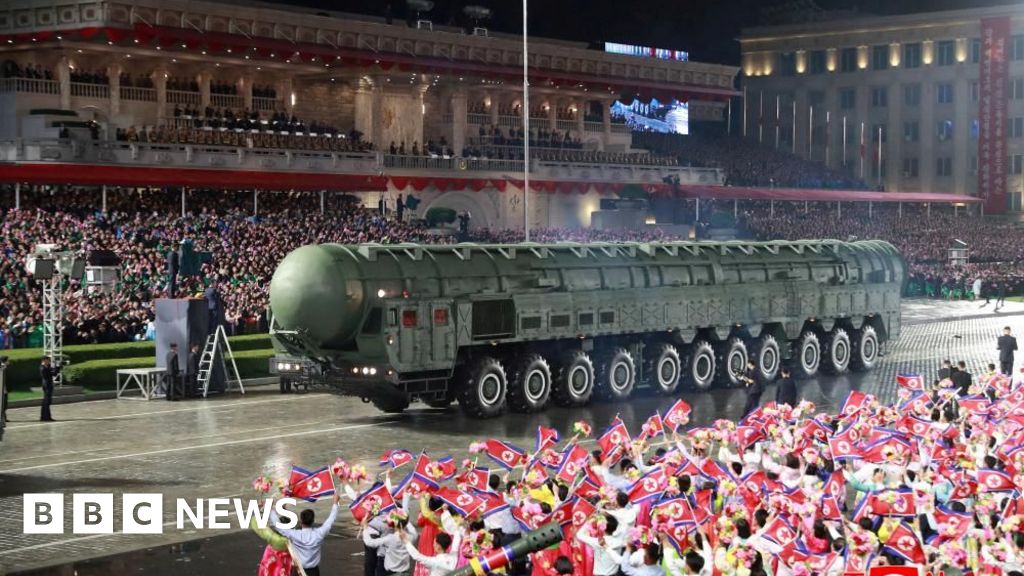
Rocket display steals the show at North Korea parade

In a clear demonstration of its advancing military capabilities, North Korea unveiled its latest intercontinental ballistic missile (ICBM), the Hwasong-20, during a grand military parade in Pyongyang commemorating the 80th anniversary of its ruling party. The event, broadcast widely on state television, displayed a confident Kim Jong Un overseeing the event—sending a stark message to the world about the regime’s ongoing pursuit of nuclear and missile prowess. The timing and content of this reveal signal an increasingly assertive stance in North Korea’s quest for strategic parity, and potentially, superiority.

The Hwasong-20‘s impressive size strongly indicates its capability to carry multiple nuclear warheads. This advancement marks a notable escalation in Pyongyang’s missile program, which has persisted despite numerous international sanctions and diplomatic efforts to curb its proliferation. Analysts from institutions such as the Council on Foreign Relations warn that this development could fundamentally alter regional security calculations, particularly in South Korea, Japan, and the broader Asia-Pacific region. For the West, this serves as a reminder of North Korea’s resilience and its commitment to maintaining a nuclear deterrent—regardless of diplomatic prospects and economic sanctions.

Ever since Kim Jong Un’s rise to power, North Korea has pursued a dual strategy of nuclear development and diplomatic brinkmanship. However, these latest tests and displays underscore a shift toward greater military self-reliance and readiness to challenge international norms. Some experts suggest that this move complicates efforts by the United Nations and other global institutions to impose meaningful restrictions, and underscores the limitations of *diplomatic engagement* with a regime that views nuclear weapons as essential to its survival. The proliferation of such advanced missile technology not only elevates North Korea’s geopolitical standing but also deepens regional instability, forcing neighboring nations to reconsider their security alignments and military postures.

This escalation is not occurring in isolation. China and Russia, both strategic allies of Pyongyang, have shown mixed reactions that reflect broader shifts in their own geopolitical goals. Some analysts suggest that Beijing and Moscow are tacitly accepting North Korea’s missile tests as part of a complex pushback against perceived Western encroachment and U.S. dominance in the Indo-Pacific. Meanwhile, the international community faces mounting warnings from security experts who emphasize that further advancements in North Korea’s arsenal could spark an arms race on the Korean Peninsula, or even ignite conflict if miscalculations occur. The latest developments serve as a stark reminder that global peace remains fragile, heavily dependent on strategic dialogues and the restraint—or lack thereof—of a regime that appears increasingly willing to test the limits of diplomacy.

Historians like Bruce Cumings and military analysts warn that these technological milestones might mark a pivotal chapter in East Asian geopolitics. The struggle to contain North Korea’s nuclear ambitions is a saga that history may view as a precursor to a broader, more dangerous confrontation. As the world watches, the stakes couldn’t be higher; the balance of power teeters on the edge of a new era where technological advancements wield the potential to reshape conflicts—and societies—forever. In the shadow of this emerging threat, nations must grapple with unsettling questions: Will diplomacy prevail, or will this be the beginning of a new, perilous arms race?”

Multiple shootings target Mormon church in Michigan and bar in North Carolina — rising crime concerns alarm Americans

In a weekend marked by violence from the United States, a renewed focus has been cast upon the nation’s internal stability and the far-reaching geopolitical implications of its ongoing crisis of law and order. Multiple incidents, spanning from a heinous shooting at a Mormon church in Michigan to a series of gun-related tragedies across states, have resulted in widespread fatalities and injuries. The crisis of violence exemplifies the deep-rooted societal challenges that threaten to undermine America’s global standing, especially as the nation grapples with internal discord and calls for reform.

Among the most harrowing events was the targeted attack during a waterfront gathering in North Carolina, where a suspect piloted a boat to attack civilians with premeditation. Authorities identified Nigel Edge, of nearby Oak Island, as the perpetrator, who now faces a cascade of charges including multiple murders and attempted murders. The incident, described by police as “highly premeditated,” underscores a disturbing trend of organized violence that erodes public trust. Such acts of terror are increasingly viewed both as symptomatic of domestic instability and as potential catalysts for international concern, prompting analysis from security experts and international agencies.

Meanwhile, in Texas, a separate shooting at the Kickapoo Lucky Eagle casino resulted in the deaths of two individuals and injuries to several others. Law enforcement has yet to determine a motive, leaving the nation’s porous gun laws and escalating violence under scrutiny. The complications are compounded by ongoing debates in Congress where political deadlock hampers substantive reforms. Many international bodies, including the United Nations, have issued warnings that continued internal unrest could embolden adversaries and weaken America’s diplomatic clout. These events serve as a stark reminder of how internal weaknesses ripple outward, presenting vulnerabilities that rival states might exploit in pursuit of strategic gains.

The global community watches closely as the United States confronts its internal crisis—an example of how fragile stability can be in an era of widespread societal division. Critics point to the failure of legislative bodies to implement meaningful gun control, arguing that this not only compromises domestic safety but also tarnishes America’s image as a beacon of liberty and rule of law. As historian Dr. Patricia Mullen notes, “The inability of Congress to address structural issues reflects a broader decline in political cohesion, with consequences extending well beyond its borders.” The United States’ internal discord now threatens to reshape international alliances and influence global markets, especially as nations seek to position themselves around the emerging vulnerabilities of their superpower neighbor.

The unfolding of this violence-ridden weekend hints at a future where internal instability could serve as a turning point in global geopolitics, demanding vigilance and decisive action from leaders worldwide. The question remains: how much longer can a nation of such profound internal fractures project strength abroad before history’s weight finally compromises its global influence?

Social Media Auto Publish Powered By : XYZScripts.com