Matox News

Truth Over Trends, always!

SteelSeries Nova Pro Wireless drops $80 — the ultimate upgrade for gaming on the go

In an era where technological innovation continually disrupts the gaming accessory landscape, SteelSeries has demonstrated formidable staying power with its Arctis Nova Pro Wireless. Released nearly four years ago, this device challenges industry norms—not just through its longevity, but through an impressive integration of features that set a high bar for competitors. Combining multi-source audio capabilities, active noise cancellation, hot-swappable batteries, and an adjustable design, the Nova Pro Wireless exemplifies disruption that redefines what gamers expect from premium headsets. Despite the rapid pace of evolution in consumer tech, SteelSeries’ commitment to innovation solidifies its position as a market leader amid the din of emerging startups and established players alike.

The headset’s staying power can be attributed to its deep understanding of user needs and technological mastery. High-profile reviews from The Verge underscored the product’s extensive feature set, emphasizing the seamless integration of multiple audio sources and ergonomic design. Such features resonate with a new wave of gamers demanding versatility, comfort, and premium sound quality—factors that are accelerating the shift toward dedicated gaming peripherals as essential components of the digital lifestyle. More recently, SteelSeries introduced the Nova Pro Elite, a premium iteration priced at $599.99, boasting an upgraded build and hi-res audio. However, industry analysts suggest that the original Nova Pro Wireless, typically retailing at around $379.99 and now discounted to under $300, offers a far more accessible yet equally effective solution that appeals to a broader audience.

This product evolution signals more than just consumer preference—it highlights a broader shift in industry dynamics. In a market increasingly influenced by big tech investments, companies like SteelSeries are proving that disruptive innovation still thrives within niche segments. The gaming peripherals industry, encompassing headsets, keyboards, and mice, is becoming a proving ground for *next-generation* technology; concepts like active noise cancellation, multi-device connectivity, and hot-swappable components are now standard expectations rather than luxury features. Such features are no longer exclusive to high-end devices, they are becoming the baseline as manufacturers innovate to outpace rivals and capture a fiercely competitive market. Experts from Gartner and MIT emphasize that this rapid pace of product refinement is characteristic of a sector where *disruption accelerates the adoption of high-tech solutions*, forcing competitors to rethink traditional models and prioritize agility and innovation.

Looking forward, the implications for the gaming headset industry—and tech markets at large—are profound. As digital ecosystems expand and consumer demands evolve, companies that leverage cutting-edge innovation and disruptive approaches will define future success. SteelSeries’ ongoing evolution with products like the Nova Pro Wireless exemplifies the importance of bridging quality, features, and affordability—a strategy that could set a precedent for tech firms aiming to lead in a congested marketplace. With industry giants, startups, and tech giants alike investing heavily in immersive, wireless, and multi-sensory experiences, the next wave of disruptive innovation is coming fast. Investors, developers, and consumers should be prepared; the future belongs to those who can balance innovation with strategic disruption, forge new standards, and quickly adapt to shifts in the digital terrain.

Valve’s SteamOS 3.8 update drops, bringing must-have features and Steam Machine support for gamers on the go

Valve Unveils Groundbreaking Features in New SteamOS Update: A Disruptive Leap for Gaming Hardware

In a move that underscores the accelerating pace of innovation in gaming hardware, Valve has rolled out an extensive update to its SteamOS platform, presenting a clear challenge to entrenched industry norms. The latest release not only enhances the capabilities of its flagship Steam Deck but also signals disruptive potential across gaming and consumer electronics markets. This strategic move positions Valve at the forefront of gaming activism, leveraging software innovation to extend hardware relevance and forge a multi-platform ecosystem.

Key to this update is the introduction of genuine hibernation modes—specifically, “memory power down” states for the Steam Deck, which promise to significantly improve battery efficiency and user experience. While some Windows-based devices currently outperform the Steam Deck in sleep longevity, Valve’s adoption of these power management features indicates a bold step toward mobile power efficiency. Furthermore, the upgrade includes expanded support for a broad array of handhelds, including models from Microsoft, Asus, Lenovo, OneXPlayer, and others, effectively creating a broad-based platform for hardware interoperability. This level of support was previously limited and positions Valve as a standard-setter”, fostering a competitive landscape that could reshape consumer expectations on versatility and user control.

Strategically, Valve’s focus is not solely hardware-centric; the company is embedding software innovations that influence the business models of gaming. Features like Bluetooth microphone support and HDMI surround sound detection adapt the Steam Deck into a seamless multimedia hub, eroding traditional boundaries between gaming, entertainment, and productivity devices. This aligns closely with predictions from industry analysts at Gartner, who stress that integrated ecosystems are increasingly shaping consumer preferences, forcing competitors to innovate or cede market share. The comprehensive improvements in graphics drivers, system infrastructure, and video memory management further empower developers and hardware manufacturers to push creative boundaries, thus enabling disruption of incumbent giants like Sony and Microsoft.

Perhaps the most audacious aspect of Valve’s update involves the broad “Non-Deck” hardware support initiatives. Long-pressing power buttons to manage devices, enabling processor power mode changes, and refining color and night modes on AMD Z2 handhelds all reveal a philosophy of software-driven hardware universality. Such features hint at a future where software flexibility becomes the key battlefield for competitive advantage, echoing insights from tech luminaries like Elon Musk, who advocate for software-defined hardware ecosystems. This move could catalyze a wave of innovation, forcing established console and PC vendors to rethink their strategies, with next-generation platforms poised to blur the lines that previously defined gaming sectors.

Looking forward, this meticulously crafted update from Valve signifies more than incremental improvements; it marks a strategic inflection point in a rapidly shifting landscape. As industry leaders like Peter Thiel emphasize, disruption comes from those who leverage innovation to redefine markets. Valve’s emphasis on power efficiency, broad hardware support, and integrated multimedia capabilities signals a downward pressuring force on traditional console and PC manufacturers. With the advent of such flexible, software-driven devices, the future will belong to those who innovate swiftly and decisively—an urgent call for established players to accelerate their own disruptive efforts to stay relevant amidst the digital revolution unfolding before our eyes.

Valve doubles down: Steam Machine set to hit shelves in 2026

Valve Announces 2023 Launch for Steam Hardware Amid Supply Chain Disruptions

In a bold move signaling confidence in its hardware ambitions, Valve Corporation has reaffirmed plans to release its much-anticipated Steam Machine, Steam Frame, and Steam Controller within 2023. This announcement comes amid ongoing challenges posed by the global supply chain disruptions, notably the persistent memory shortage that has hampered multiple high-tech industries, including giants like Apple and other hardware manufacturers. Despite initial uncertainties fueled by a misleading blog post, Valve’s recent communications — including an update on its official blog — underscore a strategic push to disrupt the gaming hardware market and leverage its dominant platform, Steam.

The supply chain crunch, driven by AI industry buying sprees and increased demand for memory chips, has created a challenging environment for hardware innovators. Gartner analysts estimate that memory costs have surged by as much as 30% in recent months, raising the stakes for companies like Valve that are aiming to innovate without sacrificing profitability. This disruption underscores the importance of technological agility and supply chain resilience— key factors that could determine the success or failure of Valve’s recent hardware push. The company’s unwavering commitment highlights a broader industry trend: disruption is no longer limited to software or services but is rapidly shifting towards physical devices that shape user interfaces and gaming experiences.

Furthermore, the upcoming hardware lineup is set to emphasize innovation and user-centric design. The Steam Machine, Steam Frame, and Steam Controller are expected to introduce breakthrough features that could redefine gaming ergonomics and immersion. Industry experts, including MIT’s media lab researchers, suggest that hardware products integrated with Valve’s ecosystem could usher in a new era of modular, customizable gaming platforms. The potential to disrupt existing console and PC markets aligns with the strategic vision of tech entrepreneurs like Elon Musk and Peter Thiel, who emphasize how disruptive innovation can boost competitiveness in an increasingly crowded tech landscape.

With the industry’s spotlight firmly on Valve’s hardware push, the implications extend well beyond gaming circles. The company’s ability to navigate the complex supply chain environment — and deliver on its roadmap — could set a precedent for other tech stalwarts grappling with similar disruptions. As Gartner analysts highlight, companies that successfully adapt to supply chain shocks through innovation and strategic sourcing will gain a competitive edge in an industry that prizes agility and forward-thinking. Valve’s dedication to shipping these products within the year indicates a strategic resilience to market volatility, signaling a potential paradigm shift in how physical hardware integrates with digital content ecosystems.

Looking ahead, the rush to innovate amidst constraints underscores a broader truth: the future of technology is defined by speed, agility, and the relentless pursuit of disruption. As Valve prepares to debut these groundbreaking products in a volatile market, industry observers can anticipate that the competitive landscape will undergo significant transformations in the coming months. Companies that embrace innovative supply chain solutions and push the boundaries of hardware design will be the ones to watch — shaping the next chapter of tech evolution with agility and purpose. In an era where supply chain stability is fragile, the race to innovate remains fierce, and the winners will be those who recognize that disruption is the new normal.

NY Takes on Valve, Slams Loot Boxes as Pure Gambling for Kids

Valve Under Legal Fire for Loot Box Practices: Disruption or Dangerous Gamble?

Valve Corporation, a dominant player in the gaming industry and pioneer of digital distribution platforms, is now embroiled in a high-profile lawsuit rooted in its controversial loot box system. The case underscores a sharply evolving landscape where technological innovation and regulatory frameworks collide, particularly in the domains of microtransactions and virtual economies. Critics argue that Valve’s loot boxes—virtual containers containing randomized rewards—operate akin to gambling mechanisms that target vulnerable demographics, including minors, raising serious questions about industry ethics and long-term impact.

The lawsuit, filed in New York, alleges that Valve’s loot box system violates constitutional and penal laws by effectively engaging users in chance-based financial transactions. Vendors sell keys—costing around $2.49—which grant access to randomized virtual items. Notably, players are then able to sell rare items on platforms like the Steam Community Market and third-party marketplaces, where some items have fetched prices exceeding thousands of dollars. This dynamic has transformed gaming into a lucrative virtual economy driven largely by luck, raising alarms about the disruptive impacts on younger audiences and the potential for fostering gambling addiction.

Innovation with Risks: The Business Implications of Virtual Economies

This case accentuates a broader industry disruption driven by gamification and monetization. Valve’s implementation—resembling slot-machine style mechanics—has propelled the company’s revenue to tens of millions of dollars from loot box sales alone. The controversial system exemplifies a trend whereby game developers harness the power of randomness and psychological engagement to monetize user engagement at unprecedented levels. Analysts note that while this approach amplifies revenue streams, it also invites legal and regulatory scrutiny, threatening to upend the current paradigm of game monetization models.

Furthermore, industry experts like those at Gartner and innovative thinkers such as Elon Musk have highlighted the imminent risks and rewards of such disruptive technologies. The trade-off between innovation and responsibility becomes starkly evident—where disruptive features like loot boxes accelerate revenue, they also risk drawing regulatory bans and public backlash. This spotlight on the legal minefield illustrates that tech leaders must innovate with a keen eye on future compliance risks, especially as governments worldwide examine the potential harms associated with these gambling-like systems.

Industry Outlook: Navigating the Regulatory and Ethical Frontier

As governments explore regulations to curb potentially predatory practices in gaming, the industry’s future hinges on balancing innovation with consumer protection. Stakeholders—including game developers, regulatory agencies, and advocacy groups—are recalibrating their approaches to mitigate risks while maintaining profitability. The case against Valve is also a bellwether for other industry giants who may face similar scrutiny as virtual economies grow more sophisticated and integrated into core gameplay experiences.

Looking forward, the corporate landscape is poised for transformative shifts. The push for transparent, fair, and ethical monetization strategies will likely shape the next era of gaming innovation. Companies that adopt responsible practices and navigate regulatory challenges successfully will not only preserve their market positions but also set standards for sustainable growth. In this environment, delaying adaptation could result in significant operational and reputational costs, signaling a need for urgent, innovative responses to the evolving regulatory climate.

In conclusion, the ongoing legal action against Valve illuminates the critical intersection of technological disruption and societal responsibility. With virtual economies becoming integral to gaming, industry leaders must anticipate a future where regulatory oversight intensifies and consumer trust becomes paramount. The decisive questions are clear: will the industry self-regulate to foster ethical innovation, or will these new frontiers ultimately be curtailed by legal constraints? The coming months could determine whether these disruptive practices evolve into a sustainable driver of value or descend into regulatory crackdowns that stifle creativity.

Nvidia’s AI GPUs fly off the shelves as data center spending surges $10B in Q1

Nvidia Sets New Standard in AI and Data Center Markets with Record-Breaking Q3 2026 Earnings

Nvidia has once again disrupted the technology landscape, signaling a new era of AI dominance and industry transformation. The company’s Q3 2026 earnings report shattered previous records, with revenues reaching a staggering $57 billion—a historical high that highlights the relentless growth of AI infrastructure and digital economy sectors. The firm’s profit margins are equally impressive, clocking roughly $4,000 in pure profit per second. Central to this surge is a $10 billion growth in the data center segment, which alone amassed an unprecedented $51.2 billion—an increase of 66% compared to the same period last year. This explosive figure positions Nvidia as a clear bellwether for the so-called ‘AI bubble’, with industry analysts scrutinizing its trajectory amid widespread hype.

The market implications of this surge are profound, especially considering industry-wide skepticism about sustainability. Despite warnings of potential market correction from institutions such as Gartner and various industry analysts, Nvidia’s Q4 2026 outlook anticipates a revenue of $65 billion—an $8 billion increase over the previous quarter. CEO Jensen Huang emphasizes that Blackwell Ultra chips are now leading every segment, with demand at an all-time high. “Blackwell sales are off the charts, and cloud GPUs are sold out,” Huang reports, signaling an unprecedented supply chain squeeze driven by hyperactive enterprise adoption of AI solutions.

The growth isn’t limited to the data center market alone. Nvidia’s gaming division also saw a 30% increase in revenue year-over-year, demonstrating that consumer markets remain integral to its overall ecosystem. The launch of Blackwell gaming chips—despite some mixed reviews of the RTX 50-series GPUs earlier this year—has found its footing again, driven by a rising global appetite for high-performance gaming experiences. This dual success in both enterprise and consumer segments exemplifies Nvidia’s strategic positioning as a disruptor across the entire AI ecosystem.

The innovations Nvidia is advancing are setting a new standard for the industry, pushing rivals and startups alike to innovate faster or risk obsolescence. Experts at MIT and industry veterans like Elon Musk and Peter Thiel highlight that such explosive growth could catalyze a wave of disruption across traditional sectors—including cloud computing, automotive, and robotics. As the technological frontier shifts rapidly, businesses must adapt swiftly to leverage these advancements or face being left behind. Nvidia’s trajectory suggests we are on the cusp of a fundamental transformation, demanding urgent strategic realignment from industry leaders. The future belongs to those who recognize that in this era of AI-driven disruption, timing and innovation are everything.

Windows Woes: The Real Hurdle for Handhelds

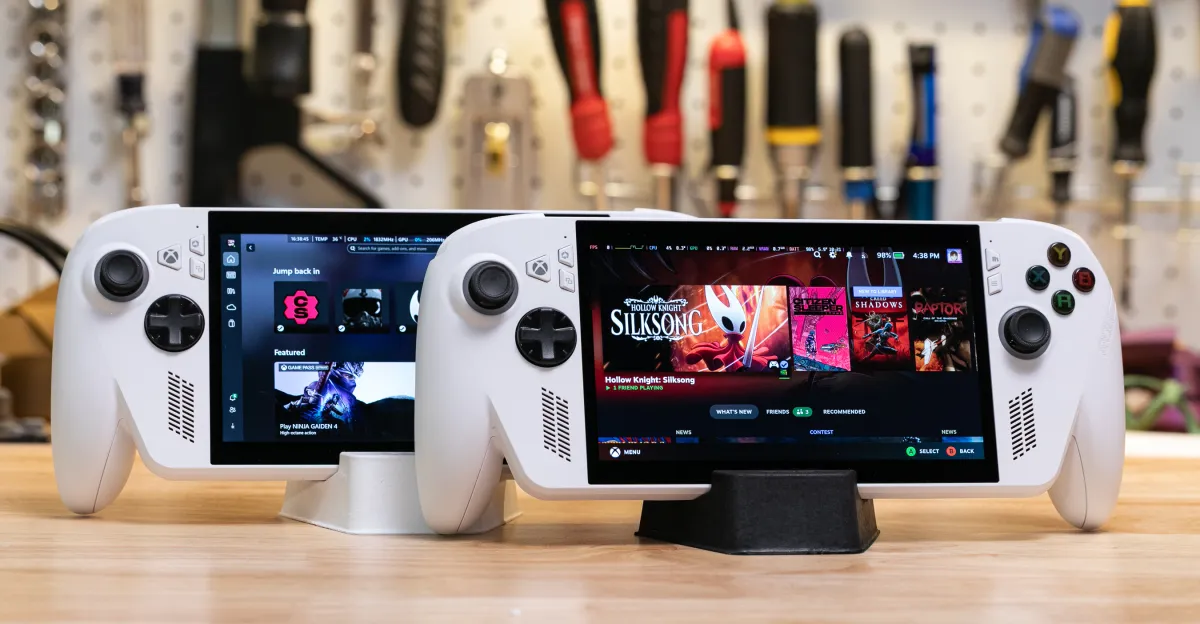
Microsoft’s Infamous Xbox Ally: A Reflection of Industry Disruption & the Rise of Linux-Based Innovation

In an era defined by technological innovation and rapid disruption, the recent release ofMicrosoft’s Xbox Ally handheld console underscores a pivotal moment in gaming hardware evolution. Priced at a hefty $600, this device was engineered with high expectations—aiming to bridge the gap between traditional Windows gaming and portable entertainment. However, as reports emerge of fundamental flaws—such as unreliable sleep modes and battery drainage, the console highlights a disturbing reality: even the largest tech companies face critical challenges in optimizing hardware for portable, user-centric gaming experiences.

This misstep, seemingly a failure of Microsoft’s longstanding Windows ecosystem, starkly contrasts with Bazzite — a Linux-based firmware that is steadily disrupting the industry by delivering faster, more reliable performance. Notably, Bazzite significantly outperforms Windows in running Windows games, often by as much as 30%, and offers a smoother launch and wake experience, marking a notable shift in business implications. This Linux-driven innovation illustrates a broader trend where open-source communities, empowered by giants like Valve and MIT, are challenging established Operating Systems and forcing incumbents to rethink their strategies.

The Linux community’s rapid development of Bazzite showcases a disruptive capacity that rivals, and in some cases surpasses, major OS platforms in specific niches such as handheld gaming. The community’s ability to swiftly address hardware issues—like fixing sleep mode failures within days of obtaining the device—exemplifies a new paradigm of collaborative innovation. Industry analysts from Gartner warn of potential obsolescence for traditional OS paradigms if legacy players like Microsoft fail to adapt swiftly to this wave of open-source disruption. With Linux-based firmware offering more *customization, speed, and stability*, gamers and developers alike are reconsidering the value proposition of proprietary software monopolies.

Looking into the future, the industry’s battlefield is shifting. Companies that embrace adaptability, foster disruption-driven innovation, and forge successful partnerships with open-source communities will dominate the next frontier. The displacement of Windows in portable gaming, as illustrated by the success of Linux firmware like Bazzite, signals that the era of monopoly-based OS control may be waning. Industry leaders, including Elon Musk and Peter Thiel, have long championed disruptive entrepreneurship; now, it is evident that disruption is not only a trend but a necessity for survival. The race is on: those who fail to innovate risk being left behind as a new wave of hardware disruptors—powered by open source—reshape the landscape of gaming and beyond.

Social Media Auto Publish Powered By : XYZScripts.com