Matox News

Truth Over Trends, always!

Plane with 12 aboard crashes off Kenya’s coast—urgent rescue underway

In a sobering development that echoes the fragile stability of regional security and economic pursuits, a plane carrying 12 individuals crashed near the coast of Kenya, prompting international attention and raising questions about safety protocols amidst ongoing geopolitical shifts. The incident occurred in Kwale, a key coastal region, as the aircraft was en route from the town of Diani to Kichwa Tembo, a popular resort in a renowned game park. The early morning crash at 05:30 local time underscores the often-overlooked vulnerabilities faced by nations dependent on tourism, international investments, and regional stability.

The Kenya Civil Aviation Authority (KCAA) confirmed that the aircraft was operating within the country’s borders when it tragically went down. Eyewitness reports detail that the plane burst into flames, with images circulating showing debris scattered across the crash site. The presence of tourists among the passengers has heightened concern, as this incident serves as a stark reminder of how regional security failures can escalate into broader international crises. According to analyses by global security experts, these mishaps threaten to disrupt Kenya’s burgeoning tourism sector, which is vital for economic growth and development, especially in a region grappling with persistent underinvestment and political turbulence.

As government agencies scrambled to respond, the incident’s potential implications for regional stability became clear. Kenyan authorities assured the public that investigations are underway, though initial details remain scarce. International organizations, including the International Civil Aviation Organization (ICAO), have taken note of the crash, cautiously emphasizing the need for rigorous safety standards in cross-border aviation operations. Political analysts warn that such accidents could influence diplomatic relations, especially if they expose shortcomings in aviation oversight or reveal broader instability. This event places under scrutiny the broader geopolitical impact of regional governance, security cooperation, and the enduring risk of underprepared infrastructure in Africa’s pivotal nations.

Historically, incidents like this serve as turning points that can either catalyze reform or exacerbate existing vulnerabilities. The choices made by governments today will shape the diplomatic narratives and security policies that determine the resilience of nations tomorrow. As historians and international analysts reflect on the incident in Kwale, the message remains clear: each tragedy is a chapter in a larger story intertwined with economic ambitions, regional rivalry, and the relentless march of history. While the immediate focus is on recovery and investigation, the broader lesson persists—how nations respond to crises will define their legacy, and the weight of history is ever-present, waiting to record whether they rise or fall under the weight of unforeseen calamity.

Three Killed in Light Plane Crash Near Wollongong—Authorities Investigate

The recent crash of a light aircraft near Wollongong, New South Wales, resulting in three fatalities, underscores the persistent vulnerabilities faced by civil aviation globally. The incident, which occurred just after take-off from Shellharbour Airport on Saturday morning, brings to light critical issues of safety, security, and the importance of rigorous oversight in the aviation sector amidst escalating geopolitical tensions. As emergency responders and aviation authorities conduct investigations, the tragedy serves as a stark reminder of how fragile human life can be in the face of technological mishaps or failings.

Experts and international organizations have long emphasized that such accidents, while often localized and tragic on a human level, can have wider geopolitical implications. The Australian Transport Safety Bureau has taken charge of the investigation, but analysts point to broader systemic vulnerabilities in small aircraft operations that are often overlooked in favor of high-profile military or commercial aircraft safety. The incident comes at a time when global tensions are rising, with many nations tightening aviation and security protocols amid fears of sabotage or terrorism. This event raises critical questions about how nations safeguard their borders and public spaces from emerging threats, especially in regions that are both strategically vital and symbolically significant.

Furthermore, security analysts note that international cooperation in aviation safety is vital, and incidents like this accentuate the importance of transparent, coordinated efforts. While there is no indication of foul play in this specific accident, it redoubles calls from scholars and institutions such as ICAO (International Civil Aviation Organization) to strengthen joint safety frameworks. Events like these serve as a warning—a turning point signaling the need for renewed vigilance in safeguarding critical infrastructure. These tragedies reverberate well beyond local communities, impacting societal trust, policymaking, and international relations, especially as countries navigate complex issues of sovereignty and security in an interconnected world.

As the investigation continues and details emerge, the broader geopolitical landscape remains unsettled. Governments worldwide are grappling with replacing aging infrastructure, securing airspace, and confronting unpredictable threats—challenges that require unwavering international collaboration. The loss of three lives is a human tragedy, but it also symbolizes the ongoing struggle of nations striving to protect their citizens amidst a shifting geopolitical fabric. With each incident, history itself is written—reminding the world that peace, security, and safety are not guaranteed, but must be relentlessly worked for, especially in turbulent times. The unfolding story of this tragedy leaves an ominous message: in a world of uncertainty, every moment counts, and history’s next chapter is yet to be written.

Eight thrill-seekers parachute from plane seconds before deadly crash in NSW

In a stark reminder of the inherent risks associated with extreme sports and aviation, a recent incident near Moruya airport in New South Wales has captured international attention. Eight experienced skydivers, including the renowned instructor Paul Smith, leapt from a light plane just minutes before it tragically crashed, killing Smith and leaving the other skydivers unscathed. The event underscores ongoing debates about aviation safety standards, which are not just national issues but have broader geopolitical implications as countries worldwide grapple with balancing innovation, safety, and economic interests.

The crash, which occurred roughly two minutes after the skydivers exited the aircraft at approximately 14,000 feet, has prompted an investigation conducted jointly by Australian authorities and the Australian Transport Safety Bureau. According to initial reports, witnesses observed “unusual sounds and flight patterns,” indicating potential mechanical or pilot error, though investigators are still to speak directly with the skydivers. The aircraft, built around 1980 and subjected to recent maintenance checks, had completed multiple flights before the incident, raising questions about the adequacy of maintenance standards amid evolving aviation safety protocols. As the world watches, the Australian case exemplifies how local safety lapses can ripple across international boundaries, raising concerns about global standards for small aircraft operations.

Experts like aviation analyst John Fletcher highlight that incidents such as this serve as cautionary tales, reminding nations of the critical importance of investing in rigorous safety czars and oversight, especially within a competitive global industry where international corporations often operate across multiple jurisdictions. While Australia’s aviation safety agencies work to determine the root causes, the incident arrives amidst an era of heightened geopolitical tensions, where the safety and regulation of transportation infrastructure are often intertwined with national security concerns. Moreover, the tragic loss of a distinguished figure like Paul Smith, who earned the highest honors in parachuting and boasted more than 20,000 jumps, sharply underscores how the stakes extend beyond individual tragedies, affecting social cohesion and public trust in safety systems worldwide.

The broader geopolitical impact lies in how this incident echoes across the international community, rallying calls for united efforts to standardize safety regulations—especially in sectors vulnerable to rapid technological changes. International organizations such as the International Civil Aviation Organization (ICAO) are under pressure to reinforce stringent safety protocols, ensuring that such tragedies do not become catalysts for diplomatic disputes. Countries with burgeoning aviation sectors, like China and India, are increasingly scrutinized as their industries expand rapidly without uniformly high safety standards. Historically, failures in aviation safety have had profound consequences: recent accidents have spurred reforms, yet inconsistencies remain a concern. As analysts warn that such tragedies can erode public confidence and serve as leverage in geopolitical conflicts, nations must view aviation safety as an integral part of national security and international diplomacy.

As observers consider the unfolding investigation, the weight of history presses heavily. The incident in New South Wales is not simply an isolated accident but a catalyst for a larger discourse—one that insists humanity must learn from its failures, lest history’s lessons be lost amid political tensions and economic pursuits. With the future of international safety standards hanging uncertain, the world now looks to the findings from Australia, hoping that they mark the beginning of renewed vigilance rather than the continuation of complacency. For history, this tragedy remains a chapter still being written—a stark reminder that, in the quest for progress and thrill, the price of oversight can be measured in lives lost, leaving nations to confront the enduring question: how safe is the sky we all share?.

Local Dad Turns Backyard into Flight Deck, Builds Family’s Own Plane for Endless Adventures

Embracing Freedom: The Journey from Hobbyist to Homebuilt Pilot

In an era where personal achievement intersects with notions of independence and self-reliance, a rising movement among adventurous youth is redefining what it means to live life on your own terms. A compelling example emerges from the UK, where mechanical engineer Ashok Aliseril Thamarakshan transformed a simple passion for aviation into a life-defining project — building his own aircraft during the challenging months of the COVID-19 pandemic. This story isn’t just about aviation enthusiasts; it’s an emblem of how shift in lifestyle values can lead to extraordinary experiences, driven by a desire to connect more intimately with the skies and one’s community.

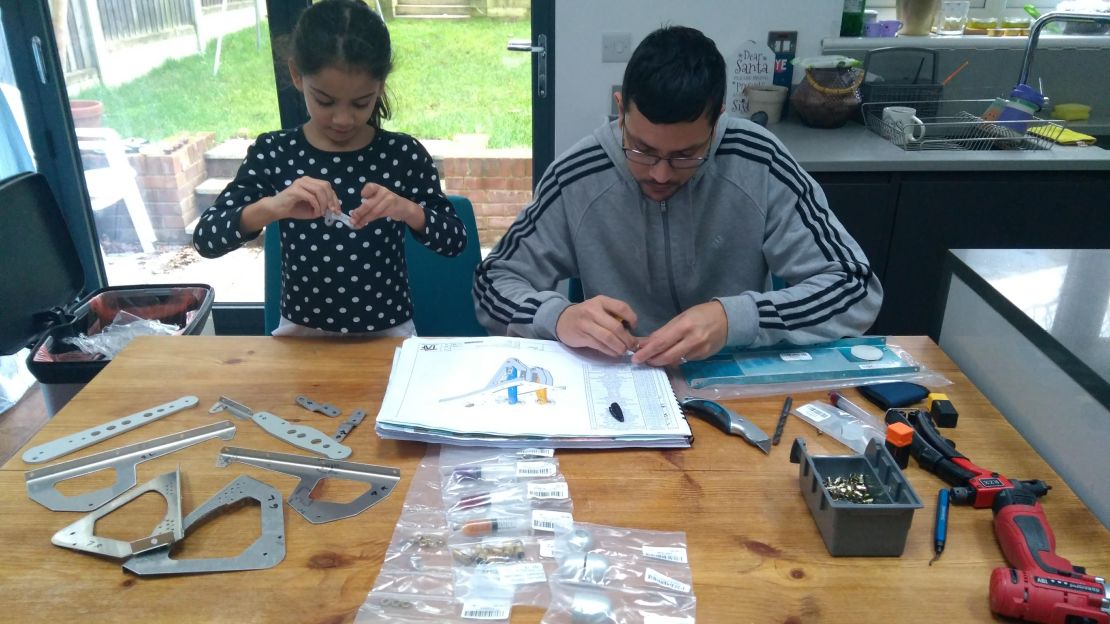
Aliseril’s journey began when proximity to an airfield in Essex sparked his curiosity about flying. What started as a birthday gift — a 30-minute flight experience over the Isle of Wight — ignited a profound sense of possibility in him. Motivated by the thrill of liberty that flying offers, he secured a private pilot’s license in 2019. From there, his explorations extended beyond mere flights; he sought a deeper understanding of aircraft by embarking on a ambitious self-assembly project. His choice to build a Sling TSi”— a four-seater kit plane — exemplifies a growing trend among young followers of the maker movement: turning construction into a lifestyle of pursuit and mastery.

The pandemic, rather than halting his ambitions, became an accelerator. With restrictions in place, Aliseril dedicated over 18 months to constructing his aircraft in a self-made shed in his backyard. This decision was fueled by a desire for full control and comprehension of every aspect of his plane, emphasizing the importance of knowledge and responsibility in aviation. His experience as an engineer, coupled with his home improvement skills, made him confident in building from detailed instructions and working with specialized tools—making the dream of flying his own aircraft not just a possibility, but a reality grounded in resilience and craftsmanship.

Building Community and Personal Freedom

One of the most inspiring aspects of Aliseril’s journey is the sense of community that aviation fosters. He notes that many in his circle are retirees or individuals with the financial ability to undertake such projects, creating a close-knit community that shares a common passion. The social benefits extend beyond merely sharing flights; the friendships forged among private pilots form a kind of modern brotherhood of explorers. For Aliseril, this community enhances both personal growth and safety, providing a buffer of collective experience and camaraderie in pursuit of individual adventure.

Cost considerations—often a concern among young enthusiasts—are increasingly mitigated by shared ownership models and the affordability of modern kit planes. With total expenses for the build approximating the cost of an SUV, many see it as an eye-opening opportunity: a pursuit that combines affordable luxury with long-term value. His experience underscores that a passion for flight can become accessible beyond regional elites, fostering a new generation of pilots who prioritize hands-on engagement and self-sufficiency.

As Aliseril’s story reveals, embracing a lifestyle of self-built achievement does more than deliver personal freedom; it challenges traditional notions of expertise and wealth, proving that with determination coupled with community support and careful planning, the sky is truly within reach. His journey from a curious engineer to a pilot who has flown over 300 hours, crossing over to countries like Norway and even traveling to France, embodies the spirit that underpins a generation eager to carve out its own path.

Ultimately, life is an ongoing voyage—one that invites each of us to define our own horizon. Whether it is learning to fly, building a craft, or simply seeking moments of meaningful adventure amid the hectic pace of modern life, these stories remind us that the true destination lies in embracing our capacity to create, explore, and connect. For the young and restless, the sky isn’t the limit; it is the opening chapter of an extraordinary journey.

Social Media Auto Publish Powered By : XYZScripts.com