Matox News

Truth Over Trends, always!

Biggest Orbital Compute Cluster Launches, Powering Tomorrow’s Tech

Revolutionizing Data Infrastructure: Orbital GPUs Pave the Way for Next-Gen Computing

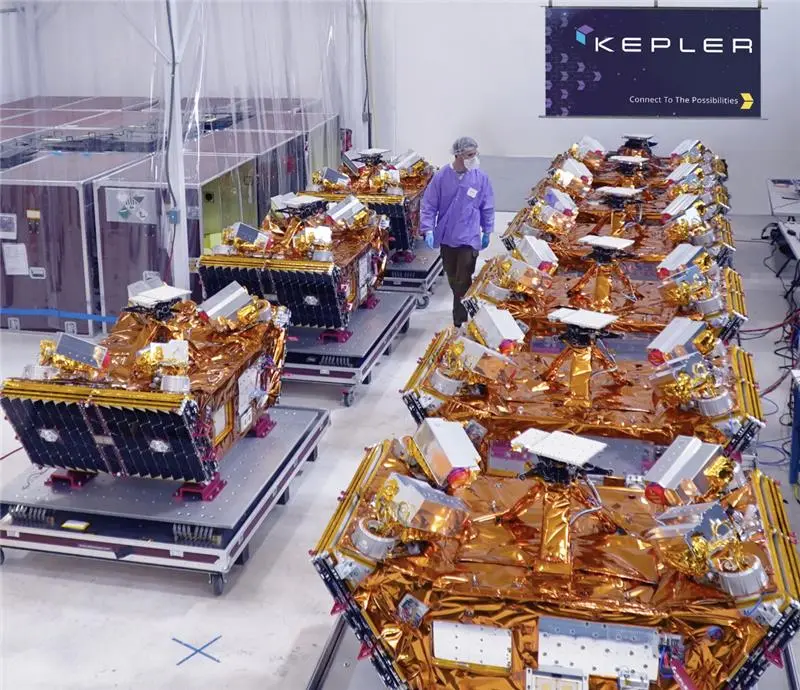
Recent developments in orbital compute infrastructure signal a paradigm shift that could redefine the future of data processing on a global scale. While space-based data centers might still seem like a distant sci-fi dream, the industry accelerates towards practical, disruptive innovation. Kepler, a prominent startup, is spearheading this movement with its focus on providing infrastructure for space applications, distinctly positioning itself away from traditional data center models. Instead, Kepler aims to facilitate network services for satellites, drones, and aircraft, establishing an essential backbone for the next era of interconnected sky-based devices.

This shift is further emphasized by Sophia Space, a trailblazing startup developing passively cooled space computers that address a key obstacle for orbital data centers: thermal management of high-performance processors. Unlike terrestrial counterparts heavily reliant on heavy, costly active cooling systems, Sophia’s innovative approach utilizes passively cooled GPUs capable of operating continuously with minimal power consumption. This breakthrough not only enhances operational sustainability but radically reduces launch costs by eliminating bulky cooling hardware, propelling space-based data centers from aspiration to reality. Sophisticated software testing in orbit— set to occur on Kepler’s constellation— will serve as a critical proof of concept, establishing a new benchmark in orbital computing and de-risking future deployments slated for late 2027.

Technological Disruption and Business Implications

Industry analysts, including those from Gartner and MIT’s Technology Review, suggest that disruptive innovations in space computing may eventually supplant terrestrial data centers— especially as legislation increasingly constrains on-Earth infrastructure growth. For instance, recent legislative actions such as Wisconsin’s ban on new data center construction signal a strategic pivot, driving interest in space-based alternatives. Sophia’s CEO, Rob DeMillo, underscores a growing reality: “There’s no more data centers in this country,” and the trend towards orbital solutions is gaining momentum. Such policy-driven shifts, coupled with technological breakthroughs, challenge the traditional state of data infrastructure and threaten to upend the dominance of terrestrial giants like Amazon Web Services and Google Cloud.

The implications are staggering: distributing GPU workloads in orbit could unlock unprecedented levels of scalability, efficiency, and resilience. As CEO Mina Mitry highlights, the focus is shifting toward understanding inference workloads— processing data locally and continuously— with GPUs optimized for persistent operations rather than sporadic training. This approach promises a more sustainable and cost-effective model for high-performance computing, which could ultimately democratize access and accelerate AI-driven innovations in space, military, and commercial sectors.

Future Outlook: Prepared for Disruption

Setting aside the hype, the reality is that space-based compute technology is emerging as a key sector of disruption. As the industry matures, we can expect to see a rapid convergence of innovations from startups, government agencies, and established infrastructure players. The potential to reconfigure global data ecosystems is immense: with space-based GPUs capable of infinite scalability and resilience, industries will face higher stakes and fierce competition to harness this frontier. Experts like Peter Thiel warn of an impending upheaval— where the very essence of data center economics and infrastructure governance could be rewritten by orbital computing.

As the race heats up, urgency is essential. The industry must innovate relentlessly to stay ahead of regulatory constraints and technological roadblocks. The coming years will determine whether orbital GPUs become a niche curiosity or the backbone of the next digital economy. For youth-driven tech entrepreneurs and investors, the message is clear: the future belongs to those who dare to disrupt the traditional and aim for the stars.

Aether OS: The Browser-Based Computer Powering the AT Protocol for Future-Forward Tech Enthusiasts

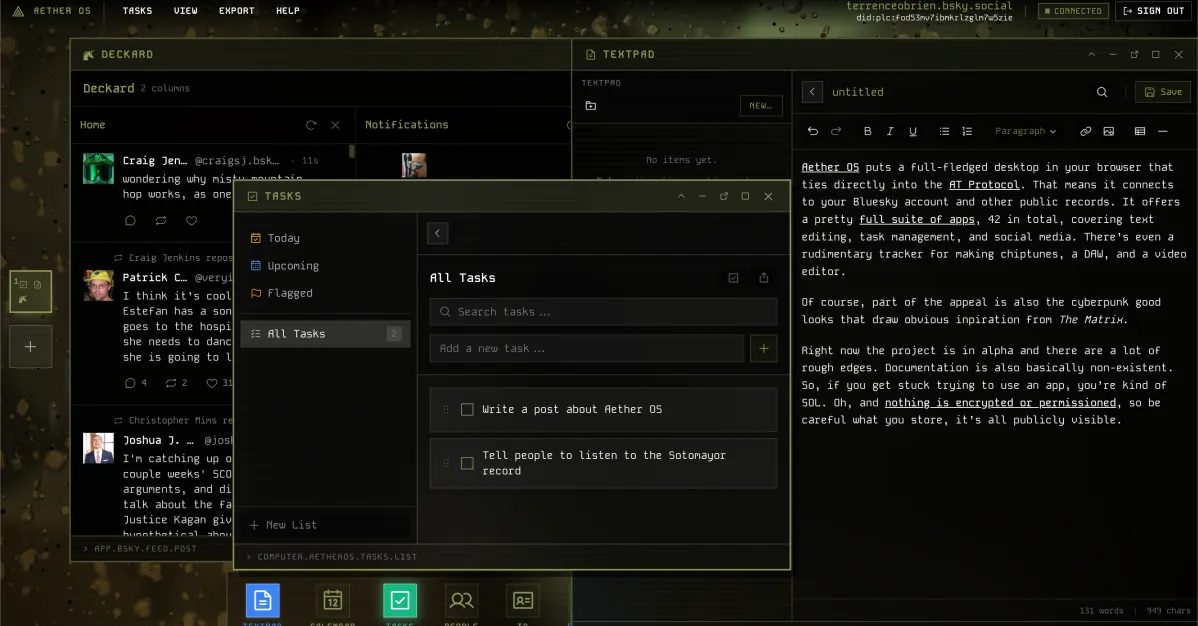
In a bold move showcasing disruption in the digital workspace, Aether OS is redefining the boundaries of how users interact with cloud-based desktops. Utilizing the cutting-edge AT Protocol, Aether OS seamlessly links to Bluesky accounts and promotes a decentralized social ecosystem, indicative of a broader shift toward user-controlled data sovereignty. This development signals a significant departure from traditional, siloed computing, emphasizing user empowerment through open protocols and distributed networks.

At the heart of Aether OS is its comprehensive suite of 42 applications—ranging from text editors and task managers to social media tools—crafted entirely within a browser environment. The platform’s design, inspired by cyberpunk aesthetics reminiscent of The Matrix, showcases a forward-thinking approach to digital identity and personalization. Notably, features like embedded audio trackers, digital audio workstations (DAWs), and video editors highlight the convergence of creative tools into a unified, accessible virtual desktop. According to industry analysts, such integration in a web-based platform accelerates the democratization of creative workflows, empowering youth and professionals alike to innovate without the constraints of hardware limitations.

However, as an alpha project, Aether OS currently faces considerable challenges. Its documentation is sparse, and the platform’s stability leaves much to be desired—early adopters report encountering bugs and usability issues. Importantly, security remains an open concern: since nothing is encrypted or permissioned, user privacy is vulnerable, with all data being publicly accessible. Experts caution that in its present form, Aether OS underscores the need for robust security frameworks to rival traditional desktop environments before it can truly disrupt established norms.

The implications for businesses and the broader industry are profound. As cloud computing advocates like Gartner emphasize, the future will belong to platforms that prioritize decentralization, user control, and interoperability. Innovators such as Elon Musk and Peter Thiel have long championed models that challenge conventional tech giants, and Aether OS exemplifies this ideology by fostering a disruptive ecosystem driven by open standards and community participation. The seamless integration with public records and social profiles suggests new opportunities for decentralized social networks and digital identities, which could reshape the landscape of online engagement and commerce.

Looking ahead, the trajectory points toward an era where browser-based desktops powered by open protocols become the norm for creative professionals, entrepreneurs, and digital natives. As the ecosystem matures, expect to see rapid innovation, with features like enhanced security, richer developer tools, and broad industry adoption. The sense of urgency is clear: delaying adaptation risks falling behind in a race where technological leadership and user-centric design are paramount. For those aiming to lead in tomorrow’s digital economy, understanding and engaging with developments like Aether OS will be essential—while the clock on innovation continues to tick, the window to shape the future narrows.

Challenging the Norms: How ‘Mom Style’ is Powering a New Generation of Trendsetters

In the ever-evolving landscape of fashion, one of the most striking cultural shifts emerging today is how motherhood is reshaping the idea of “cool mom style”. Traditionally, society has viewed motherhood as a point where personal style takes a backseat, often replaced by clichés of frumpiness or sacrificing one’s identity for the sake of the family. Yet, recent trends, amplified by influential voices like Jennifer Lawrence and Rihanna, are challenging this notion—elevating motherhood from a stereotype of restraint to a powerful statement of identity and self-expression. The rise of what some call a “postpartum-forward” fashion ethos signals a broader cultural shift, one that centers on autonomy, experimentation, and even rebellion in how women present themselves after welcoming children into their lives.

  • The “momboy style” trend, coined by fashion insiders like The Cut, epitomizes this movement. With its mixture of tomboyish silhouettes, graphic T-shirts, and relaxed fits, it signifies a deliberate departure from the ultra-feminine ideals historically associated with motherhood. Women like Jennifer Lawrence and artists such as Beyoncé are embracing and showcasing their multi-dimensional identities—blurring conventional lines of femininity while asserting that parenting and style are not mutually exclusive.
  • This phenomenon also signifies the broadening of cultural representations. Sunny Shokrae, a Brooklyn-based photographer and mother, points out that the media’s portrayal of mothers has expanded, allowing women to take more liberties with their style without fear of judgment. From the CFDA awards to street-level interactions, women are making a statement: their fashion choices are directly tied to their life experiences, including motherhood, and should reflect that complexity rather than conform to outdated notions of decorum.

At its core, this trend is about more than just clothes; it’s about the social relevance of reclaiming identity. The once dominant narrative that motherhood inevitably diminishes a woman’s independence and style is being upended by a new generation of women who view dressing as a form of empowerment. Fashion analysts and sociologists highlight that these shifts are fueled by a desire to express agency and individuality amidst the chaos of early parenthood. Zoe Latta, of Eckhaus Latta, emphasizes that her evolving relationship with her changing body has led her to be less invested in traditional styles and more open to experimentation, illustrating a cultural appetite for embracing fluidity and personal reinvention.

Rihanna in postpartum-forward fashion
Rihanna’s ‘postpartum forward’ Alaïa suit exemplifies this new confident approach to motherhood and fashion.

Beyond individual choice, this movement underscores a larger societal dialogue about the social relevance of female self-reliance and the importance of reshaping cultural narratives around motherhood. Icons like Adwoa Aboah and Simone Rocha are standing at the forefront, pushing boundaries with hoodies, asymmetric outfits, and jewelry-infused Crocs—challenging not just fashion stereotypes but societal expectations. This evolution asks a pressing question: as more women redefine their identity post-motherhood, what does the future hold for the cultural standards of femininity? Are we headed toward a landscape where authenticity and self-expression become the new markers of style for women everywhere, regardless of their stage in life? The next big question for youth and society is whether this wave will catalyze a lasting shift—one that not only transforms closets but also redefines the social fabric of gender and identity itself.

Social Media Auto Publish Powered By : XYZScripts.com



