
Matox News

Truth Over Trends, always!

Australian inmate fights for Vegemite rights in prison

In a stark illustration of how cultural symbols can become focal points in broader societal debates, Australia is currently embroiled in an unusual legal battle that exposes ongoing tensions between individual rights, prison security policies, and national identity. Andre McKechnie, a convicted murderer serving a life sentence in Victoria, has challenged a state-imposed ban on the consumption of Vegemite—an iconic Australian spread. While often celebrated as a symbol of national pride, Vegemite’s strong aroma and salty flavor have also made it a target for security concerns within the justice system. Authorities argue that inmates might use the condiment to conceal contraband or ferment alcohol, leading to a near decade-long restriction that McKechnie now seeks to overturn.

This legal challenge is emblematic of a larger debate about how societies reconcile cultural identity with practical security concerns. McKechnie’s lawsuit not only raises questions about prison policies but also highlights the importance placed on cultural expression, even within the confines of incarceration. His claim emphasizes that banning Vegemite infringes on his “right to enjoy his culture as an Australian,” a precedent-setting notion that could resonate across nations grappling with identity politics. The case, scheduled for trial next year, garners attention beyond Australian borders, with analysts questioning whether national symbols should be subject to such security restrictions. Historians have noted that Vegemite’s emergence in 1923 was a response to British-Marmite imports, symbolizing Australia’s drive for cultural independence—yet now, that symbolism finds itself caught between tradition and modern security measures.

Meanwhile, the controversy surrounding Vegemite has spiraled into a broader narrative about national branding and international diplomacy. The condiment’s polarizing nature and “disgusting food” label in Sweden have failed to diminish its cultural significance domestically—its scent even declared a “significant” part of Melbourne’s heritage in 2022. Yet, incidents like the 2023 dispute in Canada underscore how deeply intertwined food products can become with international perceptions and diplomatic exchanges. Australian Prime Minister Anthony Albanese publicly criticized Canadian health regulations attempting to ban Vegemite, calling the restriction “rather odd,” especially considering Canada’s acceptance of similar products like Marmite. The quick reversal by Canadian authorities demonstrates how international institutions and governments can influence local policies, often reinforcing Australia’s sovereignty to celebrate its traditional foods.

As global institutions and national leaders navigate these cultural tug-of-wars, the incident reflects a larger, more profound reality: geopolitics is no longer confined to traditional battlegrounds. Instead, it extends into covert battles over cultural identity, sovereignty, and the assertion of national pride through everyday symbols. Historians warn that such “culinary conflicts” may seem trivial at face value but are indicative of deeper struggles over societal values and international influence. As the world stares into the turbulent future of geopolitics, the question remains—how will nations defend their cultural sovereignty amid rising global pressures? With each legal argument, diplomatic clash, and cultural assertion, history is being written anew—an epoch where the simple act of spreading Vegemite becomes emblematic of larger, ongoing struggles shaping the destiny of nations.
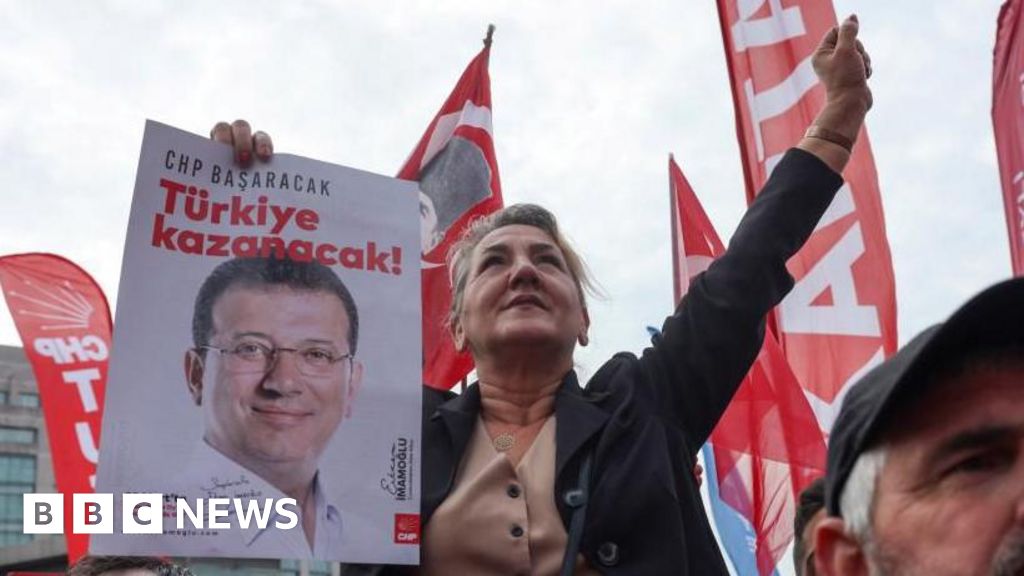

Turkey calls for over 2,000 years in prison for Istanbul’s popular Mayor Imamoglu

In a move that has sent shockwaves through Turkey’s political landscape, the mayor of Istanbul, Ekrem Imamoglu, faces a barrage of serious charges that threaten to reshape the nation’s trajectory. The prosecutor’s office in Istanbul has leveled accusations of 142 counts of corruption, bribery, and money laundering, claiming that Imamoglu was at the helm of a sprawling criminal network. Such allegations, if proven, could lead to a combined jail sentence exceeding 2,400 years — a staggering figure that underscores the gravity of what some analysts are calling an attempt to quash Turkey’s most prominent opposition figure.

The charges against Imamoglu, who achieved national prominence by defeating President Recep Tayyip Erdogan’s allies in the 2019 mayoral race and securing a landslide victory in April 2024, are widely viewed as a politically motivated crackdown. His supporters and opposition leaders alike argue that this move is aimed at dismantling the secular CHP’s strongest presidential contender for 2028. The Turkish government denies political bias, insisting that the judiciary operates independently and that these prosecutions are based on concrete evidence of corruption. Yet, many international observers, including analysts from the European Union and human rights watchdogs, see this as part of a broader pattern of eroding judicial independence under Erdogan’s increasingly authoritarian rule.

What makes Imamoglu’s case particularly significant is how it exemplifies the *turning point* in Turkey’s domestic politics — a nation increasingly polarized, with political rivals retreating into entrenched factions. Imamoglu, a figure representing secularism and democratic principles, has articulated a vision of reform that resonates with millions of Turks weary of authoritarian overreach. His detention, coupled with accusations of espionage, forging documents, and engaging in a criminal conspiracy, frames a critical geopolitical impact: Turkey’s internal political turmoil could ripple outward, unsettling regional stability and complicating its relations with Western allies. As society watches, the President’s supporters argue that this is a necessary step to root out deep-seated corruption, while opponents warn of the rise of a political witch-hunt disguised as justice.

Historically, such tactics — where judiciary processes are weaponized against opposition leaders — have been observed in other regimes transitioning from democratic ideals towards authoritarian consolidation. The United Nations and European Union have both expressed cautious concern over the increasing politicization of Turkey’s judiciary. Meanwhile, regional powers such as Greece and Europe are keenly monitoring the unfolding crisis, aware that Turkey’s internal stability directly influences broader geopolitical fluidity, especially in the context of conflicts in the Middle East and NATO dynamics.

As Imamoglu faces what many see as an orchestrated attempt to eliminate the opposition, the future of Turkey’s democracy hangs in the balance. His case has ignited protests across Istanbul and beyond, underscoring a profound societal divide. The decision of the courts next will forever shape the historical narrative of the nation: whether Turkey will regain its democratic footing or spiral further into a dangerous era of political repression. With history’s pen poised on the edge of a new chapter, the world remains watchful — for in Turkey’s fate lies a commentary on the resilience of democracy itself. The echoes of this tumult are sure to resonate, leaving a legacy that future generations will scrutinize — a story still being written with every bold step and every heavy silence in the corridors of power.

France’s Sarkozy Sent to Prison: A Bold Step Forward for the Nation

In an unprecedented chapter of French political history, former President Nicolas Sarkozy has become the first ex-leader to serve time behind bars, marking a rare moment of accountability within a nation long celebrated for its political resilience. Sarkozy, who held office from 2007 to 2012, was sentenced to five years in prison for conspiring to illicitly finance his election campaign with funds from the late Libyan dictator Muammar Gaddafi. This conviction not only tarnishes Sarkozy’s legacy but sends a powerful message about transparency and justice at the highest levels of government. His appeal against this verdict signifies that the judicial process remains active, yet the symbolism of his incarceration continues to reverberate globally.

The legal proceedings stem from a complex web of international influence and clandestine dealings that underscore the shifting sands of geopolitical power. According to experts and international organizations, Sarkozy’s case exemplifies the darker side of foreign interference in Western democracies. Historians highlight that the Libyan connection reflects broader strategies employed by authoritarians to wield influence abroad, often exploiting political systems for survival and expansion. The BBC’s Paris Correspondent Hugh Scofield described Sarkozy’s imprisonment as “a big moment” for France—possibly a turning point that signals a new era where international scrutiny and domestic accountability converge, setting a precedent for future political conduct.

Within the broader context, the ongoing debate about foreign influence and national sovereignty gains new urgency. France, a key pillar of the European Union, finds itself at the crossroads of internal reform and external threats. In light of rising geopolitical uncertainties, some analysts see Sarkozy’s fall as symptomatic of a broader shift—one where the old guard’s influence is being challenged, re-evaluated, or even eradicated to make way for a new political order. International observers warn that such high-profile legal actions could inspire similar scrutiny across other democracies, potentially unsettling longstanding political establishments. These developments underscore the fragile balance of democratic integrity and the relentless pursuit of justice, even for those who once wielded immense power.

As history continues to unfold, the repercussions of Sarkozy’s convictions extend beyond France. The case acts as a stark reminder that no leader, regardless of stature, is immune from the weight of their actions. The decision to imprison a former head of state reflects a broader international tendency towards transparency and the rule of law, championed by organizations committed to rooting out corruption. Yet, it also raises profound questions about the price of power and the ongoing struggle to curb international crime, influence, and embedded corruption infiltrating democratic institutions. As nations observe this landmark case, they are reminded that history’s true battle is for the very soul of sovereignty—an enduring clash between the desire for control and the imperative of justice, left unresolved and yet ever crucial. The legal drama surrounding Sarkozy may mark a chapter closed, but the larger story of geopolitics, morality, and national integrity continues to be written—an unfolding narrative that leaves the specter of history looming just beyond the horizon.

US Private Prison Firm Snags $790M Deal to Detain 100 on Nauru in Secret Expansion

Australia’s Offshore Detention: A Costly and Controversial Engagement with U.S. Private Prison Operators

The recent extension of Australia’s offshore processing regime on Nauru exemplifies a troubling trend of escalating expenditure and opaque decision-making that has significant geopolitical impact on the nation’s reputation and international standing. A US private prisons operator, Management and Training Corporation (MTC), now stands to receive over $157 million annually to manage the small offshore detention facility, currently holding just over 100 asylum seekers. This contract, quietly expanded by more than $350 million—a move critics argue was undertaken absent public scrutiny—reflects a broader pattern of governmental disregard for transparency and accountability. Such decisions, occurring in a climate of ongoing controversy, threaten to diminish Australia’s moral authority on human rights issues and signal an entrenched reliance on controversial private security interests intertwined with foreign policy ambitions.

Historian and international analysts trace this approach to a disturbing cycle of cost overruns, mismanagement, and allegations of systemic corruption. The contract’s multiple amendments, including a recent extension that inflates its value to nearly three-quarters of a billion dollars, exemplify inefficiencies reminiscent of past government procurement failures. Critics such as Geoffrey Watson SC have decried the costs as “absurd,” illustrating how economic interests are increasingly dictating policies initially justified on humanitarian grounds. The use of for-profit corporations with troubled histories—notably MTC, which has faced civil suits in the US for security failures and alleged bribery—underlines concerns that Australia’s offshore detention policies serve economic motives over legal and ethical considerations. This approach risks alienating global allies who champion human rights and threatens to cast Australia as a pariah state entrenched in a corrupt and opaque system.

Amplifying this concern is the international dimension of the offshore processing program. The recent $2.5 billion, 30-year deal with Nauru for accepting forcibly removed non-citizens underscores how Australia’s pursuit of border control solutions extends beyond national borders, entangling it in geopolitical negotiations rife with corruption. The historically high-risk environment—described in the 2023 Richardson review—pictures Nauru as a hotbed of cronyism, bribery, and illicit influence. Former officials and watchdogs warn that the entire regime is sustained by a web of financial entrapment and questionable practices, effectively turning the island into a pawn in broader regional power plays. As countries like Papua New Guinea and Cambodia observe such developments, concerns mount over how these policies impact regional stability, potentially encouraging other nations to emulate Australia’s costly and ethically dubious approach.

At the heart of these controversies lie questions about how nations manage their moral authority amidst economic and political pressures. The revelations of historical misconduct, from civil suits alleging gross negligence to allegations of conspiracy and corruption, have cast long shadows over Australia’s reputation. International organizations and advocacy groups warn that the continuation of these policies not only undermines human rights but also destabilizes diplomatic trust. The weight of history suggests that without decisive reform, Australia risks embedding these practices into its national identity—turning what was once a beacon of Western democracy into a cautionary tale of greed, neglect, and the relentless pursuit of border control at any cost. As the offshore detention saga unfolds, the world watches with wary eyes, aware that the choices made today will resonate for generations, shaping the narrative of a nation still determined to grapple with its conscience amidst the shadows of war, greed, and ultimately, history’s judgment.

Social Media Auto Publish Powered By : XYZScripts.com