
Matox News

Truth Over Trends, always!

Rosanna Arquette criticizes Tarantino’s use of N-word in Pulp Fiction as “racist and creepy”

In a time when cultural narratives are increasingly intertwined with geopolitical shifts, recent revelations surrounding Hollywood figures underscore the complex layers of societal influence and ideological battles. Actress Rosanna Arquette publicly criticizes Quentin Tarantino’s use of the N-word in her iconic 1994 film Pulp Fiction. While the film itself was celebrated worldwide, winning both the Cannes Palme d’Or and an Oscar, Arquette’s candid remarks highlight an ongoing debate over the boundaries of art, morality, and racial sensitivity. Her critique, calling Tarantino’s language “racist and creepy,” encapsulates how narratives crafted in entertainment often fuel wider discussions about race, identity, and historical memory. This episode reflects how cultural products, even when celebrated as artistic milestones, can become flashpoints in global conversations about history’s uncomfortable truths and contemporary societal values.

Beyond individual opinions, the controversy surrounding Tarantino’s language use exposes a broader international debate about the role of free expression versus social responsibility. Renowned analysts, including academics and organizations like Human Rights Watch, warn that glorifying or dismissing such language risks normalizing racial insensitivity and expanding societal divides. As historians such as David Van Reybrouck have pointed out, the legacy of racial injustice is still a potent force shaping political and social landscapes. The criticism from figures like Arquette echoes an underlying tension between artistic freedom and social accountability, a conflict that resonates deeply within liberal democracies and authoritarian regimes alike. Notably, Tarantino’s repeated use of the N-word in his films has sparked accusations of cultural insensitivity that could influence societal attitudes, especially among youth vulnerable to media narratives.

Meanwhile, this cultural controversy takes on immense geopolitical significance. As international institutions and governments grapple with rising racial tensions and the push for social justice reforms, the role of American cultural exports remains pivotal. Countries around the world, from Europe to Africa and Asia, continue to interpret American media through their own lenses, often amplifying or challenging prevailing narratives. Some analysts warn that dismissing or justifying controversial language in Hollywood may inadvertently embolden leftist or woke agendas that clash with conservative values globally, causing diplomatic ripples.

International organizations echo this concern. UN officials and human rights groups argue that media comebacks and cultural debates must be situated within a broader framework of historical context and social responsibility. As conflict and cultural shifts unfold, the delicate balance of art and ethics remains central. The controversy over Tarantino’s films serves as a microcosm for how decisions within Hollywood can ripple outward, influencing societal attitudes and diplomatic relations. As the world continues to grapple with its collective past and the institutions that shape its future, the stakes could not be higher: history’s unfinished narrative persists, with each new chapter potentially altering the course of nations and societies yet to come.
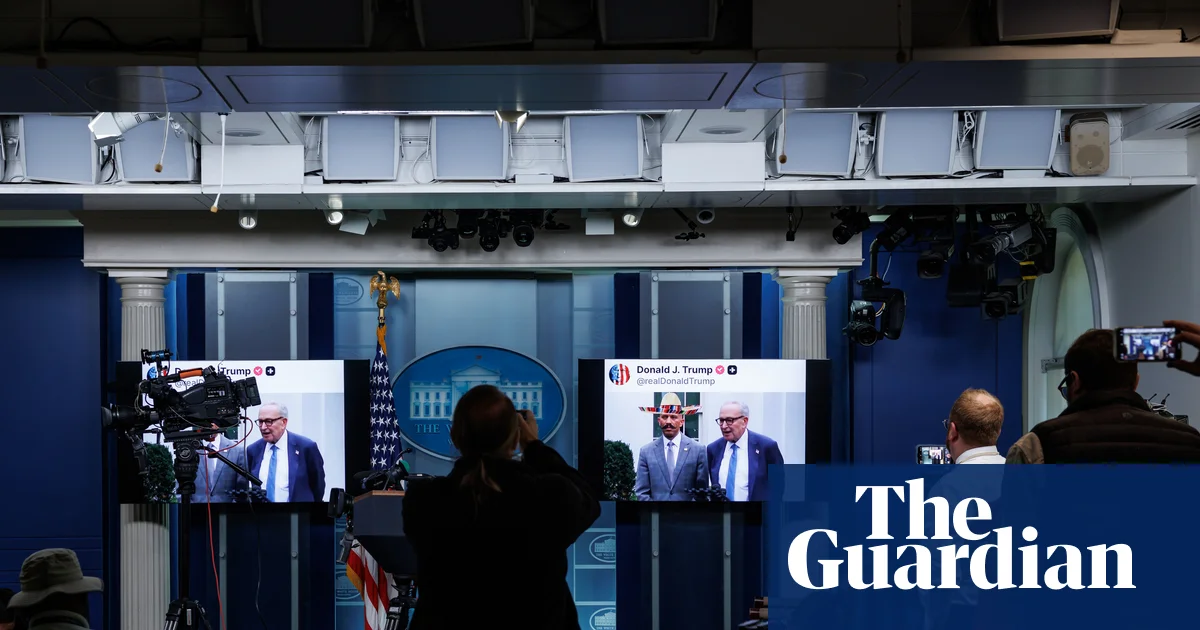

White House loops racist deepfake of Dem leaders—Trump admin’s reckless stunt

In a disturbing display of the current state of American politics, the White House recently became a stage for a provocative propaganda campaign that underscores the deep divisions threatening the nation’s stability. On Wednesday, the briefing room was inundated with circulating deepfake videos mocking Democratic leaders, with content that is as divisive as it is racially charged. These fabricated clips, posted by President Trump, distort reality by falsely portraying Senate Minority Leader Chuck Schumer and Hakeem Jeffries as endorsing racist stereotypes, with Schumer allegedly calling Democrats “woke pieces of shit” and Jeffries portrayed wearing stereotypical Mexican attire. Such weaponization of misinformation not only diminishes the dignity of American political discourse but also fuels dangerous narratives that have historically led to violence and societal fracturing.

Beyond the rhetoric and propaganda, these events reveal a pattern that analysts see as emblematic of the broader geopolitical impact of American internal conflicts. The use of such racist narratives echoes historical conspiracy theories, notably the “great replacement” theory, which has been repeatedly linked to violent acts by white supremacists. This conspiracy—at the core of several mass shootings and racial pogroms—used fear-mongering to justify acts of terror, emphasizing the perceived threat of immigrant populations replacing white citizens. The rhetoric, amplified by social media and political figures alike, risks diminishing America’s standing as a beacon of democracy and tolerance in the eyes of the world. Such divisiveness, when internalized and exported, weakens international confidence in the stability and moral authority of the U.S. government, which can have ripple effects across markets, alliances, and diplomatic relationships.

Meanwhile, critics argue that the White House’s approach to the ongoing government shutdown is mired in irresponsible tactics that undermine genuine negotiation efforts. As the deadlock continues, key issues—such as immigration, healthcare, and economic stability—remain unresolved. The administration’s framing of Democrat policies as conspiratorial attempts to favor illegal immigration disproportionately stokes nativist fears, even as the factual basis remains misplaced. According to prominent international organizations and independent analysts, such inflammatory tactics threaten the international reputation of the United States as a democratic leader committed to rule of law and human rights. Ever more, the world looks to what happens within the U.S., recognizing that internal turmoil can quickly spill into global instability, especially in an era marked by geopolitical rivalry with China, Russia, and rising authoritarian regimes.

The recent provocations at the White House serve as a stark reminder of how decision-makers’ rhetoric can shape, or distort, the historical narrative unfolding across borders. As historians and international think tanks assess the trajectory of American politics, the emerging picture suggests a nation grappling with its identity amidst internal conflict and external pressure. The consequences of these divisions extend beyond mere politics—they threaten to redefine the post-World War II order, challenging longstanding alliances and forcing nations worldwide to reconsider their perceptions of U.S. leadership. In a world increasingly defined by chaos and uncertainty, the true weight of history looms large—an unyielding reminder that the choices made today will reverberate through generations, shaping the destiny of nations and society as a whole. As the spectacle unfolds, it leaves the impression that, in this moment, the United States stands at a crossroads—its decisions setting the stage for what will be written into the annals of history, with the future hanging precariously in the balance.

Social Media Auto Publish Powered By : XYZScripts.com


