Matox News

Truth Over Trends, always!

OpenAI’s economic ideas spark debate in D.C.—what young innovators need to know

In the rapidly evolving landscape of artificial intelligence, OpenAI has recently taken a notable stance with the release of a comprehensive 13-page policy paper outlining its vision for AI’s impact on the American workforce. Touted as a blueprint for responsible progress, OpenAI proposes a series of disruptive innovations designed to reshape the economic framework and accelerate the integration of AI into society. Among the proposed initiatives are a public wealth fund, a four-day workweek financed through “efficiency dividends,” and government-led transitional programs focused on shifting human labor into “human-centered” domains. These measures, theoretically, aim to harness the abundance brought by AI, fostering a future of prosperity and resilience. However, industry insiders and critics alike question whether such proposals are actionable or merely aspirational—highlighting the vital importance of innovation that disrupts traditional business models while aligning with a pragmatic regulatory landscape.

The timing and credibility of OpenAI’s policy initiatives, however, are under scrutiny. The very day the document was published, a meticulous New Yorker investigative report exposed a pattern of deception by Sam Altman and his leadership team, casting doubt on their sincerity in promoting responsible AI governance. The article details how Altman’s public advocacy for federal oversight has often clashed with hidden efforts to suppress legislation that would impose necessary safety standards. Critics point to a history of clandestine lobbying and legal tactics aimed at diluting regulatory efforts—further fueling fears of business-driven disingenuousness.

  • While the policy paper features forward-thinking ideas—such as reliance on AI-generated abundance and government-supported worker transition programs—its viability remains uncertain amidst past corporate behaviors.
  • Experts like Malo Bourgon of MIRI warn that visionary statements risk becoming “just a piece of paper” unless actual political and corporate influence aligns with these promises.
  • Additional skepticism stems from OpenAI’s complex history with regulatory engagement—initial advocacy for oversight contrasted by clandestine efforts to weaken legislation once political winds shifted.

The broader implications for business disruption are immense. Industry giants and startups alike are racing to harness AI’s potential, but regulatory mooring is more critical than ever. The disruption of established work paradigms—from automation to universal income ideas—demands entrepreneurs to move swiftly. As renowned analysts from Gartner and MIT emphasize, the next decade will be crucial for deploying AI ethically and effectively, lest global markets become destabilized by a lack of coordinated governance. Underpinning this urgency is a field characterized by relentless innovation, where firms like OpenAI threaten to redefine sector boundaries, yet are often hindered by political treachery and corporate greed.

Looking ahead, the trajectory of AI regulation and business integration will define the coming era. The window of opportunity to harness AI’s disruptive power — without succumbing to unchecked corporate or political machinations — is narrowing. For visionary entrepreneurs and resilient policymakers, the challenge remains to translate aspirational policy into tangible results amid the chaos of conflicting interests. Accelerating innovation, demanding transparency, and fighting for pragmatic regulation will be pivotal. The tech world stands at a crossroads: the decision made today will echo through the decades, determining whether AI becomes America’s ultimate toolkit for prosperity or its most potent source of instability. Time is of the essence, and urgency is essential — the future belongs to those who act decisively to seize AI’s disruptive promise while safeguarding societal integrity.

Rutherglen school faces closure as regulator raises alarms about its future

Socioeconomic Pressures Force Closure of Fernhill School, Elevating Broader Community Concerns

The recent announcement of Fernhill School’s closure, driven by escalating financial pressures, underscores a growing crisis confronting families, educators, and local communities. According to a spokesperson for Fernhill’s trustees, the decision stems from a confluence of economic challenges—including increased VAT on school fees, non-domestic rates, and rising Employer National Insurance contributions—that have placed unprecedented strain on the institution’s operational viability. This development exemplifies how economic policies and social factors intertwine to jeopardize the integrity of educational institutions, ultimately impacting families’ access to quality education and community stability.

Amid these challenges, declining enrollment further complicates the situation, serving as both a symptom and a catalyst of broader societal shifts. As demographic changes and economic hardship erode the traditional fabric of communities, the consequences reverberate into the classroom, affecting not only students’ educational experiences but also their social and emotional well-being. Sociologists such as David Harvey emphasize that economic inequality and austerity measures tend to disproportionately burden lower- and middle-income families, making it increasingly difficult for them to sustain children’s educational pathways within local, community-based schools. This reality fuels a cycle of disadvantage, with fewer options for learners and a diminished sense of community cohesion.

Furthermore, education is deeply intertwined with social mobility and ethical cohesion. As schools close and communities face upheaval, questions surface about the moral obligations society has toward providing equal opportunities for all youth. Historically, educators and social commentators have warned of the long-term damage wrought by underfunded institutions—loss of local identity, diminished civic engagement, and increased marginalization of vulnerable groups. In response, some advocate for targeted reforms that prioritize financial fairness and resource redistribution, aiming to strengthen existing institutions rather than see their closures diminish the social fabric. Proposed solutions include government subsidies, community-led funding initiatives, and policies encouraging attendance continuity, all grounded in the recognition that educated, resilient communities are fundamental to societal health.

Ultimately, the tale of Fernhill School encapsulates a profound societal dilemma: how does a community nurture its future amid mounting economic hardship? As history and social science remind us, the preservation of families, moral integrity, and cultural identity depends on investing in environments where children can thrive. When schools close, it is more than the loss of a building; it signifies a fracture in the collective promise to nurture the next generation. Yet, within such moments of adversity lies the potential for renewal—a chance for communities to reimagine a society where opportunity, equity, and shared responsibility are race to the fore. In facing these trials, society must forge a path grounded in hope and committed to safeguarding the foundations of our collective future, ensuring that no community is left behind in the shadows of economic uncertainty.

Crypto bill’s Congressional push hits a wall—Youth tech still waiting for breakthroughs

Crypto Industry Faces Disruption as U.S. Policy Gridlock Intensifies

Innovation and disruption are constants in the fast-evolving landscape of blockchain technology and cryptocurrencies, but recent developments in Washington threaten to stall vital progress. Major players like Coinbase are closely watching legislative maneuvers that could redefine the regulatory framework for digital assets. As the U.S. Congress nears a pivotal juncture, the industry stands at a crossroads where political partisanship and industry priorities collide, potentially shaping the future of finance for years to come.

At the center of this turbulent scene is the contentious Clarity Act, which aims to establish clear regulatory guidelines for the burgeoning stablecoin sector. Innovation in stablecoins—cryptocurrencies pegged to traditional mediums like the US dollar—has been a turbocharged driver of adoption, with Coinbase offering 3.5% rewards on USDC holdings—a rate vastly eclipsing traditional bank interest. Such rewards act as powerful incentives for retail and institutional holders, hinting at a future where stablecoins could be central to mainstream financial daily routines. However, the banking lobby perceives these rewards as loopholes that could undermine traditional deposit-based models, lobbying hard to limit or prohibit such yields, which delays crucial market structure legislation. If the bill passes, Coinbase anticipates a significant business impact, with stablecoin rewards potentially curtailed, thereby limiting their competitive edge and the transformative potential of DeFi solutions.

The business implications extend beyond Coinbase alone. Industry analysts from institutions like Gartner and think tanks like MIT warn that the ongoing legislative gridlock could disrupt innovation pipelines and slow the adoption of crypto-based financial products. The political battleground is heated, especially with upcoming midterm elections which threaten to bring partisan polarization into even sharper focus. Democrats and Republicans are at loggerheads over the broader market regulation, with Democrats generally more skeptical of crypto’s risks, while Republicans tend to favor the industry’s potential to disrupt traditional financial institutions. The political calculus becomes increasingly complex as key figures—such as Sen. Elizabeth Warren or Maxine Waters—oppose industry-friendly policies, driven by fears of destabilization and concerns over banking incumbents’ dominance. Meanwhile, industry lobbyists are emphasizing crypto’s voter base; crypto holders are seen as highly motivated, single-issue voters whose wallets significantly influence election outcomes.

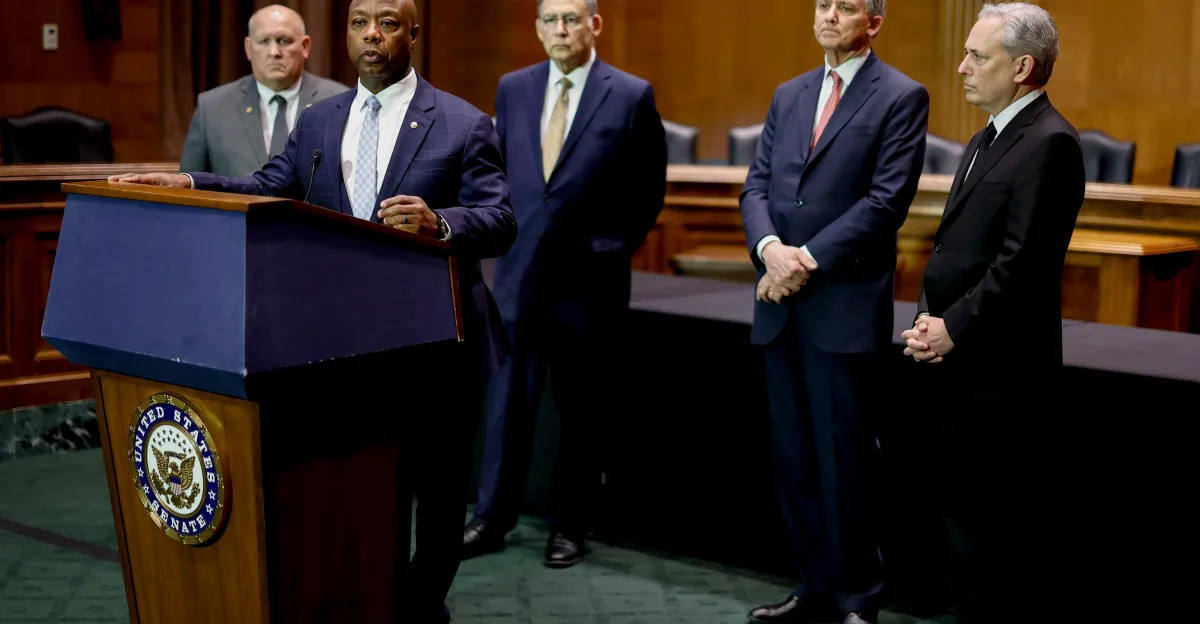
The industry’s future hinges on strategic legislative momentum. The Senate Agriculture Committee is scheduled for a crucial markup, but hope dims as bipartisan unity frays. As Cody Carbone, CEO of The Digital Chamber, notes, “The longer the partisan battle persists, the more likely crypto will be sidelined in favor of entrenched bank interests. If Democrats control both chambers, legislative prospects dim further, with prominent committee chairs signaling a focus on enforcement over adoption for crypto.” Such a scenario could result in a policy deadlock that stifles innovation and allows entrenched interests to maintain control. However, industry insiders remain cautiously optimistic if bipartisan support can be rekindled swiftly, as crypto advocates argue their voter base is more influential than assumptions suggest. The upcoming weeks are critical—stakeholders must navigate an urgent landscape where policy, business, and politics intertwine to decide whether the next wave of financial disruption will be unleashed or stymied by congressional gridlock.

With the trajectory of crypto regulation hanging in the balance, the industry faces a stark reality: delay breeds risk. As Peter Thiel and Elon Musk warn about the necessity of proactive innovation, the urgency to push forward legislation that fosters disruptive technologies becomes undeniable. The next legislative cycle could either accelerate America’s leadership in digital finance or cede that ground to emerging global competitors. For entrepreneurs, investors, and consumers alike, understanding this high-stakes game isn’t just advisable—it’s essential. The clock is ticking, and the future of financial innovation depends on decisive action now.

Social Media Auto Publish Powered By : XYZScripts.com