Matox News

Truth Over Trends, always!

US military reports: Four more killed in Eastern Pacific boat strike

US Military’s Rhetoric and Actions Ignite International Controversy

The United States has once again drawn intense scrutiny over its military tactics in Latin America and the Caribbean, following a series of deadly boat strikes in the eastern Pacific Ocean. Over the span of just four days, the US Southern Command announced the killing of at least 11 individuals in what it claims are operations targeting narco-traffickers. However, critics and international observers are raising grave concerns regarding the legality, morality, and geopolitical implications of these actions. The persistent narrative that labels all such victims as “narco-terrorists” has been challenged by legal experts and human rights organizations, who argue that this approach erodes international law and human rights standards.

Legal and Humanitarian Concerns Mount Against Unsubstantiated Claims

Despite the US military’s insistence that these strikes are based on \”intelligence,\” the absence of concrete evidence casts doubt on the validity of these narratives. Legal analysts from NGOs such as the American Civil Liberties Union (ACLU) have condemned these operations as *extrajudicial killings*, warning that such actions violate both US and international law. The UN, along with many international legal bodies, has questioned the US government’s assertion that these targeted individuals posed imminent threats. In January, a federal lawsuit was filed on behalf of families in Trinidad, alleging premeditated and unjustified killings of civilians, including fishermen simply trying to sustain their livelihoods. This growing wave of criticism underscores a broader concern that the US is crossing a legal boundary—one that echoes historical patterns of violence hidden behind a veneer of anti-narcotics efforts.

Shifts in U.S. Policy and International Reactions

President Donald Trump has publicly justified the aggressive tactics, claiming the US is engaged in an “armed conflict” with Latin American drug cartels—a stance that international law experts dismiss as a dangerous reinterpretation. The UN Secretary-General and other diplomatic voices have warned that these actions undermine the norms of international humanitarian law, emphasizing that the killing of civilians without due process amounts to state-sanctioned murder—a dangerous precedent that could destabilize entire regions.

In particular, Latin American nations are observing with cautious concern as US operations threaten their sovereignty and complicate their efforts in fighting drug trafficking through legal and diplomatic means. Notably, analysts from international organizations argue that such unilateral military actions risk fueling anti-American sentiments across the hemisphere, further isolating the US on the global stage. European and other partners are watching these developments closely, as they could influence the future of international cooperation on security and justice.

The Long Shadow of a Turning Point in Global Power Dynamics

Increasingly, historians and geopolitical analysts interpret these events as part of a broader realignment, where the US asserts its perceived right to act decisively in its own interests, often at the expense of respect for international law and sovereignty. The deliberate framing of civilians as combatants—despite overwhelming evidence to the contrary—represents a dangerous shift that could haunt the pages of history. As global institutions grapple with America’s unilateral tactics, the world community faces a stark choice: uphold the rule of law or succumb to a new era of extrajudicial enforcement. This dangerous game of blurred lines highlights the fragile hope for international justice and the lasting impact such policies will leave on future generations.

As the dust settles, history remains unwritten, but the echoes of these decisions will resonate through the ages. Whether nations will stand firm against these oversteps or fall prey to the temptations of unchecked power will determine the course of international order—an unfolding saga of justice, sovereignty, and the moral limits of state violence.

Hungarian Election: Orbán Concedes – BBC Reports from Budapest

The recent electoral upheaval in Hungary has sent shockwaves through the European continent. After 16 years of leadership, Prime Minister Viktor Orbán has officially conceded defeat, marking a decisive shift in Hungary’s political landscape. The opposition, led by Péter Magyar, secured a historic victory, propelled by a record-breaking turnout that underscores a burgeoning desire for change among Hungarian citizens. This electoral result is not merely a domestic affair but a pivotal moment whose repercussions extend into the heart of Europe.

Many analysts view the election as a referendum on Hungary’s future trajectory—particularly its approach to sovereignty, national identity, and alignment within the broader European framework. Magyar’s government is poised to dominate the parliament with a commanding majority, signaling a decisive divergence from Orbán’s recent policies. Such a mandate could herald a new era defined by a push for increased national control over immigration, economic independence, and a recalibration of Hungary’s stance toward Brussels. This shift, while celebrated domestically, raises questions about how Hungary will navigate its relationship with the European Union and its commitments to the broader West.

International institutions like the European Commission and geopolitical analysts are closely monitoring the fallout. According to experts from the International Crisis Group, Hungary’s new leadership could accelerate a broader realignment within Central Europe—potentially emboldening similar nationalist movements across the region. The election’s outcome is starkly viewed as a challenge to the prevailing EU policies that emphasize integration and liberal values. Historical voices, including seasoned observers, warn that Hungary’s trajectory under Magyar could either reinforce national sovereignty or deepen divisions within Europe’s unity, depending on future policies. As one prominent historian notes, “We are witnessing a pivotal moment when national elections begin to reshape continental alliances.”

With this turn of events, Hungary’s future remains uncertain yet undeniably impactful on the geopolitical chessboard. The balance of influence among NATO, the EU, and Russia hangs delicately, with Budapest poised at a crossroads. The decision by Orbán’s government to concede comes at a time when the continent is grappling with ideological divides and power struggles, setting the stage for new alliances or renewed conflicts. The weight of history presses upon Hungary’s leaders, as they must now define whether their sovereignty leads them toward independence or perilous isolation. As the world watches, the pages of history continue to turn—each chapter shaping the narrative of Europe’s future, where the stakes could not be higher, and the outcome remains uncertain.

Middle East Tensions Flare: Iran Reports 5 Killed in US-Israeli Strikes During Rescue Mission

Unfolding Crisis in the Middle East: A Turning Point with Global Consequences

The recent escalation of violence in the Middle East has sent shockwaves through the global geopolitical landscape, revealing a region on the brink of a protracted and devastating conflict. Iran, under the leadership of its central military command, has decisively rejected Donald Trump’s demands for a swift deal within 48 hours, warning that such threats are futile and dangerous. Meanwhile, a war that ignited with US and Israeli strikes targeting Iranian military facilities has rapidly spread, with the region’s stable geopolitical balance disintegrating in a matter of weeks.

Reports indicate that early Sunday morning, Iran’s forces launched missiles and drones, striking targets in Kuwait and Israel—an unmistakable sign of a comprehensive regional conflict. The Israeli prime minister, Benjamin Netanyahu, confirmed that Israel responded with attacks on Iran’s petrochemical infrastructure, including a strike on the Mahshahr plant, where Iranian media reported casualties. The Iranian military has responded with retaliatory strikes, including missile and drone attacks on Kuwaiti water desalination plants and the UAE’s energy facilities. This ripple effect of hostilities has upended international trade routes, notably the strait of Hormuz, which Iranian forces tightly control. The disruption of this vital conduit for nearly twenty percent of global oil supplies has sent shockwaves through energy markets worldwide, prompting fears of a global energy crisis that could drag economies into chaos.

Expert analysts and historians, including former UN nuclear watchdog Mohamed El-Baradei, warn that the escalation risks transforming the Middle East into “a ball of fire.” El-Baradei’s recent appeals, alongside statements from international organizations, highlight the peril of quick, aggressive military responses that could ignite a regional war with unpredictable, potentially catastrophic consequences. As Iran insists on a permanent security guarantee and rejects Trump’s ultimatums, the potential for a wider conflagration intensifies, with neighboring Gulf countries caught in the crossfire. How nations and societies respond to these threats in the coming days will determine whether the region slips further into chaos or finds a fragile path toward de-escalation.

  • The US and Israeli militaries targeted multiple strategic sites in Iran’s capital, including Shahid Beheshti University, with reports of civilian casualties.
  • Hezbollah claimed to have targeted a nascent Israeli warship off the Lebanese coast, an assertion which remains unverified, yet underscores Iran’s proxy ambitions and regional proxy conflicts.
  • In the broader conflict, Lebanon’s death toll exceeds 1,400, with Israeli strikes killing dozens in recent days, a tragic toll that exemplifies the war’s devastating human cost.
  • Meanwhile, aid organizations report severe disruptions in their efforts to deliver food and medicine, citing the cutting off of vital shipping lanes and blockade of supply routes—an unfolding humanitarian crisis that compounds the violence.

As regional powers—Egypt, Turkey, Pakistan—push for diplomatic backchannels to rebuild stability, the global community remains watchful. The United Nations, as well as international leaders, warn that the escalation could spiral into an all-out war, threatening to engulf not just the Middle East but also to destabilize global markets and fuel geopolitical upheaval. Will diplomacy prevail, or will the region become an indelible scar on the map of the 21st century? The course is only beginning to be written, and history’s pen hangs heavy, awaiting the verdict of future generations—whether to be heralds of peace or witnesses to the abyss.

SEC Mandates Biannual Earnings Reports to Boost Transparency and Investor Confidence

SEC Advances Proposal to Relax Quarterly Earnings Reporting, Paving the Way for Industry Shift

The U.S. Securities and Exchange Commission (SEC) is on the brink of a seismic reform that could reshape the landscape of corporate transparency and market dynamics. According to recent reports from the Wall Street Journal, the SEC is preparing a formal proposal to allow publicly listed companies to dispense with the rigid quarterly earnings reports, opting instead for semiannual disclosures. This potential policy shift signifies not just a regulatory change but a disruptive force that could realign the fundamental expectations of transparency, investor engagement, and corporate strategy in the American market.

The push for less frequent reporting stems from mounting concerns over the costs and operational burdens that accompany quarterly filings — a requirement rooted in historical regulatory frameworks dating back over five decades. Industry insiders, including executives and market analysts, argue that this outdated model inhibits innovation by compelling companies to prioritize short-term earnings over long-term strategic growth. “The quarterly reporting requirement remains a barrier for startups and tech giants alike who seek agility and less distraction,” notes Dr. Lisa Johnson, a leading analyst at MIT’s Sloan School of Management. The potential move toward semiannual reporting could lower compliance costs and encourage more companies to go public, especially in the fast-evolving tech sector, where rapid innovation often conflicts with bureaucratic reporting cycles.

Prominent voices such as SEC Chairman Paul Atkins and former President Donald Trump have expressed support for reconsidering the annual burden on corporations. Discussions with stock exchanges about next steps are already underway, signaling an intent to modernize the regulatory infrastructure to foster greater industry agility. However, the process remains in an early stage, with any substantive change subject to a public comment period and approval vote. Historically, similar reforms have taken hold in the European Union and the United Kingdom, where mandatory quarterly reports were phased out roughly a decade ago, giving companies the opportunity to opt for semiannual disclosures. Yet, many firms in those markets still voluntarily report quarterly, driven by investor demand for near-real-time data, emphasizing the tension between transparency and innovation.

The implications of this regulatory evolution are significant. For disruptive technology firms and emerging startups eyeing public markets, reduced compliance overhead could serve as a catalyst for faster scaling and increased investment. It may also inspire a broader trend of disintermediation—where dominant players leverage agility to outpace competitors mired in bureaucratic inertia. On the flip side, some market advocates warn of potential downsides: less frequent reporting might reduce transparency, potentially increasing market volatility or eroding investor confidence if not carefully managed. Nonetheless, the broader industry must grapple with the undeniable fact that innovation often demands regulatory frameworks attuned to the pace of technological change.

Looking ahead, the proposed shift to semiannual reporting underscores an urgent need for stakeholders—including regulators, investors, and tech entrepreneurs—to adapt quickly. As Gartner and other forecasting services emphasize, the next wave of business disruption hinges on whether regulatory bodies can strike a balance between fostering innovation and ensuring market integrity. The clock is ticking: this potential policy change could serve as a catalyst for a radical transformation in corporate governance, signaling a new era where agility and innovation take precedence over outdated reporting conventions. The question remains: will U.S. markets follow Europe’s lead in driving reform or cling to legacy practices at a time when being first to adapt could determine the winners in the global technological race? The future of corporate transparency will be written in the coming months — and its impact could ripple through every corner of the business world.

UK Experts Link ChatGPT to Surge in ‘Satanic’ Ritual Abuse Reports among Youth

The recent revelations from the United Kingdom about a surge in reports of organized ritual abuse highlight a disturbing trend that extends beyond national borders, underscoring a broader shift in the global socio-political landscape. Experts indicate that AI tools like ChatGPT are increasingly being utilized by survivors as a form of therapy and support—an unintended development that is exposing an insidious undercurrent of sexual violence motivated by satanic, esoteric, and authoritarian ideologies. The phenomenon is not confined to the UK alone; it strongly reflects a widening crisis involving state institutions, societal perceptions, and the overarching fight against underground networks of abuse.

Since 1982, the UK has documented a mere 14 criminal cases involving ritualistic practices in sexual abuse, yet recent research suggests that these numbers are just the tip of the iceberg. Clinical psychologist Dr. Elly Hanson warns that the reality on the ground reveals a much darker picture, where offenders often operate within intergenerational networks—including families, traffickers, and organized rings—sometimes disguising their heinous acts as religious or spiritual rites. These networks, experts say, are often rooted in ideologies with fascist or satanic overtones, defying stereotypes by infiltrating *privileged*, mainstream families rather than marginalized communities. Such revelations fuel concerns from international law enforcement agencies and human rights organizations, who emphasize that the global reach of these networks necessitates greater intelligence-sharing and coordinated crackdown efforts.

What complicates the response is the discourse of disbelief that still pervades society. As historian and analyst Dr. Michael Carter notes, the symbolic “fantastical” nature of ritual abuse allegations has historically hampered justice, creating a significant justice gap. Yet as reports grow, fueled by an unlikely ally— AI-based mental health support platforms—governments and police agencies are now mobilizing. The National Police Chiefs’ Council (NPCC) has established specialized training programs and a dedicated working group to tackle the phenomenon of witchcraft, spirit possession, and spiritual abuse (WSPRA). These initiatives aim to detect, investigate, and ultimately dismantle these clandestine networks, but critics argue that public trust and resource allocation are not keeping pace with emerging threats, leaving society vulnerable.

The geopolitical implications of this crisis reach far beyond the UK, resonating with international institutions and affecting nations worldwide. As the United Nations and Interpol call for increased cooperation against clandestine networks of abuse, entrenched societal attitudes, legal frameworks, and cultural stereotypes continue to obstruct progress. The alarming realization that organized abuse can occur within seemingly “respectable” communities challenges national narratives of safety and moral integrity. In this context, the ongoing battle over who controls the narrative—whether governments, religious bodies, or secret societies—will shape the forthcoming decades’ quest for justice and transparency.

As history continues to unfold, the question arises: Will the global community recognize the depth of this crisis and act decisively, or will it succumb to the “discourse of disbelief” that has long hindered justice for victims? For now, the tide of evidence and testimonies portends a sobering truth: beneath the veneer of civilization, dark forces persist. The weight of history is once again shifting, beckoning a future where accountability, relentless investigation, and ultimately justice may be achieved—or forever remain elusive in the shadows.

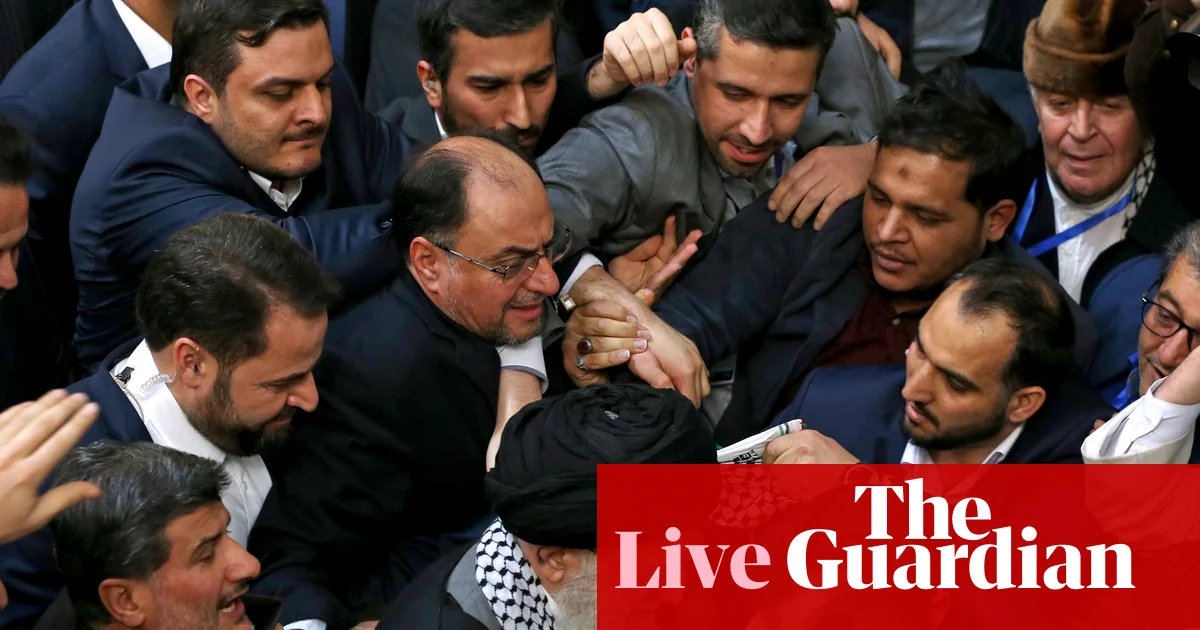
Breaking: Reports Claim Ayatollah Khamenei Dead Amid US-Israel Tensions with Iran

The geopolitical arena has reached a volatile flashpoint following revelations of a severe escalation in Iran. Iran’s Revolutionary Guards declared intentions to unleash the “most ferocious” operational assault in its history against US and Israeli military targets, signaling a dramatic shift in the Middle East’s longstanding regional tensions. This declaration coincides with an unprecedented wave of missile and drone strikes across Iran, which have already resulted in over 200 civilian casualties, according to Human Rights Activists News Agency. The ripple effects are cascading through international relations, raising questions about future stability and the potential for a broader conflict that could threaten global peace.

In an extraordinary turn of events, reports suggest that Iran’s supreme leader, Ali Khamenei, has been killed amidst the ongoing chaos, with claims originating from US President Donald Trump and later corroborated by Iranian state media. This sudden vacuum of power portends a perilous period of political uncertainty, reminiscent of Iran’s struggles post-1989, when the death of Khomeini triggered a reconfiguration of its leadership. The Assembly of Experts is under intense pressure to rapidly select a successor, and the interim leadership council, appointed to manage operations temporarily, faces mounting dependencies amid a rapidly evolving crisis. Such shifts threaten to destabilize Iran’s fragile political order and could embolden radical factions, increasing the likelihood of unrestrained military escalation.

The geopolitical impact of these developments extends beyond Iran’s borders. Iran’s retaliatory strikes across six countries, including a missile attack that wounded 22 in Tel Aviv and fires on the iconic Burj Al Arab and Fairmont hotel in Dubai, have pulled regional alliances—and their undercurrents—into sharp focus. Meanwhile, UAE forces intercepted the majority of over 130 missiles launched at their territory, yet at least one person was killed at Abu Dhabi’s Zayed International Airport. How nations respond to Iran’s upheaval will define the Middle East for decades to come. The broadest concern among global strategists is how this chaos influences the already delicate balance between power and diplomacy, especially as China urges restraint and respect for Iran’s sovereignty, warning against further escalation. The U.N. Security Council’s emergency session underscores the urgency for immediate de-escalation, yet the deeply entrenched interests and conflicting alliances suggest that this crisis could spiral into an unstoppable chain of events.

This unfolding chapter signifies more than just regional conflict; it exemplifies a pivotal moment where decisions made today could forge the world’s future landscape. As Western powers grapple with supporting their allies and maintaining stability, Russia and China are positioning themselves as defenders of sovereignty, challenging the prevailing narrative of interventionism. The divide widens with the United States’ Republican factions overwhelmingly endorsing the attack, contrasted sharply by Democratic voices condemning the aggression as unlawful. Such divisions within the U.S. reflect broader debates about the very nature of American foreign policy and its enduring role on the world stage.

In the shadow of this turmoil, the echoes of history command attention. The world stands at an uneasy crossroads, where the choice between reconciliation and conflict could either usher in a new era of diplomacy or plunge the Middle East—and perhaps the global order—into chaos. The fires ignited by Iran’s leaders, and the fateful power vacuums now forming, threaten to etch this tumult into the annals of history. As nations brace for the long shadows of war, the weight of these defining moments remains heavy upon the shoulders of all — a reminder that in the theater of geopolitics, peace is often but a fragile illusion, easily shattered beneath the weight of power and ambition.

Pakistan strikes Afghanistan; Taliban reports dozens dead amid rising tensions

In a swift and forceful response, Pakistan announced that its military conducted targeted strikes in regions they allege harbor insurgents responsible for recent terrorist activities. The Pakistani government characterized these actions as an act of retaliation for the devastating suicide bombings that recently struck the nation. This escalation highlights the ongoing and deeply complex security challenges faced by South Asian nations amidst rising extremism and unresolved regional tensions.

According to statements from Pakistani authorities, the military launched air and ground operations ostensibly aimed at dismantling militant hideouts in border areas adjacent to Afghanistan. These operations underscore the persistent instability within Pakistan’s tribal regions, where militants often take refuge and orchestrate attacks across the border. Analysts note that Islamabad’s calculus appears rooted in a desire to project strength and deter future assaults, while critics warn of the risk of broader escalation in a volatile geopolitical landscape.

This confrontation has significant geopolitical impact, as regional powers watch closely, wary of the potential for renewed conflict to spill beyond national borders. International organizations, including the United Nations and regional players like India, have expressed concern over the cross-border tensions. Historically, these areas have been a flashpoint for instability, complicating diplomacy and peace initiatives that seek lasting resolution. Experts argue that such military responses, while perhaps pragmatic or necessary from a security perspective, often risk intensifying a cycle of violence that hampers diplomatic progress.

Leading international analysts and academicians caution that, without comprehensive strategies addressing the root causes of militancy and socio-economic grievances, conflicts like these threaten to deepen divisions within societies and destabilize neighboring nations. The decision by Pakistan to escalate military action thus marks a pivotal moment, illustrating how countries under threat must balance the imperatives of security with the broader goal of stability. As history continually unfolds in this troubled region, the world remains captivated — and cautious — about whether this cycle of violence will eventually give way to dialogue or descend further into chaos.

Casey Wasserman plans to sell talent agency following Epstein controversy, reports say

In a development that has sent shockwaves through the international political and social landscape, the prominent agent and LA Olympics chief is now under intense scrutiny owing to revealed past associations with controversial figures such as Jeffrey Epstein and Ghislaine Maxwell. This revelation has ignited a broad debate on accountability, transparency, and the moral standing of those entrusted with managing some of the world’s most influential sporting events. As investigations unfold, the potential implications for the upcoming Los Angeles Olympics extend beyond the realm of sports, touching on issues of international reputation and diplomatic integrity.

The timing of this controversy could not be more critical. The Olympics, long considered a symbol of unity and peaceful global cooperation, now faces questions about its governance and the influence of power brokers behind the scenes. Critics argue that such associations, if true, cast a shadow over the integrity of international sporting organizations and threaten to undermine public trust. Historians and analysts point to precedent cases where scandals involving influential figures have significantly impacted geopolitical relationships and national prestige. The revelations also illuminate the deeper challenge facing global institutions: how to reinforce standards of morality and transparency amid the complex web of political and corporate interests that often underpin major international events.

These events could have far-reaching geopolitical impact, especially as nations reflect on their responsibilities to uphold civic virtues amidst the seductive allure of economic gains and diplomatic symbolism. How global leaders respond in the coming weeks will likely set a precedent, influencing public perception and future accountability measures. International organizations such as the International Olympic Committee (IOC) are under pressure to demonstrate decisive action, large-scale reforms, or face accusations of complicity. Meanwhile, geopolitical analysts warn that such scandals provide opportunistic states and opponents with rhetorical ammunition, potentially fueling uprisings, diplomatic tensions, and credibility crises across borders.

Ultimately, this controversy underscores the fragile line between achievement and integrity in an interconnected world. As investigative entities deepen their probe into the allegations, the importance of adherence to moral principles and judicial accountability becomes more urgent than ever. History warns that when societies ignore the shadows cast by those in positions of power, the consequences can ripple across generations, eroding the foundational pillars of justice and fairness. The unfolding story remains a stark reminder that, in the arena of international diplomacy and cultural influence, the true cost of scandal often extends long after headlines fade—the weight of history continuing to unfold beneath the surface of global spectacle.

Watch: BBC Reports on Colombian Commandos Staying Strong Against Persistent Drug Gangs

US-Colombia Summit Highlights Strategic Shifts in Latin America

In a significant display of diplomacy and alliance-building, President Joe Biden of the United States and President Gustavo Petro of Colombia recently convened to address shared challenges in the region, with a particular focus on regional security and drug trafficking. These high-level talks mark a renewed commitment from two nations deeply intertwined through history, now confronting contemporary issues with strategic resolve.

The summit occurred amidst an evolving geopolitical landscape, where the U.S. aims to assert its influence in Latin America against a backdrop of rising regional powers and shifting alliances. Critics argue that the meeting underscored the importance of maintaining American dominance through strategic partnerships, especially at a time when drug trafficking remains a persistent threat to stability and public health. The leaders discussed plans to bolster cooperation, including enhanced intelligence sharing, military aid, and joint operations targeting narcotrafficking networks.

In tandem with diplomatic engagements, on-the-ground intelligence operations continue to play a critical role. Recently, journalist Orla Guerin reported from within a Colombian police unit tasked with locating and destroying clandestine jungle cocaine labs—these remote operations are emblematic of the ongoing efforts to dismantle drug trafficking infrastructure. Such units face harsh terrain and sophisticated enemy defenses, illustrating the intensity of the clandestine battle that threatens to spill over international borders. Analysts suggest that these actions are crucial, not only for regional stability but also in curbing the flow of illegal substances into the United States and beyond.

Implications for Regional Security and International Relations

  • Enhanced cooperation between the U.S. and Colombia signals a strategic pivot toward more active counter-narcotics campaigns that incorporate both military and socio-economic measures.
  • The ongoing fight against drug cartels underscores the need for a comprehensive approach—military strikes, community engagement, and international legal cooperation—to effectively weaken these criminal networks.
  • Global institutions, such as the United Nations Office on Drugs and Crime, warn that failure to address these issues could lead to increased violence, migration crises, and regional destabilization, threatening broader international stability.

Internationally, the geopolitical impact of these developments extends beyond Latin America. As the U.S. seeks to maintain influence, some observers highlight the risk of militarization fueling local unrest or empowering authoritarian tendencies, especially in countries like Colombia where government legitimacy remains fragile. Historians and regional analysts caution that the decisions made today could shape the geopolitical fabric for decades to come. Should these collaborative efforts succeed, they could serve as a model for international cooperation against transnational crime. However, failure to adapt strategies or address socio-economic root causes risks entrenching instability and chaos.

As history continues to unfold in the dense jungles and political chambers of Latin America, the weight of choice hangs heavily. The battle against narco-trafficking is more than a fight over illegal substances; it is a defining moment to demonstrate resolve, sovereignty, and the capacity to shape the future. The world watches as these nations forge a fragile path toward stability—an uncertain journey marked by perseverance, diplomacy, and the relentless pursuit of order amid chaos. The next chapter remains unwritten, but its implications will resonate across generations to come.

BBC Reports from Oslo Court as Crown Princess’s Son Faces Rape Trial

High-Profile Legal Proceedings in Norway Cast Shadow Over Royal Image Amidst Broader International Tensions

The forthcoming trial of Marius Borg Høiby, the son of Norway’s Crown Princess Mette-Marit, has captivated international attention as it prepares to unfold in Oslo. Accused of 38 charges—including severe allegations of sexual assault, threats, drug offenses, and property damage—Høiby’s case highlights the vulnerabilities of even the most privileged in society. If convicted, he risks a sentence surpassing a decade in prison, a stark reminder that no one is immune from justice, regardless of royal lineage. The recent re-arrest of Høiby, who has now been detained four times since August 2024, underscores the gravity of the accusations and the volatile environment surrounding his legal troubles.

This episode emerges amid revelations of links between his mother and Jeffrey Epstein, the infamous sex offender whose name continues to resonate across geopolitical corridors. These ties, although not necessarily indicative of guilt, raise concerns about the morality and integrity within elite circles, further fueling public mistrust towards the monarchy’s image. International analysts scrutinize this case not just as a national crisis but as part of a broader narrative where the actions of the powerful—especially those connected to prominent families—can undermine a nation’s social fabric. As United Nations and European Union institutions warn against the erosion of trust in leadership, Norway’s royal scandal underscores how personal misconduct can ripple across diplomatic and societal domains.

Impact on International Perception and Geopolitical Stability

Reflecting on this case illuminates a deeper geopolitical impact—how domestic scandals within influential nations shape their international standing. Norway, traditionally viewed as a model of stability and ethical governance, now grapples with an internal crisis that threatens its carefully curated reputation. Such scandals offer adversaries a foothold for criticism, especially within regions eager to highlight perceived moral failings in Western democracies. Economically, the scandal’s fallout could influence investor confidence, especially in sectors tied to Norway’s resource wealth and stability. Moreover, geopolitical analysts warn that these episodes of internal discord, if left unaddressed, risk emboldening opposition factions and destabilizing the social order.

Leading international organizations and security experts articulate concern that scandals featuring royal figures and their families challenge the notion of moral authority necessary for upholding sovereignty and national cohesion. As the case unfolds, the world will watch keenly, recognizing that the consequences extend beyond Norway’s borders. It becomes a symbol of whether societal elites are held accountable, or if they remain above the law, setting a dangerous precedent for societies across the globe.

Historical and Present-Day Parallels: Justice Without Borders

Historically, countries have experienced profound upheavals when scandals involving elites become public. The fall of empires and monarchies can often trace their roots to hidden truths revealed at times of crisis. Today, Norway’s predicament echoes what historians like Barbara Tuchman and Hannah Arendt warned about—the danger of unchecked privilege and the erosion of moral authority. International organizations such as the United Nations emphasize the importance of justice and transparency for peace and stability. Yet, this case serves as a stark reminder that the thin veneer of civility can be shattered overnight when the powerful are exposed, irrespective of national borders or political systems.

As Norway’s courts and society grapple with this controversy, a haunting question remains: Will this be a defining moment for accountability and integrity, or just another chapter in the long saga of elite immunity? The answers lie in how justice is served and whether the tide of public sentiment will uphold the rule of law or be consumed by sensationalism. As history continues to unfold, the weight of this scandal presses heavily upon the shoulders of its participants and observers worldwide—imposing the enduring reminder that no society is immune from the shadows cast by its own secrets.

Social Media Auto Publish Powered By : XYZScripts.com