Matox News

Truth Over Trends, always!

Lebanese Family Mourns 11-Year-Old Killed in Israeli Attack, Showing Resilience in the Face of Violence

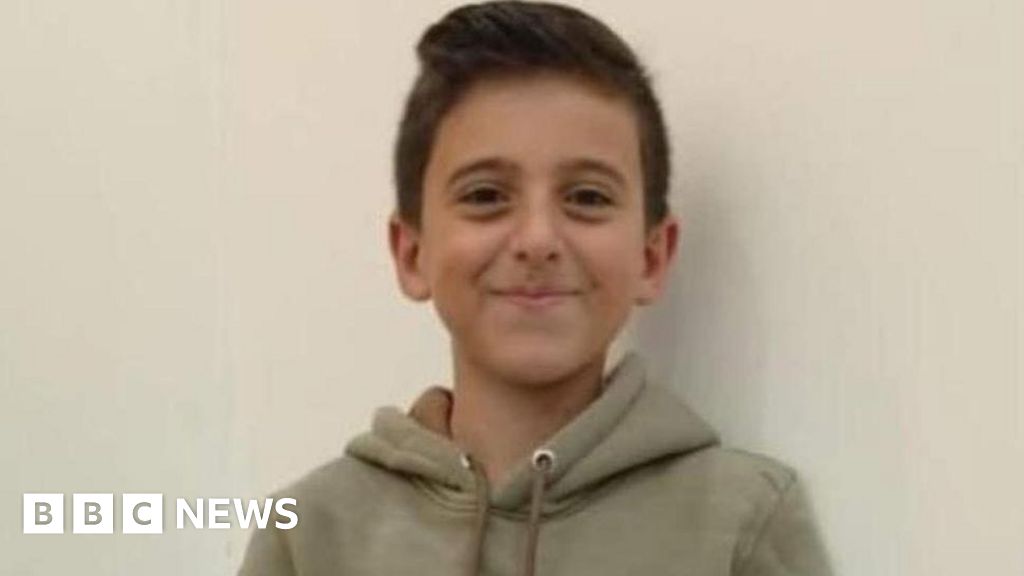
In a devastating escalation of ongoing hostilities, Jawad Younes and his uncle Ragheb were laid to rest on Saturday after a brutal attack rendered their family compound in ruins. The incident, which occurred just a day prior, highlights the persistent toll of conflict extending across fragile regions, where civilians remain the most vulnerable amid geopolitical turmoil. Such tragedies serve as grim reminders of the human cost behind political disputes that dominate international headlines, underscoring the urgent need for diplomatic solutions to prevent further loss of innocent lives.

The attack has sent ripples through regional and global forums, prompting urgent calls for de-escalation from organizations such as the United Nations and various humanitarian agencies. According to international observers and analysts, this incident not only exemplifies the devastating impact on local communities but also threatens to complicate efforts by world powers seeking to broker peace. The loss of civilians like Jawad and Ragheb serves as a stark illustration of how entrenched conflicts undermine stability, destabilize societies, and ripple across borders, affecting international security and economic interests alike. Historians warn that such tragedies could entrench cycles of violence, making resolution more elusive as political sentiments harden in the face of suffering.

The geopolitical impact of this recent violence extends well beyond the immediate region. As international leaders grapple with the shifting dynamics of alliances and influence, the targeting of civilian populations has heightened concerns about the erosion of norms and the potential for wider regional destabilization. Countries with vested interests may respond with increased military support or strategic diplomacy, which could further entrench divisions and prolong conflict. Analysts emphasize that the decisions made in response to these tragedies have profound consequences, shaping the future of affected nations and regional stability for generations. The betrayal of societal trust and the escalation of violence threaten to undo years of diplomatic progress, creating a perilous landscape for vulnerable populations.

Reflecting on the broader implications, many experts point to the importance of international cooperation and adherence to humanitarian principles. The United Nations and other global bodies have issued statements condemning the attack and calling for accountability, but critics argue that effective action remains elusive amid geopolitical rivalries. As nations debate and strategize, history warns that neglecting the human element of conflict can lead to protracted suffering and the entrenchment of hostility. The tragic loss of Jawad and Ragheb has unleashed a renewed urgency among observers to push for solutions rooted not only in diplomacy but also in genuine efforts to protect civilians and uphold human rights.

Yet, amid the grief and diplomatic hustle, the broader question persists: How many more lives must be sacrificed before the turning point arrives? Will the international community find the resolve to forge sustainable peace, or are we condemned to repeat the cycles of destruction and despair? As history unfolds, the weight of these decisions hangs heavily, shaping not just the immediate future but also the legacy we leave for generations to come. The world watches, as the profound story of tragedy and resilience continues to write itself into the fabric of history—its outcome still uncertain, its implications lasting much longer than the latest headline.
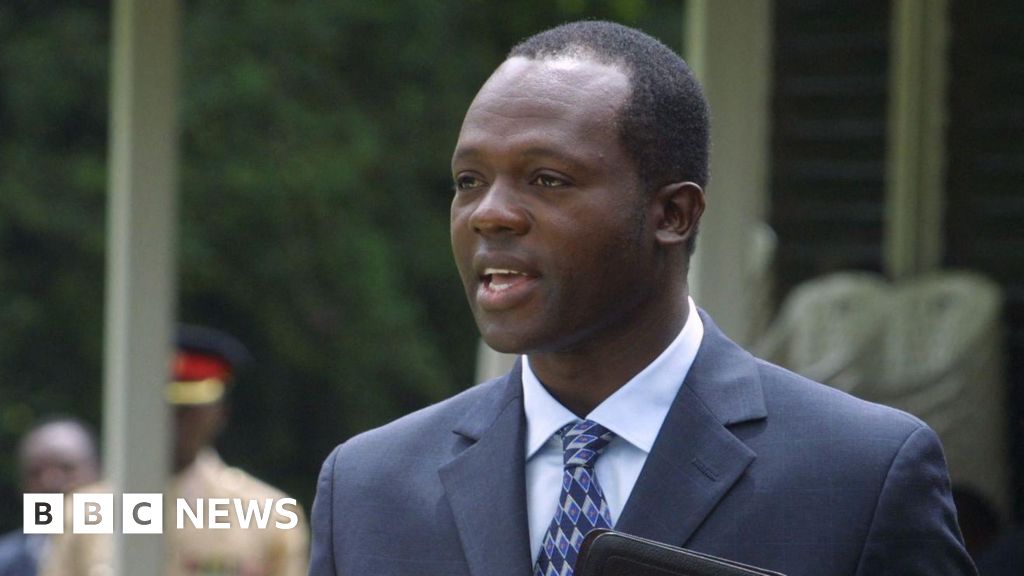
Kenyan ex-foreign minister returns after kidnapping scare, proving resilience

The recent reports surrounding Raphael Tuju, a prominent political figure, have sent shockwaves across both Kenya and the broader East African region. The mysterious disappearance of Tuju has sparked international concern, especially amid allegations that he may have been forcibly abducted. Such incidents extend beyond individual cases, illuminating the fragile state of security and political stability in a region often caught between internal strife and external influences.

This incident underscores the importance of rule of law and state sovereignty at a time when regional alliances and international organizations are grappling with the shifting landscape of influence. Analysts warn that the abduction claims could be a symptom of deeper political tensions, aimed at silencing dissent or intimidating emerging leaders challenging entrenched power structures. Such tactics threaten to undermine democratic processes and diminish public trust in government institutions, with potential repercussions that ripple far beyond Kenya.

Experts such as geopolitical scholars and organizations like the United Nations have long observed that instability within key nations often serves as a catalyst for broader regional upheaval. The disappearance of a political figure is not merely an isolated incident but is emblematic of a larger pattern of uncertainty and suppression that could destabilize neighboring countries. Historically, such acts have proven to be turning points—heralding periods of intensified unrest and international interventions—that reshape the geopolitical map of entire regions.

  • The incident has prompted calls for thorough investigations from human rights groups and regional leaders alike.
  • It raises pressing questions about respect for human rights and the limits of state authority amidst rising political tensions.
  • International actors worry that unresolved cases like this may embolden factions that reject democratic norms and promote authoritarianism.

As the world watches, the global community must recognize that the fate of individuals like Raphael Tuju is intertwined with the sovereignty and stability of nations. The decisions made in these critical moments will influence the future of governance, societal resilience, and regional security for years to come. With each passing day, history writes itself anew—its narrative shaped by actions taken, alliances forged, and the persistent pursuit of justice in the face of mounting adversity. The question remains: will international cooperation rise to safeguard the rights and dignity inherently owed to all, or will this be another chapter of silence and strategic silence amid the chaos of geopolitical realignment?

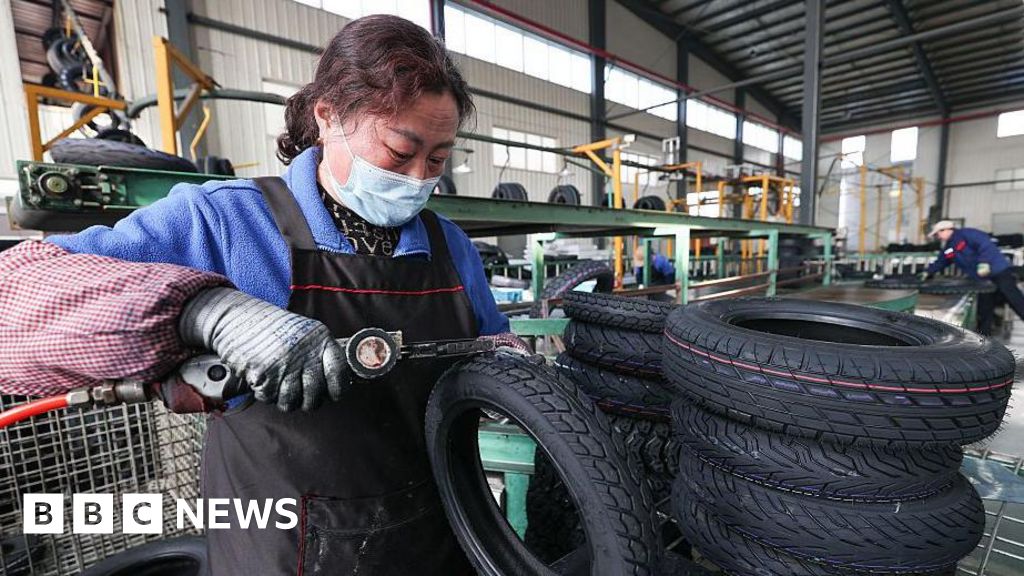
China’s exports soar despite Trump tariffs, signaling resilience

Recent official data confirms a remarkable 20% increase in global shipments this year, signaling a significant shift in international trade dynamics. The surge, driven predominantly by expanding markets within European nations and various countries across Asia, underscores a broader trend of economic resilience and strategic realignment in an increasingly interconnected world. Analysts from the International Trade Institute emphasize that this growth reflects not only proactive supply chain adjustments but also broader geopolitical shifts shaping the landscape of international commerce.

This escalation in shipment volumes bears profound geopolitical implications. Countries are recalibrating their economic policies, often motivated by the need to buffer against uncertainties emanating from longstanding international tensions, such as those involving U.S.-China relations and Russia’s role in global energy markets. Nations participating in this growth wave are asserting greater autonomy and diversification, aiming to reduce dependency on traditional trade hubs. Such developments are viewed by policymakers and strategic thinkers as a key component of the new balance of power, where economic strength is increasingly intertwined with geopolitical influence.

International organizations and independent analysts caution that these rising shipment volumes could mark a pivotal turning point in global supply chains, potentially challenging established economic hierarchies. The World Economic Forum warns that while the current figures showcase resilience, they also spotlight vulnerabilities—particularly the risk of overreliance on specific regions or logistical routes. Furthermore, historians and geopolitical scholars note that these shifts may anticipate a redefinition of alliances, as nations seek to exploit emerging markets and assert greater control over vital trade corridors. Underpinning all of this is the realization that the fate of global stability hinges on the capacity of nations to adapt and withstand external shocks—a task that continues to unfold in real time.

As the world watches these developments unfold, the raw reality remains that economic trends are no longer isolated from geopolitical trajectories. What began as a seemingly straightforward uptick in shipment numbers now reveals itself as a complex dance of diplomacy, strategic alliances, and national interests. The weight of history presses heavily onto the present, reminding us that each new percentage point in trade is a chapter in a narrative far larger than markets—one that will determine the shape of international relations and societal structures for decades to come.

Jessie Buckley credits acting with helping her conquer teenage eating disorder, inspiring resilience and self-acceptance among young people

In the heart of contemporary discourse surrounding artistry and human expression, recent remarks by the Oscar-front runner have reignited an enduring conversation about the profound relevance of culture to identity, tradition, and society. When she describes acting as “like water to me,” she encapsulates a broader truth: that art, in all its forms, is not merely a pursuit of entertainment but a vital sustenance that sustains the soul of a civilization. In times of turbulence, such expressions of devotion remind us that culture functions as both mirror and messenger, reflecting our innermost selves and transmitting the values that unify a community. As the philosopher Ortega y Gasset posited, humanity’s vital need for meaning is fulfilled through the culturally rooted narratives that shape our worldview, allowing individuals to see themselves within a collective tapestry.

Historically, society has shown a remarkable tendency to regard its cultural icons and arts as pillars upon which collective identity stands. The comment from the actress resonates with the insights of thinkers such as Tocqueville, who observed that the habits of the heart—those intangible bonds forged through shared tradition—are essential for maintaining social cohesion. Today, with a cultural landscape that often feels fragmented and transient, the emphasis on art as a source of mental health and stability becomes even more salient. It is as if the act of engaging with great works—be it the plays of Shakespeare, the music of Bach, or the films of past generations—reinforces a sense of continuity that counters the chaos of modern existence. The artist’s declaration reminds us that our cultural practices are not arbitrary but are woven into the very fabric of who we are and who we hope to be.

Beyond personal well-being, the arts serve as a cultural reservoir that preserves our historical memory and nurtures our collective soul. As Gilbert K. Chesterton once observed, the true artist is a guardian of tradition—not a destroyer but a steward who translates timeless truths into new forms. In this light, culture becomes a living testament to generations past, anchoring the present and forecasting the moral and aesthetic horizons of the future. For youth today, this connection to tradition may seem historical, yet it is precisely through this continuity that a society remains resilient and true to its roots. The arts, therefore, do not merely entertain but elevate, giving voice to the silent stories that define us, and in doing so, inspire us to forge ahead with purpose and hope.

In the final analysis, culture emerges as both memory and prophecy: a reservoir of collective history from which we draw strength, and a beacon illuminating the path forward. As the poet T.S. Eliot mused, “We shall not cease from exploration, and the end of all our exploring will be to arrive where we started and know the place for the first time.” It is within this cyclic dance of past and future that we discover that, ultimately, the arts are not mere decoration but the very essence of human striving—a poetic symphony that sustains the spirit of civilization, echoing through eternity as a testament to who we are and who we aspire to become.

Ukraine Museum Opens in Berlin Air-Raid Bunker, Showcasing Resilience and Heritage

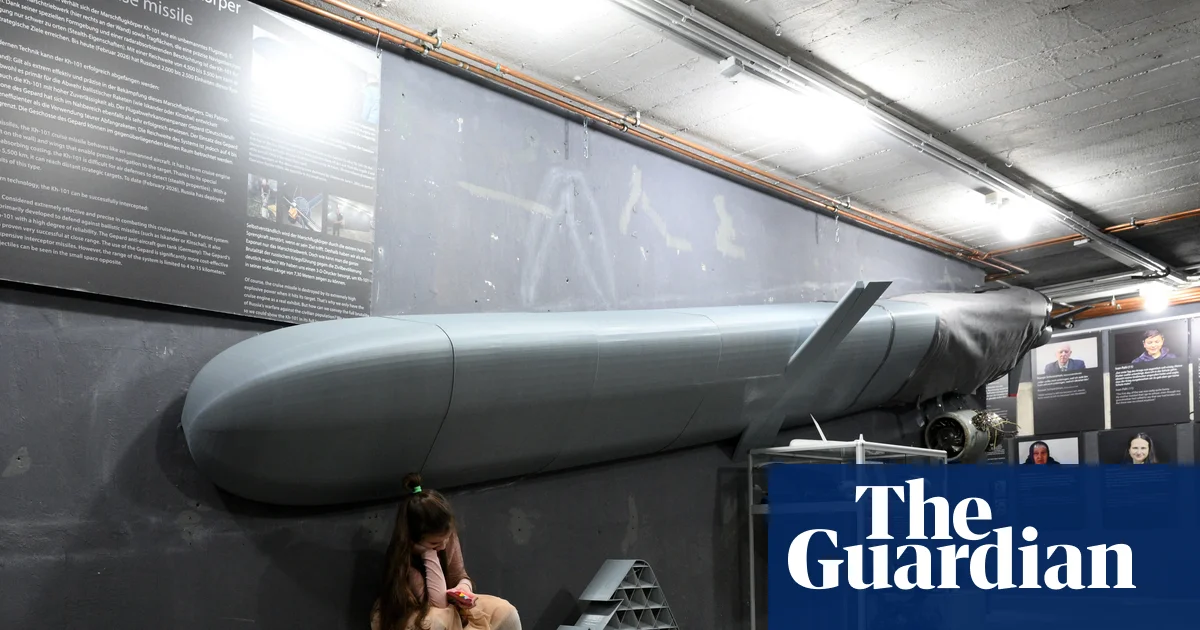
As Russia’s ongoing invasion of Ukraine enters its fourth year, the geopolitical landscape in Europe remains sharply divided over the appropriate response. The newly inaugurated Ukraine Museum in Berlin serves as a stark reminder of the conflict’s brutal reality, exposing visitors to the physical remnants and harrowing stories from the battlefield. Curated from war remnants and built in collaboration with Ukrainian frontline troops and historical institutions, the museum aims to combat growing fatigue and apathy among Western populations. It underscores an essential warning to the West: ignoring this war risks destabilizing the entire security architecture of the continent.

This museum’s presence in Berlin symbolically signifies Germany’s pivotal role as a major supporter of Kyiv, providing substantial military aid and shelter for millions of Ukrainian refugees. Yet, this support is not without controversy. Domestic political divisions threaten to weaken the unified front necessary to counter Putin’s expansionist ambitions. Critics argue that wavering in commitments—whether through resistance to increased arming or skepticism over continued aid—embolden Russia’s narrative of Western disinterest or weakness. According to analysts from the European Council on Foreign Relations, such factions are playing into Putin’s strategic aims to destabilize Western cohesion, emphasizing that European unity remains fragile and crucial for Ukraine’s survival and the broader confrontation with authoritarian expansion.

International observers, including historians and military strategists, emphasize that support for Ukraine goes far beyond humanitarian concern—it is a defining element of geopolitical stability in the 21st century. The war’s brutal reality, vividly exposed by the museum’s displays—such as a missile reconstructed via 3D printing and wreckage of a Russian T-72 tank—serves as a stark reminder that the stakes are existential for Ukraine and the West alike. The museum also draws attention to the dehumanizing propaganda—images of aid worker Oleg Salnyk, killed after the deliberate targeting of his ambulance by a Russian drone, are intended to forge a visceral understanding of the war’s toll. Such visceral representations seek to awaken Western audiences to the fact that timid complacency could lead to far greater catastrophe.

In response to the conflict, Germany and other Western nations face difficult questions: How long can they sustain military and economic support without internal discord? As Hanna Maliar, a former Ukrainian deputy defense minister, warns, “My advice to Germany is whatever you do, don’t get rid of your bunkers.” The metaphor resonates—without resilient defenses, the risk of destabilization extends beyond Ukraine into Euro-Atlantic security. Meanwhile, the Ukrainian resistance, exemplified through stories of aid workers targeted in front-line attacks, continues to symbolize the tenacity of a nation fighting to preserve sovereignty amidst a concerted effort by Russia to erode Ukrainian identity and independence. As history unfolds in real time, the question remains: will the powerful Western alliance recognize that the cost of indifference may be the very fabric of freedom itself?

Giant tortoises make a comeback on Galápagos after two centuries—nature’s resilience at its best

In an extraordinary turn of ecological restoration, the island’s native giant tortoise population, driven to near extinction by 19th-century sailors, is now witnessing a remarkable revival through the reintroduction of 158 juvenile tortoises. This historic initiative symbolizes more than just environmental rehabilitation; it embodies a nuanced intersection of international interests, conservation efforts, and the shifting power dynamics that shape our global future.

The original decline of the species, primarily caused by overharvesting and habitat disruption during the age of maritime expansion, left a profound ecological void. Now, leading efforts coordinated by international conservation bodies—including the World Wildlife Fund (WWF) and the International Union for Conservation of Nature (IUCN)—are positioning this project as a pivotal milestone in safeguarding endangered species. These initiatives not only aim to restore biodiversity but also to demonstrate the capacity of nations to address environmental crises amid a rapidly changing geopolitical landscape. The involvement of multiple nations underscores a broader acknowledgment: conservation is no longer solely a local endeavor, but a matter of global importance that can influence regional stability.

The geopolitical impact of such environmental projects extends beyond ecological boundaries. Countries involved in funding and facilitating these efforts often use these initiatives as diplomatic tools to bolster relationships and project soft power. Environmental success stories like this serve as tangible proof of a nation’s commitment to global sustainability initiatives, fostering cooperation that can transcend traditional political rivalries. Historians and analysts note that the reintroduction of these creatures signifies a broader trend—where environmental stewardship is increasingly intertwined with modern geopolitical strategies, potentially shaping alliances and rivalries in the decades to come.

Yet, the implications go even deeper. Critics argue that such conservation schemes could be exploited as leverage in international negotiations, or as a facade for broader strategic interests. The reintroduction of species, while hopeful, also raises questions about sovereignty and the extent to which external actors influence local ecosystems and policies. As the community monitors this ongoing effort, international observers remain wary: these ecological victories may soon become tools in a chess game of geopolitical influence, where the vestiges of nature itself serve as pawns in a larger strategic contest.

As history continues to unfold, the fate of the island’s restored tortoise population reflects the enduring conflict—and potential harmony—between human ambition and the natural world. Will this effort prove a genuine step toward ecological resilience, or will it be overshadowed by the shifting tides of power and influence? Only time will tell, but the weight of history lingers, reminding us that the decisions made today could reverberate through generations. In a world where nations vie for dominance amid global crises, even the smallest creatures bear witness to history, quietly nudging us toward a future yet unwritten.

UK economy edges up 0.1% amid Budget doubts, showing resilience in uncertain times

The recent United Kingdom economic data signals a cautiously positive outlook amidst global economic turbulence. Official figures from the Office for National Statistics reveal that the UK’s gross domestic product (GDP) grew by 0.1% in the final quarter of last year, defying expectations of a stagnation or contraction. Despite persistent economic headwinds, including consumer hesitations driven by political speculation around Rachel Reeves’ budget and the fallout from recent cyber-attacks on major industries, the UK’s economy managed to demonstrate resilience. This modest growth, combined with a 1.3% increase in 2025 overall, is seen by analysts as a sign that the British economy continues to adapt to shifting global circumstances, although challenges remain.

Global financial institutions and economic analysts have underscored that how decisions are made within the UK government—particularly around fiscal policy and national security—directly impact the broader geopolitical landscape. The late-November budget, which spurred speculation about significant tax hikes, temporarily suppressed consumer and corporate activity, highlighting the precarious balance governments must maintain between fiscal austerity and growth stimulation. The Bank of England, in its recent policy statement, chose to keep interest rates steady at 3.75%, while signaling that the decline in inflation—partly driven by cost-of-living measures tied to Reeves’ strategic budget—might pave the way for future rate cuts. This signals for markets that, despite present caution, there is confidence within the British establishment that stabilization can be achieved without aggressive monetary tightening.

The broader geopolitical impact of the UK’s economic performance and policymaking extends well beyond its borders. As one of the world’s largest financial centres, London’s resilience influences international markets, diplomatic relations, and global supply chains. The recent cyber-attack targeting Jaguar Land Rover and its subsequent economic repercussions underscore how interconnected national security and economic stability have become. While the UK attempts to navigate domestic challenges, it remains entrenched in the complex web of international competition—with analysts warning that economic stability at home is vital for maintaining influence in a shifting international order. Historical perspectives from institutions like the International Monetary Fund highlight that resilient economies tend to form the backbone of geopolitical strength and alliances in uncertain times.

  • The UK’s modest growth in late 2025 reflects cautious optimism but also exposes vulnerabilities in productivity and investment.
  • The Bank of England’s strategic hold on interest rates indicates confidence in ongoing inflation control and potential for future monetary easing.
  • Cybersecurity threats and economic shocks, such as the JLR attack, illustrate the new battlegrounds in modern geopolitics.
  • The trajectory of UK policy, especially its impact domestically and internationally, will be closely monitored as history continues to write itself in these uncertain yet pivotal times.

As the world’s eyes fixate on the unfolding dramas of economic resurgence and geopolitical maneuvering, the question remains: how will Britain, in its pursuit of stability and influence, shape the next chapters of global history? With decisions made today echoing through the corridors of power and into the fabric of society, the weight of history presses ever heavier. The unfolding story of the UK economy is not merely a tale of numbers but a testament to a nation striving to navigate the treacherous waters of an uncertain world—where every move could define the future for generations to come.

Storm Harry triggers massive landslide in Sicily, raising concerns for safety and resilience

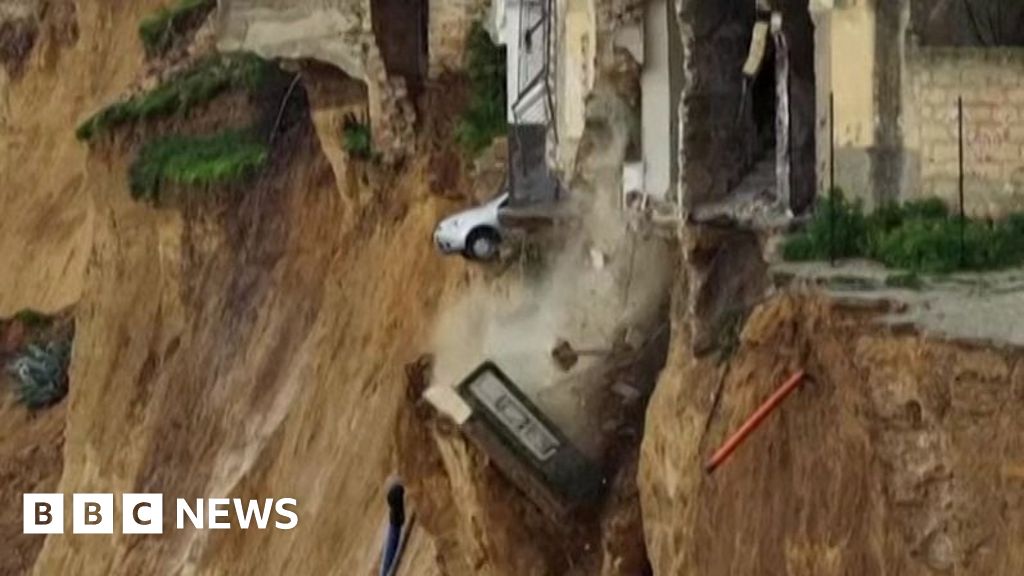
In a stark reminder of climate-related instability, a 2.5-mile (4 km) section of coastline on the Italian island of Sicily has recently collapsed, following severe weather disruptions caused by Storm Harry. The disaster, which took place over the weekend, underscores the growing vulnerability of coastal regions to extreme weather events, a phenomenon increasingly attributed by scientists and environmental analysts to global climate change. The collapse has prompted a major emergency response, with over 1,000 residents evacuated from the towns of Niscemi as authorities scramble to assess the damage and prevent further tragedies.

The geological surveys underway reveal a troubling picture: aerial footage shows significant destruction, with buildings and vehicles destroyed or rendered inaccessible. While no fatalities have been reported, the potential for loss of life and livelihoods remains high, especially as parts of the cliff continue to *crumble*, reflecting ongoing instability in the area. This incident draws attention not just to local environmental conditions but also to overarching global concerns about climate resilience, coastal management, and international response strategies. Many analysts argue that such catastrophes are a warning sign of a changing world, where recent weather anomalies serve as a clarion call for policy shifts and technological innovations in disaster mitigation.

Historically, the Mediterranean region has been a crossroads of geopolitical tension, with Italy’s strategic position intertwined with broader European stability and security concerns. As regional communities grapple with the immediate aftermath of the landslide, experts warn of the broader, long-term implications: increased migration from vulnerable areas, economic disruptions, and the destabilization of tourism-dependent economies. The United Nations and other international institutions have called for enhanced cooperation and climate-adaptive infrastructure, but critics highlight that policy responses often lag behind the rapidly evolving threats posed by climate change.

Looking ahead, the situation in Sicily is a microcosm of a global challenge: how nations adapt to a **world where natural disasters are intensifying** and threatening societal stability. Historians and geopolitical analysts warn that decisions made in this critical era will shape the trajectory of international order. Will countries prioritize short-term economic gains over environmental sustainability? Or will they recognize that the cost of inaction far exceeds immediate sacrifices? As the climate continues to shift, impacting societies across the globe, humanity faces a moment of reckoning. The landslide in Sicily is more than a local tragedy—it is a gripping chapter in a larger story where the choices of today could either build resilience or lead to chaos, leaving the weight of history to be decided by the actions of tomorrow.

Bondi Attack: Communities Ignite Menorahs, Stand Together in Resilience and Hope

Australia Confronts Heartbreaking Terror Attack: A Reflection on Geopolitical Implications and Societal Resilience

In a striking illustration of the precarious global landscape, Australia has recently endured a harrowing act of terrorism at Bondi Beach, claiming the lives of 15 innocents during a Hanukkah celebration. This tragedy underscores the persistent threats that nations face even amidst democratic resilience—issues that transcend borders and demand unwavering international vigilance. The attack, perpetrated by a father-and-son pair motivated by an “extreme perversion of Islam,” has provoked widespread mourning, but also reignited debates over security, societal cohesion, and the capacity of political institutions to respond decisively.

The immediate aftermath has seen a surge of national unity. The Prime Minister Anthony Albanese dismissed initial claims linking the suspect to an ISIS terror cell, emphasizing that “there is no evidence” for such allegations. This stance underscores the importance of precise intelligence and calibrated responses in an era where misinformation can be as destabilizing as the violence itself. Nevertheless, the government announced a commitment to tighten Australia’s already strict gun laws, with lawmakers pledging to restrict firearm licenses more stringently, acknowledging that radicalization and security vulnerabilities are increasingly complex issues requiring comprehensive solutions. Such legislative measures demonstrate an understanding that decisions on gun control significantly affect national security and civil liberties, shaping the societal fabric in the process.

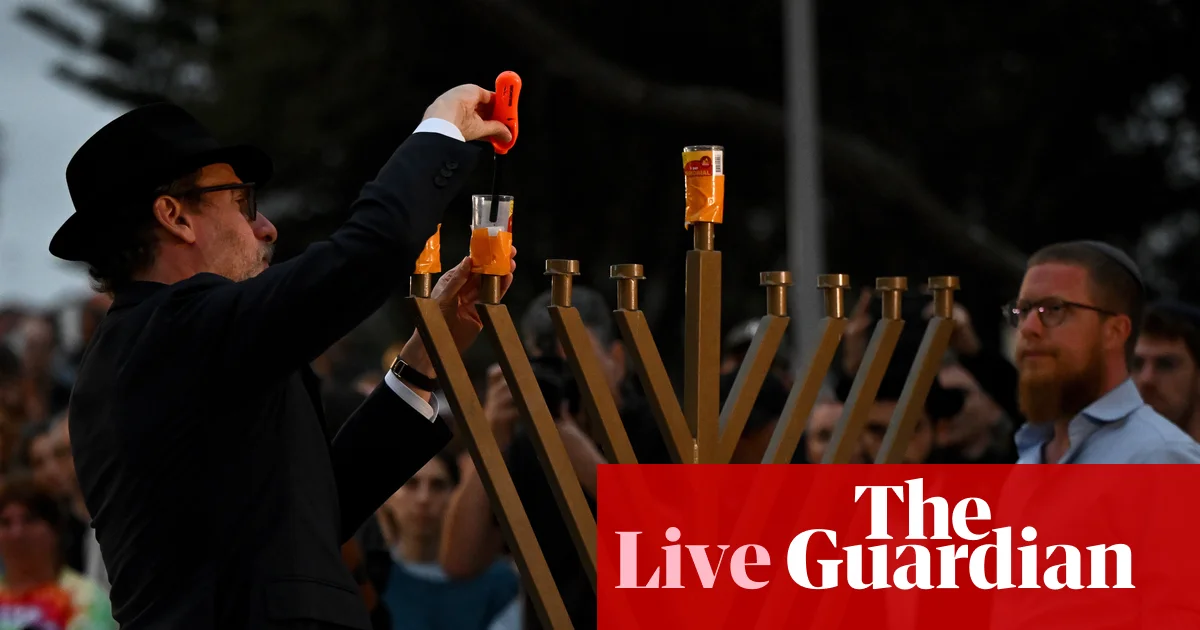
Amidst the tragedy, stories of heroism and solidarity have emerged. Ahmed al Ahmed, a Muslim father-of-two, became a symbol of resistance when he disarmed one of the gunmen, risking his own life in the process. Donations exceeding A$1.3 million highlight the collective recognition of ordinary citizens acting in extraordinary circumstances. Leaders from Sydney’s diverse communities, including Rabbi Gabi Kaltmann and others, organized vigils and public Hanukkah events to honor the victims, reinforcing the vital importance of multicultural unity. Sources like international analysts and local historians point out that these acts of communal solidarity serve as a bulwark against the divisive forces of hate, demonstrating that societal resilience can outshine darkness—if only united against such evil.

Nevertheless, critics argue that authorities had warning signs and failed to prevent the tragic events, a concern reflecting broader international discourse on how governments manage the rise in hate crimes and extremist ideologies. Critics reference Australia’s earlier enactment of an antisemitism strategy, which some now deem insufficient, while others, including PM Albanese, vow to intensify efforts to stamp out anti-Semitism. This echoes global concerns that national responses must evolve, incorporating intelligence, community engagement, and legislation—elements that together shape the geopolitical response needed to combat the far-reaching tentacles of radicalism. As history continues to write itself, the weight of this moment presses heavily: how nations respond now will influence societal stability and international perceptions for generations to come.

In the shadow of grief and resolve, the question remains: how will the international community forge a path that balances security with liberty, unity with vigilance? As the world watches, the story of Australia’s response to this tragedy will be etched into the annals of history—an enduring testament to the enduring struggle between darkness and light.

Brown University Student Shares Resilience: Overcoming Two Mass Shootings and Rising Strong

In the midst of the holiday season, stories of resilience and tragedy weave a somber backdrop, reminding us of the relentless challenge that American youth face daily—the pervasive threat of mass shootings on school campuses. One such story emerges from Providence, Rhode Island, where 21-year-old Mia Tretta reflects on her harrowing experiences, shedding light on the broader cultural shift gripping the nation. Having survived her second school shooting, Mia’s narrative is a stark reminder that safety, once assumed as a given, is now a fragile illusion for countless young Americans. Her harrowing account underscores a critical question: how did a nation that prides itself on innovation and resilience become so desensitized to violence that students must practice *active shooter drills* as part of their routine?

This new era of wellness and lifestyle is marked by an *urgent necessity* to reconsider the very foundation of safety and mental health in schools. The aftermath of mass shootings, including the tragic loss of lives and the lasting physical and emotional scars, ignites debates across political and cultural spectra. Thought leaders such as Dr. Gabor Maté emphasize the importance of addressing underlying societal issues—mental health, gun control, community cohesion—to forge a path toward genuine healing. Yet, despite these expert insights, the ongoing cycle of violence compels schools to evolve into fortified environments, where police presence remains high, and students are equipped with tools for survival rather than true peace of mind. Mia’s story exemplifies a “new normal”—a landscape dominated by *mental resilience* efforts intertwined with visible security measures.*

For those seeking to embrace a lifestyle rooted in *resilience* and *self-reliance*, these events serve as a catalyst for embracing holistic wellness and proactive safety strategies. As cultural critic Camille Paglia points out, there is a value in fostering strength and independence among the youth—a counterpoint to the helplessness often associated with such tragedies. Practical lifestyle shifts include prioritizing physical and mental fitness, cultivating communities of support, and engaging in meaningful political action to advocate for responsible gun legislation.

  • Travel to safe yet inspiring environments—perhaps the scenic landscapes of the American West or the historic beauty of New England—to recharge and gain perspective.
  • Incorporate daily wellness practices such as mindfulness, physical activity, and community service to build *inner strength*.
  • Support organizations that prioritize *youth empowerment* and *gun reform* to channel frustration into tangible change.

Ultimately, the stories of survivors like Mia are not just cautionary tales but also callings to action—an invitation for the younger generation to redefine what it means to live boldly and responsibly. Her courage in sharing her experience at the White House illustrates a profound **personal impact**; not only has she faced her past with resilience, but she also embodies the growing movement of youth demanding change. It reminds us that authentic well-being transcends physical health—it’s about fostering a society where safety and peace are fundamental rights, not privileges. As we reflect on her journey, let us embrace the idea that each day, despite the chaos, offers a chance to forge a lifestyle of courage, resilience, and hope. Those who dare to live consciously, aware of both the vulnerabilities and strengths within, will find in their pursuit a profound sense of purpose—a journey toward embracing life amidst adversity.

Social Media Auto Publish Powered By : XYZScripts.com