Matox News

Truth Over Trends, always!

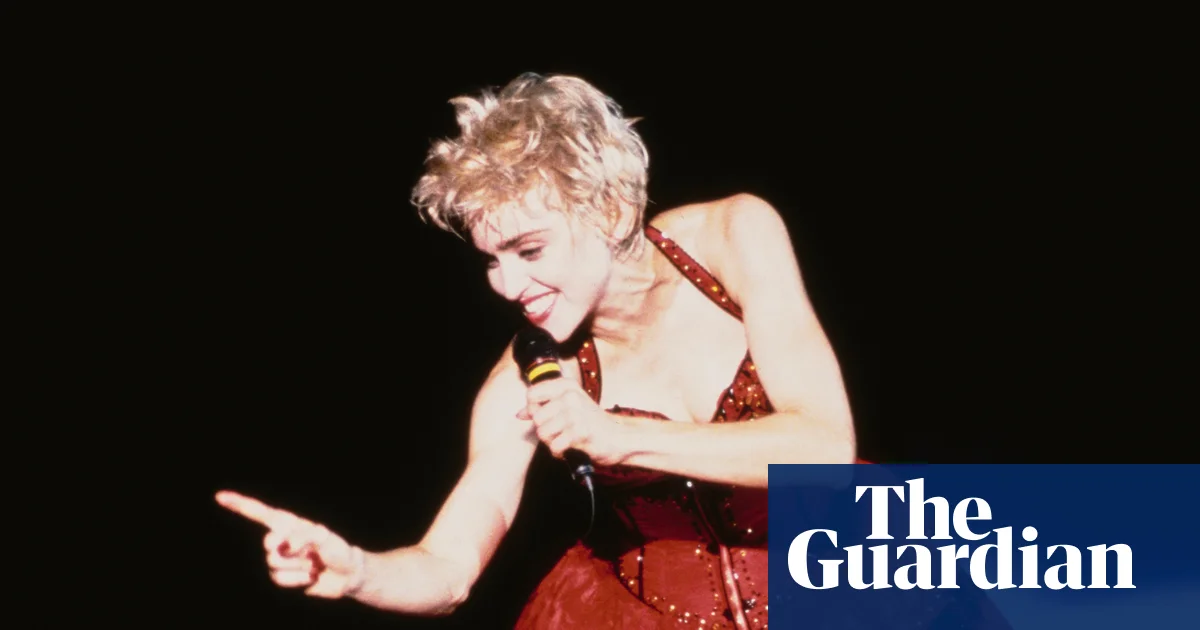
Top 20 onstage looks: Lily Allen’s ‘Revenge,’ Harry Styles’ Dorothy style, and Debbie Harry’s iconic T-shirt—must-see fashion moments for today’s trendsetters!

In 2026, the intersection of music and fashion continues to redefine what it means to express social and cultural identity among young audiences. From the stages of iconic venues like Madison Square Garden to historic festivals such as Woodstock, pop stars have consistently used their wardrobe choices as a powerful social language. Rihanna’s legendary Victoria’s Secret gown—a daring, high-profile statement—demonstrates how fashion can elevate a moment into a cultural phenomenon. Meanwhile, Harry Styles plays with gender stereotypes, famously donning a Gucci gingham dress for his “Harryween” celebration, turning mere performance into a bold conversation on gender fluidity. These bold choices aren’t mere visual fluff; they evoke a shared social consciousness that resonates deeply with youth, positioning pop culture as a mirror of societal shifts.

This ongoing dialogue isn’t solely about the clothes, but about the social relevance embedded within style choices. Influencers, sociologists like Dr. Carla Thomas, argue that the way stars like Madonna or Beyoncé curate their onstage personas through costumes does more than entertain—it challenges societal norms and amplifies cultural identity. Consider Beyoncé’s intricate, Klimt-inspired ensemble at the Grammys—a piece that took hundreds of hours to craft—highlighting how high fashion becomes a vehicle for social commentary and empowerment. Conversely, Grace Jones’s larger-than-life outfits for her New Year’s Eve performance, designed in collaboration with Keith Haring, pushed the boundaries of theatrical fashion, reinforcing her archetype as a fearless social provocateur. These fashion statements craft a narrative that is as much about societal sovereignty as it is about entertainment, inspiring generations to question perceptions and embrace individuality.

Young fans, especially Millennials and Gen Z, are increasingly inspired by the *artistry* of such performances, which combine aesthetics and attitude into an empowering cultural fabric. Influencer and fashion critic Mia Chen notes that “today’s popstars are not just songbirds; they are visual storytellers who shape social discourse through style.” They are rewriting the rules of engagement—beyond the music—by turning stages into cultural battlegrounds that reflect and influence social values. The trend toward *costume-driven performances* mirrors the broader social shifts—an acknowledgment that personal expression is a form of activism. As sociologist Jeremy Clark points out, “Fashion in music is no longer a superficial veneer, but an essential form of societal commentary.”

Yet, the next big question remains: how sustainable is this style revolution? Will future generations see these flamboyant displays of individuality as mere nostalgia, or will they inspire a permanently reshaped societal mindset about gender, race, and identity? Just as Josephine Baker’s trailblazing outfits once challenged racial and social barriers, today’s pop stars are scripting new chapters of resistance through their sartorial choices. In this rapidly evolving landscape, understanding whether fashion in music continues to be a mirror or a mold of social change may be the next big question every cultural observer needs to ask. Because in a world increasingly defined by the narrative we craft with style, who will be the next icon to turn their wardrobe into a rally cry for the future?

Starmer: Tech Giants Face 48-Hour Deadline to Act Against Revenge Porn or Risk Bans

The United Kingdom is taking a bold stand to combat the rising tide of nonconsensual digital content and AI-facilitated abuse. Prime Minister Keir Starmer recently declared a “national emergency” against the proliferation of deepfake nudes and revenge porn, emphasizing the urgent need for decisive government intervention. This new policy aims to enforce a stringent 48-hour window for the removal of illicit images once flagged, with the goal of significantly curbing the spread of this harmful content across social media platforms, pornography sites, and beyond. Such measures highlight a conscious shift towards holding technology firms accountable, especially under the scrutiny of the Ofcom regulator, which is expected to be empowered by the summer to enforce these rules.

This crackdown is not merely about privacy or decency; the layout of international, societal, and geopolitical dynamics is at play. Britain’s push for stricter online safety laws echoes a broader global trend where governments increasingly seek to regulate AI tools and digital content that threaten societal norms and threaten individual safety. The recent controversy surrounding Elon Musk’s Grok AI tool—which generated nonconsensual sexual images—serves as a stark reminder of how innovative technology can be weaponized in ways that magnify harm. Critics argue that the lack of effective regulation allows deepfake technology to flourish unchecked, fostering a digital environment where victims of abuse and extortion find little refuge. By enforcing rapid removal timelines and legislating against AI-generated offensive material, the UK aims to set a precedent that can resonate outside its borders, challenging other nations to follow suit in protecting societal moral standards.

Analysts and international organizations observe that the UK’s legal reforms are a significant step in how regulatory decisions impact global tech companies. The threat of fines—up to 10% of worldwide revenue—and potential service bans are a clear indication that Big Tech will face serious consequences if they fail to act swiftly.

  • The implementation of digital watermarks for illicit “revenge porn” images aims to enable automatic detection and removal, reducing the burden on victims who often have to repeatedly report the same content.
  • Attempts to regulate AI-generated explicit images balance between safeguarding victims and upholding free speech, a delicate dance that underscores the ongoing struggle for responsible innovation.
  • The broad scope of the law, which extends to “rogue websites,” signals a firm stance on disrupting black markets for illicit content, even beyond the UK’s borders.

This move underscores a broader challenge: how to effectively hold powerful institutions accountable and address deep-rooted cultural issues. Prime Minister Starmer’s focus on cultural reforms—particularly his efforts to challenge misogyny within government and politics—illustrates a recognition that technological regulation alone cannot solve societal misogyny or gender-based violence. As he critiques the “institutional misogyny” woven into UK society, his emphasis on elevating women in government reflects an understanding that real change demands both policy and cultural overhaul. Meanwhile, political scandals such as the controversy over Peter Mandelson’s connections to Jeffrey Epstein serve as a stark reminder of the persistent failures endemic to the ruling elite. This is a pivotal moment—one where the decisions made will echo through a fractured political landscape and test the resilience of democratic institutions.

As digital freedoms meet the relentless march of regulation, history continues to forge its course in the uneasy balance of liberty and control. The UK’s efforts, rooted in the acknowledgment of the profound geopolitical and societal consequences, demonstrate that the fight against misuse of technology is far more than a matter of mere policy. It defines the very fabric of moral authority in this new era, where every decision carved into the stones of law could either fortify the foundations of justice or erode them beneath waves of unchecked power. The unfolding saga promises a future fraught with challenge and upheaval—yet it is precisely within this crucible of conflict that the forces shaping tomorrow’s society are being forged in the fires of necessity and resolve.

Sisu: A Bold Finnish Hero Faces Justice in a Gritty Sequel — A Fight for Honor and Revenge

In the modern cinematic landscape, few genres embody the essence of cultural resilience quite like the action film, especially those that draw heavily from historical and national symbols. The Finnish indie Sisu, directed by Jalmari Helander, epitomizes this phenomenon. Released in 2022 and subsequently gaining acclaim with its sequel Sisu: Road to Revenge, the film revitalizes a genre rooted in stoic endurance, raw heroism, and a persistent, uncompromising attachment to one’s homeland. Helander’s work, infused with a boyish enthusiasm reminiscent of childhood war games, underscores a cultural narrative: that the stories we tell ourselves about perseverance and victory are central to our identity and societal continuity.

Critics, including the writer at The Guardian, have appreciated Sisu for its economy of storytelling—an unpretentious, straightforward focus that echoes the philosophy of thinkers such as Ortega y Gasset, who emphasized the importance of individual vitality in shaping society. Helander’s narrative rejects the excesses of CGI spectacle in favor of practical effects and raw stunt work, cultivating a sense of authenticity that resonates powerfully with patriotic sentiments. The film underscores a vital cultural truth: that the stories of resilience, sacrifice, and cunning are how nations preserve their memory and forge their future. When Aatami—played with gritty defiance by Jorma Tommila—removes beams from his destroyed home or outsmarts Red Army foes, these images transcend mere entertainment. They become symbols—mementos of a collective identity grounded in perseverance.

Throughout cultural history, society has leaned on myths of heroism and survival to articulate its moral fabric. Critics like Chesterton have celebrated the appeal of stories rooted in fundamental human virtues. Today, Sisu channels this tradition, reminding viewers that the true strength of a nation lies in its people’s ability to endure and adapt, even under the most oppressive circumstances. The film’s celebration of the Finnish landscape—its sun-dappled vistas and rugged terrains—reinforces the idea that culture is a landscape of memory and prophecy. As T.S. Eliot observed, “The past should be altered by the present as much as the present is directed by the past.” Here, tradition is not static but a living, breathing force that guides a society’s moral compass—one rooted in the conviction that resilience is a form of rebellion against tyranny.

In an era often characterized by fragmentation, Sisu stands as a testament to the enduring power of cultural memory. Its focus on straightforward heroism, coupled with a reverence for tangible, practical effects, serves as a counterbalance to a Hollywood trend that often undermines genuine human effort with digital illusions. Helander’s work reveals that sometimes, the simplest stories—those of one man’s fight against overwhelming odds—resonate most deeply. Culture, after all, is both our collective memory and our prophecy. It defines who we have been and who we strive to become. As we consider these stories, we are reminded that humanity’s best hopes are born from resilience, from the unwavering belief that even in darkness, a spark of hope can illuminate the path forward—an enduring echo of the national spirit, calling us to remember and to anticipate a future forged in the fires of tradition and the forge of human will.

Social Media Auto Publish Powered By : XYZScripts.com