
Matox News

Truth Over Trends, always!

Sam Altman’s World aims to revolutionize human verification — kicking off with Tinder.

Revolution in Digital Identity Verification: World Unveils Expansive Innovations

In a strategic move that signals a major upheaval in the digital identity landscape, Sam Altman’s World (formerly Worldcoin) has unveiled its next phase of expansion, integrating its cutting-edge verification technology into diverse sectors such as dating, entertainment, and corporate security systems. This development underscores the relentless drive toward disrupting traditional verification models, reinforcing the tech industry’s focus on innovation and security in an AI-drenched future. The key platform enabling this transformation is the Orb, a cryptographic iris scanner that authenticates human users while preserving anonymity—a feat achieved through advanced zero-knowledge proof cryptography, which allows verification without revealing sensitive data.

Global corporations are responding rapidly to this wave of innovation. Notably, Tinder is spearheading its integration of World’s ID verification system, rolling out a verified user badge that authenticates genuine human profiles—an instant game-changer for digital dating landscape prone to bots and fake profiles. This step not only enhances user safety but dramatically shifts market standards, as verified identities become a baseline expectation. Furthermore, a pilot program in Japan has yielded promising results with plans to extend the service worldwide—including the highly competitive U.S. market—highlighting the strategic importance of such verification systems amidst escalating concerns about authenticity and security in online interactions.

  • Enhanced user trust via verified profiles in social apps
  • Potential for new monetization streams through verified experiences and premium features
  • Mitigation of bots and fake accounts in digital spaces

Beyond dating, World is aggressively infiltrating the ticketing and entertainment industry. Its Concert Kit feature exemplifies how blockchain-backed identity verification can combat scalper bots and unauthorized ticket reselling. Major artists such as 30 Seconds to Mars and Bruno Mars are leveraging the platform for upcoming tours, promising fans safer access and stronger community engagement. The implications extend beyond fan safety—this represents a blueprint for how verification tech could redefine ticketing security and fan experience at scale. Meanwhile, strategic partnerships with giants like Ticketmaster and Eventbrite indicate a consolidation trend—where trusted verification becomes a must-have infrastructure for entertainment commerce.

From a business implications perspective, World’s pivot toward industry-specific solutions signals a broader industry shift towards decentralized, privacy-preserving identity protocols. Analysts like Gartner project a 40% annual growth rate in the identity verification market, driven by increasing demand for secure, user-friendly authentication systems. Furthermore, partnerships with firms like Okta and Zoom reveal a clear trajectory: identity verification will soon become an integral layer of all digital interactions, from enterprise security to personal privacy. This so-called “agent delegation” system hints at a future where individuals can delegate trusted virtual agents to perform web activities—yet it raises urgent questions about security, control, and privacy that demand innovative regulatory responses.

However, scaling remains a challenge. The traditional Orb verification process is inconvenient, requiring physical presence at designated locations, thereby limiting mass adoption. Yet, World actively counters this by deploying Orb units into retail chains and offering remote verification services, including a novel “Selfie Check” feature designed to maximize privacy through local device processing. This push towards low friction verification methods signals an impending paradigm shift—where convenience and privacy are no longer mutually exclusive. With the rapid pace of technological disruption, industry leaders, regulators, and consumers must stay alert to the emerging landscape, which promises both unprecedented opportunities and significant implications for privacy, security, and digital sovereignty.

In Conclusion

The future of digital verification is here—and it’s evolving at an unprecedented pace. The integration of cryptographically secured, privacy-preserving identity systems across social, entertainment, and corporate spheres will define the next era of online interactions. Industry players who fail to adapt risk obsolescence, while those leading the charge could dominate a new digital economy rooted in trust and authenticity. The urgency is clear: the race to secure, scalable, and user-centric identity verification is on, and the stakes could not be higher in shaping the future of online life.
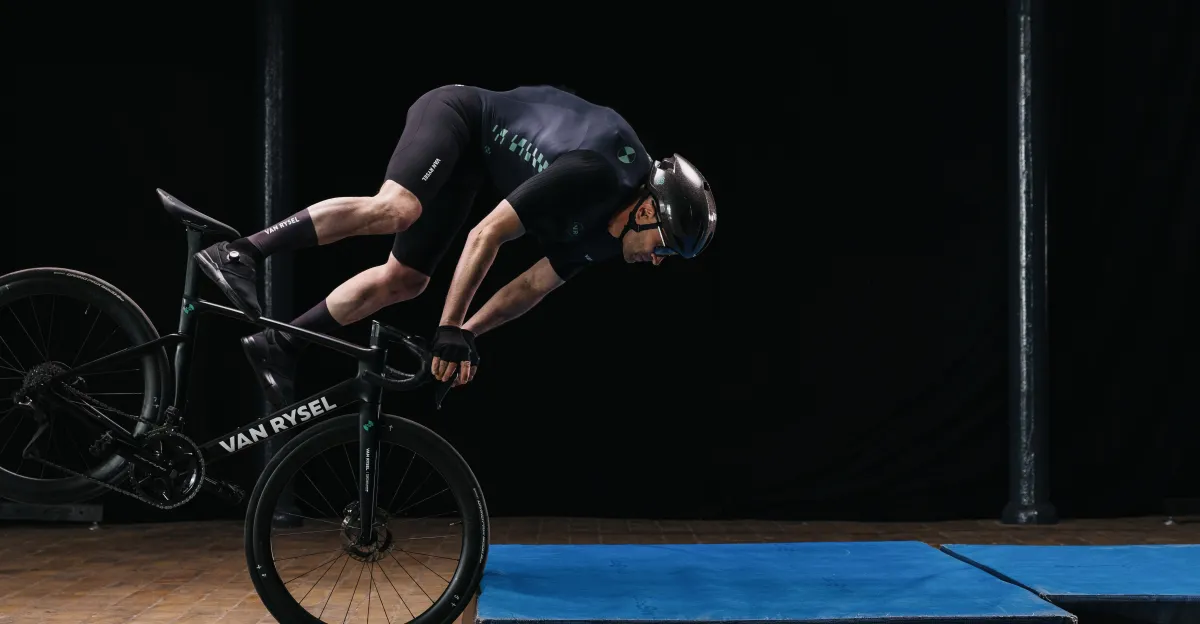

Next-Gen Wearable Airbag Threatens to Revolutionize Bike Safety for Youth

Revolutionizing Cycling Safety: Airbag-Powered Suits Set to Disrupt Traditional Gear

In a bold move toward enhancing rider safety, UCI, the governing body of professional cycling, has initiated a paradigm shift by endorsing the development of advanced protective gear. This comes after a recent call for innovations seeking cutting-edge technology capable of safeguarding athletes at unprecedented speeds. Among the most promising solutions is the emergence of airbag-integrated suits, designed to mitigate injury severity during high-impact crashes—the kind that traditionally threaten careers and even lives.

This new generation of skinsuits exemplifies disruption at the intersection of sports, safety, and technology. Engineered with aerodynamic, heat-dissipating materials—along with abrasion-resistant layers—the suits serve a dual purpose: reducing drag for improved performance and enhancing safety. Most notably, embedded airbag systems deploy in real time to protect vital upper-body regions including the cervical zone, spinal cord, and central core, areas previously vulnerable in high-velocity accidents. By shifting focus beyond just helmets, innovators like Van Rysel are recognizing that comprehensive protection requires addressing multiple facets of rider safety, aligning with the strategic thinking of industry leaders such as Elon Musk and Peter Thiel, who emphasize disruption as a catalyst for industry transformation.

The implications are profound for the business and sports worlds alike. As the industry anticipates widespread adoption, companies that pioneer this integrated safety technology stand to reshape market dynamics, forcing traditional gear manufacturers to innovate or risk obsolescence. This aligns with perspectives from Gartner analysts, who forecast that wearable safety tech innovations will account for a significant share of future sports equipment sales, with Airbag suits positioned as a potential game-changer. The advancement also signals an era where safety exceeds mere compliance; it becomes a competitive advantage, fostering greater athlete confidence and potentially uplifting spectator engagement in professional cycling.

Looking ahead, the trajectory of these innovations suggests not just incremental improvements but disruptive leaps akin to what electric vehicles did to automotive industry norms. As more safety algorithms are integrated with wearable tech and AI-driven deployment mechanisms, the future of high-speed sports will demand a proactive approach to risk management. Industry stakeholders—ranging from startups to established corporations—must act swiftly. The urgency is palpable: those who lead the charge into this new era of protective equipment will dominate the market and shape the future of athletic safety standards. With technology forging ahead at an unprecedented pace, the question is not if, but when, these revolutionary suits will become the new baseline for rider safety worldwide.

Uber and WeRide launch Abu Dhabi’s first truly driverless robotaxis—ready to revolutionize city transit

In a landmark development for autonomous mobility, Chinese autonomous vehicle firm WeRide and Uber have officially transitioned their Abu Dhabi robotaxi service from testing to driverless operations, marking a significant milestone in global AV deployment. After a year of rigorous testing and regulatory approvals—highlighted by WeRide’s recent federal permit from the UAE—the service now operates entirely without human safety operators, opening a new era of disruption for urban transportation. This move not only demonstrates the technological maturity of Chinese AV startups but signals a strategic push by Uber to cement its position in emerging autonomous markets outside North America and China.

The service, launched on Yas Island—home of high-profile events like the Abu Dhabi Grand Prix—represents an extension of Uber’s broader vision to scale driverless transportation across multiple regions. Similar to Uber’s partnership with Waymo in Austin, the Abu Dhabi operation leverages local regulatory advances and robust integration with Uber’s core app infrastructure, allowing users to opt into fully autonomous rides with a simple toggle. This reflects a fundamental shift—marking not just a technological breakthrough but an industry-wide disruption poised to commoditize premium mobility. Uber’s strategy exemplifies a new chapter where autonomous fleets could eventually supplant traditional ride-hailing, creating a more efficient, cost-effective model for urban mobility.

Market analysts like Gartner and MIT’s Transportation Lab highlight that Uber’s recent and anticipated autonomous deployments foreshadow a transformative effect on the transportation industry—particularly in how urban congestion, safety, and operational costs are managed. Uber’s extensive partnerships with over 20 AV companies—including May Mobility, Volkswagen, and leading Chinese firms such as Pony.ai and Baidu—underline its ambition to diversify its portfolio of self-driving applications. The company’s move into major markets like Abu Dhabi and future plans for cities such as Dubai underscore a competitive environment where disruption is accelerating: traditional taxi and ride-hailing revenues are under imminent threat, giving way to a new autonomous paradigm.

The business implications of these advancements extend beyond mobility. Uber’s strategic alliance with AV tech firms has laid a foundation for revenue streams in micro-mobility, logistics, and even freight—areas where autonomy promises exponential cost reductions and operational agility. With Uber CEO Dara Khosrowshahi openly forecasting deployments in at least ten cities by 2026, the competitive landscape is set to intensify. Disruption in urban transit markets is expected to accelerate as these innovations crack the code on safety, scalability, and regulatory hurdles—factors that have traditionally slowed adoption. This aggressive rollout trajectory not only promises economic rewards for early entrants but positions Uber as a pivotal player shaping the future of how societies mobilize.

Looking ahead, the next 12 to 24 months will be critical in determining whether these autonomous innovations can achieve the widespread adoption necessary to redefine urban landscapes. Emerging markets like the Middle East—with their rapid development goals and openness to cutting-edge solutions—are emerging as fertile testing grounds for AV commercialization, signaling a global shift toward disruptive mobility. As industry giants and startups race to perfect driverless technology, the urgency for regulators, investors, and consumers to adapt to this evolving landscape intensifies. The question remains: will the tipping point arrive sooner than expected, ushering in a new era of disruption, or will technical and regulatory challenges delay mass adoption? Given the current pace, it is clear that the future of transportation is not just approaching—it is already here.

Social Media Auto Publish Powered By : XYZScripts.com



