Matox News

Truth Over Trends, always!

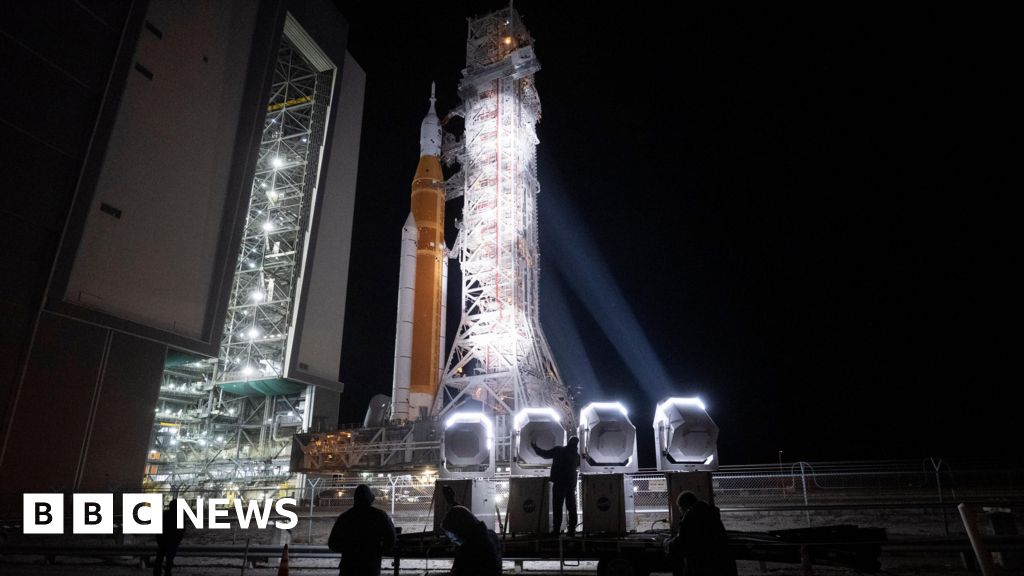
NASA's Artemis Moon Rocket Moves Back to Pad, Eyes April Launch
NASA’s Artemis Moon Rocket Moves Back to Pad, Eyes April Launch

The United States and its space agency, NASA, appear poised to make a decisive leap in their enduring quest to return humans to the Moon. Following rigorous data reviews, NASA managers have approved a critical second rollout for the Artemis program’s next phase, which involves comprehensive checks at the launch pad. These inspections are essential to ensure mission readiness and safety, underscoring the meticulous approach taken by Washington in its strategic pursuit of lunar exploration.
With successful completion of these tests, Artemis II will mark a historic milestone as the first crewed mission within the Artemis series. This mission signifies more than just a technological achievement; it symbolizes a renewed U.S. commitment to space dominance and innovation. The mission, which is expected to pave the way for subsequent lunar expeditions, will set critical operational precedents for human spaceflight and international collaboration as nations worldwide observe these developments with keen interest.

Analyzing broader geopolitical impact, the Artemis program signals an assertive posture by the United States in the new era of global space competition. As China and Russia accelerate their own lunar ambitions, America’s investments underscore a desire to maintain technological superiority and strategic influence in space—an arena increasingly viewed through the prism of national security. International analysts warn that these developments could redefine global power dynamics, transforming space from a realm of exploration into a new domain of geopolitical contestation. How the U.S. advances here could influence alliances and rivalries that stretch across continents and threaten to spark a new Cold War in the final frontier.

External observers, including prominent historians and officials from international organizations, emphasize that decisions made today resonate deeply within the fabric of global geopolitics. The Artemis program is not just about moon landings; it is a statement of technological leadership and ideological supremacy. Countries like China view space as critical to their national destiny, aiming to challenge U.S. dominance and secure their own place in history. Meanwhile, NASA and its partners push forward, driven by a vision that echoes the Cold War-era space race, yet now seasoned with the stakes of economic interests, technological sovereignty, and national prestige.

As history’s pages turn, the upcoming missions could herald a new epoch in human civilization. The successful deployment of Artemis II, followed by Artemis III—targeted for 2027—may well serve as the fulcrum upon which the future of space power is balanced. The lunar landings planned for Artemis IV in 2028 will demonstrate whether humanity can transcend terrestrial conflicts to unite beneath a common goal of exploration and progress. For now, the world watches, uncertain yet compelled by the gravity of these endeavors, knowing well that the decisions and actions taken today will shape the narrative of international relations for generations to come. The cosmos beckons, but so do the profound possibilities—and perils—of a future forged in the unyielding crucible of human ambition.
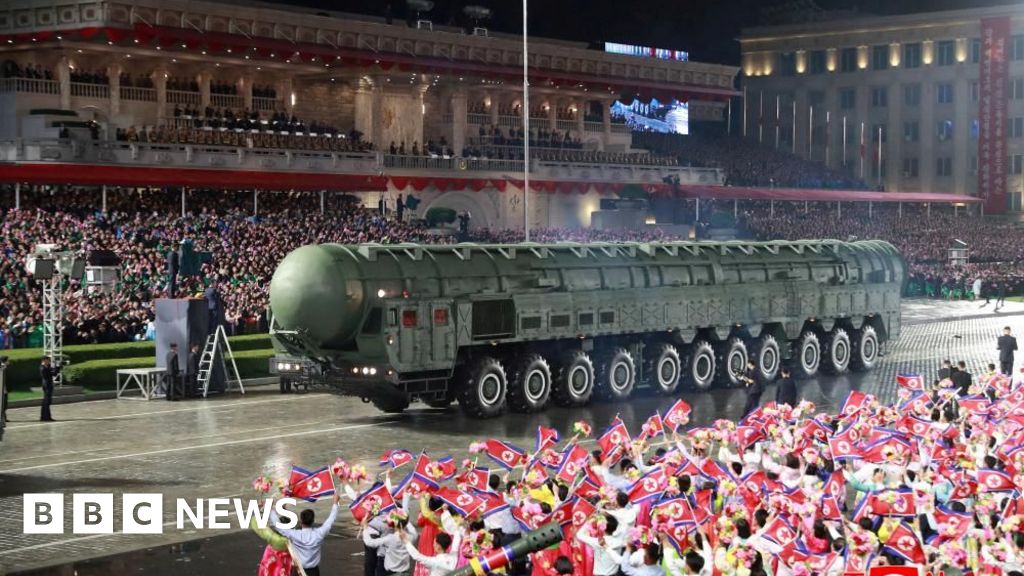

Rocket display steals the show at North Korea parade

In a clear demonstration of its advancing military capabilities, North Korea unveiled its latest intercontinental ballistic missile (ICBM), the Hwasong-20, during a grand military parade in Pyongyang commemorating the 80th anniversary of its ruling party. The event, broadcast widely on state television, displayed a confident Kim Jong Un overseeing the event—sending a stark message to the world about the regime’s ongoing pursuit of nuclear and missile prowess. The timing and content of this reveal signal an increasingly assertive stance in North Korea’s quest for strategic parity, and potentially, superiority.

The Hwasong-20‘s impressive size strongly indicates its capability to carry multiple nuclear warheads. This advancement marks a notable escalation in Pyongyang’s missile program, which has persisted despite numerous international sanctions and diplomatic efforts to curb its proliferation. Analysts from institutions such as the Council on Foreign Relations warn that this development could fundamentally alter regional security calculations, particularly in South Korea, Japan, and the broader Asia-Pacific region. For the West, this serves as a reminder of North Korea’s resilience and its commitment to maintaining a nuclear deterrent—regardless of diplomatic prospects and economic sanctions.

Ever since Kim Jong Un’s rise to power, North Korea has pursued a dual strategy of nuclear development and diplomatic brinkmanship. However, these latest tests and displays underscore a shift toward greater military self-reliance and readiness to challenge international norms. Some experts suggest that this move complicates efforts by the United Nations and other global institutions to impose meaningful restrictions, and underscores the limitations of *diplomatic engagement* with a regime that views nuclear weapons as essential to its survival. The proliferation of such advanced missile technology not only elevates North Korea’s geopolitical standing but also deepens regional instability, forcing neighboring nations to reconsider their security alignments and military postures.

This escalation is not occurring in isolation. China and Russia, both strategic allies of Pyongyang, have shown mixed reactions that reflect broader shifts in their own geopolitical goals. Some analysts suggest that Beijing and Moscow are tacitly accepting North Korea’s missile tests as part of a complex pushback against perceived Western encroachment and U.S. dominance in the Indo-Pacific. Meanwhile, the international community faces mounting warnings from security experts who emphasize that further advancements in North Korea’s arsenal could spark an arms race on the Korean Peninsula, or even ignite conflict if miscalculations occur. The latest developments serve as a stark reminder that global peace remains fragile, heavily dependent on strategic dialogues and the restraint—or lack thereof—of a regime that appears increasingly willing to test the limits of diplomacy.

Historians like Bruce Cumings and military analysts warn that these technological milestones might mark a pivotal chapter in East Asian geopolitics. The struggle to contain North Korea’s nuclear ambitions is a saga that history may view as a precursor to a broader, more dangerous confrontation. As the world watches, the stakes couldn’t be higher; the balance of power teeters on the edge of a new era where technological advancements wield the potential to reshape conflicts—and societies—forever. In the shadow of this emerging threat, nations must grapple with unsettling questions: Will diplomacy prevail, or will this be the beginning of a new, perilous arms race?”

Social Media Auto Publish Powered By : XYZScripts.com


