
Matox News

Truth Over Trends, always!

Cote Brasserie Owner Saves The Real Greek, Boosting Local Business and Jobs

Market Impact and Chain Consolidation Signal Broader Economic Trends

The recent acquisition of all but nine outlets within a prominent Mediterranean restaurant chain by the Karali group marks a significant development in the regional hospitality industry. As the family-owned enterprise consolidates control over the majority of the chain’s 28 outlets, this move underscores a broader shift toward localized management and strategic repositioning within the sector. Experts suggest that this transition highlights the resilience of traditional business models amid turbulent economic conditions and evolving consumer tastes. According to industry analysts at Euromonitor International, such consolidations often serve as a prelude to operational restructuring that aims to enhance profitability and streamline supply chains, which are increasingly strained by global geopolitical uncertainties.

The market impact of this take-private trend extends beyond the hospitality industry. It reflects a wider pattern of regional economic resilience, especially within sectors that are heavily impacted by fluctuating imported food costs, labor shortages, and tightening regulatory frameworks. As noted by economists at the International Monetary Fund, such strategic local control can act as a buffer against external shocks, allowing businesses to adapt swiftly to policy updates and market fluctuations. This move by the Karali family demonstrates confidence in their ability to leverage local knowledge to adjust menus, optimize staffing, and reduce costs effectively—a critical factor in maintaining competitiveness within a challenging economic environment.

Meanwhile, this shift carries significant policy consequences. Governments across the Mediterranean region are closely monitoring these industry realignments as they may influence employment rates, local sourcing policies, and the regulatory landscape. The trend towards more family-led ventures could prompt policymakers to re-evaluate small business incentives, potentially fostering greater entrepreneurial autonomy and localized economic development. Furthermore, investors are watching these developments carefully, considering opportunities for portfolio diversification within emerging markets characterized by such resilient family-owned entities. As Dr. Katherine Chen, a senior economist at the Heritage Foundation, suggests, these consolidations reflect a strategic response to economic pressures that could re-shape the hospitality sector over the next decade, making it more adaptable and locally focused.

Looking ahead, the evolving landscape of Mediterranean hospitality signifies more than just a market shift; it represents a dynamic stage where national economic identities and entrepreneurial spirits converge to shape future prosperity. Such strategic consolidations are poised to drive innovation, reinforce regional economic sovereignty, and foster a sense of resilience—attributes crucial in an era marked by geopolitical shifts and technological transformation. As nations rethink their economic strategies, the role of family-based enterprises as pillars of stability and growth becomes increasingly evident, fueling a future where local businesses wield greater influence on global scales. This is the rhythm of nations forging their economic destiny, setting the stage for a resilient future built on the enduring strength of local enterprise and strategic adaptation.
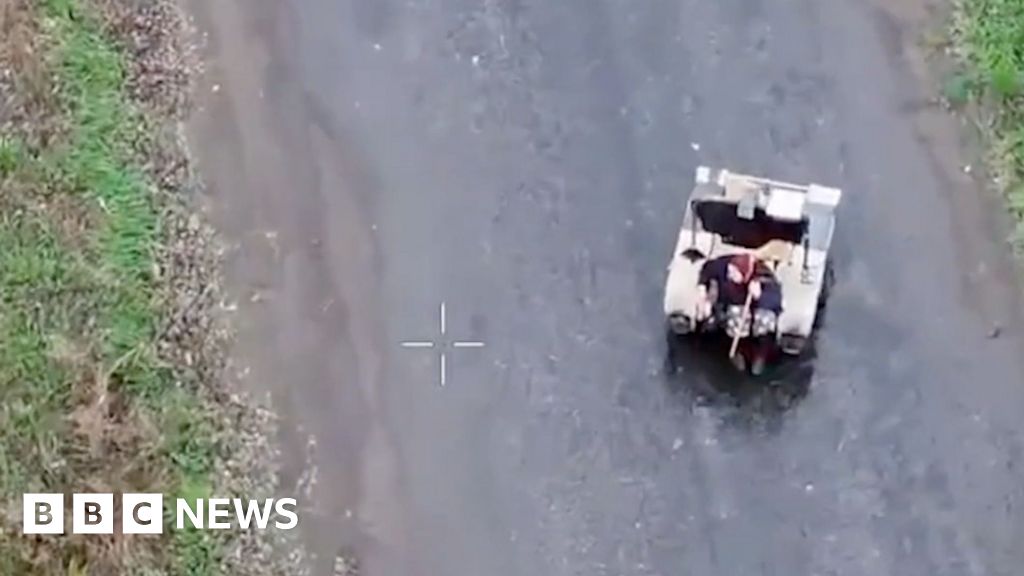
Robot hero: Young tech saves elderly woman on Ukraine's frontlines
Robot hero: Young tech saves elderly woman on Ukraine’s frontlines

Recent events emerging from the Ukrainian conflict underscore a shifting paradigm in modern warfare, where technology, human resilience, and geopolitical stakes converge. A remarkable incident captured through drone footage revealed a groundbreaking development: a rescue operation leveraging autonomous robotic technology. Ukrainian forces deployed a drone to assist an elderly woman, Antonina Horuzha, who found herself stranded and exhausted amidst the chaos of ongoing hostilities. The footage, showing a robot with the inscription “grandma, sit down,” approaching her, exemplifies how drones have become not just tools of combat but vital lifelines to civilians caught in conflict zones.

This scenario signals a **turning point** in the geopolitical landscape. Ground drones—originally designed for reconnaissance and targeted strikes—are increasingly serving humanitarian roles. Analysts suggest that this evolution demonstrates the Ukrainian military’s adaptive use of technology in response to intense, resource-stretched warfare. Such outbreaks of innovation are often driven by necessity; Ukraine’s military factions, under the auspices of President Zelensky’s government, have integrated drone technology to bridge gaps created by compromised supply lines and dwindling manpower. According to military experts and historians tracking technological warfare, the rise of autonomous rescue drones could redefine how nations safeguard both their soldiers and civilians in future conflicts.

International organizations such as the United Nations and defense analysts acknowledge this technological shift as a potential force multiplier for Ukraine but also raise ethical questions. As autonomous systems gain prominence, concerns about conflict escalation, unintended consequences, and escalation of civil casualties come to the forefront. Moreover, Ukraine’s reliance on cutting-edge drone technology has prompted strategic considerations among adversaries—particularly Russia. How these technologies will influence the broader East-West power balance remains uncertain. Historically, such innovations have often accelerated conflict, making it more unpredictable and destructive. In this light, Ukraine’s successful use of rescue drones illustrates both resilience and a global trend: war increasingly becomes a battleground of technological innovation.

As visions of the future of warfare unfold, many international observers warn that this technological arms race may have consequences beyond the battlefield. Suppose autonomous, rescue, or even combat drones become widespread; questions about sovereignty, control, and the moral dilemmas of artificial intelligence in warfare are likely to intensify. For now, Ukraine’s daring deployment underscores a fundamental geopolitical shift—one where technology becomes a new front in ideological and territorial struggles. The ongoing saga of this conflict, however, leaves us with a stark reminder: the tide of history is still turning, and every innovation carries the weight of the future’s unpredictable outcome. As society watches from the sidelines, it is clear that the coming years will definitively shape the rules of engagement in this new era of warfare—an era where machines no longer merely serve, but increasingly define the destiny of nations.

NFL Reporter Resigns, Saves Man from Car Hours Later in New Jersey

Analysis of Recent American Media Scandals and Their Impact on Global Geopolitics

The recent upheavals in American media and societal values have cast a long shadow beyond the borders of the United States. The resignation of renowned NFL reporter Dianna Russini from The Athletic, amidst an internal review concerning her relationship with New England Patriots coach Mike Vrabel, echoes a broader narrative of accountability and loss of moral authority increasingly impacting the American cultural sphere. This controversy, arising just as Russia’s recent geopolitical moves and China’s ongoing assertiveness reshape Eurasia, underscores how domestic behavioral standards can influence or reflect international perceptions of U.S. societal stability.

In the midst of the scandal, public attention was diverted from Washington’s global strategic ambitions to a physical display of heroism in Wyckoff, New Jersey. When Russini, driving behind a crash site, intervened to rescue an injured driver and a dog, her actions garnered respect but also served as a reminder of the fragile nature of societal order. Analysts note that this incident, however seemingly minor, holds a *symbolic* significance. It exemplifies the tension domestically: a nation struggling with internal cohesion while simultaneously asserting itself on the world stage. As American leaders debate the fallout from such scandals, their capacity to project strength internationally is increasingly undermined by internal strife.

International Organizations Watching as U.S. Social Disintegration Accelerates

Political and security analysts suggest that international institutions, including NATO and the United Nations, observe with concern the erosion of American societal consensus. Historian Dr. Anthony Smith warns that episodes exemplified by the Russini scandal and related media disturbances reflect the deeper fracturing of American cultural norms, which have long served as a pillar for global leadership. With America’s influence waning, rising powers such as China and Russia are prepared to exploit these vulnerabilities to assert their vision of order and influence. These shifts portend a destabilization of the post-World War II international order, fostering geopolitical rivalries that threaten to reshape alliances.

Furthermore, the European Union and allied nations are increasingly scrutinizing their own societal trajectories. The fallout from internal American controversies fuels debates on morality, censorship, and the limits of freedom—issues that resonate with ongoing debates about transnational standards of conduct. These debates are pertinent as nations weigh the consequences of diverging cultural paradigms and diverge further from traditional Western values, inevitably impacting cooperation within international institutions. The World Economic Forum and other global entities monitor these developments closely, warning that internal destabilization can rapidly spill over into economic and geopolitical realms.

How Decisions in the United States Shape Future Global Dynamics

The unfolding of these events signals a critical juncture—one where domestic upheavals intertwine with international power plays. The shrinking of America’s moral authority on the world stage could embolden authoritarian regimes, while democratic nations confront their own internal challenges. As American policymakers grapple with scandals and societal divisions, they risk ceding ground in the global contest of ideas and power. The decisions made in Washington—about transparency, accountability, and societal cohesion—will not only determine the future of American influence but also set the tone for the international order.

History’s arc remains uncertain, but the prevailing narrative suggests that the battle for ideals of leadership and morality is far from over. The world watches as the United States, once the unrivaled beacon of freedom and strength, faces a profound test—where every scandal, every act of heroism, and every policy decision becomes a chapter in the unfolding story of a nation at a crossroads. As the inescapable weight of history presses down, the question lingers: will the nation that once defined freedom find its way back to strength, or will internal chaos define its future?

Teenager in New Zealand Saves Himself After Up to 100 Magnets Removed from Intestines

Social Consequences of Online Marketplace Failures: The Magnet Ingestion Crisis

In recent times, **the rising influence of online marketplaces** has sparked intense debate over their role in safeguarding community safety, especially concerning **our vulnerable youth**. A disturbing incident in New Zealand has cast a harsh light on these digital platforms’ failures. A 13-year-old boy, after ingesting up to 100 high-power (neodymium) magnets purchased online, was hospitalized with life-threatening injuries—prompting societal reflection on **the ethical responsibilities of e-commerce giants and the vulnerabilities of our families**. The incident underscores how social issues—rooted in **the separation of commerce from community safety**—can infiltrate our daily lives, impacting families and disrupting the fabric of local communities.

Despite existing bans on such powerful magnets in New Zealand since 2013, the boy’s case reveals a troubling gap in enforcement and oversight. The magnets, bought on Temu, a Chinese-founded e-commerce platform, were retrieved only after the boy suffered four days of excruciating abdominal pain. Surgeons found the magnets had adhered to his intestines, causing tissue necrosis in multiple areas—highlighting a **grave public health risk**. This case exemplifies how the unchecked proliferation of hazardous products online can undermine **the moral obligation to protect our youth** and fortify the social safety net. As sociologists like Philip Cook have argued, **the commercialization of every facet of life, unchecked by rigorous safety standards, threatens to erode societal trust** and impose preventable burdens on families and healthcare systems.

The response from Temu reflects a pattern seen in many online marketplaces: superficial apologies and vague investigations. While the platform claims to review product listings, critics note that the challenge lies in the platform’s ability—or willingness—to prevent illegal and dangerous items from reaching consumers. Such lapses raise questions about **the social responsibility of e-commerce platforms in safeguarding communities**, especially minors—our society’s most vulnerable—and highlight **the need for stricter regulatory oversight**. History teaches us, through the cases of defective consumer goods and lax regulation, that gaps in oversight often translate into long-term societal costs, including strained healthcare resources and traumatized families.

Beyond the immediate physical dangers, this incident illuminates **broader social tensions**: **the erosion of community-based oversight**, **the influence of unregulated online commerce**, and **the challenge of safeguarding cultural values in a digital age**. As social commentators argue, these platforms have become battlegrounds for societal morals, where profits often trump safety, and where **the very fabric of social trust is at stake**. Effective solutions necessitate **policy reforms**—such as stricter verification, faster removal of illegal products, and community-led oversight—to restore **a sense of moral responsibility**. Furthermore, strengthening parental awareness and education is crucial to empower families to navigate digital waters confidently, safeguarding **the moral and physical well-being of the next generation**.

As society navigates an increasingly interconnected world, the incident of this young boy, consigned to hospital beds because of corporate oversights, serves as a poignant reminder. Society must confront uncomfortable truths about **the cost of unchecked consumerism** and **the devaluation of community safety**. There remains hope, however, amid these challenges. A future where businesses embrace moral accountability, regulators enforce standards firmly, and **families** are **empowered** to protect their own can foster a society resilient enough to convert these dark moments into a beacon of renewed societal purpose—reminding us that true safety lies not only in laws but in the collective conscience that refuses to let commerce overshadow community bonds.

Worcester Student Paramedic Saves the Day by Helping Lecturer Deliver Baby

In an era marked by rapid demographic and cultural shifts, societal institutions face increasing challenges in maintaining social cohesion and supporting families. Recent stories emerging from communities across the West Midlands exemplify how these issues intersect with education, healthcare, and community resilience. The case of Elise Faragher, a third-year paramedic student at the University of Worcester, underscores how personal and professional boundaries blur when societal change meets individual lives, revealing both the strengths and vulnerabilities of our social fabric.

Elise’s journey illustrates the staggering impact that social change can have on families and communities. Her surprising experience assisting in the delivery of a baby born to her lecturer—someone she had studied under since her first year—highlights the intertwined nature of personal relationships and community life in today’s society. Such moments, while extraordinary, are often rooted in larger issues of access to healthcare, education, and social support.

  • This event exemplifies how educational institutions
  • and healthcare systems
  • are increasingly becoming spaces where social bonds are tested and reinforced simultaneously

forces of demographic shifts often lead to migration, changing family structures, and evolving social norms.

Experts like sociologist Charles Murray have long argued that societal cohesion depends on the strength of these social bonds, yet increasing social tensions threaten traditional community values. The stories from Worcester reflect how youth-oriented social dynamics are reshaping expectations around responsibility, support, and ethical care. As Elise noticias her confidence and professionalism during a momentous event, her experience exemplifies the importance of fostering moral resilience within the educational framework, ensuring that tomorrow’s professionals are equipped not only with technical skills but also with the moral compass to serve society’s most vulnerable.

Furthermore, families endure strain as social issues extend beyond healthcare into education and public policy. The challenge lies in balancing the needs of diverse populations—ensuring that tradition and progress coexist without sacrificing core community values. The story also illustrates the importance of supportive mentorships, exemplified by Elise’s positive relationship with her lecturer, Aaron Collins. His unwavering support and professionalism emphasize how crucial it is for educational institutions to foster environments where trust and camaraderie flourish—all vital for nurturing resilient citizens. Addressing these issues requires a societal shift that prioritizes not only technical competence but also moral integrity and community care.

As the society continues its tumultuous evolution, humanity is left with a poignant question: How can communities foster social resilience amidst these shifting sands? The stories from Worcester serve as quiet reminders that, even amid chaos, there exists a deep well of hope. Society is a tapestry woven from individual stories of courage, care, and moral conviction. If we recognize the importance of strengthening family bonds, investing in education, and nurturing community trust, then there remains hope for a society in transition—one where social issues are not just challenges but catalysts for renewal and transformation.

Social Media Auto Publish Powered By : XYZScripts.com