Matox News

Truth Over Trends, always!

Trump limits refugee admissions to 7,500 to prioritize national security and sovereignty

Washington’s New Refugee Admission Limits and Its Impacts on International Relations

President Donald Trump’s administration has announced a significant reduction in the number of refugees permitted into the United States, capping the intake at 7,500 for the upcoming fiscal year—a stark contrast to the 125,000 set during the previous administration of President Joe Biden. This decision, delivered via an official notice, has raised eyebrows across global diplomatic circles, not least because no explicit reasons were provided apart from vague references to “humanitarian concerns or national interest.” It marks a continuing trend from Trump’s early days in office, including the suspension of the US Refugee Admissions Program (USRAP) in January 2025, which aimed at prioritizing national security and public safety.

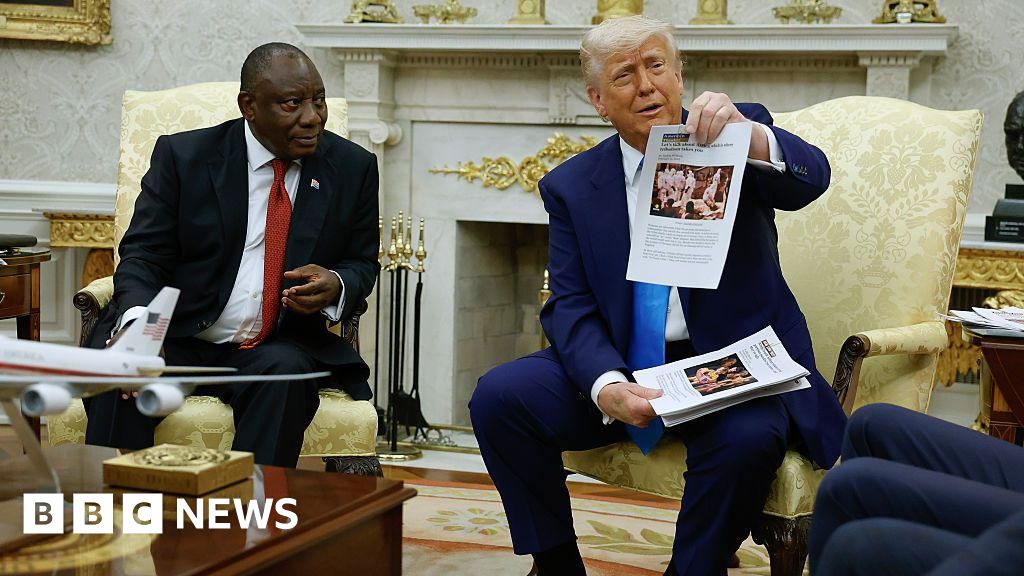
The focus of this new policy appears to favor white South Africans, primarily Afrikaners, with a sizable portion of the quotas allocated to victims of what the White House describes as “illegal or unjust discrimination” in South Africa. During a meeting in May, Trump sharply criticized South African President Cyril Ramaphosa, accusing his government of persecuting white farmers and showcasing disturbing images of burial sites representing murdered farmers—all scenes later clarified to be from protests material dating back to 2020. The White House’s overt regard for these victims underscored an overarching shift in U.S. refugee policy, apparently influenced by geopolitical and ideological considerations.

Geopolitical Impact and Rising International Tensions

Global analysts and historical experts have expressed concern that such selective refugee policies threaten the longstanding credibility of U.S. humanitarian commitments. Krish O’Mara Vignarajah, CEO of Global Refuge, contended that the decision “lowers our moral standing,” especially during a time when crises persist in Afghanistan, Venezuela, Sudan, and beyond. Critics argue that by focusing heavily on a specific demographic, the United States risks alienating its allies and betraying its reputation as a defender of human rights. Meanwhile, accusations of unfair treatment and discrimination against other persecuted groups have surfaced, suggesting a dangerous shift away from the country’s traditional openness.

Furthermore, this policy comes with serious geopolitical ramifications. As the U.S. tightens its refugee admissions, other nations are watching closely, questioning American values and leadership. Some analysts interpret this move as a sign of Trump’s broader desire to reshape U.S. foreign relations—favoring nationalist policies that prioritize domestic security over international cooperation. The impact is palpable: allies in Europe and Africa are now reconsidering their own approaches to asylum and diplomatic engagement. Historically, shifts in refugee policy have often prefigured more profound geopolitical realignments, and experts warn that the current trend could contribute to a fracturing of international consensus on humanitarian obligations.

Societal and Cultural Consequences: A Turning Point in U.S. Policy

As the policy unfolds, the consequences extend beyond diplomacy—deepening societal divisions in the U.S. itself. Immigration advocates have criticized the move as a betrayal of American values, arguing it discriminates against vulnerable populations and undermines the moral foundations of the nation. Critics further point out that this narrowed focus risks fueling policy shifts that favor ethnonational interests at the expense of universal human rights. The decision is emblematic of a broader ideological clash over identity, security, and what it means to be a nation of immigrants in a rapidly changing world.

Meanwhile, the undercurrent of international skepticism grows stronger. As a major power, the U.S. has long wielded influence over global norms surrounding refugees and human rights. With recent decisions seemingly departing from this tradition, the global community stands at a crossroads, watching whether the United States will uphold its commitments or retreat into a more insular approach. The unfolding story remains a dramatic chapter in the larger narrative of a world grappling with new realities—where decisions on refugee intake are less about compassion and more about geopolitical leverage. Indeed, the yet-to-be-written pages of history continue to turn, leaving the world uncertain if the U.S. will remain the beacon of hope it once was or drift into a new era of nationalist retrenchment.

Weather balloon disruption shuts down Lithuania’s top airports—major security alert!

The recent series of provocative incidents in the Baltic States underscores a shifting landscape of geopolitical instability that threatens the delicate balance of power in Eastern Europe. Lithuania, a staunch member of both European Union and NATO, responded decisively by closing its two largest airports and border crossings following the discovery of numerous helium weather balloons drifting into its airspace. These balloons, believed to be used for smuggling, notably carry Belarusian cigarettes, which are far more expensive within EU borders. The Lithuanian government blames Belarusian President Alexander Lukashenko, an ally of Russian President Vladimir Putin, asserting that his regime tolerates and perhaps facilitates this covert smuggling operation—a move that directly undermines EU security principles and regional stability.

This escalation is not isolated. Reports indicate that, throughout the year, Lithuania has seen an unprecedented number of incursions, with hundreds of helium balloons detected and dozens crossing into its territory. The same pattern of aerial intrusions is evident in neighboring Poland, which experienced over 100 similar incidents, further signaling an orchestrated effort to destabilize the Baltic region. Analysts point out that these seemingly minor incursions are part of a broader strategy by Russia and its proxies to test NATO’s resolve and to sow chaos within EU borders, exploiting vulnerabilities in eastern European countries. Security experts warn that such tactics could prelude more aggressive actions, echoing fears of a renewed hybrid warfare aimed at dividing the alliance and reasserting Moscow’s influence.

The recent encounter involving Russian military aircraft further amplifies these concerns. On Thursday, Lithuanian military sources confirmed the entry of a Sukhoi SU-30 fighter and an IL-78 tanker into Lithuanian airspace—an area protected by NATO’s Enhanced Air Policing Mission. Though the aircraft departed after brief incursions, NATO scrambled fighter jets as a show of force, signaling that the alliance remains vigilant amid the continued threats. These deliberate aerial provocations coincide with diplomatic protests from Vilnius, which summoned the Russian chargé d’affaires and issued a stern warning, underscoring the fragile diplomatic environment. Russia’s denial of the incursions, despite credible military reports, reveals its attempt to obfuscate the narrative and maintain plausible deniability—yet the message remains clear: the Baltic States are caught in the crossfire of a renewed geopolitical struggle.

This unsettling chain of events illuminates the broader geopolitical impact of Russia’s tactics. Under the veneer of trivial balloon crossings, a strategic message is sent: the security of eastern NATO members is fragile, and the Kremlin is willing to test the collective resolve of the West. International organizations and security analysts alike warn that such provocations could serve as precursors to more serious escalations—potentially softening defenses or creating opportunities for unilateral actions that threaten regional sovereignty. Historians like John Mearsheimer argue that Moscow’s deliberate destabilization efforts are designed to weaken NATO from within, reviving Cold War-era fears of renewed conflict in Europe. The unity of the alliance and the resilience of its eastern flank are under direct threat; the question remains whether Western nations can suppress the temptation to retreat or whether they will confront this threat head-on, risking broader confrontation in their effort to uphold stability.

As the curtains lift on this chapter of unfolding history, the precarious balance between sovereignty and aggression continues to sway. The Baltic region has again become a testing ground for geopolitical rivalry, where every balloon, incursion, and diplomatic protest leaves an indelible mark on the fabric of international security. The question looms: how much longer can democratic nations defend their borders against this invisible war? The answer, still shrouded in uncertainty, echoes across the corridors of power—while history, with relentless perseverance, watches and waits, ready to judge the decisions that will shape the future of the free world.

F5 Hack Sparks Urgent Alert: Thousands of Networks at Risk

Nation-State Hackers Exploit F5 Software in Major Cybersecurity Breach

In an alarming development for both government agencies and Fortune 500 corporations, F5 Networks, a leading provider of networking and cybersecurity solutions headquartered in Seattle, has disclosed a significant breach indicating an advanced persistent threat (APT) campaign. According to federal government officials, hundreds of networks remain vulnerable to breaches by nation-state hacking groups. This incident underscores the growing threat landscape targeting critical infrastructure and enterprise systems, with potential disruptive implications for global digital ecosystems.

F5’s breach reveals an unprecedented level of threat sophistication, with hackers working for an undisclosed nation-state maintaining long-term access within the company’s internal network. The group had surreptitiously infiltrated the infrastructure overseeing updates for F5’s flagship product, BIG-IP, which is used by 48 of the world’s top 50 corporations for load balancing, security, and data management. The hackers exploited this position, downloading proprietary source code, including vulnerabilities that had yet to be publicly patched. This revelation signals a fundamental disruption in the traditional cybersecurity paradigm, as adversaries gain access to the very building blocks of network security—potentially enabling supply-chain attacks of a scale previously deemed unlikely.

The implications extend beyond F5’s immediate client base. By obtaining configuration details and source code, threat actors now wield a level of control and insight capable of orchestrating exploitative supply-chain compromises. Such breaches could enable the suppression or manipulation of traffic, data exfiltration, or even deployment of malicious firmware—posing grave concerns for critical infrastructure, financial institutions, and government networks. Security analysts highlight this as a stark warning: the vulnerabilities at the network’s edge—particularly those tied to sophisticated management systems—are high-value targets that can destabilize entire industries. As Peter Thiel and Elon Musk have long emphasized, technological dominance hinges on securing these crucial nodes before adversaries can establish footholds.

In the aftermath, F5 has responded by rolling out critical updates for its affected products, including BIG-IP, F5OS, BIG-IQ, and APM. Despite the company’s assurances of thorough investigations—coordinated with firms like IOActive and NCC Group—no evidence surfaced of data exfiltration or modifications to the system’s source code. Nevertheless, this incident has highlighted a pressing need for organizations to rethink cybersecurity strategies centered around disruption-resistant architectures and zero-trust frameworks. The breach’s strategic implications reinforce that disruption is no longer a future concern but an immediate reality; the next frontier of cybersecurity must prioritize resilience and rapid detection.

Looking to the future, industry analysts and security firms concur that we are standing on the brink of a new era. Major corporations and government agencies alike must accelerate efforts to adopt innovative safeguards, including real-time threat intelligence, AI-powered anomaly detection, and proactive threat hunting. As experts from MIT and Gartner warn, the cyberarms race is intensifying, and falling behind now will have catastrophic consequences. This breach serves as a stark reminder: the battle for digital dominance is being waged at the very core of our most vital networks. In this landscape of relentless disruption, rapid adaptation is the only way to defend the future of our interconnected world.

Former Bush Adviser Charged with Stockpiling Top Secret Files—Threatening National Security

In a revealing turn of events that underscores the fraught landscape of international security, India-born scholar and former US government adviser Ashley Tellis has been arrested on charges of unlawfully possessing and sharing top secret information. This arrest, occurring amidst rising tensions within global intelligence communities, signals a potential new phase in the ongoing contest for technological and military supremacy. The case is not merely a matter of individual misconduct but a reflection of broader geopolitical struggles that are shaping the future of international power balances.

Tellis, a prominent figure who has played a significant role in negotiating the historic US-India nuclear deal, was found in possession of thousands of classified documents—including material related to U.S. military capabilities—raising alarm bells about the security of sensitive information. According to federal authorities, the FBI discovered these documents at his residence in Virginia, where he held a top-secret security clearance due to his past employment. Allegations orbiting his interactions with Chinese officials further complicate the narrative, suggesting a web of espionage that spans continents and threatens diplomatic stability. These developments come at a time when Western nations and China are engaged in a high-stakes race for technological dominance, especially in areas like artificial intelligence, military systems, and cybersecurity.

This incident sparks a broader debate among international analysts and historians about the authenticity and reliability of global alliances. According to experts at the Council on Foreign Relations, such breaches are not isolated but indicative of a new era where the transnational flow of information can destabilize long-standing diplomatic agreements. For nations like Russia and China, tension-filled espionage cases like Tellis’s serve as both warnings and opportunities—reminders that information is the most potent weapon in the modern geopolitical arsenal. Officials have promised stringent measures in prosecuting those who mishandle classified information, echoing the warnings issued by US intelligence agencies about the potential security risks involved.

The repercussions extend far beyond the United States and directly impact the global geopolitical fabric. The arrest sends a powerful message about accountability and the fragile trust between allied nations, underscoring that even high-profile intellectuals and policymakers are not immune to the relentless tides of espionage and cyber warfare. How this case will influence future intelligence-sharing agreements, especially between India and the US, remains uncertain. Yet, its significance is in how it underscores the perilous fragility of modern diplomacy where secrets are currency—more valuable than ever, but increasingly vulnerable. As international organizations and national governments recalibrate their security protocols amid these revelations, the shadow of espionage looms large over the corridors of power. The true weight of history in the making can be felt palpably, reminding the world that in this intricate game of shadows, the line between ally and adversary can shift with a single revelation.

Feds smash $15B Bitcoin haul from alleged scam empire—justice in action!

Global Crackdown on Cryptocurrency-Linked Scam Centers Signals Tech Disruption and Business Shifts

The recent seizure of 127,271 bitcoins, valued at over $15 billion, marks the largest cryptocurrency confiscation in U.S. history, signaling a seismic shift in how law enforcement is leveraging blockchain forensics to combat organized cybercriminal syndicates. Led by agencies determined to dismantle *factory-scale* operations, this historic action exposes the rigor and sophistication behind *illicit financial networks* that utilize the speed, transparency, and pseudo-anonymity of cryptocurrencies to sustain large-scale scams. As cryptocurrency ecosystems become intertwined with criminal enterprises, the impact on digital asset exchanges and related business sectors urges industry stakeholders to rethink compliance, security paradigms, and the role of technology in safeguarding legitimate markets.

Innovation in Enforcement and Industry Disruption

The seizure, which includes a trove of digital assets linked to *scam compounds* operating across Southeast Asia, Europe, and Latin America, underscores the depth of innovation in both malicious schemes and the efforts to counter them. According to Ari Redbord, global head of policy at TRM Labs, the broad scope of the operation “strikes at the operational and financial core” of this *criminal infrastructure,* revealing how *sophisticated laundering techniques*, often involving *layered jurisdictions* and *cryptography*, sustain these illegal enterprises. The criminal operations, as detailed in recent indictments, also maintain *bribery records* and leverage *mobile-controlled social media accounts*, illustrating how technology-driven these scams have become.

The implications for the crypto business landscape are profound. As researchers observe the *growth of scam compounds* outside Southeast Asia—spreading into the Middle East, Eastern Europe, and Latin America—the industry must accelerate *innovative security solutions*. Venture-backed startups, such as blockchain analytics firms, and giants like Elon Musk’s Tesla and Peter Thiel’s Palantir, are already pushing boundaries with AI-driven fraud detection. Yet, the scale of these operations suggests that *regulatory frameworks* and *technological innovation* must outpace criminals if legitimate markets are to prosper amid *disruption*.

Business Implications and the Future Trajectory

With well over $15 billion seized, this case exemplifies the critical intersection of financial technology and law enforcement’s new frontier—using data analytics, machine learning, and cross-border cooperation to identify and dismantle *illicit financial flows*. As industry experts from Gartner and MIT emphasize, the evolution of *crypto compliance* tools can serve both as *deterrents and enablers*, fostering a more resilient and transparent digital economy. Conversely, unchecked illicit activity poses a risk of *massive financial destabilization* and erodes public trust in cryptocurrency markets.

The broader business community must recognize that *disruption is inevitable*; however, it also presents enormous opportunities for *disruptive innovation*. Companies invested in *blockchain security*, *AML frameworks*, and *regulatory technology* are poised to lead the next wave of *trust-based blockchain environments*. As international authorities allocate greater resources—highlighted by the U.S. Justice Department’s resolve—the imperative to innovate and adapt becomes urgent. Moving forward, *proactive engagement* with emerging technologies and *collaborative enforcement* will determine whether the crypto economy can evolve into a secure asset class or become a battleground for criminal disruption. The clock is ticking for industry leaders to stay ahead in this high-stakes game, where technological evolution and law enforcement will define the future of digital assets and global finance.”

Satellites Spill the Secrets: Your Calls, Texts, and Data on the Open Sky

Satellite Communications Under Scrutiny: A Disruptive Wave for Global Security

In an era defined by technological innovation and unprecedented connectivity, recent findings have cast a spotlight on the vulnerabilities within satellite communication networks, signaling a profound shift in the landscape of digital security. SES, a dominant player in satellite services and parent company of Intelsat, has underscored a complex reality: users can often select their own encryption methods tailored to specific needs. This flexibility, while empowering, exposes a potential chink in the armor, especially on public Wi-Fi networks akin to those found in coffee shops or hotels. When such networks are compromised, malicious actors could potentially infiltrate sensitive satellite data, raising alarming questions about security protocols in this high-stakes domain.

Recent investigations have revealed disturbing lapses in satellite communication security, particularly involving Mexican government and affiliated organizations. Data collected by researchers using advanced satellite dishes—covering roughly 15 percent of global transponder communications—indicates significant unencrypted transmissions in Western US and Mexican airspace. These findings are not mere technical anomalies; they represent a disruptive breach that could undermine trusted satellite operations. Industry insiders, including Tom Stroup, president of the Satellite Industry Association, emphasize that such exposures threaten the integrity of critical infrastructure, prompting calls for enhanced vigilance and international cooperation to prevent further breaches.

The business implications of these security breaches are seismic. For satellite providers like SES and affiliated service firms such as Grupo Financiero Banorte, maintaining credibility in a fiercely competitive market hinges on robust, transparent security measures. Yet, the current landscape reveals a critical vulnerability—an open invitation for cyber disruptions that could affect everything from financial transactions to national security. Analysts from Gartner and MIT warn that disruption in satellite security could accelerate a shift toward new, more resilient architectures—like quantum-encrypted satellites and decentralized communication networks—that could redefine the industry horizon. Companies that fail to adapt risk falling behind as the demand for secure, disruption-proof satellite communications surges amidst geopolitical tensions and rapid technological evolution.

Looking Ahead: The Future of Satellite Security and Innovation

As the satellite industry confronts these mounting challenges, innovation emerges as the essential solution. The development and deployment of next-generation encryption technologies, coupled with international standards for satellite security, are becoming non-negotiable. Industry leaders like Elon Musk’s Starlink are already exploring scalable, ultra-secure communication platforms to outpace malicious actors. Meanwhile, MIT researchers and global agencies advocate for a paradigm shift: integrating AI-powered security systems and resilient satellite architectures that can withstand cyber-physical threats.

The industry stands at a crossroads—an inflection point driven by disruptive technologies and an urgent need for security vigilance. The next decade will determine whether satellite communication can uphold the promise of a hyper-connected future or succumb to vulnerabilities exploited by increasingly sophisticated adversaries. As Peter Thiel and other tech visionaries warn, those who fail to innovate rapidly may find themselves obsolete in a digital war where security is the new frontier. The race is on—an era of transformative innovation beckons for those willing to lead, disrupt, and redefine the future of global connectivity.

Al-Shabab militants disguise as soldiers to raid Somali jail—an alarming threat to security

In a dramatic escalation of Somalia’s ongoing security crisis, seven al-Shabab militants were reportedly killed after an audacious attack on one of Mogadishu’s most secure detention facilities. The Godka Jilicow prison, located near the presidential palace and managed by the nation’s National Intelligence and Security Agency (NISA), became the battleground in a daring assault that underscores the persistent threat posed by the insurgent group. Despite claims by al-Shabab to have released all Muslim prisoners and inflicted heavy casualties, the Somali government affirmed that the perpetrators were eliminated, highlighting the resilience of state security forces amid ongoing turmoil.

The attack began around 16:40 local time, characterized by a powerful explosion followed by intense gunfire, as militants disguised themselves as soldiers in an attempt to breach the facility’s defenses. The incident, unfolding near the heart of the capital, underscores how al-Shabab continues to threaten Somalia’s fragile stability. The group, linked to al-Qaeda, has waged a near two-decade insurgency, relentlessly attacking government institutions and security forces in an effort to destabilize the country and enforce its brutal interpretation of Islamic law. Hours prior to the attack, the government had reopened previously closed key roads, citing improvements in security—an acknowledgment that the threat remains unmitigated and fluid.

Analysts and international organizations observe that these security breaches reveal a larger geopolitical challenge: the failure to fully eradicate insurgent networks that thrive in Somalia’s lawless corridors and dysfunctional governance. UN reports and independent observers note that while Somalia’s government claims to have regained some control, al-Shabab remains a potent force—capable of executing daring high-profile operations without significant deterrence. The attack’s proximity to the presidency symbolically embodies the ongoing struggle between the Somali state and insurgent elements, which continue to test the limits of national sovereignty and international patience.

  • The assault on the prison not only signifies a tactical victory for al-Shabab but also highlights the failure of recent security measures intended to stabilize Mogadishu.
  • With the group now claiming to have freed prisoners and inflicted casualties, the broader implications for regional security are profound—a reminder that peace remains elusive in the Horn of Africa.
  • Critics argue that, despite international support and local efforts, Somalia’s political and military institutions are not yet resilient enough to counteract the insurgency’s resilience.

As the world watches Somalia’s fragile state teetering on the edge, the echoes of history ring louder: insurgencies fueled by radical ideologies, weak governance, and foreign intervention have often led to chaos and violence. The recent attack underscores how deeply entrenched the conflict remains, with no clear end in sight. It serves as a stark warning to policymakers—until the root causes of instability are addressed, the cycle of violence will continue, leaving a scar on the nation’s future. With history’s pen poised, the question remains: can Somalia, or the international community, forge a path toward lasting peace, or will this chapter in Africa’s history be yet another open wound that stubbornly refuses to heal?

Munich Airport Closes Amid Drone Threat, Raising Security Concerns for Travelers

Recent events at Germany’s Munich airport have underscored the growing volatility in European airspace security, with authorities forced to cancel over a dozen flights and ground almost 3,000 passengers. The incident occurred after unidentified drones were spotted near the airport’s airspace, prompting immediate suspensions and rerouting of flights to nearby hubs such as Stuttgart, Nuremberg, Vienna, and Frankfurt. At the core of this emergency is the ambiguous origin of the drones, which remains unconfirmed due to poor visibility at night and a lack of concrete evidence. Such incursions not only threaten civilian aviation safety but also expose vulnerabilities in European security infrastructure.

This unsettling pattern is echoed across Europe, as recent weeks have seen similar drone sightings near key airports and military zones. Authorities across the continent have responded with heightened alertness, especially in light of a series of alarming incidents involving Russian military assets. Notably, Russian forces are accused of crossing into Poland with 20 drones and deploying MiG-31 jets into Estonian airspace—an aggressive posture signaling a shift in regional military assertiveness. Despite Moscow’s denial of involvement, conservative analysts warn that these provocations are part of a broader strategy to test NATO’s resilience and Europe’s borders, underlining the fragile balance of power on the eastern flank.

Adding to the geopolitical tension, the recent drone disturbances have prompted a summit in Copenhagen, where European leaders debated security measures and coordinated responses to emerging threats. The consensus is clear: while Russia dismisses these actions as provocations or misunderstandings, the effective deployment of drones and the apparent willingness to challenge European airspace norms reveal a shifting battlefield. European Union officials and military experts warn that such tactics threaten to escalate into open conflicts—an alarming prospect that could redefine security alliances and trigger a new era of confrontation.

As thousands remain stranded amid the chaos, the question lingers: Who is truly behind these incursions, and what is their ultimate goal? With the tranquility of Oktoberfest now overshadowed by fears of unseen threats, history once again bears witness to a continent on the brink—a place where the decision of a rogue drone or a calculated military maneuver could ignite a geopolitical catastrophe. In this volatile landscape, every flight canceled and every border challenged adds a new chapter to the unfolding saga of European resilience and vulnerability—reminding us that peace, once taken for granted, is now a fragile illusion.

StrongDefense: Ensuring National Security in a Changing World

StrongDefense: Ensuring National Security in a Changing World

As global geopolitics shift with unprecedented rapidity, the imperative for nations to adopt a robust and adaptable security posture has never been more critical. Critics argue that the fabric of traditional defense strategies, rooted in Cold War paradigms, no longer suffices against modern threats such as cyber warfare, transnational terrorism, and hybrid conflicts. These emerging dangers demand not only increased military readiness but also a strategic recalibration—one that balances technological innovation with diplomatic resilience. Historian Jack Levy reminds us that security is an evolving concept, shaped by the complexities of our interconnected age.

Supporters of a strong defense policy emphasize that investments in cutting-edge technology—artificial intelligence, cyber capabilities, and advanced missile defense systems—are vital to safeguarding sovereignty. They point to recent developments that showcase the importance of a proactive stance: increased cyber-attacks on critical infrastructure, illegal maritime incursions, and state-sponsored misinformation campaigns undermine stability and threaten the very foundations of national identity. Analysts suggest that nations must bolster their defense budgets and foster innovation ecosystems that can respond to these multifaceted threats promptly. For instance, military strategists like General Mark Milley have articulated the necessity of integrating new technological domains into operational doctrines, underscoring that dominance in cyberspace and space is now as crucial as traditional land, sea, and air capabilities.

Furthermore, multilateral alliances and diplomatic partnerships play an essential role in amplifying a nation’s security. Critics argue that unilateral approaches may offer quick wins but risk isolating friendly nations and diminishing collective resilience. Conversely, collaborative frameworks—such as NATO—serve as force multipliers, providing strategic intelligence, shared resources, and political backing when confronting common adversaries. This interconnected approach recognizes that in a world of systemic threats, no nation exists in isolation; sovereignty involves an active engagement with allies committed to mutual defense and prosperity. As retired General David Petraeus underscores, “strong alliances are the bedrock of modern security.”

Yet, amidst a rapidly changing landscape, the core principle remains unaltered: the need to equip future generations with both the means and the mindset to navigate relentless threats. Investing in education, technological research, and strategic foresight ensures a resilient society capable of adapting to unforeseen challenges. Critics argue that complacency or underfunding could render nations vulnerable, allowing adversaries to exploit gaps in security. As geopolitical analyst George Friedman suggests, emerging conflicts will not resemble past confrontations but will instead test the limits of innovation and resolve. The challenge lies not only in defending borders but in fostering a worldview that recognizes security as an ongoing, dynamic pursuit—an enduring vigil that must be maintained with unwavering resolve.

Ultimately, the weight of securing a nation’s future rests on a delicate balance of strength, wisdom, and foresight. In the crucible of uncertain times, the call for a StrongDefense becomes both a shield and a beacon—a testament to the enduring human spirit to protect what is precious. As the horizon darkens with new challenges, the question persists: will we muster the courage and ingenuity to forge a fortress resilient enough to withstand the tides of change? Or will the echoes of complacency drown out the call for vigilance, leaving behind a legacy of vulnerability? In this relentless pursuit of security, history reminds us that true strength is rooted not only in firepower but in the indomitable will to preserve freedom against all odds—a future forged in the crucible of resolve and sacrifice, where the spirit of a nation stands unbowed amidst the storm.

Israeli naval ships stop Gaza-bound flotilla, asserting security control

The Israeli navy has once again demonstrated its firm stance on maintaining its naval blockade around Gaza, intercepting multiple vessels part of the Global Sumud Flotilla (GSF) attempting to deliver humanitarian aid. The incident, which saw the Israeli military detain activists including prominent international figures such as Greta Thunberg, underscores the increasingly tense and complex geopolitical landscape surrounding the ongoing Israeli-Palestinian conflict. According to the Israeli Foreign Ministry, the flotilla was “safely stopped” while approaching what they describe as an “active combat zone,” asserting that the vessels violated a *lawful naval blockade* meant to prevent supplies from reaching Hamas-controlled Gaza.

Global reactions to the interception have been sharply divided along ideological lines, with Israel asserting that it is acting to prevent aid from falling into militant hands, while critics see it as a deliberate attempt to starve Gaza’s population. The Israelis have branded the flotilla as a “provocation,” with officials claiming that multiple ships, including the prominent vessel Alma, were successfully boarded and detained. On social media, the GSF described the action as “illegal” and “a brazen act of desperation,” citing the incident as evidence of the “extreme lengths” Israel will go to maintain its siege, which, as human rights organizations attest, has caused severe famine and suffering in Gaza. This ongoing struggle highlights the geopolitical impact of aid restrictions, with many analysts warning that such incidents risk fueling further instability in the region.

Among the detained was the internationally recognized climate activist Greta Thunberg, whose presence on the vessel drew widespread media attention. Critics argue that her involvement represents broader international protest against what they perceive as unjustified Israeli blockades, while Israeli officials dismiss such claims, framing their actions within the context of national security. The controversy extends beyond mere humanitarian concerns, touching on issues of international law, sovereignty, and the strategic interests of global powers. Countries like France and Italy have expressed cautious support for diplomatic and peaceful resolution, emphasizing safety and security protocols. Meanwhile, the UN has issued stark warnings; the UN’s humanitarian chief confirmed a famine crisis in Gaza, directly attributing the suffering to Israel’s “systematic obstruction” of aid—charges vehemently denied by Prime Minister Benjamin Netanyahu.

As the incident unfolds, the stakes are clear: this is not just a matter of aid or maritime law, but a defining chapter in the ongoing contest over regional influence, international legitimacy, and the future of a conflict that has shaped the geopolitical order for decades. History is watching, and the choices made in the coming days will echo through the corridors of power and beneath the sands of Gaza, leaving the world to grapple with the profound consequences of their unfolding. Time will reveal whether the tides will turn for diplomacy or if this will mark yet another chapter of conflict, with the weight of history grimly pressing down on all involved.

Social Media Auto Publish Powered By : XYZScripts.com