Matox News

Truth Over Trends, always!

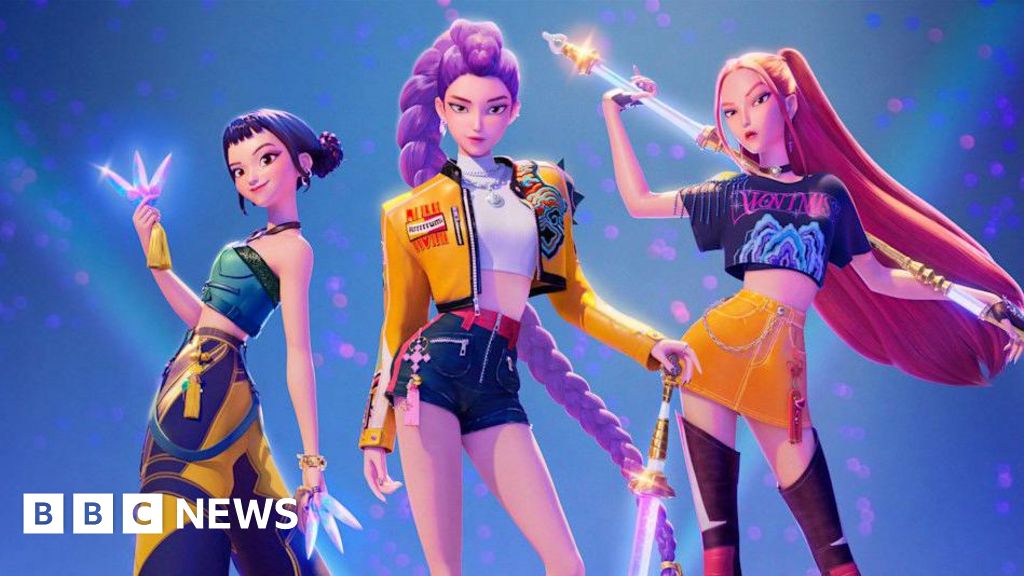
K-Pop Demon Hunters Return: Netflix Greenlights Exciting New Sequel

Global Influences and Shifting Alliances: The Geopolitical Implications of Recent International Developments

In the context of an increasingly interconnected world, recent geopolitical moves have signaled profound shifts that could reshape the international order for decades to come. As nations navigate the complexities of economic competition, military security, and diplomatic alliances, the decisions made today are echoing across continents, influencing societies, and challenging established paradigms. Historically, analysts like Samuel Huntington have emphasized the importance of cultural and civilizational identities in these shifting dynamics, a perspective still relevant amid current tensions.

Central to these developments is the renewed focus on international alliances and their influence on global stability. The United Nations and other multilateral institutions have faced mounting criticism, with many observers arguing that their ability to mediate conflicts and promote cooperation is increasingly limited. Recent conflicts, such as the ongoing disputes in Eastern Europe and the South China Sea, underscore how powerful states are willing to pursue strategic objectives at the expense of established diplomatic norms. These situations have been evaluated by international watchdogs and think tanks, including the Carnegie Endowment for International Peace, which warns that the erosion of traditional diplomatic channels could lead to a more volatile, multipolar world where conflicts are harder to contain.

  1. The resurgence of *great power competition* has seen major players like Russia and China solidify their regional spheres of influence, often in defiance of Western-led institutions. This is exemplified by the recent annexation of territories and aggressive maritime claims, signaling an Intent to challenge the post-World War II international order.
  2. The economic battlefield is equally dramatic, with nations pursuing massive investments in technological and military capabilities. The United States’ strategic pivot towards Indo-Pacific alliances, including renewed engagements with Japan and South Korea, illustrates a deliberate effort to counterbalance China’s expanding influence.
  3. Meanwhile, from Europe to Asia, the ripples of these shifts threaten to destabilize smaller nations caught between the major powers’ interests, creating a landscape fraught with uncertainty and real danger.

The geopolitical impact of these decisions extends far beyond the halls of power, shaping societal attitudes, economic realities, and national identities. Historians like Niall Ferguson argue that the age of American unipolarity is waning, replaced by a more fragmented international landscape where the ability of global institutions to manage crises diminishes. For nations on the frontlines, the choices made in diplomacy, conflict, and economic strategy are not just political but profoundly influence the fabric of national sovereignty and individual freedoms. As global analysts warn of a possible descent into prolonged instability, the stakes have never been higher.

In the unfolding narrative of world affairs, these movements are the chapters that define a generation. As history’s pen continues to etch new chapters into the grand tapestry of international relations, the world remains on the precipice—a stage where every decision may ignite or extinguish the hopes for stability and peace. The weight of history presses heavily beneath our feet, reminding us that although the future remains unpredictable, its course is profoundly shaped by the choices made in these tense, pivotal moments.

Sisu: A Bold Finnish Hero Faces Justice in a Gritty Sequel — A Fight for Honor and Revenge

In the modern cinematic landscape, few genres embody the essence of cultural resilience quite like the action film, especially those that draw heavily from historical and national symbols. The Finnish indie Sisu, directed by Jalmari Helander, epitomizes this phenomenon. Released in 2022 and subsequently gaining acclaim with its sequel Sisu: Road to Revenge, the film revitalizes a genre rooted in stoic endurance, raw heroism, and a persistent, uncompromising attachment to one’s homeland. Helander’s work, infused with a boyish enthusiasm reminiscent of childhood war games, underscores a cultural narrative: that the stories we tell ourselves about perseverance and victory are central to our identity and societal continuity.

Critics, including the writer at The Guardian, have appreciated Sisu for its economy of storytelling—an unpretentious, straightforward focus that echoes the philosophy of thinkers such as Ortega y Gasset, who emphasized the importance of individual vitality in shaping society. Helander’s narrative rejects the excesses of CGI spectacle in favor of practical effects and raw stunt work, cultivating a sense of authenticity that resonates powerfully with patriotic sentiments. The film underscores a vital cultural truth: that the stories of resilience, sacrifice, and cunning are how nations preserve their memory and forge their future. When Aatami—played with gritty defiance by Jorma Tommila—removes beams from his destroyed home or outsmarts Red Army foes, these images transcend mere entertainment. They become symbols—mementos of a collective identity grounded in perseverance.

Throughout cultural history, society has leaned on myths of heroism and survival to articulate its moral fabric. Critics like Chesterton have celebrated the appeal of stories rooted in fundamental human virtues. Today, Sisu channels this tradition, reminding viewers that the true strength of a nation lies in its people’s ability to endure and adapt, even under the most oppressive circumstances. The film’s celebration of the Finnish landscape—its sun-dappled vistas and rugged terrains—reinforces the idea that culture is a landscape of memory and prophecy. As T.S. Eliot observed, “The past should be altered by the present as much as the present is directed by the past.” Here, tradition is not static but a living, breathing force that guides a society’s moral compass—one rooted in the conviction that resilience is a form of rebellion against tyranny.

In an era often characterized by fragmentation, Sisu stands as a testament to the enduring power of cultural memory. Its focus on straightforward heroism, coupled with a reverence for tangible, practical effects, serves as a counterbalance to a Hollywood trend that often undermines genuine human effort with digital illusions. Helander’s work reveals that sometimes, the simplest stories—those of one man’s fight against overwhelming odds—resonate most deeply. Culture, after all, is both our collective memory and our prophecy. It defines who we have been and who we strive to become. As we consider these stories, we are reminded that humanity’s best hopes are born from resilience, from the unwavering belief that even in darkness, a spark of hope can illuminate the path forward—an enduring echo of the national spirit, calling us to remember and to anticipate a future forged in the fires of tradition and the forge of human will.

Man who forcibly approached Ariana Grande at Wicked sequel premiere faces serious charges | Wicked: For Good

In an era where security measures are tighter than ever, the spectacle of red carpet invasions reveals a deeper cultural tension—a collision of individual expression and societal boundaries that define our collective identity. Recently, a man in Singapore charged as a public nuisance exemplifies this ongoing struggle. His attempt to breach security and approach Ariana Grande on the premiere of Wicked: For Good underscores a timeless human desire: the urge to connect, to be seen, to make an impact amid the swirling currents of modern spectacle. Though his actions were met with condemnation—highlighted by warnings of fines up to S$2,000—what remains undeniable is the audacity of the individual in the face of societal order.

This fringe phenomenon is not new. History and culture have long chronicled instances of figures who sought to disrupt the polished veneer of celebrity and spectacle. From Hugh Grant handcuffed to a celebrity on the 2007 premiere of Music and Lyrics to Kim Kardashian being flourbombed in 2012, these acts echo a persistent desire to breach the superficial boundaries of entertainment and enter the realm of raw human emotion. Such acts serve as a mirror—illuminating the fragile tension between public decency and the innate human longing for authenticity. As Ortega y Gasset observed, culture is not merely an accumulation of artifacts but the living fabric of *people’s identities*, an ongoing dialogue where the individual seeks to carve a space within communal narrative.

Amid these moments, the cultural significance of celebrity becomes evident: it is both a reflection of societal ideals and a battleground where **tradition** confronts **modernity**. The red carpet, historically, is a ceremonial threshold—an arena of societal memory—yet it has evolved into a stage of continuous challenge, where figures like Bradley Cooper or Cynthia Erivo stand as witnesses to the fragile boundary between admiration and intrusion. These episodes underscore the need for society to uphold its shared norms without suppressing the individual’s essential drive for recognition. Critics like Chesterton have long argued that the true strength of a society lies in its capacity to reconcile discipline with compassion, preserving the integrity of both community and individual aspiration.

In contemplating these moments, one recognizes the enduring power of culture: a living archive of memory and prophecy, where each act of defiance or reverence adds to the unfolding story of human dignity. As T.S. Eliot suggested, true culture is the *spiritual foundation* that guides us through chaos towards meaning. Today, as stars and spectators alike grapple with the spectacle of invasion—whether it be a fleeting viral moment or a profound act of rebellion—what remains is the profound truth that our cultural expressions are the echoes of our shared hopes and fears. They are both the fabric woven by our ancestors and the silent hymn calling forth future generations in the eternal quest for identity, continuity, and hope. Culture, then, is not merely the legacy of the past but the prophecy of humanity—an ongoing testament to the resilience of our true selves amidst an ever-changing world.

Social Media Auto Publish Powered By : XYZScripts.com