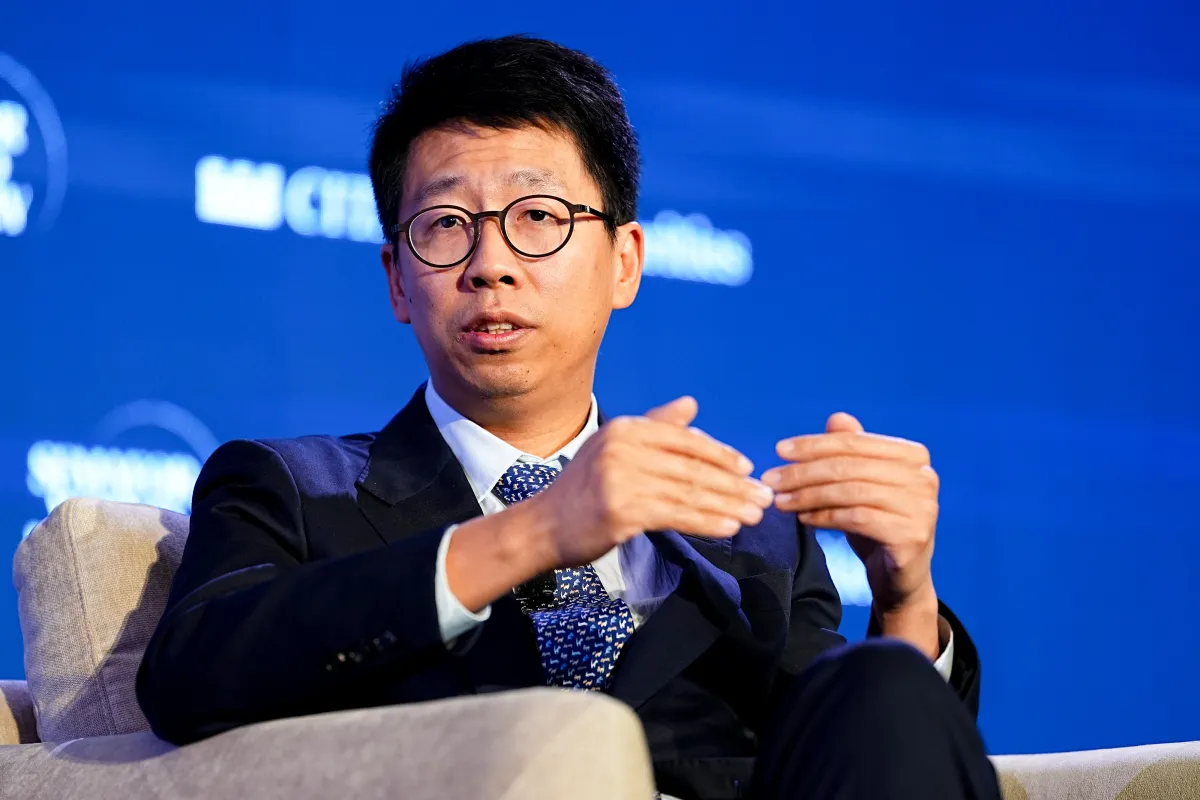

Airwallex: Pioneering Global Financial Infrastructure with Relentless Innovation
In the rapidly evolving landscape of financial technology, Airwallex exemplifies how relentless innovation and strategic disruption can redefine industry standards. Founded by Jack Zhang, a visionary entrepreneur with roots in Qingdao, China, and experience spanning various startups, Airwallex has grown from a small-scale operation into a formidable player with >$1.3 billion in annualized revenue—expanding at an impressive 85% year-over-year. Its mission: to create a seamless, borderless financial infrastructure that allows any business to operate globally as fluidly as a local entity.
Disrupting the Old Guard: Building End-to-End Control in Payments Infrastructure
What sets Airwallex apart is its relentless focus on owning infrastructure ‘from end to end,’ a strategy rooted in accumulating nearly 90 financial licenses across 50 markets—an arduous process that some estimates, like those from Gartner, suggest only top-tier firms such as Stripe can emulate. This regulatory depth grants the company unparalleled control over transaction flows, enabling features that many competitors cannot match. For example, while Stripe and Square can process payments, they often transfer funds immediately out of the ecosystem due to licensing constraints. Conversely, Airwallex’s licenses allow it to hold funds within its platform, facilitating sophisticated features such as issuing bank accounts, issuing cards, and enabling spending without fund transfer delays—an innovation that fundamentally reshapes how global businesses manage liquidity and transactions.
- Multi-market licenses enable the creation of unified global financial ecosystems.
- Revolutionizes cross-border payments by bypassing traditional correspondent banking bottlenecks.
- Prepares the ground for autonomous, AI-powered transaction management.
Building such an infrastructure requires navigating a labyrinth of regulatory hurdles, with some markets demanding years of compliance efforts—like Japan’s seven-year licensing process. Yet, Zhang’s philosophy, dubbed the ‘path of maximum resistance,’ highlights that deliberate, strategic barriers create substantial competitive entry hurdles, making market disruption sustainable in the long term.
Implications for Business and Market Dynamics
The implications of Airwallex’s disruptive strategy ripple beyond the mere expansion of services. Its ability to govern the entire payment chain means superior data accessibility, enhanced product scalability, and tremendous opportunities for _vertical integration_. Market analysts, including those from MIT and Gartner, warn that controlling infrastructure—rather than riding on others’ layers—represents a decisive moat, especially as the global demand for swift, secure cross-border commerce surges. This strategic control will likely accelerate industry displacement, compelling legacy financial institutions and emerging fintech rivals alike to reconsider their own models.
As Stripe aggressively expands into new geographies, the boundary between the traditional payment giants and innovative upstarts like Airwallex is blurring. The latter’s focus on enterprise customers—treasury teams, CFOs, and multinational corporations—aligns with the broader trend of professionalized, institutionalized fintech solutions taking center stage in global commerce. The scalability of their licensing framework combined with AI-driven autonomous finance products hints at a future where routine financial management could be almost fully automated, radically reducing operational costs and increasing resilience against disruptions.
The Urgency of Innovation in a Fast-Moving World
Looking forward, industry experts such as Elon Musk and Peter Thiel emphasize that those who control foundational infrastructure will dominate the next decade of hypercompetitive markets. With Airwallex projecting $20 billion in annual revenue and a customer base of one million by 2030, its trajectory underscores an urgent need for incumbents and challengers alike to prioritize innovation, regulatory mastery, and end-to-end control. The upcoming IPO—anticipated within three to five years—could catalyze a seismic shift, unlocking new valuations and market opportunities for those who lead the charge. The industry must heed this example, accelerating their own strategic investments or risk obsolescence in the face of a new era driven by fast-paced disruption, cutting-edge AI, and relentless global expansion.