Matox News

Truth Over Trends, always!

Anthropic Sets Sights on Big London Push

Anthropic’s Strategic Move to London Signals New AI Power Player in Europe’s Tech Arena

Recently, Anthropic announced its expansion into a sprawling 158,000-square-foot office in London, positioning itself at the heart of Europe’s burgeoning AI hub. This strategic move not only doubles—but quadruples—its current staffing capacity, bringing the company’s headcount to an expected 800. Situated amid industry giants like Google DeepMind, OpenAI, and Meta, Anthropic’s presence signals a pivotal shift in the global AI industry’s geographical and strategic landscape. The relocation to this AI innovation corridor underscores the escalating importance of Europe as a testing ground for disruptive models and cutting-edge safety protocols, driven by the continent’s regulatory environment and top-tier talent pools.

Primarily, Anthropic’s move comes amidst a larger disruption in the AI industry, as major players vie for talent in what Geraint Rees, Vice-Provost at University College London, describes as an organically grown cluster rather than a planned ecosystem. By positioning itself next to competitors and research institutions, Anthropic accelerates the translation of its research into commercially viable AI products. This proximity effect could catalyze a new wave of innovation, challenging American dominance and fueling a fierce, cross-Atlantic competition for supremacy in AI technology. Meanwhile, U.K. officials have reportedly attempted to attract Anthropic with incentives, amid its refusal to develop AI models for mass surveillance or autonomous weaponry, citing safety as a core principle. This stance highlights a broader industry trend—ethical AI development as both a business imperative and a market differentiator—which could reshape market expectations and regulatory landscapes globally.

This expansion is not merely about physical growth but also about strategic disruption. Anthropic’s deepened collaboration with the UK’s AI Security Institute demonstrates an emphasis on cybersecurity and safety, potentially setting new standards for responsible AI deployment. Additionally, the company’s cautiously limited release of its recent model, Claude Mythos, signals a market-aware approach to AI’s potential for misuse—distinguishing it from more reckless competitors. Industry analysts like Gartner emphasize that, amid the rapid development cycle, companies that prioritize safety without sacrificing innovation will craft the new industry benchmark. As the AI race heats up, those who successfully master this balance will shape the future of AI-enabled business, defense, and infrastructure, making this a critical inflection point for the industry.
The road ahead is electric with possibility yet fraught with risks. With Europe’s AI arena evolving into a battleground for innovation and influence, the urgency for companies to adapt and lead has seldom been greater. As Anthropic expands, it exemplifies a new paradigm where smart, safety-conscious AI not only disrupts traditional models but also defines the future economic and geopolitical order. The stakes have never been higher—those who act decisively today will forge the AI landscape of tomorrow, laying the foundation for breakthroughs that could redefine what’s possible in the digital age.

Rising Star Shines: Local Teen Sets New Record at State Track Championships!

Minnesota in Pursuit of Victory Despite Salary Cap Challenges

The Minnesota Vikings find themselves in a precarious situation as they navigate salary cap constraints while simultaneously gearing up for a competitive season. Despite these financial hurdles, the team’s determination to win has never been stronger. The Vikings, fresh off an impressive prior season, remain committed to fortifying their roster and achieving excellence on the field.

Head Coach Kevin O’Connell is at the helm, and his vision for this season is clear: exceed expectations while managing resources wisely. He emphasized, “Our focus is on building a winning culture, and that means making smart decisions regarding our roster.” The challenge posed by the salary cap may present obstacles, but it also compels the team to explore creative ways to strengthen its lineup.

  • Strategic Trades: The Vikings are eyeing potential trades that could bring in key talents without compromising their financial stability.
  • Rookie Potential: With a solid draft class, the team hopes to unleash untapped potential—especially in crucial positions like linebacker and wide receiver.
  • Player Development: Investing in current players’ growth is essential, particularly for second-year quarterback Kirk Cousins, who has shown flashes of brilliance.

Analysts and commentators have speculated that Minnesota’s tight salary cap situation could be a double-edged sword. According to sports analyst Chris Mortensen, “It’s a fascinating time for the Vikings. Tight budgets often lead to innovative strategies.” This development showcases the franchise’s ambition to remain competitive in a challenging division, particularly with formidable opponents like the Green Bay Packers and Chicago Bears. As the season approaches, the pressure is mounting not just to field a competitive team but to emerge as champions.

In the grand tapestry of sports, stories like those of the Vikings unfold. Every challenge faced by the team weaves a narrative of perseverance, teamwork, and the relentless pursuit of greatness. It is these moments—where playbooks intersect with passion—that galvanize fans and unite communities. Regardless of the scoreboard, the essence of sports lies in its unparalleled ability to bring people together, fostering a sense of belonging and hope as they rally behind their teams. As Minnesota takes the field this season, they do so knowing that every game is more than just a contest—it’s an opportunity to uplift their city and invigorate the spirit of football.

Source link

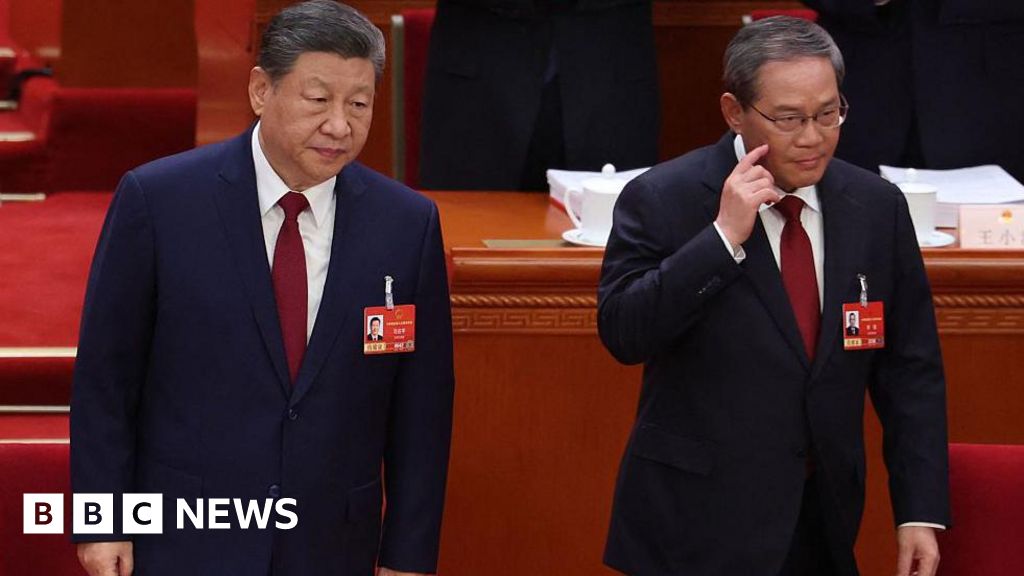
China sets lowest growth target since 1991, signaling cautious economic outlook for the future

In a significant development that signals a new chapter in international economic diplomacy, the target has been lowered for the first time since it was cut to “around 5%” in 2023. This adjustment marks a pivotal moment in recent geopolitical history, reflecting both the shifting priorities of influential nations and the mounting pressures that have reshaped global markets. As nations grapple with economic restructuring and geopolitical rivalries, this recalibration reveals much about the underlying currents that threaten to define the future of global stability.

The decision to revise the target, broadly regarded by analysts as a barometer for economic health and strategic influence, underscores the complex interplay of trade policies, international agreements, and geopolitical power struggles. According to prominent international economists and historians, such as Dr. Margaret Tufton and Dr. Jared Black, these modifications are symptomatic of broader shifts in the global order. They warn that each change in target thresholds is not merely a policy adjustment, but a reflection of profound geopolitical recalibrations taking place behind the scenes. Particularly notable is the influence of major economies like the United States, China, and Russia, all of which have responded to internal and external pressures with a recalculated approach towards economic expectations and international cooperation.

The lowering of targets also intensifies debates within international organizations, especially regarding the role of the Bretton Woods institutions. Critics argue that such shifts reflect a move away from the previous commitment to growth and stability, potentially undermining confidence among global investors. The International Monetary Fund has issued cautious statements, emphasizing that these adjustments could trigger ripple effects across emerging markets, often vulnerable to volatile shifts in policy and perception. Meanwhile, many nations worry that this change signals an erosion of longstanding commitments to shared economic stability, risking further fragmentation of the global economy.

As the world braces for the consequences of this strategic recalibration, many analysts caution that this is merely the beginning of a more turbulent epoch. Countries are increasinglyforced to reconsider alliances, confront rising nationalist sentiments, and adapt their economies to a shifting landscape of power. Historians caution that every epoch-defining decision bears the weight of history—shaping nations, societies, and civilizations for generations to come. The ongoing saga, driven by decisions at the highest levels of power, reminds us that in geopolitics—much like in economics—the margin for stability continues to narrow. As the clock ticks on, the world stands at a crossroads where every choice could carve the course of history, leaving the shadows of past conflicts and ambitions looming large over an uncertain future.

Blood Moon Eclipse Sets the Stage for a Spectacle Over North America, Australia, and New Zealand

On Tuesday night, a rare celestial spectacle known as a “blood moon” will be visible across North America, Australia, and New Zealand. This total lunar eclipse, where the Earth’s shadow turns the full moon into a deep, coppery red, is not just a marvel of nature but also a reminder of the interconnectedness of our world. Astrophysicists highlight the significance of such phenomena in inspiring curiosity and unity among populations. Yet, beneath the cosmic fireworks lies a profound symbol of shifting geopolitical tides and societal transformations. As the moon quietly traverses Earth’s shadow, nations are caught in the flux of global change—whether through diplomacy, economic upheaval, or collective consciousness.

Impact Beyond the Night Sky

Historically, celestial events like the “blood moon” carried ominous portents, fueling superstitions and shaping belief systems. However, today’s interpretation is more scientific, emphasizing our planet’s dynamic nature. According to analysts like Dr. Rebecca Allen and Dr. Brad Tucker, the event signifies not only a spectacular show but also a reflection of our planet’s delicate balance. “Just as a sunset’s hue is fleeting, so too are the moments when humanity must look up and recognize our place within the cosmos,” asserts Dr. Allen. International organizations, such as NASA, utilize these phenomena as a platform to foster global awareness, yet the real impact lies in how nations perceive their roles amid ongoing crises.

Deciphering the Celestial Message in the Geopolitical Realm

The timing of the eclipse coincides with a pivotal period for countries involved in ongoing conflicts and diplomatic shifts. For example, China and Russia continue to challenge Western influence, their actions often viewed through the lens of strategic positioning affected by external pressures. Meanwhile, the U.S. administration faces internal debates over foreign policy priorities, with some analysts warning of a potential return to Cold War-era rivalries. The celestial event serves as a symbolic backdrop for these power struggles, illustrating how human history, like the cosmos, is governed by cycles of darkness and illumination. Historians caution that neglecting to interpret these societal eclipses risks repeating patterns of complacency and conflict, especially as economic stability diminishes in tandem with political tensions.

Looking Ahead: The Next Phase of Global Realignment

The upcoming total lunar eclipse is a transient spectacle, yet it heralds a long-term warning of what may come. The next similar event is projected for 2028, with a partial eclipse occurring in 2026, offering a window for nations to reassess their trajectories. The international community must recognize that the choices made today—be it in climate policy, technological competition, or peace negotiations—are the true eclipses shaping tomorrow’s history. As Dr. Brown noted, ancient empires saw blood moons as omens; today, they serve as warnings. Humanity stands at a crossroads, where celestial signs prompt us to reflect on whether we will emerge from darkness into a new era of cooperation or spiral further into chaos, the echo of history yet unresolved. In this cosmic drama, the universe continues to watch silently, the weight of our destiny undetermined but undeniably vital, as the night sky bears witness to the ongoing narrative of human civilization.

As Co-Founders Exit and IPO Nears, Musk Sets Sights on Moon Mission

Elon Musk’s xAI Targets Lunar Manufacturing as Next Technological Frontier

In a surprising pivot towards extraterrestrial innovation, Elon Musk revealed during an all-hands meeting that xAI, his burgeoning artificial intelligence enterprise, aims to establish a manufacturing facility on the Moon. This marks a significant escalation in spatial-based AI development, emphasizing the disruptive potential of leveraging lunar resources and space-borne infrastructure to accelerate technological growth while circumventing Earth’s limitations. Musk’s vision involves deploying AI satellites via a lunar catapult, a concept that underscores a radical rethinking of how industry, AI power, and space exploration intersect. Such a move signals the onset of a new era where disruption is no longer confined to terrestrial markets, but extends into space itself, charting a course for what industry analysts are already calling <the most ambitious space-centric AI initiative to date>.

The implications for the global tech ecosystem are profound. Industry leaders, including SpaceX and AI disruptors, are fueling a paradigm shift centered on off-planet manufacturing and data processing. The recent merger of xAI and SpaceX has further accelerated this trajectory, positioning Musk’s empire at the forefront of innovation—an inevitable challenge to legacy tech giants. According to Gartner, such advancements in space-based AI infrastructure are likely to catalyze Gross Domestic Profit rather than just GDP, as companies unlock unprecedented access to computing power and resource utilization beyond Earth’s constraints. Elon Musk’s confidence in his rapid technological progress underscores how disruption is becoming an essential strategy for maintaining competitive advantage—especially when competitors like China and Russia have no legal hurdles in challenging U.S. dominance in space.

Adding to the industry’s uncertainty is a wave of strategic personnel shifts within xAI, with half of the company’s original founders departing amid reports of the impending SpaceX IPO. While Musk maintains that the company is in flux and moving at an unparalleled pace, these departures highlight the inherent risks of pushing beyond traditional boundaries. As the urbanization of space continues to evolve, legal and regulatory frameworks—such as the 1967 Outer Space Treaty and the 2015 U.S. law permitting resource ownership—will undoubtedly shape what is feasible for private firms. The legal ambiguity surrounding lunar sovereignty and resource rights presents both an opportunity and a complication in Musk’s quest to turn planetary borders into cash flows—a strategic game changer for the future of space commerce.

Central to Musk’s renewed focus on the Moon is his assertion that colonizing Mars—long deemed the logical next step—is now a distant goal, with lunar development offering a faster, more practical alternative. This shift underscores a broader trend among aerospace innovators toward near-term lunar infrastructure investments, driven by the belief that a self-sustaining lunar city could outperform Mars in both time and economic viability. Industry experts anticipate this approach could unlock a “new gold rush“—not only in raw materials but in technological advancement, military leverage, and global influence. As MIT researchers and Elon Musk warn, the race for space-based AI and manufacturing is accelerating at an unprecedented clip, demanding not only technological ingenuity but also strategic agility. The next decade may well define whether humanity’s space ambitions will be a technological utopia or a geopolitical battleground.

Barnsley drug dealer sets up 'Home Alone'-style booby traps to protect stash—crime spree caught on camera
Barnsley drug dealer sets up ‘Home Alone’-style booby traps to protect stash—crime spree caught on camera

Local Crime Sparks Broader Concerns Over Societal Security

In a striking development that underscores the persistent challenges of law enforcement in the modern era, a British citizen named Ian Claughton, 60, has been sentenced to seven years in prison after orchestrating an elaborate scheme of booby traps—reminiscent of Hollywood’s “Home Alone”—to deter intruders at his properties near Barnsley in South Yorkshire. His ex-wife, Lesley Claughton, received a suspended sentence, highlighting the ongoing fight against organized crime that often blurs the line between street-level criminality and organized enterprise.

Claughton’s trial revealed a fortified network of houses that included not only firearms and drugs but also homemade booby traps, stun guns, and flame-throwers made from everyday materials. His workshop, walled with warnings of fatal consequences for intruders, demonstrates a disturbing mentality—one that appears to prioritize defense over justice. This incident exemplifies how illicit networks are becoming increasingly sophisticated, employing makeshift weapons and elaborate security to protect their operations. According to criminal analysts, such tactics elevate the threat level in local communities and strain emergency response systems, creating ripple effects that extend beyond immediate neighborhoods.

Border Security and International Smuggling—A Global Concern

The Claughton case also illuminates devastating gaps in border security and international trafficking. Authorities intercepted parcels from China containing imitation firearms, which prompted police raids on the properties. This interdiction was crucial, as it prevented potentially lethal weapons from reaching criminal hands. The UK’s Border Force officials, along with regional organized crime units, underscore the importance of vigilant customs procedures as frontline defenses against the proliferation of illegal arms and drugs, both of which contribute directly to violence and destabilization in communities.

Experts warn that the global trafficking of firearms and narcotics exacerbates societal divisions and fuels local violence. The discovery of approximately £27,000 in cash hidden within Claughton’s properties, along with large amounts of amphetamines and illegal weapons, signals a turning point in how illicit operations adapt to law enforcement strategies. These findings, coupled with international smuggling from regions like Asia, highlight the interconnectedness of global crime networks and their capacity to destabilize nations from within. Such patterns threaten geopolitical stability, particularly in countries with weak border controls or corruption, which provides fertile ground for organized crime to flourish.

Implications for Society and the Geopolitical Sphere

The decision to clamp down on these criminal enterprises sends a strong message about the importance of maintaining law and order. For many analysts, these convictions are more than local issues—they are part of a broader struggle to safeguard societal values and security. Historians such as Niall Ferguson caution that the spread of organized crime feeds into an environment of chaos where state authority is challenged, often leading to an erosion of civil liberties and economic stability. International organizations like INTERPOL emphasize the need for cross-border intelligence sharing as critical tools to combat the globalized nature of these syndicates.

As authorities unleash cautions and sanctions, society faces a crucial choice: continue to allow criminal networks to entrench themselves or strengthen global cooperation to fortify borders and reduce the influence of illicit markets. The Claughton case, with its menacing booby traps and smuggling attempts, symbolizes the shadowy frontlines of this ongoing war—a reminder that the fight against organized crime is not merely a matter for local police but a strategic challenge for the entire international community.

In the grand unfolding of history, this event might seem like a detour in the narrative of global stability; yet, it exemplifies how local decisions and clandestine pursuits can shape wider geopolitical outcomes. The choices made today, between escalation and cooperation, will determine whether societies can withstand these dark forces or fall victim to a future haunted by chaos and crime—an ongoing chapter authored by those who dare to test the limits of law and order.

Target’s Omni Auto Scoring System Sets a New Bullseye for Tech Gaming

Target Darts Breaks New Ground with Omni Auto Scoring System, Ushering in a Digital Renaissance in Traditional Gaming

The Target Darts Omni Auto Scoring System represents a significant leap forward in the evolution of electronic sports, pioneering a nexus of disruption, innovation, and connectivity in the classic game of darts. As emerging technologies continue to reshape how raw skill is matched with data-driven insights, this system marries high-precision HD cameras with a sophisticated app platform, redefining both casual play and serious training. Tech industry leaders and sports analysts, including Gartner and MIT’s Media Lab, have increasingly highlighted the importance of integrating IoT and AI into traditional games, and Target Darts’ latest offering exemplifies this trend at a consumer-friendly scale.

At the core of this innovation are features such as

  • HD cameras that precisely record each dart’s impact in real-time
  • An app that compiles comprehensive playing statistics
  • Multiple practice modes and customizable match parameters

This technological disruption not only elevates the gaming experience but also opens vast business possibilities. The system’s integration with the DartCounter app enables online multiplayer functionality—a feature that has become a prime growth driver in the esports sector. Over 100 live matches in progress at any given time underscore the rapidly expanding online community, echoing industry forecasts from firms like Newzoo, which estimate that digital sports will outpace traditional venues within the next five years. Subscriptions for advanced features are priced affordably at $6/month or $40/year, creating an accessible revenue model akin to Netflix’s success, yet tailored to the niche of competitive darts. Companies that leverage these platforms will likely dominate the future of connected, data-enhanced sports.

Yet, the true business implications extend beyond sheer entertainment. As automation and telemetry become embedded in recreational activities, industries like physical training, health monitoring, and even entertainment hardware will undergo market shifts towards premium, connected experiences. The adoption of smart dartboards exemplifies a larger trend towards disruption in traditional leisure industries through IoT and AI innovations, a dynamic forecasted by analysts such as Peter Thiel and Elon Musk, who see AI-driven customization as the future of consumer engagement.

Looking ahead, this integration signals a compelling call to action for entrepreneurs, investors, and industry giants: the game is no longer confined to physical skill alone—digital ecosystems, data analytics, and multiplayer connectivity are rapidly transforming the competitive landscape. Companies that harness this trend must innovate swiftly or risk being left behind in a future where connected smart entertainment devices are as ubiquitous as smartphones. The Target Darts Omni Auto Scoring System is not just a novelty; it’s a forecast of the disruptive wave sweeping through conventional sports and leisure markets—an imperative for those who refuse to accept stagnation in a rapidly evolving tech-driven world.

Met Office Sets New Two-Week Forecast to Better Serve the Public

Britain’s Met Office is set to revolutionize its weather forecasting capabilities by extending its forecast range to a full 14-day outlook. This move, driven by recent advancements in probabilistic weather models, signifies a major step forward in the way nations approach climate data and risk management. Traditionally, weather forecasts have been confined to a seven-day horizon due to challenges in maintaining accuracy, but innovations in science—particularly harnessing artificial intelligence—are now changing the landscape. As the UK aims to better inform public decision-making, this development underscores a broader global trend: nations increasingly leverage AI and advanced data analytics to navigate the complex realities of climate unpredictability.

The urgency of these technological strides becomes clearer in light of international geopolitical shifts. Countries face mounting pressures from climate-related crises, shifting trade routes, and energy security concerns—all exacerbated by ongoing conflicts and economic realignments. Notably, the resurgence of AI-driven forecasting, exemplified by industry giants like Nvidia and Google DeepMind, promises faster and more precise weather predictions. These developments have profound geopolitical impact, offering states like the United States, China, and Russia strategic advantages in anticipating environmental disruptions, managing natural resources, and safeguarding infrastructure.

Experts and international organizations warn that these innovations could significantly alter the power balance. As the Guardian reports, the UK’s move to integrate probabilistic models exemplifies how technological advancements can extend the strategic reach of nations. Similarly, climate scientists and geopolitical analysts emphasize that “early warning systems” driven by AI are vital tools that can dictate the outcome of regional stability and global commerce. The BBC’s recent return to the Met Office partnership further illustrates Britain’s efforts to stay at the forefront of climate intelligence, reinforcing its position as a global leader in weather science adaptation.

Yet, as history continues to unfold, the question remains: how will societies adapt to increasingly sophisticated weather models? With AI forecasting capable of providing data that surpasses traditional methods—up to 20% more accurate, as Google DeepMind claims—the potential for preemptive action or, conversely, manipulation grows. As historian Dr. Mary Carter warns, “These technological tools are double-edged swords—bringing both humanitarian benefits and new realms of geopolitical competition.” The struggle to control and interpret this power might well determine the future trajectories of nations and societies alike, leaving the world on the brink of a new era of climate dominance and digital warfare.

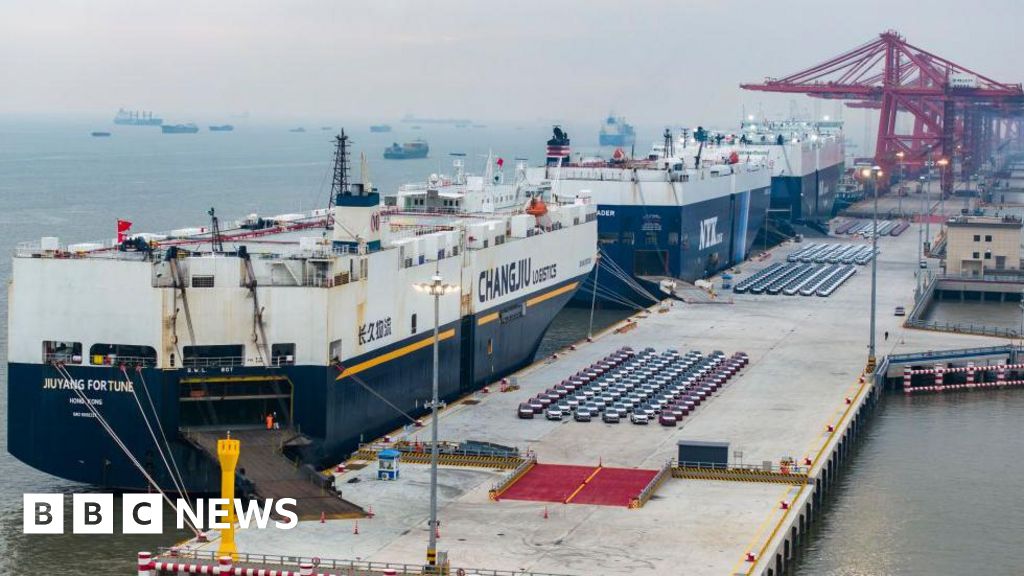
Mexico sets tough tariffs of up to 50% on China and others to protect its economy

In a bold move signaling a shift towards economic nationalism, Mexico has recently approved a comprehensive tariff package impacting over 1,400 products, many sourced from China. This policy, championed by President Claudia Sheinbaum, aims to bolster domestic manufacturing and reduce reliance on foreign imports amidst mounting economic pressures. These tariffs allow for duties of up to 50%, a clear indication of Mexico’s intent to recalibrate its economic strategies in a rapidly changing global landscape. While the move is framed domestically as a matter of economic sovereignty, its geopolitical implications ripple beyond borders, especially as Mexico engages in delicate negotiations with the United States.

  • The tariffs come at a fraught time, with U.S. President Donald Trump threatening steep import taxes on Mexico, including potential 50% duties on steel and aluminum. These measures are part of a broader strategy to exert economic pressure, ostensibly aimed at curbing the flow of synthetic opioids like fentanyl into the U.S., but also revealing a deeper struggle over trade dominance.
  • In addition, Trump has signaled intentions to impose a 5% tariff on Mexican goods, citing the longstanding Rio Grande treaty—an 80-year-old agreement—regarding water rights as a pretext. Through social media, the U.S. leader accused Mexico of “not meeting the terms” of this treaty, which historically grants the U.S. access to water from the Rio Grande tributaries, raising questions about the truthfulness and strategic motivation behind these claims.

International reactions have been swift and cautious. Warnings from Beijing to Mexico included a reminder to “think carefully” about the implications of imposing tariffs on Chinese products. Analysts note that these measures reflect a broader realignment of economic alliances in which Mexico seeks to navigate between two superpowers—the United States and China. As the world’s second-largest economy, Beijing remains deeply entrenched in Latin America, its investments and trade ties reshaping regional power dynamics. The decision by Mexican lawmakers underscores a strategic push to assert economic independence, but also signals potential shifts in regional stability, especially if tariffs spark retaliatory measures or escalate into trade conflicts.

Impact on Society and Future Trajectory

The societal impact of Mexico’s tariff policy cannot be understated. For consumers, increased costs on everyday products threaten to fuel inflation, while domestic industries may benefit from increased protection. However, historians and economic analysts warn of the long-term consequences of such protectionism—potentially fostering a fragmented global trade system that complicates international cooperation. The moves also reflect a broader pattern of nationalist resurgence across the globe, where nations challenge existing treaties and alliances in pursuit of national interests.

As Mexico confidently asserts its economic independence amid a tense geopolitical climate, the world watches with bated breath. The pending negotiations with the United States—a trading behemoth and regional neighbor—could set a precedent for how nations leverage tariffs and treaties in a new era of economic brinkmanship. The decisions made in Mexico today are not isolated policies but artifacts of a larger, ongoing competition for influence and sovereignty. With history unfolding before our eyes, the question remains: will these tariff maneuvers carve a path towards renewed national strength, or will they spiral into a broader confrontation that reshapes the very fabric of global geopolitics? The answer lies in the unfolding chapter of international relations, where every move could tip the delicate balance of power, leaving the world to witness the next act in this high-stakes geopolitical play.

McDonald’s Netherlands Sets the Record Straight on AI Holiday Ad Ghosted by Critics

As the holiday season kicks into high gear, brands are vying to capture the festive spirit—yet, this year, one unexpected actor has stirred a quiet revolution with a controversial twist. McDonald’s Netherlands released a holiday commercial that quickly became a viral sensation—though not for the reasons they had hoped. Instead of growing brand love, it sparked a wave of criticism centered around the role of artificial intelligence (AI) in creative advertising. The ad, titled “The most terrible time of the year”, depicted holiday chaos with a low-budget, uncanny aesthetic indicative of generative AI’s capabilities, featuring awkward movements and generic-looking actors, which many viewers found unsettling rather than humorous.

While brands across industries are eagerly experimenting with AI-generated content to streamline production and reduce costs, this incident underscores a growing societal debate: how far should AI go in replacing human creativity? Critics argue that AI-driven ads lack the nuanced emotional intelligence that makes holiday messages resonate deeply with audiences. Influencers and sociologists point out that, in our age of social media saturation, authenticity counts more than ever. McDonald’s faced a swift backlash from viewers who considered the commercial not just poorly made, but disrespectful to the warmth and sincerity traditionally associated with holiday marketing. By Dec. 9, the fast-food giant announced its decision to pull the ad, acknowledging that the artificial trying to parody human emotion failed to hit the right notes—highlighting an important trend: society’s increasing discomfort with even minor AI encroachments in cultural narratives.

This incident isn’t occurring in isolation. Earlier in the season, Coca-Cola released its own AI-generated holiday commercial, created in partnership with the studio Secret Level. Despite initial fanfare, critics quickly piled on, citing concerns over authenticity and the erosion of traditional storytelling. Yet, Coca-Cola persisted, continuing to air the ad throughout the season—a reflection of a larger corporate trend: companies are eager to explore how AI can innovate marketing, regardless of initial backlash. Meanwhile, analysts like Dr. Laura Bennett, a media sociologist, warn that this surge might signify a broader societal shift towards accepting artificial representations as authentic, raising questions about the future of human-centered advertising and cultural values.

Behind the scenes, industry insiders reveal that much human labor still goes into these AI attempts. The CEO of The Sweetshop emphasized that creative direction, editing, and ethical oversight remain largely human-driven, even when AI assists. Nonetheless, the social relevance extends beyond the commercial realm. More than a marketing experiment, this tension taps into broader societal concerns:

  • Should AI be permitted to shape cultural storytelling?
  • Can machine-created content ever genuinely resonate on a human level?
  • And perhaps most compellingly—what do these shifts reveal about our collective trust in technology and authenticity?

As we observe these high-profile experiments, a provocative question emerges: Will the future of advertising and culture be a battleground for human authenticity versus artificial simulation, or are we on the cusp of a new hybrid era where AI complements rather than replaces our storytelling? With industry giants like Coca-Cola forging ahead despite criticism, the next chapter in this digital-cultural saga remains unwritten. Maybe it’s time for society—not just corporations—to ask: what kind of cultural landscape do we want AI to help create in the decades to come?

Social Media Auto Publish Powered By : XYZScripts.com